

The Evolution of Holiday Meal Preparation
The tradition of roasting a whole turkey for Thanksgiving or other celebratory gatherings is a practice rooted in colonial American history, designed to feed large groups. However, demographic shifts and changing household sizes over the last several decades have necessitated a pivot in how such meals are approached. According to data from the U.S. Census Bureau, the average household size in the United States has steadily declined, leading to a diminished need for 15-to-20-pound whole birds.
The rise of the "small-format holiday" has seen an increase in demand for alternative proteins. Culinary experts and food safety organizations, such as the USDA, have long emphasized that internal temperature control is the most critical factor in turkey preparation. The adoption of slow cooking technology allows for precise temperature management, mitigating the risk of the dry, overcooked meat often associated with larger, unevenly roasted birds. By focusing on the breast—the most delicate and leanest portion of the turkey—home cooks can achieve a more consistent result with minimal active labor.
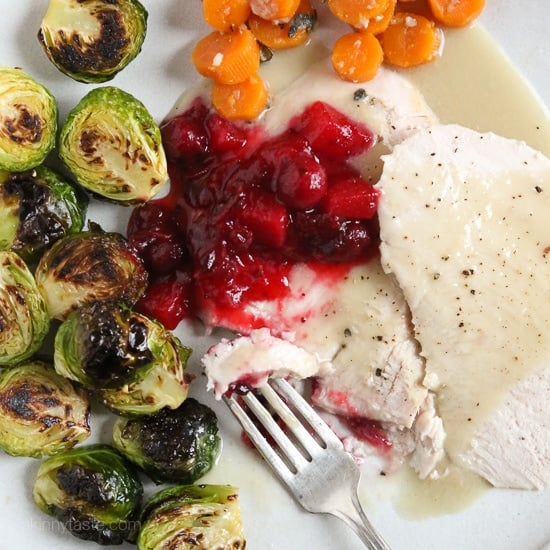
Technical Methodology and Chronology
The process of preparing a turkey breast in a slow cooker, or Crock Pot, requires a departure from traditional roasting techniques. Unlike oven-roasting, which relies on dry heat and air circulation, slow cooking utilizes moist heat to break down connective tissues.
- Preparation (0–10 minutes): The process begins with minimal prep. The turkey breast, typically ranging from 4 to 6 pounds, is seasoned or brined according to preference. Unlike large-scale roasting, which often requires an overnight brine to ensure moisture retention, the slow cooker environment naturally maintains humidity, reducing the necessity for extensive pre-treatment.
- The Cooking Phase (5–7 hours): The turkey is placed in the slow cooker with aromatics such as carrots, celery, onions, and herbs. The appliance is set to the "LOW" temperature setting. This low-temperature, long-duration cycle allows the internal temperature of the meat to reach the food-safe threshold of 165°F (74°C) without the rapid dehydration that occurs in high-heat environments.
- Gravy Emulsification: A defining feature of this method is the creation of a pan sauce within the slow cooker. As the meat cooks, juices render into the base of the pot. Once the meat is removed, these juices are combined with a thickening agent, such as a flour-based roux or cornstarch slurry, to create a gravy, effectively utilizing every byproduct of the cooking process.
- Resting Period (20 minutes): Essential to the final texture, the meat must rest after removal from the heat. This allows the internal juices to redistribute throughout the muscle fibers, preventing moisture loss upon carving.
Nutritional Profile and Dietary Implications
From a nutritional standpoint, turkey breast remains one of the leanest sources of high-quality animal protein. A standard 4-ounce serving of slow-cooked turkey breast contains approximately 25 grams of protein and roughly 167 calories, depending on the ingredients used in the gravy.
Public health experts often recommend lean poultry as a component of a heart-healthy diet. By using a slow cooker, the need for added fats or oils is reduced, as the device relies on the natural juices of the bird and the added aromatics to create flavor. This makes it an ideal option for individuals managing caloric intake or those adhering to specific dietary requirements during the holiday season, when traditional menus are often high in saturated fats and sodium.

Broader Impact on Home Cooking Trends
The shift toward automated cooking appliances—specifically the slow cooker—reflects a broader trend in consumer behavior known as "convenience-driven cooking." With an increasing number of households balancing professional obligations with family commitments, the ability to "set and forget" a main course provides significant utility.
Industry analysts note that sales of multi-cookers and slow cookers have remained consistent even as more advanced air-frying technology has emerged. This suggests that the slow cooker serves a specific niche: providing a reliable, low-stress method for preparing large cuts of meat. Furthermore, this method is environmentally and economically efficient. An oven requires significant energy to preheat and maintain a constant temperature, whereas a slow cooker uses a fraction of the electricity, making it a sustainable choice for long-duration cooking.
Expert Perspectives and Safety Standards
Food safety is a primary concern when utilizing slow cookers. The USDA recommends that consumers ensure the turkey is completely thawed before it enters the slow cooker to prevent the meat from spending too much time in the "danger zone" (40°F to 140°F), where bacterial growth is most rapid.

"The beauty of this method lies in its predictability," notes culinary consultant Sarah Jenkins. "When you roast a massive bird, you are playing a guessing game with varying muscle densities. With a turkey breast, you have a uniform piece of protein. By keeping it in a sealed, moist environment, you are essentially poaching the meat in its own juices, which is a foolproof way to ensure it doesn’t dry out."
Future Outlook for Traditional Recipes
As we look toward future holiday seasons, the trend toward smaller, more manageable meals is likely to continue. The integration of modern kitchen technology into traditional recipes allows for the preservation of culinary heritage—the turkey and gravy remain the centerpieces—while updating the execution to fit the modern lifestyle.
The versatility of the leftovers also adds to the appeal. Cooked turkey breast prepared in this manner is highly conducive to meal prepping, providing a ready-to-use protein source for salads, sandwiches, and soups throughout the week. This minimizes food waste, a growing concern in modern household management, and provides long-term value to the consumer.

Ultimately, the transition from the traditional whole-bird oven roast to the slow-cooked turkey breast represents a synthesis of culinary efficiency and nutritional awareness. By prioritizing the quality of the protein and utilizing modern thermal management tools, home cooks can continue to honor the tradition of the holiday meal while adapting to the demands of contemporary life. This approach serves as a testament to the adaptability of cooking, proving that even the most deeply rooted traditions can evolve without sacrificing the quality or the spirit of the occasion.
