
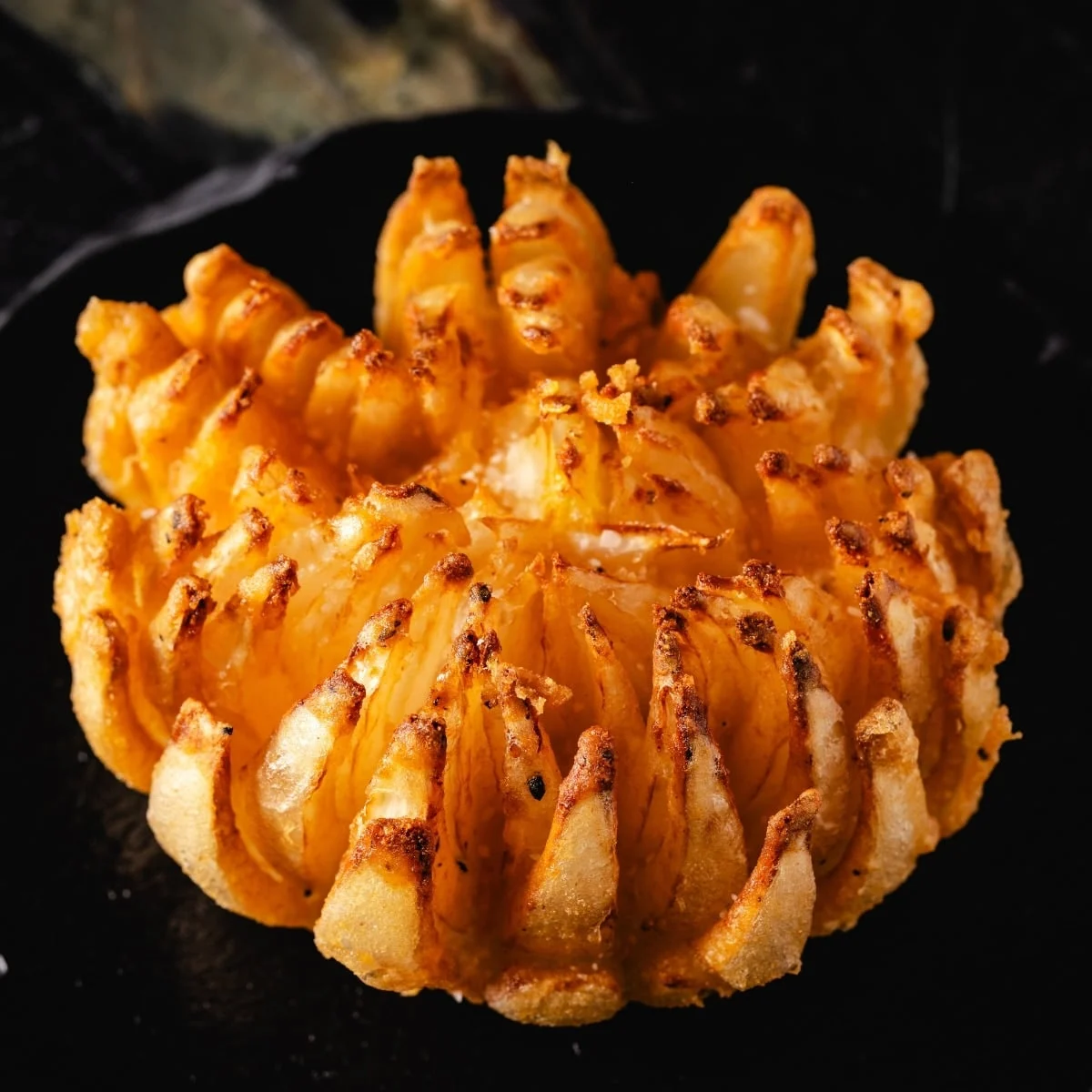
The Smoke-Fried Onion Blossom represents a significant shift in contemporary backyard gastronomy, merging the traditional low-and-slow techniques of American barbecue with the high-heat precision of deep-frying. This culinary innovation takes the Sweet Vidalia onion—a staple of Southern agriculture—and subjects it to a two-stage thermal process designed to maximize both structural integrity and flavor complexity. By utilizing a smoker to soften the vegetable and infuse it with aromatic wood smoke before applying a crispy golden batter and finishing it in hot oil, chefs are creating a hybrid appetizer that challenges the standard offerings of commercial steakhouses. The process requires approximately one hour of preparation and cooking time, utilizing three primary ingredients to achieve a result that balances sweetness, salinity, and smoke.
The Agricultural Foundation: The Role of the Vidalia Onion
Central to the success of the Smoke-Fried Onion Blossom is the selection of the onion itself. While various cultivars exist, the Vidalia onion is the preferred medium for this technique due to its unique chemical composition. According to the Vidalia Onion Act of 1986, these onions can only be grown in a specific 20-county region in Georgia, where the soil is unusually low in sulfur. This lack of sulfur prevents the onion from developing the sharp, pungent bite associated with standard yellow or white onions, resulting in a higher perceived sugar content.

From a culinary science perspective, the high water and sugar content of the Vidalia makes it ideal for the smoke-frying method. During the initial smoking phase, the low heat allows the natural sugars to begin a slow caramelization process without the vegetable disintegrating. Data from agricultural extensions suggest that the Vidalia’s mildness allows the volatile organic compounds found in wood smoke—such as syringol and guaiacol—to penetrate the layers of the onion more effectively than they would in more pungent varieties.
Chronology of the Smoke-Frying Process
The preparation of a Smoke-Fried Onion Blossom follows a strict chronological sequence to ensure the "bloom" effect is achieved without compromising the vegetable’s texture.
- Mechanical Preparation: The process begins with the structural modification of the onion. The root end is kept intact to serve as a base, while the top is removed. A series of vertical cuts are made, typically 12 to 16, stopping just short of the root. This allows the onion to "fan out" or "blossom" during the heating phases.
- The Smoking Phase: The smoker is preheated to a consistent 225 degrees Fahrenheit (107 degrees Celsius). The onion is placed directly on the grates for approximately 45 minutes. Unlike traditional meat smoking, where internal temperature is the primary metric, the goal here is textural transformation. The heat breaks down the hemicellulose in the onion’s cell walls, causing the "petals" to relax and open, creating more surface area for the subsequent battering.
- The Battering Phase: Once the onion has reached a softened state and has absorbed the desired level of smoke, it is removed and coated. A combination of a dry batter mix and a savory BBQ rub is applied. The relaxation of the petals during the smoking phase is critical here, as it allows the dry ingredients to reach the inner crevices of the blossom.
- The Frying Phase: The final stage involves flash-frying the onion in oil heated to 350 degrees Fahrenheit (177 degrees Celsius). This phase is rapid, lasting only three to four minutes. The high heat triggers the Maillard reaction in the batter, creating a crispy, golden-brown exterior that contrasts with the tender, smoke-infused interior.
The Science of Hybrid Cooking: Thermal Physics and Flavor Retention
The decision to smoke before frying is rooted in the physics of moisture management. Traditional "blooming onions" are often battered raw and deep-fried. While effective, this can sometimes lead to a "steamed" interior that lacks depth. By introducing the smoking phase, chefs are essentially "pre-cooking" the onion in a dry-heat environment. This reduces the initial moisture content on the surface, which in turn allows the frying oil to create a more resilient crust.

Furthermore, the smoke-frying technique utilizes the "pellicle" concept often seen in smoked meats or fish. During the 45 minutes in the smoker, a thin, slightly tacky layer forms on the surface of the onion petals. This pellicle acts as a superior adhesive for the batter, ensuring that the coating does not slough off during the turbulence of the deep-frying process.
Historical Context and Cultural Impact
The "onion blossom" or "blooming onion" first gained international prominence in the late 1980s, popularized by the American restaurant chain Outback Steakhouse. Developed by founders Tim Gannon, Chris Sullivan, Robert Basham, and Trudy Cooper, the original dish was a high-calorie, deep-fried marvel that became a symbol of casual dining indulgence.
The transition of this dish from a commercial kitchen to the backyard smoker reflects a broader trend in American barbecue culture. Over the last decade, the "Backyard BBQ Hero" movement has seen home cooks adopting professional-grade equipment, such as pellet grills and offset smokers, to replicate and improve upon restaurant classics. The Smoke-Fried Onion Blossom is a direct result of this democratization of culinary technology. It represents a move away from simple grilling toward "craft barbecue," where multiple techniques are layered to create more sophisticated flavor profiles.

Market Trends and the Rise of Home Smoking
The popularity of recipes like the Smoke-Fried Onion Blossom is reflected in the economic data of the outdoor cooking industry. According to reports from the Hearth, Patio & Barbecue Association (HPBA), nearly 70% of all adults in the United States own a grill or smoker. More significantly, the market for pellet grills—which offer the precise temperature control necessary for the 225-degree smoking phase of this recipe—has seen exponential growth.
Industry analysts suggest that the "experience economy" has driven consumers to seek out "project recipes." These are dishes that require more time and specialized equipment than a standard weeknight meal. The Smoke-Fried Onion Blossom fits this criteria perfectly, offering a visual "wow factor" and a complex taste profile that justifies the hour-long preparation time.
Nutritional Analysis and Dietary Considerations
While the Smoke-Fried Onion Blossom is an artisanal upgrade of a fast-food classic, it remains a calorie-dense appetizer. A standard serving of the smoke-fried variant contains approximately 163 calories, 37 grams of carbohydrates, and 672 milligrams of sodium.

However, proponents of the home-cooked version point out that the smoke-frying method allows for greater control over ingredients compared to commercial versions. By using high-quality oils with higher smoke points (such as peanut or avocado oil) and controlling the salt content in the BBQ rub, home cooks can mitigate some of the health concerns associated with traditional deep-fried appetizers. Additionally, the fiber content of the onion (approximately 1 gram per serving) and the presence of Vitamin C and Calcium provide some nutritional value amidst the indulgence.
Expert Perspectives and Culinary Implications
Culinary experts note that the smoke-frying technique is being applied to an increasing variety of foods, from chicken wings to firm vegetables. Susie Bulloch, a prominent figure in the BBQ community and founder of Hey Grill Hey, has highlighted that the key to this dish is the "interplay of textures." The ability to achieve a "shatter-crisp" exterior while maintaining a succulent, smoky interior is often cited as the pinnacle of backyard cooking.
The implications of this technique extend to the restaurant industry as well. As home cooks master these hybrid methods, commercial establishments are under increasing pressure to innovate. The "standard" blooming onion is no longer the novelty it was in 1988; today’s consumers are looking for the added depth that only wood smoke can provide.

Conclusion: The Future of the Backyard Barbecue
The Smoke-Fried Onion Blossom is more than a mere appetizer; it is a testament to the evolving sophistication of the home cook. By understanding the chemistry of the Vidalia onion, the physics of smoke penetration, and the mechanics of the Maillard reaction, backyard chefs are transforming simple ingredients into complex culinary displays.
As outdoor cooking technology continues to advance, the line between professional steakhouse kitchens and backyard patios will continue to blur. The Smoke-Fried Onion Blossom stands as a flagship of this movement—a dish that honors tradition while aggressively pursuing innovation through the marriage of smoke and fire. For the modern BBQ enthusiast, the goal is no longer just to cook food, but to engineer an eating experience that is as visually stunning as it is gastronomically satisfying.
