
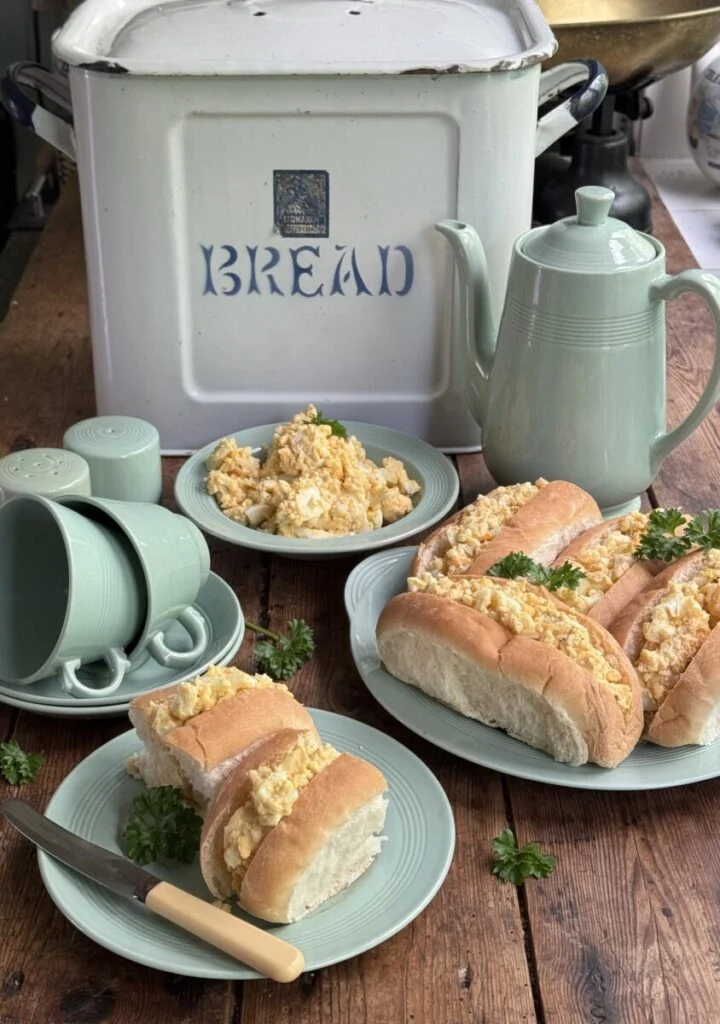
The humble egg salad, a seemingly simple dish, takes on profound historical significance when viewed through the lens of Britain’s World War II rationing era. On June 15, 2026, culinary historian Karen Burns-Booth revisited this iconic dish, highlighting its original 1940s iteration featuring homemade wartime salad cream and, historically, dried eggs. This revival serves not merely as a recipe but as a tangible link to the ingenuity and adaptability that defined the British home front, showcasing how ordinary citizens navigated extraordinary circumstances with resourcefulness and resilience. The dish, traditionally served in bridge rolls on utilitarian Woodsware Beryl crockery, accompanied by a pot of Camp Coffee and a sprig of parsley, encapsulates a period when sustenance and small comforts were meticulously managed and cherished.

The Historical Context: Britain Under Rationing
The outbreak of World War II in September 1939 plunged Britain into an unprecedented era of economic and social upheaval. As a nation heavily reliant on imported foodstuffs, the threat of German U-boat attacks on shipping lanes became an immediate and critical concern for food security. To ensure equitable distribution and prevent shortages, the British government, through the newly established Ministry of Food, implemented a comprehensive system of rationing. This initiative, which began with bacon, butter, and sugar in January 1940, progressively expanded to encompass almost all essential food items, including meat, tea, cheese, and notably, eggs and cooking fats. The goal was not just to manage scarcity but also to maintain public morale and health amidst the conflict.

The timeline of rationing demonstrates its pervasive impact. By mid-1940, sugar, butter, and bacon were rationed, followed by meat in March 1940, tea and fats in July, and preserves in March 1941. Eggs, both fresh and dried, became central to the household diet, with fresh eggs being particularly scarce. The weekly allowance for fresh eggs often dwindled to one or two per person, or even none, depending on availability. This severe restriction necessitated a dramatic shift in culinary practices, pushing home cooks to innovate with limited ingredients and embrace substitutes.
The Scarcity of Eggs and the Rise of Substitutes

Before the war, fresh eggs were a staple in the British diet. However, with imports severely curtailed and domestic production prioritized for other uses or challenged by wartime agricultural demands, the availability of "shell eggs" plummeted. This led to the widespread introduction of dried eggs, primarily imported from the United States under the Lend-Lease Act. These powdered eggs, often packaged in tins or cartons, became a lifesaver for British households, providing a crucial source of protein and a versatile ingredient for cooking and baking.
The Ministry of Food played a vital role in educating the public on how to use dried eggs, which were initially met with skepticism due to their unfamiliar form and sometimes different texture. Posters, leaflets, and radio broadcasts disseminated recipes and tips, transforming dried eggs from an unusual import into a household necessity. While Karen Burns-Booth’s contemporary recreation wisely opts for fresh eggs for taste and convenience, her disclaimer acknowledges that the authentic 1940s experience would have almost certainly involved the rehydrated powdered variety. This historical nuance underscores the challenges faced by wartime cooks, who had to adapt their palates and techniques to make the most of what was available. The nutritional data for a single serving of egg salad—119 calories, 9g total fat, 2g saturated fat, 7g unsaturated fat, 189mg cholesterol, 167mg sodium, 1g carbohydrates, 1g sugar, and 6g protein—reflects a dish that, even with wartime adaptations, provided essential sustenance.

Crafting Condiments: The Wartime Salad Cream
One of the most significant casualties of rationing for culinary enthusiasts was the availability of traditional salad dressings, particularly mayonnaise and commercially produced salad cream. The core ingredients—oil and fresh eggs—were either heavily rationed or virtually unobtainable for non-essential use. This scarcity spurred the Ministry of Food to develop and promote alternative recipes that required minimal or no rationed items.

The "Royal Dressing" is a prime example of this ingenious adaptation. As detailed in the historical culinary notes, it comprised 2 ounces of National Flour, ½ pint milk or vegetable water, 1 tablespoon vinegar, and seasonings (salt, pepper, and sugar). The method involved creating a thick sauce from the flour and liquid, then beating in the remaining ingredients. National Flour itself was a product of wartime necessity, a higher-extraction flour that utilized more of the wheat grain, making it more nutritious but also darker and denser than pre-war white flour. The use of "vegetable water" – the liquid left over from cooking or steaming vegetables – exemplifies the "waste not, want not" ethos, leveraging every available resource for flavor and nutrition. This dressing, intended for eggs or raw vegetable salads, provided a much-needed tangy and creamy element without relying on scarce fats.
Furthermore, the concept of "eggless mayonnaise" became a common staple. This resourceful concoction typically involved mashing a small, boiled, and peeled root vegetable, such as a potato, until silky smooth. Vinegar, mustard, salt, and a minimal amount of vegetable oil (if any was available beyond the cooking ration) were then slowly whisked in until a creamy consistency was achieved. These improvised dressings, though different from their pre-war counterparts, offered a vital psychological and culinary comfort, allowing families to enjoy familiar dishes like egg salad, albeit in a modified form.

The Art of Presentation: Bridge Rolls and Utility Ware
Even amidst austerity, a degree of normalcy and dignity was sought in daily life. The presentation of food, however simple, played a role in this. The wartime egg salad was often served in "bridge rolls," small, soft bread rolls aptly named because they were popular at social gatherings known as bridge parties. These rolls typically featured simple, ration-friendly fillings like cheese, fish paste, or, indeed, egg salad, embodying a modest elegance in an era of deprivation.

The choice of crockery further emphasizes the wartime context. The egg salad is pictured on "Woodsware Beryl" utility crockery. The "Utility" scheme was a comprehensive government initiative during WWII to standardize the production of goods, from clothing to furniture and ceramics, to conserve raw materials and labor. Utility designs were characterized by their simplicity, durability, and lack of elaborate ornamentation, reflecting the pragmatic needs of the time. Woodsware Beryl, with its understated design and robust construction, perfectly represents this era, where functionality and efficiency superseded luxury.
Accompanying the meal was a "pot of Camp Coffee," a popular coffee substitute that became indispensable during the war when real coffee imports were severely restricted. This chicory-based essence offered a comforting, if not entirely authentic, coffee-like experience. The final touch, an "obligatory parsley garnish," speaks volumes. Despite the focus on economy and necessity, the inclusion of a fresh herb demonstrates a persistent desire for aesthetic appeal and the small pleasures that could elevate a wartime meal from mere sustenance to something more nourishing for the spirit.

Enduring Legacy: More Than Just a Recipe
The "Wartime 1940s Egg Salad" is more than just a historical recipe; it is a culinary artifact that tells a powerful story of national resilience, ingenuity, and community spirit. These recipes, meticulously crafted and disseminated by the Ministry of Food, not only fed a nation but also fostered a sense of collective effort and shared sacrifice. They taught a generation the value of "make do and mend" in the kitchen, turning limitations into opportunities for creative cooking.

The implications of wartime rationing extended far beyond the immediate conflict, profoundly shaping British culinary habits and tastes for decades. The emphasis on home cooking, resourcefulness, and the utilization of every scrap of food became ingrained in the national psyche. Even after rationing ended in 1954, many of these thrifty cooking practices persisted, influencing the evolution of British cuisine.
Today, the recreation and sharing of such historical recipes by individuals like Karen Burns-Booth serve multiple purposes. They offer a tangible connection to the past, allowing contemporary audiences to experience a slice of wartime life. They inspire an appreciation for simple, wholesome ingredients and sustainable cooking methods. Furthermore, they stand as a testament to human adaptability, reminding us that even in the face of severe adversity, the human spirit finds ways to create comfort, nurture, and maintain a sense of normalcy through the universal act of sharing food. The enduring appeal of this humble egg salad, served on utility ware with a coffee substitute, is a poignant reminder of the strength and spirit of the British people during one of their darkest hours.
