
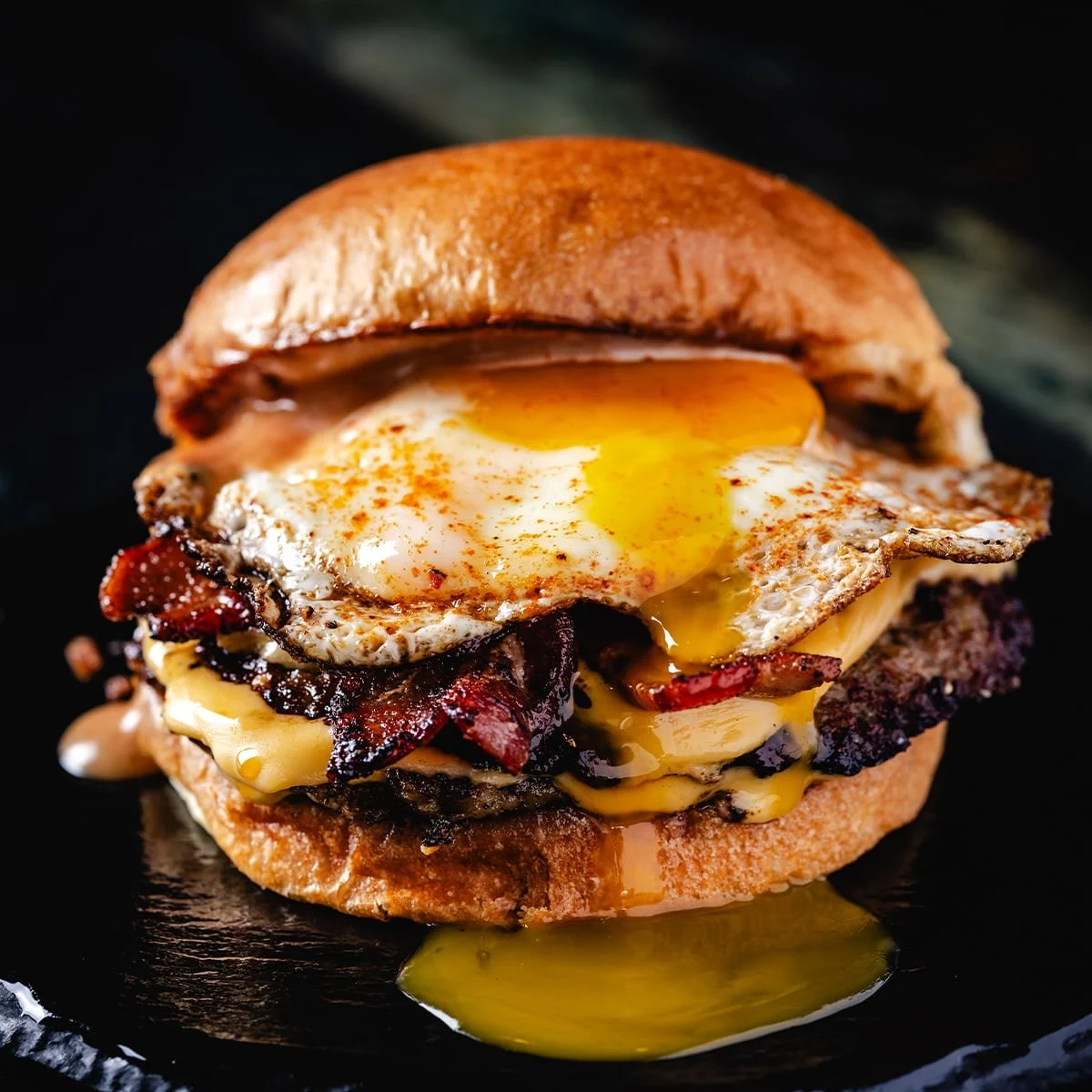
The culinary landscape of the American breakfast is undergoing a significant transformation as home cooks increasingly move away from traditional convenience options and toward sophisticated, griddle-based gourmet creations. At the forefront of this movement is the Breakfast Smash Burger, a multi-layered sandwich that combines the textural complexity of seared sausage with the richness of classic breakfast staples. This dish represents a convergence of the "smash" technique—originally popularized in the Midwest burger scene—and the burgeoning outdoor griddle culture. By utilizing high-heat searing, artisanal buns, and a specialized maple-infused sauce, this breakfast variant challenges the dominance of fast-food breakfast menus, offering a high-protein, flavor-dense alternative designed for the backyard enthusiast.
The Evolution and Mechanics of the Smash Burger Technique
The "smash" technique is not merely a method of shaping meat but a deliberate application of thermodynamics. When a ball of ground meat, in this case, breakfast sausage, is pressed firmly against a hot metal surface, it maximizes the surface area in contact with the heat. This triggers the Maillard reaction, a chemical reaction between amino acids and reducing sugars that gives browned food its distinctive flavor and crispy texture. In the context of a Breakfast Smash Burger, this results in sausage patties with thin, lace-like edges that are intensely caramelized, providing a stark textural contrast to the soft interior of the patty.
Culinary experts note that the choice of protein is critical. While traditional smash burgers utilize 80/20 ground beef, the breakfast iteration relies on high-quality pork sausage. The higher fat content in sausage ensures that even when pressed thin, the meat remains succulent. Furthermore, the pre-seasoned nature of breakfast sausage—often featuring notes of sage, black pepper, and nutmeg—eliminates the need for complex dry rubs, though supplemental seasoning can be used to enhance the savory profile.

Component Analysis: Constructing the Perfect Breakfast Layer
The architecture of a Breakfast Smash Burger is a study in balance, requiring a precise combination of fats, acids, and sugars to create a cohesive palate.
The Protein Foundation: Sausage and Bacon
The recipe calls for a dual-protein approach. Two smashed sausage patties serve as the primary structural element, providing a savory, spiced base. This is topped with "crackling" bacon, often prepared with a touch of sweetness to create a "candied" effect. The inclusion of bacon provides a secondary level of crunch and a smoky depth that complements the pork sausage.
The Binding Agent: Melty American Cheese
In the world of smash burgers, American cheese remains the industry standard. This is due to its low melting point and the presence of emulsifiers that prevent the cheese from breaking or becoming oily under high heat. When placed on a freshly flipped sausage patty, the cheese melts almost instantly, acting as a culinary "glue" that binds the meat to the subsequent layers.
The Crown: The Sunny-Side Up Egg
The inclusion of a fried egg with a runny yolk transforms the burger into a true breakfast experience. As the consumer bites into the sandwich, the yolk breaks, creating a natural sauce that enriches the other ingredients. Achieving a perfectly set white with a liquid center requires precise temperature control on the griddle, typically achieved by cooking the egg in the residual fat from the bacon or sausage.

The Vessel: The Brioche Bun
A standard flour bun is often insufficient for a burger of this magnitude. Brioche, characterized by its high egg and butter content, provides a sturdy yet pillowy structure. When toasted on the griddle, the sugars in the brioche caramelize, creating a barrier that prevents the juices from the meat and the egg yolk from making the bread soggy.
The Role of the Breakfast Burger Sauce
A critical differentiator for the gourmet Breakfast Smash Burger is the "Maple Mayo" burger sauce. This condiment serves as the bridge between the savory elements of the meat and the sweet expectations of a morning meal. The sauce typically consists of:
- Mayonnaise: Providing a creamy, neutral base.
- Maple Syrup: Introducing a distinct autumnal sweetness that pairs traditionally with pork.
- Acidic Elements: Often mustard or a splash of vinegar to cut through the heavy fats of the sausage and cheese.
- Spice: A hint of cayenne or black pepper to provide a subtle back-of-the-throat heat.
This sauce is applied generously to both the top and bottom of the toasted bun, ensuring that every bite is seasoned and moist.
Chronology of Preparation: From Prep to Plate
The preparation of Breakfast Smash Burgers follows a strict timeline to ensure all components reach the peak of freshness simultaneously.

Phase 1: Pre-Cooking Preparations
The process begins with the preparation of the Breakfast Burger Sauce, allowing flavors to meld while the griddle preheats. Simultaneously, the sausage is portioned into balls (approximately 2-3 ounces each), and the bacon is sliced. High-heat griddles, such as those manufactured by Blackstone or Camp Chef, are brought to a medium-high temperature, typically between 375°F and 400°F.
Phase 2: The Griddle Sequence
The bacon is the first to hit the heat, as it requires the longest rendering time. Once the bacon has released its fat, the sausage balls are placed on the griddle. Using a heavy-duty burger press and a square of parchment paper (to prevent sticking), the cook smashes the balls into thin discs. After approximately 2-3 minutes, once the edges are visibly browned and crispy, the patties are flipped.
Phase 3: Assembly and Finishing
Immediately after flipping the sausage, slices of American cheese are applied. On a cooler section of the griddle, the brioche buns are toasted, and the eggs are cracked. The eggs are cooked until the whites are opaque but the yolks remain fluid. The assembly follows a specific order: bottom bun, a layer of sauce, two sausage patties, bacon, the fried egg, and finally the top bun with an additional layer of sauce.
Supporting Data and Market Trends
The rise of the home-cooked Breakfast Smash Burger is supported by significant shifts in consumer behavior and the outdoor cooking market. According to market research from the Hearth, Patio & Barbecue Association (HPBA), the "griddle" category has seen the fastest growth within the outdoor cooking industry over the last five years. Consumers are increasingly seeking "versatile" cooking surfaces that allow for the preparation of entire meals—including breakfast—outdoors.

Nutritional data for a standard Breakfast Smash Burger reveals a calorie-dense profile, often exceeding 1,200 calories per serving. While this positions the dish as an indulgent "weekend" meal rather than a daily staple, the high protein content (averaging 41g per burger) aligns with modern dietary trends that emphasize protein consumption for satiety.
Furthermore, data from the National Restaurant Association indicates that "gourmet breakfast sandwiches" are among the top-trending items in the "morning meal" category. By replicating these items at home, consumers are effectively "premiumizing" their domestic dining experiences, reducing their reliance on the estimated $35 billion fast-food breakfast industry.
Analysis of Implications: The DIY Gourmet Movement
The popularity of recipes from figures like Susie Bulloch, the founder of Hey Grill Hey and a prominent BBQ expert, highlights a broader cultural shift. Bulloch, who has appeared on the Food Network and holds multiple Guinness World Records in the grilling space, represents the professionalization of the backyard cook. Her influence suggests that the "average" consumer is no longer satisfied with basic grilling but is instead seeking "restaurant-quality" results through technical mastery.
The Breakfast Smash Burger is a prime example of this "DIY Gourmet" movement. It democratizes complex culinary techniques, such as the Maillard-intensive sear and the creation of emulsified sauces, making them accessible to anyone with a flat-top grill. This shift has implications for the restaurant industry, as consumers who master these techniques at home may become more discerning when dining out, forcing commercial establishments to further innovate to maintain their value proposition.

Conclusion: The Future of the Backyard Breakfast
The Breakfast Smash Burger is more than a viral food trend; it is a testament to the evolving sophistication of the home cook. By combining the science of the smash technique with a thoughtful array of ingredients, enthusiasts are redefining what it means to eat breakfast in the 21st century. As outdoor kitchen technology continues to advance and the "griddle revolution" persists, the Breakfast Smash Burger is likely to remain a cornerstone of the American weekend tradition, offering a flavorful, high-impact alternative to the mundane morning routine.
For those looking to replicate this experience, the key lies in the details: the temperature of the steel, the pressure of the smash, and the quality of the sausage. As this culinary style continues to permeate social media and backyard gatherings, it reinforces the idea that the best breakfast in town might not be at a diner or a drive-thru, but in one’s own backyard.
