
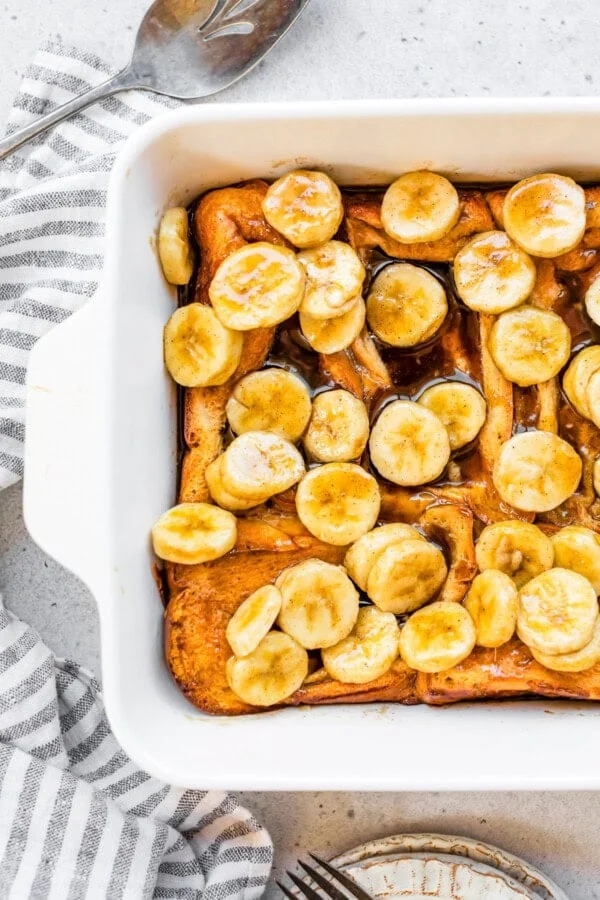
The culinary landscape continually evolves, blending classic comforts with modern convenience and health-conscious adaptations. A prime example of this gastronomic innovation is the emergence of the lighter, make-ahead overnight baked French toast casserole featuring a Bananas Foster topping, a dish designed to impress at seasonal gatherings such as Easter brunch or any special morning celebration. This dish, developed by renowned food blogger Gina Homolka of Skinnytaste, capitalizes on the growing demand for gourmet, yet accessible, home-cooked meals that minimize preparation time on the day of an event.

The Enduring Appeal of Overnight Breakfast Casseroles
Overnight breakfast casseroles have long been a staple for hosts aiming to serve a warm, substantial meal without the stress of morning-of preparations. The fundamental appeal lies in their ability to be assembled entirely the night before, allowing ingredients to meld and flavors to deepen, and then simply requiring baking the next day. This logistical advantage is particularly valuable for holidays like Easter, Christmas, or New Year’s Day, when hosts often juggle multiple tasks and desire to spend more time with guests rather than in the kitchen. The concept embraces efficiency, providing a delicious solution for entertaining without compromising on quality or flavor. Data from culinary trend reports frequently highlight the increasing consumer interest in meal preparation strategies that reduce weekday or event-day cooking demands, positioning overnight dishes as a practical and popular choice.

A Symphony of Flavors: French Toast Meets Bananas Foster
The brilliance of this particular casserole lies in its harmonious fusion of two beloved culinary traditions: classic French toast and the decadent Bananas Foster dessert.

- The Genesis of French Toast: French toast, known in France as "pain perdu" (lost bread), has roots stretching back to the Roman Empire, where it was conceived as a method to revive stale bread. Typically involving slices of bread soaked in an egg and milk mixture, then fried, it has evolved into a global breakfast favorite, celebrated for its versatility and comforting qualities. The use of challah bread in this casserole is a deliberate choice, as its rich, slightly sweet, and dense texture allows it to absorb the custardy mixture exceptionally well without becoming soggy, leading to a superior final product.
- The Legend of Bananas Foster: Bananas Foster, a quintessential New Orleans dessert, was created in 1951 by Paul Blangé, the chef at Brennan’s Restaurant, at the request of Owen Brennan. Named after Richard Foster, a friend of Owen Brennan and then-chairman of the New Orleans Crime Commission, the original recipe combines bananas, butter, brown sugar, cinnamon, dark rum, and banana liqueur, flambéed tableside and served over vanilla ice cream. Its rich, caramelized banana flavor profile, enhanced by the aromatic spices and spirits, has cemented its status as an iconic dessert. Adapting this indulgent topping for a breakfast dish elevates the humble French toast into a luxurious brunch centerpiece.
Innovation in the Kitchen: Crafting a Lighter, Healthier Version
The specific development of this Bananas Foster French Toast casserole by Gina Homolka reflects a broader trend in culinary arts: reinterpreting classic, rich dishes into lighter, yet equally flavorful, alternatives. Homolka’s inspiration for this particular recipe originated from a New Year’s Day gathering years ago. She had prepared her Lightened-Up Crème Brûlée French Toast, and her cousin, a self-described "dessert queen," spontaneously added a Bananas Foster topping. This unexpected pairing proved to be a revelation, prompting Homolka to embark on creating a lighter version of this combined dish.

Her approach involved strategic ingredient substitutions and portion control. Initially, she focused on reducing overall sugar content. In subsequent refinements, she transitioned to using monk fruit sweetener, a natural, zero-calorie alternative, further enhancing the recipe’s health-conscious profile without sacrificing sweetness. This iterative process of culinary development underscores the dedication to balancing indulgence with nutritional awareness. The resulting dish offers the comforting richness expected from a special occasion meal, while aligning with contemporary dietary preferences for reduced sugar and lighter options.
Nutritional Profile and Dietary Considerations

For those mindful of their dietary intake, the lightened-up Bananas Foster Topped Overnight French Toast Casserole presents a compelling option. Per serving (one slice with bananas), the dish provides approximately:
- Calories: 252 kcal
- Carbohydrates: 52 g
- Protein: 11 g
- Fat: 8 g
- Saturated Fat: 2 g
- Cholesterol: 195.5 mg
- Sodium: 285.5 mg
- Fiber: 2.5 g
- Sugar: 12 g
This nutritional breakdown demonstrates a conscious effort to offer a breakfast or brunch item that is more balanced than its traditional counterparts, which often contain significantly higher amounts of sugar and saturated fat. The protein content, primarily from eggs, contributes to satiety, while the fiber from bananas aids digestion. The careful selection of ingredients, such as challah bread for its ideal texture and monk fruit sweetener for its calorie-free sweetness, are key to achieving this favorable profile.

The Art of Preparation: A Step-by-Step Culinary Journey
The preparation of this casserole is divided into two distinct phases, optimizing convenience for the host.

-
Overnight Assembly: The initial phase involves preparing the French toast base. Cubes of challah bread are arranged in a baking dish. A rich custard mixture, typically composed of eggs, milk (often a lighter dairy option), vanilla extract, and cinnamon, is then poured evenly over the bread. The casserole is then covered and refrigerated overnight, allowing the challah to thoroughly absorb the eggy custard. This crucial overnight soak is what transforms the bread into a tender, pudding-like consistency, a hallmark of exceptional baked French toast. The cinnamon and vanilla infuse the bread with warm, inviting aromas, setting the stage for the next day’s flavors.
-
Morning Execution: On the morning of the event, the prepped casserole is transferred from the refrigerator directly into a preheated oven to bake. While the French toast bakes to a golden perfection, the Bananas Foster topping is freshly prepared. This involves sautéing sliced ripe bananas in a mixture of butter and monk fruit sweetener (or a minimal amount of brown sugar), along with cinnamon, until they are caramelized and tender. A splash of rum (or rum extract for an alcohol-free version) is often added at the end, providing the characteristic aromatic depth of Bananas Foster. The warm, gooey topping is then spooned generously over the baked French toast casserole just before serving. The contrast between the soft, custardy French toast and the warm, sweet, slightly saucy bananas creates a multi-textured and deeply flavorful experience.

Expert Endorsement and Broader Culinary Impact
Gina Homolka, the creator, has affirmed the recipe’s success, stating, "My family loves it," reflecting its high acceptance among taste testers. This anecdotal evidence, coupled with the recipe’s alignment with contemporary food trends, suggests a broader appeal. The dish effectively addresses several culinary demands: the desire for make-ahead convenience, the preference for lighter options without flavor compromise, and the aspiration to serve impressive, restaurant-quality brunch items at home.

The integration of such recipes into mainstream home cooking signifies a shift towards more sophisticated yet practical culinary practices. Food bloggers and recipe developers like Homolka play a pivotal role in democratizing gourmet cooking, making complex flavor profiles and elegant presentations accessible to the everyday cook. This particular casserole stands as a testament to how traditional indulgence can be thoughtfully re-engineered to meet modern lifestyles and health considerations.
Versatility, Serving Suggestions, and Storage

Beyond its primary role as a brunch centerpiece, the Bananas Foster Topped Overnight French Toast Casserole exhibits notable versatility. Its rich, dessert-like qualities make it suitable for serving as a sweet course at a dinner party, akin to a bread pudding.
- Variations and Tips: Home cooks can explore various modifications to customize the dish. Different types of sturdy bread, such as brioche or even a hearty sourdough, can be substituted for challah. A medley of other fruits, such as berries or sliced peaches, could be incorporated into the French toast base or served alongside the Bananas Foster topping. For dairy-free diets, almond or oat milk can replace traditional dairy. Flavor enhancements might include a pinch of nutmeg in the custard or a dash of orange zest in the Bananas Foster.
- Storage and Reheating: Proper storage ensures the longevity and enjoyment of leftovers. The baked French toast casserole, without the topping, can be stored in an airtight container in the refrigerator for up to three to four days. The Bananas Foster topping is best made fresh, but any leftover topping can be stored separately and gently reheated. For reheating the casserole, individual slices can be warmed in a microwave or oven until heated through, ensuring a quick and satisfying meal for subsequent days.
Broader Implications for Home Gastronomy

The popularity of dishes like the Bananas Foster Topped Overnight French Toast Casserole underscores several significant trends in contemporary home gastronomy. Firstly, it highlights the continued demand for make-ahead meal solutions that simplify entertaining and daily life. Secondly, it exemplifies the successful integration of health-conscious modifications into traditionally indulgent recipes, catering to a populace increasingly aware of nutritional impacts. Finally, it reinforces the trend of elevating home cooking to a gourmet level, allowing individuals to replicate sophisticated restaurant experiences within their own kitchens, often with a personalized, healthier twist. This dish not only promises a memorable culinary experience but also embodies the evolving philosophy of modern home cooking: delicious, convenient, and mindful.
