
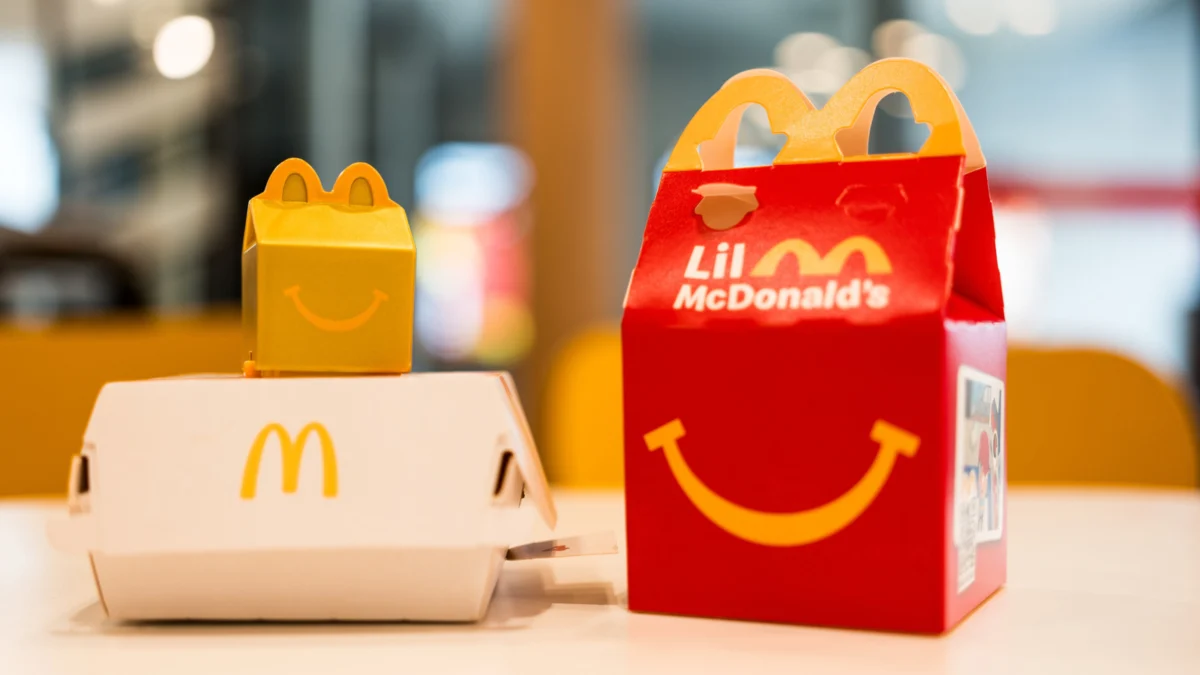
For millions of diners worldwide, the iconic red-and-yellow cardboard box of a McDonald’s Happy Meal is a staple of childhood nostalgia. However, recent viral social media trends have brought to light a design feature that has remained largely overlooked by a significant portion of the global customer base. Perforated edges lining the bottom of the packaging allow the box to be transformed into a functional, sturdy serving tray. While this design innovation has been available in select international markets for years, it has yet to see a widespread rollout in the United States, sparking a discussion regarding regional product development and consumer experience.
The Mechanics of the Perforated Tray
The feature is deceptively simple: a series of perforations around the base of the box allows a consumer to tear away the bottom portion, effectively creating a flat surface. This serves multiple purposes, primarily enhancing the ergonomics of the dining experience for children. By converting the deep box into a tray, the contents—typically a burger, a side of fries, and a beverage—become more accessible. This prevents the common issue of children struggling to reach into the depths of the carton, which often leads to spilled fries or unstable handling.
Furthermore, the flat tray provides a convenient platform for dipping sauces. In a traditional box, keeping a sauce packet upright or stable is difficult; on the converted tray, it remains stationary, reducing the likelihood of accidental spills. This design shift reflects an increasing focus by quick-service restaurants (QSRs) on the intersection of packaging design and functional convenience, ensuring that the physical limitations of takeout containers do not detract from the product experience.
A Chronology of the Happy Meal
The introduction of the Happy Meal in 1979 represented a watershed moment for the fast-food industry. Developed by Bob Bernstein, a Kansas City advertising executive, the concept was born from the observation of a simple behavioral pattern: children were often bored during breakfast and fixated on the imagery printed on their cereal boxes. Bernstein reasoned that if a box could provide entertainment during the first meal of the day, it could do the same for lunch.
Following its national launch in 1979, the Happy Meal quickly became the primary vehicle for McDonald’s marketing to families. The original design featured a "Circus Wagon" theme, complete with puzzles and jokes. Throughout the 1980s and 1990s, the brand solidified its dominance by partnering with major entertainment franchises, transforming the included toy from a simple novelty into a highly sought-after collectible.
By the late 1990s and into the 2000s, the Happy Meal underwent several structural shifts. In response to growing health concerns regarding child nutrition, McDonald’s began diversifying the contents of the meal. This included the introduction of apple slices, the reduction of fry portions, and the pivot away from soda as the default beverage, replacing it with milk or water. These changes were part of a broader corporate strategy to address public health criticisms and satisfy regulatory pressures in various international markets.
Global Disparities in Packaging Design
While the perforated tray feature is currently gaining traction through viral content, it is not a new invention. McDonald’s first introduced these modified boxes in the United Kingdom around 2017. The move was part of a larger initiative to modernize the brand’s packaging across European markets.
The disparity in availability between the United Kingdom and the United States highlights the complexities of global supply chain logistics. Packaging for McDonald’s is typically sourced regionally to maintain cost-effectiveness and adhere to local environmental regulations. Modifying the structural integrity of a box—ensuring it remains sturdy enough to hold weight while being perforated—requires precise engineering that must be validated across different manufacturing facilities. For the U.S. market, which operates at a significantly larger scale and utilizes different manufacturing infrastructure, the adoption of such a feature would require a massive overhaul of the existing supply chain, a factor that likely explains the current delay in domestic implementation.
Market Impact and Consumer Behavior
From a marketing perspective, the "hidden feature" serves as an unintentional but powerful tool for brand engagement. In an era where "unboxing" videos and social media demonstrations drive consumer trends, a physical feature that prompts users to share their experience provides organic, high-value advertising for the brand.
Data from recent years indicates that the Happy Meal remains a vital component of McDonald’s revenue. Despite fluctuations in the QSR industry, the company continues to sell approximately 5,000 Happy Meals every minute globally. This volume underscores the importance of even minor packaging refinements. When a brand improves the utility of a package, it directly correlates to improved customer satisfaction scores, as the friction of eating on-the-go is reduced.
The Broader Implications for QSR Sustainability
Beyond convenience, the evolution of the Happy Meal box touches upon the broader issue of packaging sustainability. In recent years, McDonald’s has made public commitments to transition to 100% renewable, recycled, or certified sustainable packaging by 2025. The perforated tray design serves as a case study in "smart packaging"—designing items that serve dual purposes without increasing the volume of material used.
By allowing the box to function as a tray, McDonald’s potentially reduces the need for additional plastic or paper serving platters, particularly in dine-in settings. As the industry faces increasing pressure to minimize single-use waste, the structural design of existing packaging is being scrutinized as heavily as the material composition. The integration of functional features that extend the utility of the packaging is a clear trend within the sector, as it aligns with both consumer desires for convenience and corporate environmental, social, and governance (ESG) goals.
Official Stance and Future Outlook
While McDonald’s has not issued a formal, widespread announcement regarding the introduction of the perforated tray to the North American market, industry analysts suggest that such changes are often rolled out in phases. The decision to implement this feature internationally was driven by a combination of customer feedback and a localized push to enhance the "diner experience."
Should the trend continue to gain momentum, it is probable that domestic franchise owners and corporate decision-makers will evaluate the cost-benefit analysis of transitioning to the perforated design. For now, the feature remains a point of curiosity for American consumers, who continue to observe the innovation through the lens of international social media content.
The transformation of the humble Happy Meal box into a serving tray is a small detail in the grand scheme of a global corporation’s operations, but it represents the ongoing evolution of fast food. It is a reminder that even the most established products are subject to constant refinement. As the lines between marketing, utility, and sustainability continue to blur, the "hidden" features of the items we consume are likely to become increasingly central to the consumer experience. Whether this specific feature will eventually grace the tables of American McDonald’s locations remains to be seen, but its existence serves as a clear indicator of how design can turn a routine meal into an interactive experience.
