
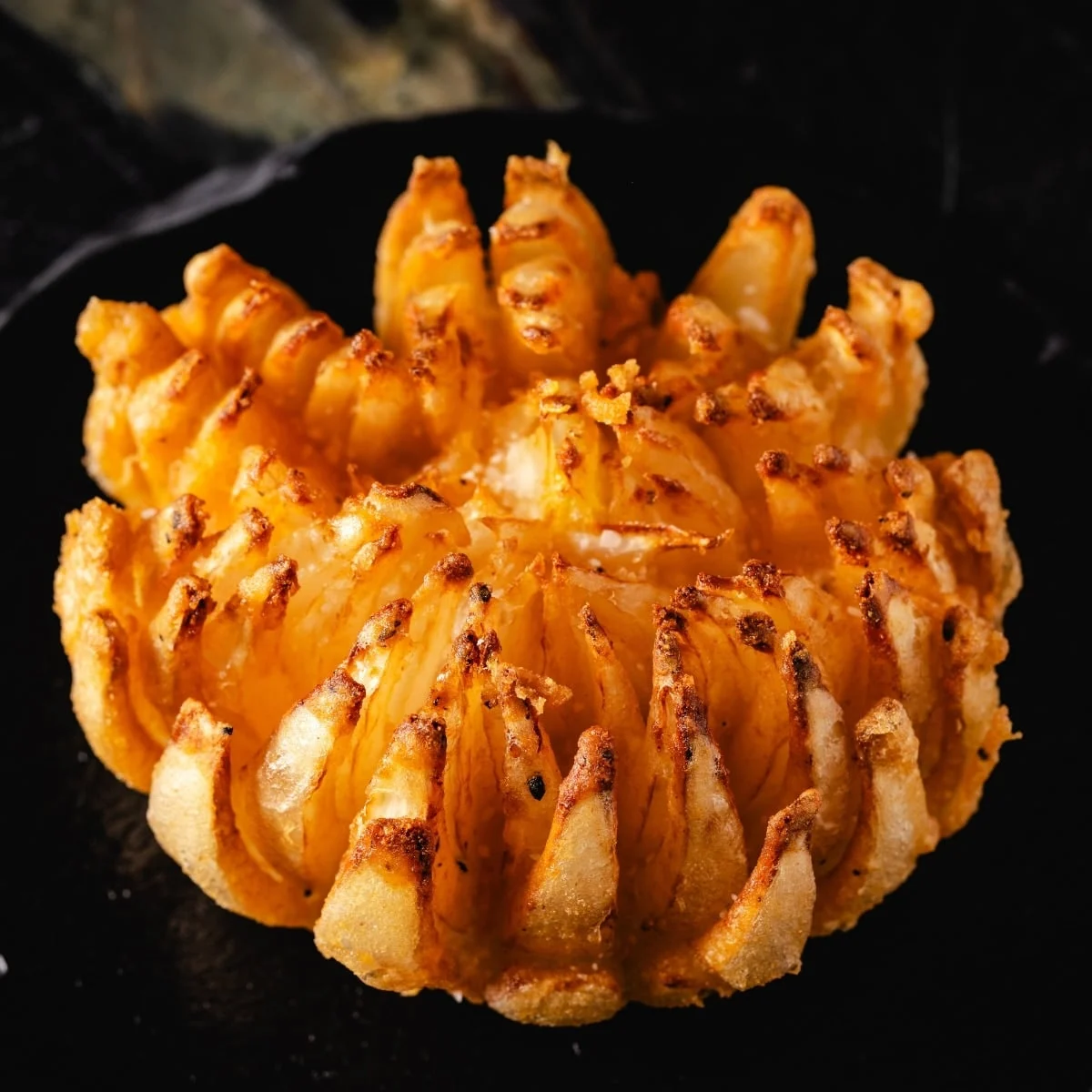
The culinary landscape of American backyard barbecue is currently witnessing a technical evolution as enthusiasts move beyond traditional slow-cooked meats toward sophisticated, multi-stage appetizers like the Smoke-Fried Onion Blossom. This dish, which combines the low-and-slow aromatic infusion of a wood-fired smoker with the high-heat crisping of a traditional deep fry, represents a growing trend in hybrid cooking methodologies. By utilizing the specific chemical properties of the Sweet Vidalia onion, culinary experts have developed a protocol that enhances the natural sugars of the vegetable through smoke exposure before stabilizing the structure with a golden, seasoned batter. This technique effectively bridges the gap between high-end steakhouse fare and accessible home-based outdoor cooking, providing a complex flavor profile that includes sweetness, savory smoke, and a distinct textural contrast.
The Evolution of the Blooming Onion in American Gastronomy
The conceptual precursor to the smoke-fried variant is the "blooming onion," a dish that gained national prominence in the late 1980s. While often associated with Australian-themed dining, the deep-fried, fanned-out onion is a quintessentially American innovation, credited largely to the founders of Outback Steakhouse in 1988. Since its inception, the dish has become a staple of casual dining, known for its high caloric density and visual appeal.
However, the modern barbecue movement has sought to refine this classic by introducing wood smoke into the preparation process. The shift toward "smoke-frying"—a two-step process where food is partially cooked or flavored in a smoker before being finished in hot oil—reflects a broader sophistication in the $4.4 billion barbecue equipment and supplies market. Consumers are increasingly seeking ways to maximize the utility of their pellet grills and offset smokers, moving away from a meat-centric focus to include complex vegetable-based sides and appetizers.

Botanical Specifications: The Role of the Vidalia Onion
The success of the Smoke-Fried Onion Blossom is heavily dependent on the raw material utilized: the Vidalia onion. Produced in a specific 20-county region in Georgia, the Vidalia is legally protected under the Vidalia Onion Act of 1986 and a Federal Marketing Order. These onions are uniquely low in sulfur, a result of the specific soil chemistry in the Georgia region, which prevents the development of the pungent, tear-inducing compounds found in standard yellow onions.
From a culinary perspective, the high sugar content of the Vidalia is critical for the smoking phase. As the onion is exposed to temperatures of 225 degrees Fahrenheit, these sugars undergo a slow caramelization process. Simultaneously, the porous nature of the onion’s layers allows for the absorption of guaiacol and syringol—the primary organic compounds responsible for the "smoky" flavor profile. This pre-treatment ensures that the final product is not merely a fried vegetable, but a deeply flavored botanical component that complements the rich profiles of smoked proteins like brisket or ribeye steak.
Technical Chronology and Methodology
The production of a Smoke-Fried Onion Blossom follows a precise chronological sequence designed to maintain structural integrity while maximizing flavor penetration. The process is divided into three distinct phases: preparation, thermal infusion, and final stabilization.
Phase I: Structural Preparation
The process begins with a large Sweet Vidalia onion. The root end is kept intact to serve as a structural anchor, while the top is removed. A series of vertical cuts are made around the circumference, typically resulting in 12 to 16 petals. This mechanical "blossoming" increases the surface area exposed to both smoke and batter. Following the cuts, the onion is seasoned with a dry barbecue rub, which often contains paprika, salt, and garlic powder, serving as the initial flavor base.

Phase II: Thermal Smoke Infusion
The prepared onion is placed in a smoker preheated to 225 degrees Fahrenheit (107 degrees Celsius). This phase lasts approximately 45 minutes. Unlike traditional meat smoking, which targets specific internal temperatures, the objective here is "softening and fanning." The gentle heat breaks down the cellular walls of the onion just enough to allow the petals to spread outward, creating the "blossom" shape, while the smoke particles adhere to the exterior surfaces.
Phase III: Batter Application and Flash Frying
Once the onion has reached the desired level of pliability and smoke absorption, it is removed from the heat. It is then coated in a specialized batter mix—often a blend of flour, cornstarch, and spices—designed to adhere to the moisture released during the smoking phase. The final step involves submerging the onion in frying oil heated to 350 degrees Fahrenheit (177 degrees Celsius). This flash-frying stage lasts only three to four minutes, just long enough to dehydrate the batter and trigger the Maillard reaction, resulting in a golden-brown, crispy exterior.
Supporting Data and Nutritional Analysis
While the Smoke-Fried Onion Blossom is an indulgent appetizer, its nutritional profile varies based on the specific batter and oil used. According to data provided by Hey Grill Hey, a leading authority in outdoor cooking, a standard serving (approximately one-quarter of a large onion) contains the following estimated values:
- Calories: 163 kcal
- Carbohydrates: 37 g
- Protein: 2 g
- Fat: 0.1 g (excluding absorption from frying oil)
- Sodium: 672 mg
- Potassium: 197 mg
- Sugar: 8 g
- Vitamin C: 8 mg
The relatively low fat content in the base calculation highlights that the majority of the caloric density is derived from the carbohydrates in the batter and the subsequent oil absorption during the frying process. However, the use of the smoking phase as a "pre-cook" can actually reduce the total time the onion needs to spend in the deep fryer compared to raw-fried versions, potentially limiting overall oil uptake.

Market Trends and Industry Impact
The rise of recipes like the Smoke-Fried Onion Blossom is indicative of a larger shift in the American culinary landscape. Data from the Hearth, Patio & Barbecue Association (HPBA) suggests that nearly 70% of U.S. adults own a grill or smoker. Within this demographic, there is a documented increase in "experimental grilling."
Industry experts, including Susie Bulloch, founder of the BBQ brand Hey Grill Hey, have noted that the "Backyard BBQ Hero" culture is driven by the desire to replicate professional steakhouse experiences at a fraction of the cost. "When you finally nail that backyard steak method," Bulloch notes, "you want the perfect side to go with it." This sentiment reflects a broader economic trend where consumers are shifting their discretionary spending toward high-quality home ingredients and specialized equipment to avoid the rising costs of premium dining establishments.
The "Hey Grill Hey" platform, which hosts over 750 BBQ-related recipes, has seen significant engagement with hybrid recipes that utilize both the smoker and the kitchen or outdoor fryer. This suggests that the modern barbecue enthusiast is no longer a "purist" dedicated only to long smoke times, but a "utilitarian" who uses various heat sources to achieve specific textural outcomes.
Broader Implications and Culinary Analysis
The Smoke-Fried Onion Blossom represents more than just a successful appetizer; it is a case study in the physics of heat transfer in cooking. By using convection (smoke) and then conduction/convection (frying), the cook manages the moisture content of the vegetable with high precision. The initial smoke phase removes just enough internal moisture to prevent the final product from becoming "soggy," a common failure in traditional onion rings or blossoms.

Furthermore, the social aspect of the dish cannot be overlooked. The "blossom" is designed for communal consumption, with individual petals easily detached for dipping. This aligns with the historical role of barbecue as a social, community-driven event. The inclusion of complementary sauces, such as a BBQ ranch dressing—which combines the acidity of buttermilk with the smokiness of a barbecue rub—completes the flavor circuit, providing a balance of fat, acid, salt, and heat.
As outdoor cooking technology continues to advance, with the integration of WiFi-enabled pellet grills and precision induction fryers, the barrier to entry for complex dishes like the Smoke-Fried Onion Blossom will continue to lower. This democratization of professional culinary techniques ensures that the backyard remains a primary site of gastronomic innovation in the United States.
In conclusion, the Smoke-Fried Onion Blossom stands as a testament to the versatility of the Vidalia onion and the ingenuity of the modern pitmaster. By applying a scientific approach to temperature and timing, home cooks can transform a humble root vegetable into a sophisticated centerpiece that rivals the output of commercial kitchens. The continued popularity of such dishes signals a vibrant future for the American barbecue tradition, characterized by a willingness to experiment and a commitment to the craft of flavor development.
