
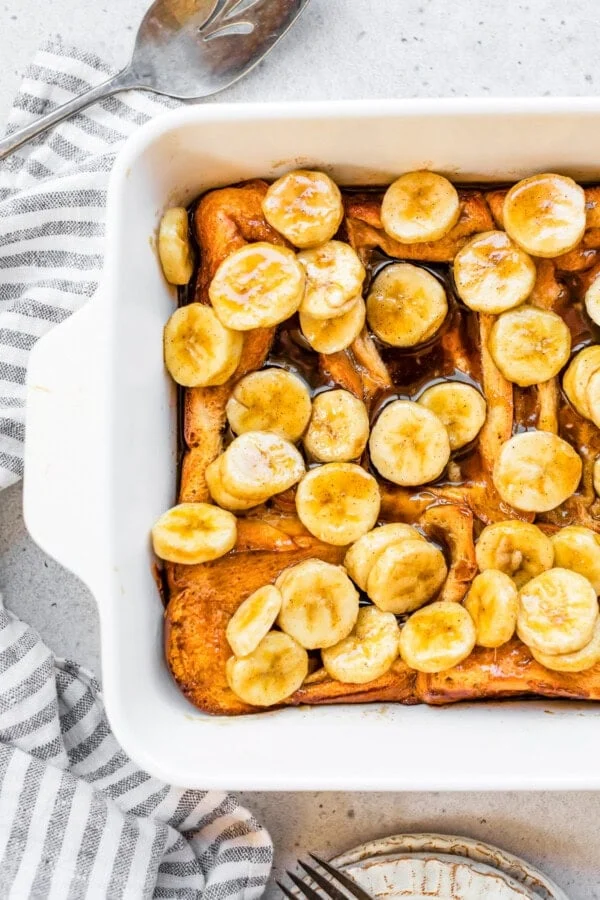
A distinctive culinary offering, the Lighter, Make-Ahead Overnight Baked French Toast Casserole with Bananas Foster, has garnered significant attention for its innovative approach to traditional brunch fare. This dish, celebrated for its convenience and indulgent yet health-conscious profile, presents a compelling option for special occasions such as Easter morning, holiday brunches, or any gathering seeking an elevated breakfast experience. Its design emphasizes preparation ease without compromising on gourmet flavor, leveraging an overnight soaking process to achieve a deeply infused, custardy texture, crowned with a meticulously crafted Bananas Foster topping.

The Genesis of a Culinary Innovation: Blending Tradition with Modern Health Consciousness
The concept for this unique French toast casserole originated from a desire to transform a beloved, often calorically dense, classic into a more accessible and health-aligned option. The inspiration behind the Bananas Foster topping component is attributed to a family gathering, where a crème brûlée French toast served with a rich Bananas Foster accompaniment sparked the idea for a lighter adaptation. This pivotal moment led to an extensive re-engineering of the topping, focusing on reducing sugar content—initially through sugar reduction, and later by incorporating monk fruit sweetener—while retaining the characteristic depth of flavor and caramelized notes. This iterative development process underscores a broader trend in contemporary cuisine: the reinterpretation of comfort foods to align with evolving dietary preferences and health goals.
The dish’s foundation is rooted in the classic overnight baked French toast casserole. This method strategically employs challah bread, renowned for its rich, slightly sweet, and absorbent crumb, which allows it to thoroughly soak up an eggy custard infused with vanilla and cinnamon over several hours. This prolonged marination is crucial, transforming the bread into a tender, pudding-like consistency that bakes to perfection, achieving a golden-brown crust and a creamy interior. The beauty of the overnight preparation lies in its capacity to streamline morning routines, freeing hosts to focus on other aspects of entertaining, thereby enhancing the overall dining experience for guests.

Historical Context: The Evolution of Brunch Staples
To fully appreciate the innovation of this casserole, it is beneficial to consider the historical trajectories of its primary components. French toast, a dish with origins dating back to the Roman Empire, was initially conceived as a practical means to utilize stale bread, preventing waste. Over centuries, it evolved from a humble, often savory, preparation to the sweet, syrup-drenched staple recognized today. Its journey through various cultures and culinary traditions highlights its enduring appeal as a versatile and comforting meal.
Bananas Foster, on the other hand, boasts a more precise and glamorous origin. Created in 1951 by Paul Blangé at Brennan’s restaurant in New Orleans, the dish was named after Richard Foster, then chairman of the New Orleans Crime Commission and a friend of restaurant owner Owen Brennan. The original recipe featured bananas sautéed in butter, brown sugar, and rum, then flambéed and served over vanilla ice cream. This iconic dessert quickly became a symbol of New Orleans’ opulent culinary scene, known for its dramatic presentation and rich, intoxicating flavors.

The fusion of these two distinct culinary traditions into a single, lightened-up, make-ahead casserole represents a modern synthesis. It marries the rustic charm and comforting familiarity of French toast with the sophisticated, celebratory flair of Bananas Foster, all while addressing contemporary desires for healthier eating.
Culinary Craftsmanship and Nutritional Considerations
The meticulous selection of ingredients and precise execution of cooking techniques are central to the casserole’s success. The challah bread, specifically chosen for its brioche-like texture and capacity for absorption, ensures that each piece becomes thoroughly saturated with the vanilla-cinnamon custard. This custard, typically comprising eggs, milk (or a dairy alternative), vanilla extract, and a touch of cinnamon, forms the backbone of the French toast’s flavor profile. The overnight chilling period is not merely for convenience; it allows the bread to fully hydrate, preventing a dry interior and ensuring a consistently tender texture throughout the baked dish.

Upon baking, the casserole develops a slightly crisp exterior and a custardy interior, akin to a bread pudding. This dual texture provides a satisfying contrast that is further enhanced by the Bananas Foster topping. The topping itself is a careful balance of ripe bananas, a reduced-sugar caramel sauce (often achieved with monk fruit sweetener or a minimal amount of brown sugar), and a hint of warmth from spices, frequently including a touch of rum extract or a non-alcoholic flavoring to mimic the original’s depth without the alcohol content. This lighter rendition preserves the signature sweetness and complexity of Bananas Foster, delivering a decadent experience without the customary caloric burden.
According to the provided nutritional data for a single serving (one slice with bananas), the dish contains approximately 252 kilocalories (kcal), 11 grams of protein, 8 grams of fat (including 2 grams of saturated fat), 195.5 milligrams of cholesterol, 285.5 milligrams of sodium, 2.5 grams of fiber, and 12 grams of sugar. These figures position it as a comparatively lighter option for a celebratory breakfast or brunch, particularly when juxtaposed against traditional, full-sugar versions of similar dishes, which can often exceed 500-600 calories per serving. The higher protein content, primarily from the eggs, also contributes to increased satiety, a desirable characteristic for any meal.

The Appeal of "Make-Ahead" for Modern Lifestyles
The "make-ahead" attribute of this casserole is a significant factor in its growing popularity. In an era where time is a precious commodity, especially during holidays or special occasions, recipes that allow for substantial preparation in advance are highly valued. The ability to assemble the French toast base the night before and simply bake it in the morning alleviates much of the stress associated with hosting. This logistical advantage not only simplifies meal preparation but also allows hosts to be present and engaged with their guests rather than confined to the kitchen.
This trend towards convenient, yet gourmet, cooking is reflected in broader consumer behavior. Data from various food industry reports indicate a steady rise in demand for meal solutions that offer both ease and quality. Overnight casseroles, slow-cooker recipes, and pre-prepped meal kits all speak to this preference, demonstrating a market that prioritizes efficiency without sacrificing culinary standards.

Broader Impact and Implications for Home Cooking
The emergence and positive reception of dishes like the Lighter, Make-Ahead Overnight Baked French Toast Casserole with Bananas Foster signal several important implications for contemporary home cooking and the food industry at large.
Firstly, it underscores the persistent demand for "lightened-up" comfort foods. Consumers are increasingly seeking healthier alternatives to their favorite indulgent dishes, driven by a greater awareness of nutritional content and a desire for balanced eating. This casserole exemplifies how classic recipes can be successfully adapted to meet these demands through clever ingredient substitutions and thoughtful preparation methods.

Secondly, it highlights the enduring appeal of brunch culture. Brunch has evolved beyond a simple meal; it is an experience, a social occasion that blends the best of breakfast and lunch. Dishes that offer both visual appeal and complex flavors, while also being manageable for a home cook, are perfectly positioned to thrive within this culinary niche. The Bananas Foster topping, with its inherently celebratory nature, elevates the humble French toast into a show-stopping centerpiece.
Thirdly, the recipe’s viral spread within online culinary communities, such as food blogs and social media platforms, demonstrates the power of digital influence in shaping food trends. Platforms like Skinnytaste, where this recipe gained prominence, serve as crucial conduits for disseminating innovative recipes and fostering a community of engaged home cooks who actively seek out and share such culinary solutions.

Finally, the casserole’s versatility suggests its potential to inspire further innovation. Its success may encourage other chefs and home cooks to experiment with similarly complex flavor profiles and make-ahead techniques, leading to a broader expansion of convenient yet sophisticated breakfast and brunch options. This continuous cycle of adaptation and innovation is a hallmark of a dynamic culinary landscape, where tradition is constantly reinterpreted through the lens of modern preferences and possibilities.
In conclusion, the Lighter, Make-Ahead Overnight Baked French Toast Casserole with Bananas Foster is more than just a recipe; it is a testament to the evolving art of home cooking. It skillfully blends historical culinary traditions with contemporary health consciousness and convenience, offering a delectable and practical solution for memorable meal experiences. Its success reflects a discerning public’s appetite for dishes that deliver on both flavor and functionality, setting a new benchmark for accessible gourmet dining.
