
The intersection of sugar and nut proteins has long served as the cornerstone of American holiday confectionery, yet few regional delicacies carry the historical weight and culinary specificity of Oklahoma nut candy. Often referred to colloquially as Aunt Bill’s Brown Candy, this dense, praline-adjacent confection has remained a cultural touchstone in the Southern United States for nearly a century. While the recipe relies on a rudimentary foundation of heavy cream, granulated sugar, and a blend of nuts, the technical precision required to achieve its signature fudgy texture elevates it from a simple kitchen project to a significant piece of regional culinary heritage.
Historical Chronology and Origins
The narrative of Oklahoma nut candy is rooted in the social fabric of the 1930s. The recipe first gained widespread public recognition in 1936, when it was featured in a local Oklahoma newspaper. During the Great Depression, home cooks were forced to innovate with limited pantry staples. This era of austerity prioritized ingredients that provided high caloric density and long shelf lives. The resulting candy—a mixture of caramelized sugars and creamed fats—offered a luxurious sensory experience during a period defined by economic hardship.
By the 1940s and 1950s, the recipe had become a staple of community cookbooks and church bake sales throughout the Sooner State. The moniker "Aunt Bill’s Brown Candy" is widely believed to have originated from a specific local matriarch whose version of the recipe gained such notoriety that the name became synonymous with the dish itself. This phenomenon of "community-owned" recipes is a hallmark of Southern culinary culture, where attribution often shifts from original authors to the individuals who most frequently prepared the dish for public gatherings.
The Chemistry of Perfection
From a technical perspective, the production of Oklahoma nut candy is an exercise in heat management and sucrose crystallization. The process begins with the careful melting of sugar, which serves as the base for the confection. Culinary experts note that the transition from a granulated state to a smooth, creamy finish requires a slow, controlled temperature increase. If the heat is applied too rapidly, the sucrose molecules bind in a way that encourages the formation of large crystals, resulting in a brittle, grainier texture rather than the intended fudgy mouthfeel.
A critical juncture in the preparation is the incorporation of baking soda. This alkaline agent reacts with the acidic components of the heavy cream and sugar mixture, creating a subtle aeration that contributes to the candy’s final density. Furthermore, the addition of butter and vanilla acts as an emulsifier and aromatic stabilizer, respectively. A notable procedural requirement is the cooling period, which typically spans approximately 20 minutes before the integration of the nuts. This rest period is essential for the viscosity of the mixture to reach an optimal state, ensuring that the nuts are suspended evenly throughout the candy rather than settling at the bottom of the cooling tray.
Nut Selection and Flavor Profiling
While the traditional recipe leans heavily on the pairing of walnuts and pecans, the flexibility of the formula allows for significant variation. Walnuts provide a robust, earthy undertone that complements the sweetness of the sugar, while pecans offer a buttery, oleaginous richness that defines the Southern palate.
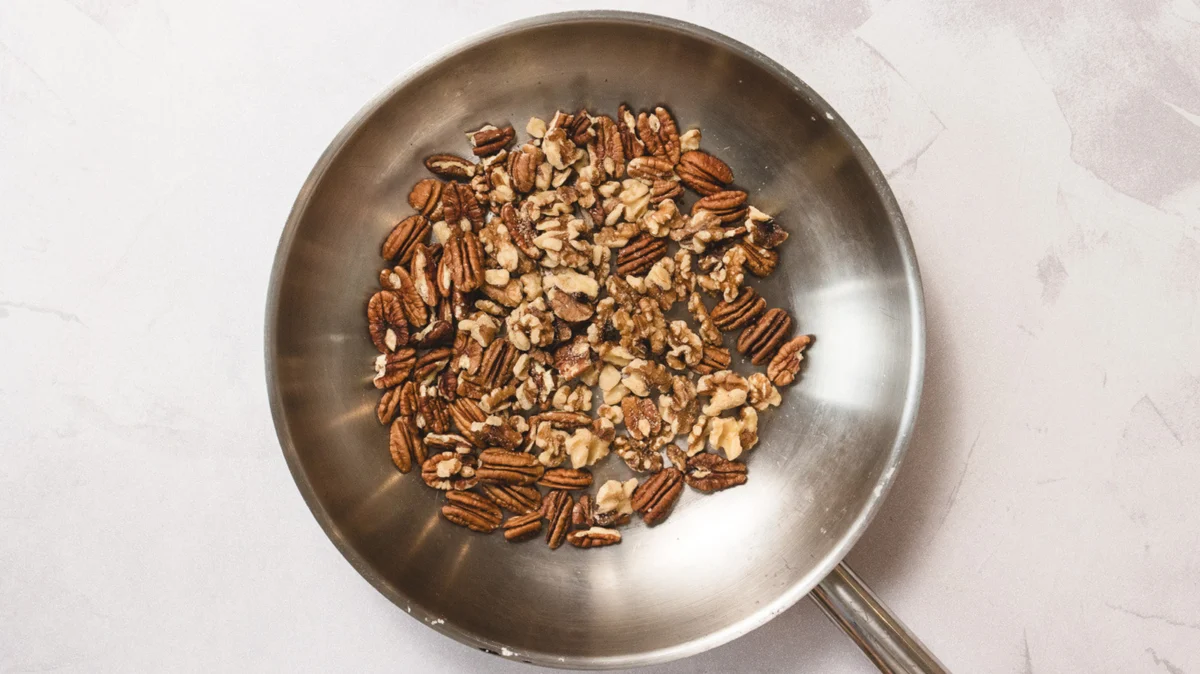
Data from the culinary sector suggests that toasting these nuts in a dry skillet for five to seven minutes—until the essential oils are released and the nuts achieve a deep golden hue—is not merely a stylistic choice but a necessary step for flavor development. The Maillard reaction, which occurs during this toasting process, creates complex flavor compounds that balance the overwhelming sweetness of the sugar base. While purists insist on the walnut-pecan blend, modern adaptations have successfully incorporated macadamia nuts for a softer texture or peanuts for a more pronounced salt-to-sweet contrast.
Broader Impact on Culinary Traditions
The survival of Oklahoma nut candy in the digital age speaks to the broader trend of "nostalgia-driven" cooking. In an era where commercial confectionery is dominated by mass-produced, shelf-stable items, the act of preparing candy from scratch serves as a connective tissue to past generations. Food historians argue that these traditions persist because they function as a sensory bridge, allowing contemporary cooks to experience the same domestic rituals as their ancestors.
The economic implications of this tradition are largely localized. While not a commercial powerhouse on the scale of major chocolate manufacturing, the persistence of the recipe contributes to a vibrant ecosystem of regional artisanal production. Small-batch candy makers often highlight their adherence to the 1936 methodology as a competitive advantage, signaling quality and authenticity to consumers who prioritize traditional manufacturing methods over industrial alternatives.
Comparative Analysis of Confectionery Techniques
When compared to other traditional Southern confections, such as pralines or old-fashioned toffee, Oklahoma nut candy occupies a unique middle ground. Unlike pralines, which rely on a higher ratio of sugar to cream and a more granular crystalline structure, the Oklahoma variety emphasizes a smoother, more opaque consistency. Similarly, while toffee requires the achievement of the "hard crack" stage (typically 300°F), Oklahoma nut candy is far more forgiving, requiring lower internal temperatures to prevent the mixture from hardening into a brittle mass.
This technical accessibility makes it a preferred entry point for beginner candy makers. However, the requirement for precise temperature monitoring remains a barrier to entry for the inexperienced. The use of a digital thermometer is frequently recommended in modern interpretations of the recipe to ensure that the sugar does not exceed the threshold where it would transition from a fudge-like state to a hard-set candy.
Expert Recommendations and Best Practices
Professional recipe developers emphasize that the quality of the raw ingredients is the most significant variable in the final outcome. The use of genuine heavy cream—rather than reduced-fat milk or dairy substitutes—is non-negotiable for achieving the correct fat content and mouthfeel.
Regarding storage and preservation, the candy’s density is its primary advantage. Once sliced, the confection can remain shelf-stable in an airtight container at room temperature for several days, though refrigeration is advised for extended storage. In a controlled environment, such as a vacuum-sealed or airtight container within a refrigerator, the product can retain its integrity for up to two weeks. For those intending to prepare the candy well in advance of the holiday season, the freezer remains a viable option, with the product maintaining its structural and flavor profile for up to two months.
The Role of Innovation in Traditional Recipes
While there is a strong cultural push to preserve the "original" 1936 recipe, there is also a documented movement toward subtle innovation. The addition of flaky sea salt, for example, has become a popular modern adjustment. This addition addresses the contemporary preference for "salted sweets," providing a sharp contrast that mitigates the potential for the candy to become cloying. Similarly, the trend of drizzling dark chocolate over the finished product reflects a broader interest in the "turtle" flavor profile, which combines caramel, nuts, and chocolate.
Despite these potential enhancements, there remains a consensus among traditionalists that the recipe should be approached with restraint. The joy of the candy lies in its simplicity and its reflection of an era that prioritized efficiency and flavor over complexity. Over-complicating the base recipe risks stripping away the very qualities that have allowed it to endure for nearly 90 years.
Conclusion
The story of Oklahoma nut candy is a testament to the resilience of regional culinary traditions. From its humble inception in a 1930s newspaper to its status as a beloved holiday staple, the confection serves as a case study in how simple, high-quality ingredients can define the character of a region. By balancing historical accuracy with modern technical understanding, the home cook can continue to uphold this tradition, ensuring that the legacy of Aunt Bill’s Brown Candy remains a permanent feature of the Southern holiday table. As the culinary landscape continues to evolve, the preservation of such recipes remains vital, serving as a reminder of the craftsmanship that defined the kitchens of the past.
