
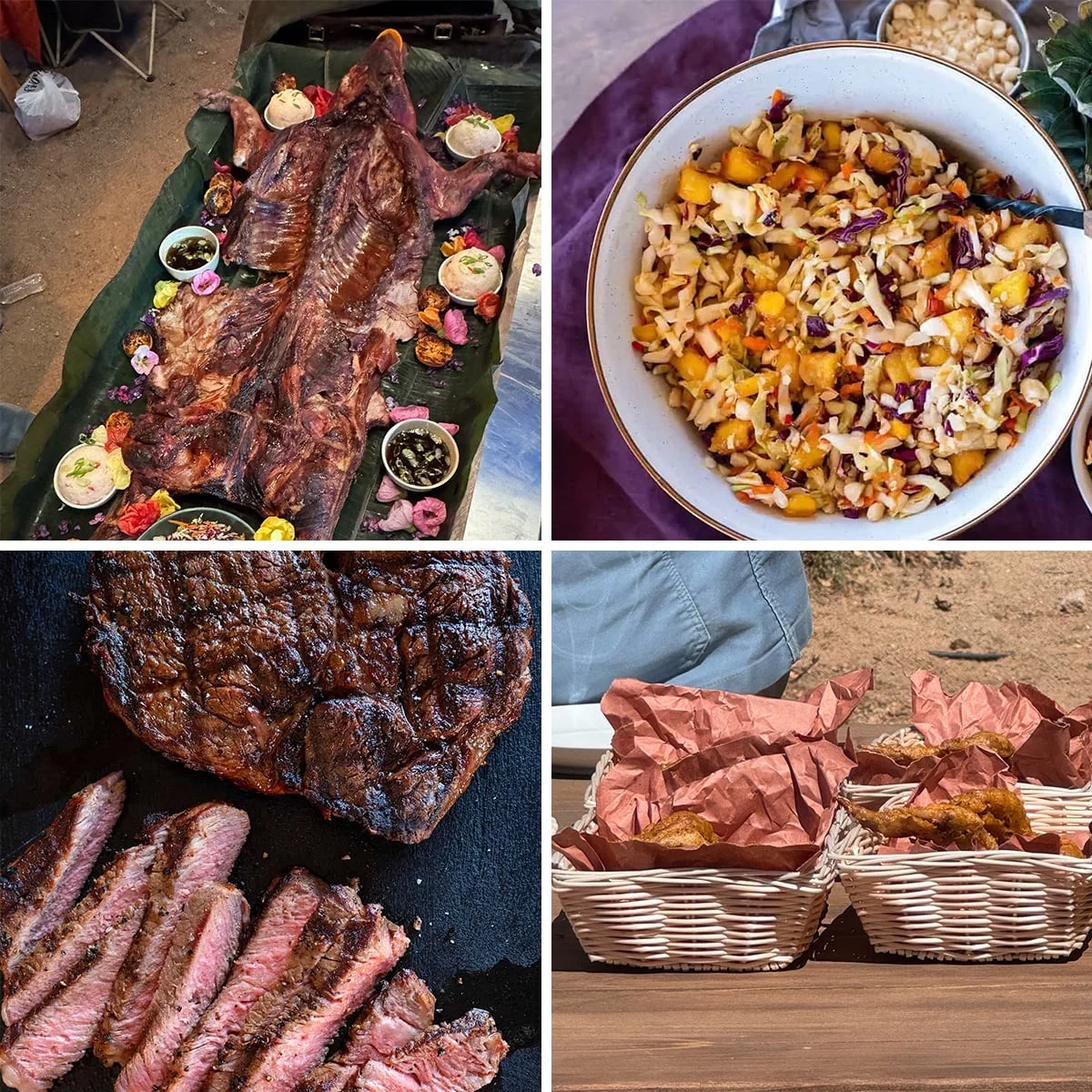
The seventh episode of the Food Network’s competitive barbecue series, Pitmasters, marked a pivotal juncture in the season, narrowing the field to the final three teams. Featuring renowned pitmasters Christie Vanover of Girls Can Grill and the Hey Grill Hey team, the episode centered on the technical demands of a nine-hour whole hog cook, supplemented by spontaneous lunch service challenges. This stage of the competition, which carried an $8,000 prize for the winning hog and a guaranteed position in the series finale, represents the apex of current televised culinary competitions, where traditional techniques meet the rigorous time constraints of a production environment.

The Technical Rigor of the Whole Hog Challenge
The core of the seventh episode was the "Big Burn," a challenge requiring teams to execute a whole hog roast over an open fire. According to culinary experts and judge Andrew Zimmern, the whole hog remains one of the most demanding trials in professional barbecue, requiring the chef to balance the distinct cooking profiles of the belly, ham, loin, ribs, and shoulder simultaneously. Unlike traditional competitive smoking, which often utilizes enclosed smokers to maintain consistent ambient temperatures, the contestants in this episode were tasked with an open-fire method using an asado cross.
An asado cross is an Argentinian-style iron frame that holds the animal in an upright, butterflied position. Because the technique relies on direct heat from coals rather than convective heat trapped in a chamber, it offers minimal margin for error. The absence of a lid exposes the meat to ambient weather conditions, including fluctuations in wind and air temperature, which can significantly alter the moisture retention and cooking time of the various muscle groups. The teams were required to manage these variables over a strict nine-hour window, requiring constant monitoring of the heat source and frequent rotations of the animal to ensure uniform heat distribution.

Chronology of the Competition
The episode followed a fast-paced timeline designed to test both endurance and adaptability. At the outset, teams were tasked with the primary objective of the whole hog. However, two hours into the cook, the judges introduced a "Flash Burn"—an unannounced lunch service challenge that forced teams to pivot away from their primary projects.
The lunch requirements were highly specific, with individual judges requesting different protein-based dishes. Ernest Servantes requested grilled chicken wings, Andrew Zimmern demanded a meatball sub, and Big Moe Cason requested a barbecue pork burger incorporating specific aromatics. Teams were granted 90 minutes to execute these orders, adding a significant layer of operational complexity to their primary nine-hour roast.

Following the initial lunch challenge, a secondary "double Flash Burn" was introduced by judge Jess Pryles, who requested a perfectly prepared ribeye steak to be served within a 30-minute window. This required the teams to balance the ongoing monitoring of the whole hog—which required constant mopping to prevent the exterior from drying out—with the high-precision requirements of searing a premium steak over an open fire.
Analysis of Culinary Methodology
The teams chose a variety of approaches to the hog challenge, with the team of Vanover and Hey Grill Hey opting for a Filipino-inspired adobo flavor profile. This approach utilized a marinade of soy sauce, vinegar, salt, and sugar. This choice of flavor profile is notable for its chemical interaction with pork; the acidity of the vinegar helps to break down muscle fibers while the sugars facilitate caramelization over the fire.

The teams’ reliance on an asado cross, while traditional, proved to be a high-risk strategy compared to the alternative of a cinderblock, closed-environment setup. In competitive barbecue, the cinderblock method is often favored for its ability to simulate an "underground" roast, effectively insulating the meat from the elements. The teams that opted for the open-cross method faced significant challenges as the weather cooled, forcing them to move the meat closer to the heat source to ensure the hams and shoulders reached the necessary internal temperatures for safe consumption and optimal texture.
Evaluation and Results
The judging phase focused on technical execution, presentation, and flavor consistency across all five primary sections of the hog. The judges noted that while the tenderloins were well-prepared, the thickness and density of the shoulders and hams remained a challenge for all participants. The skin, however, was a highlight of the evaluation, with judges observing the successful rendering of fat and the creation of a desirable, crispy texture.

John and Connie were ultimately declared the winners of the pork challenge, securing the $8,000 prize and a confirmed spot in the upcoming season finale. The departure of the team representing Girls Can Grill and Hey Grill Hey marked the conclusion of their seven-episode run. Despite the elimination, the episode highlighted a notable demographic shift in the competition, with women representing a significant portion of the final contestants—a development in a field that has historically seen lower female representation in high-level live-fire cooking competitions.
Broader Impact on the Competitive Barbecue Industry
The success of these teams in reaching the final three underscores the evolution of competitive barbecue from a niche, regional practice into a highly analyzed and professionalized culinary discipline. The use of specific tools, such as instant-read meat thermometers, and the application of scientific principles to the cooking process (such as the "meat science" approach advocated by judge Jess Pryles) reflect the increasing demand for precision in the sport.

Furthermore, the integration of traditional, culturally specific techniques—such as the Filipino adobo method—into the competitive circuit highlights a broader trend of culinary fusion. By blending established barbecue standards with global flavor profiles, competitors are expanding the definition of what constitutes "competition-ready" barbecue.
The series is set to conclude with a final episode featuring the remaining teams. This finale will determine the ultimate winner of the competition and the recipient of the title of Pitmaster. The production has maintained high viewership numbers, reflecting sustained public interest in the labor-intensive, tradition-steeped world of professional barbecue. The final episode is scheduled to air on the Food Network, with streaming options available on platforms including Max and Discovery+. The conclusion of this season leaves a lasting impression on the industry, reinforcing the value of technical skill, historical technique, and the ability to innovate under extreme environmental and time-sensitive pressures.
