
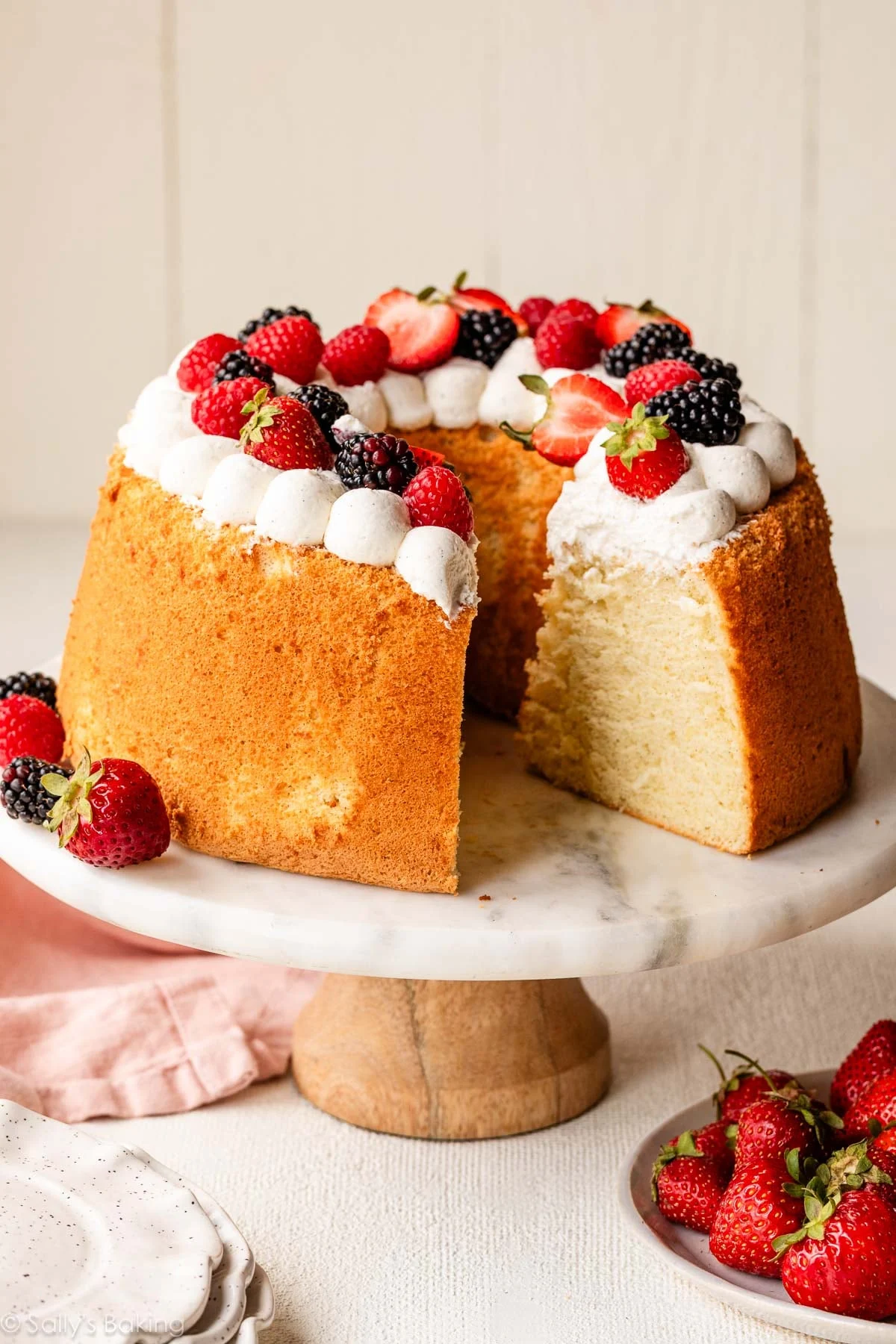
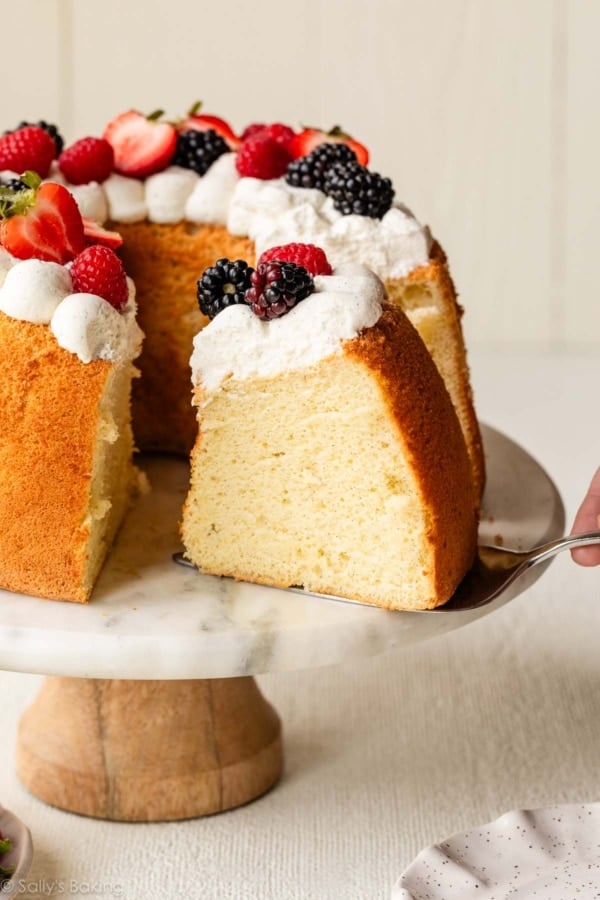
The chiffon cake stands as a testament to baking ingenuity, a culinary marvel celebrated for its ethereal lightness, exquisite moisture, and delicate richness. Often lauded as one of the most elegant cakes achievable from scratch, it masterfully marries the cloud-like softness typically associated with angel food cake with the profound tenderness and satisfying richness of a traditional butter cake. This unique duality is achieved through a precise blend of ingredients and techniques, primarily leveraging the power of whipped egg whites and the distinctive properties of oil within its batter. Whether presented in its pristine form, adorned simply with fresh berries and a dollop of whipped cream, or elevated into an impressive multi-layered centerpiece, this timeless recipe consistently yields a confection that is tall, fluffy, and remarkably soft, maintaining its delicate texture for days.
A Hybrid Masterpiece: Defining the Chiffon Cake
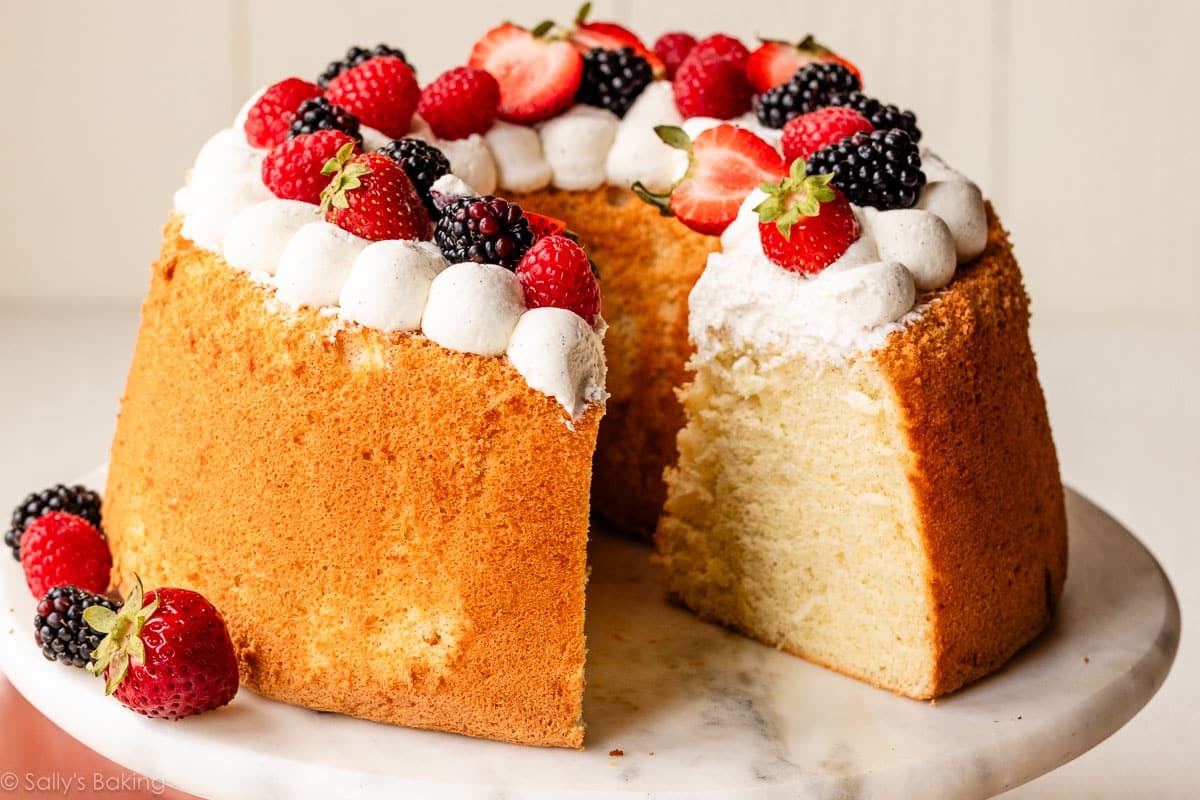
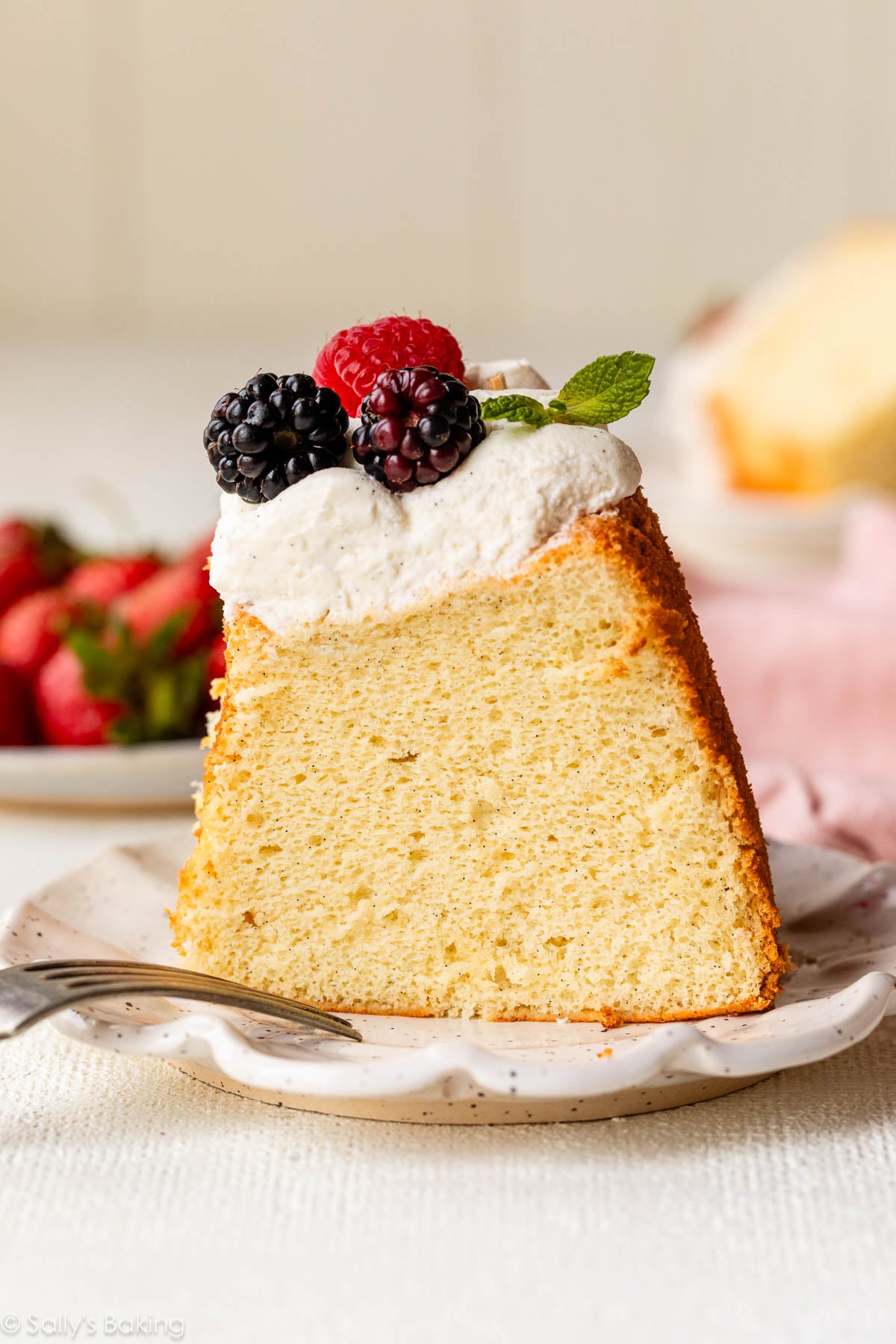
For those unfamiliar with its charms, the chiffon cake offers a truly remarkable treat. It distinguishes itself as an incredibly light, airy sponge cake, characterized by a soft, tender crumb and a subtly rich flavor profile. Its architectural brilliance lies in its identity as a hybrid, ingeniously borrowing the most desirable qualities from both the fat-free angel food cake and the fat-rich traditional butter cake.
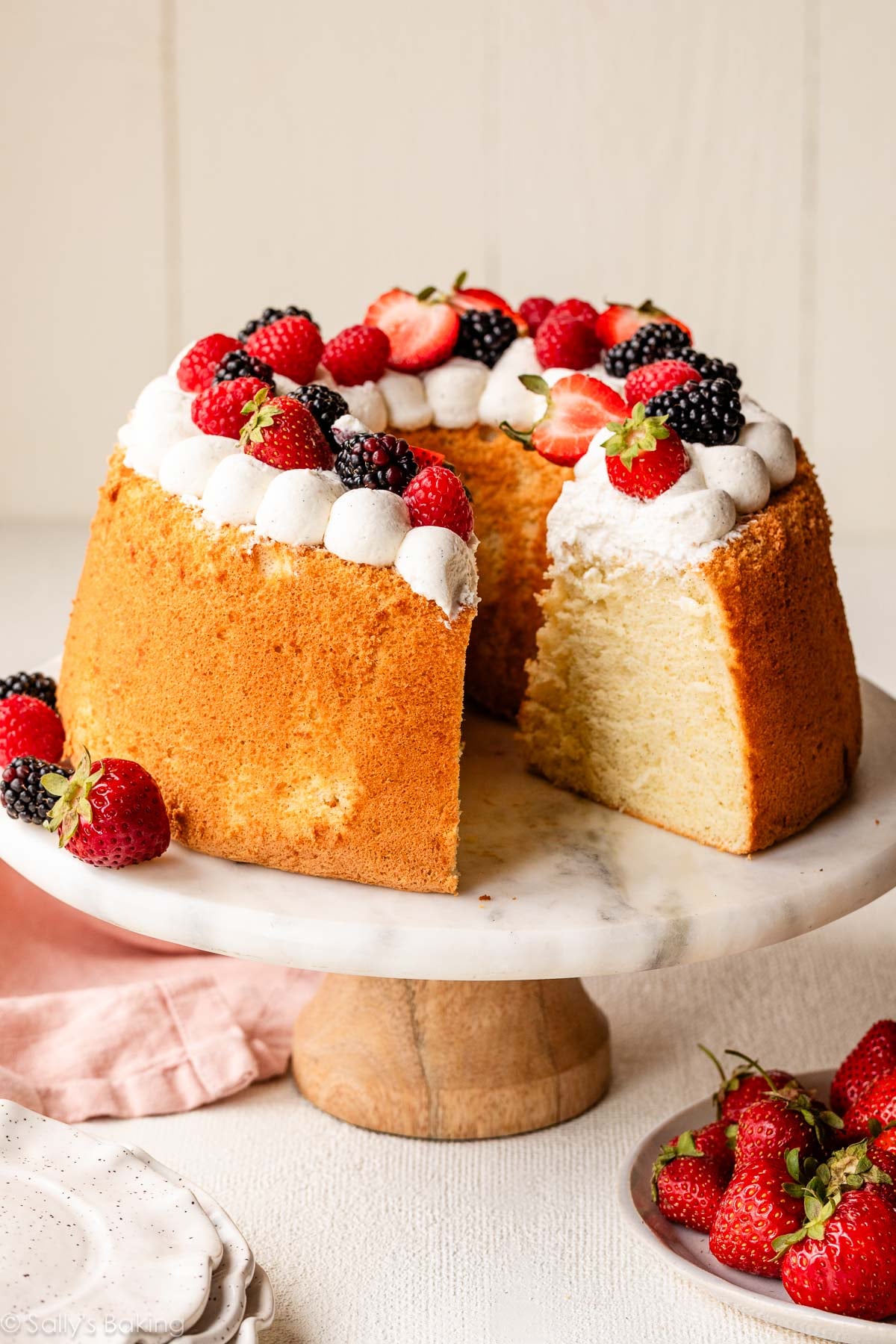
Like its cousin, the angel food cake, much of the chiffon cake’s signature lift and voluminous texture stem from the meticulous incorporation of whipped egg whites, which are gently folded into the batter. However, the chiffon cake departs significantly from the angel food cake by incorporating additional key ingredients: baking powder, egg yolks, and milk. The inclusion of these fat-contributing elements – the yolks and milk – imparts a crucial depth of richness, enhanced tenderness, and a more complex flavor, creating a perception of buttery indulgence despite the absence of actual butter in the batter itself.
The defining ingredient that truly sets the chiffon cake apart within the pantheon of sponge cakes is oil. While many classic sponge cake recipes rely primarily on eggs, sugar, and flour for their structure, the chiffon cake’s embrace of oil is revolutionary. This choice of fat ensures that every bite remains exceptionally moist and remarkably soft, a quality that is notably resilient. Unlike butter-based cakes, the oil in chiffon cake allows it to retain its tender, melt-in-your-mouth texture even after refrigeration, staying fresh and delightful for several days. The resulting cake strikes a perfect balance: it is light enough to be a refreshing choice for spring and summer gatherings, yet sufficiently rich and satisfying to feel like a special occasion dessert. For those seeking a dessert that offers indulgence without being overly sweet or heavy, the chiffon cake presents an impeccable choice.
The Genesis of an Icon: A Brief History
The chiffon cake’s story is as intriguing as its texture. It was invented in 1927 by Harry Baker, an insurance salesman turned caterer in Los Angeles, California. Baker kept his recipe a closely guarded secret for two decades, baking and selling his unique cake to Hollywood stars and studios, who were captivated by its unprecedented lightness and moistness. For years, the ingredients and methods remained a mystery, fueling speculation among bakers and gourmands alike.
The secret was finally unveiled in 1947 when Baker sold the recipe to General Mills. The company, recognizing the cake’s potential, launched a major marketing campaign, publishing the recipe in Better Homes and Gardens magazine and promoting it as "the first new cake in 100 years." This public revelation transformed home baking, introducing a revolutionary technique that combined the lightness of meringue with the richness of a standard cake. The chiffon cake quickly became a sensation, cementing its place in culinary history as a truly innovative dessert. Its introduction marked a significant shift in cake baking, offering a new standard for texture and longevity.
The Science Behind the Structure: Ingredients and Their Roles
Creating the chiffon cake’s signature lofty and tender crumb is a meticulous process, where each ingredient plays a critical, scientifically-backed role. The transformation of a handful of pantry staples into this impossibly soft and wonderfully light cake is a testament to precise formulation.
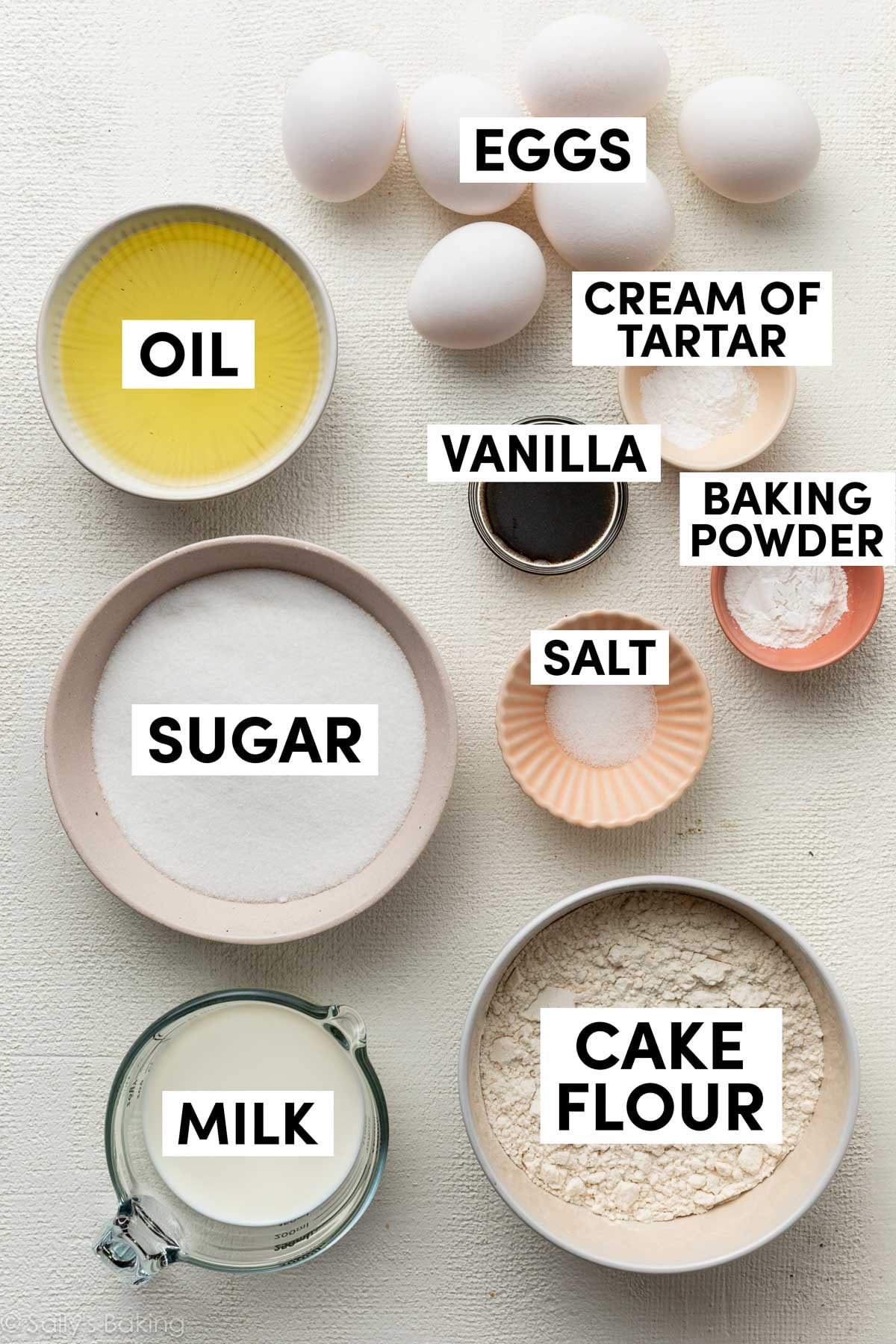
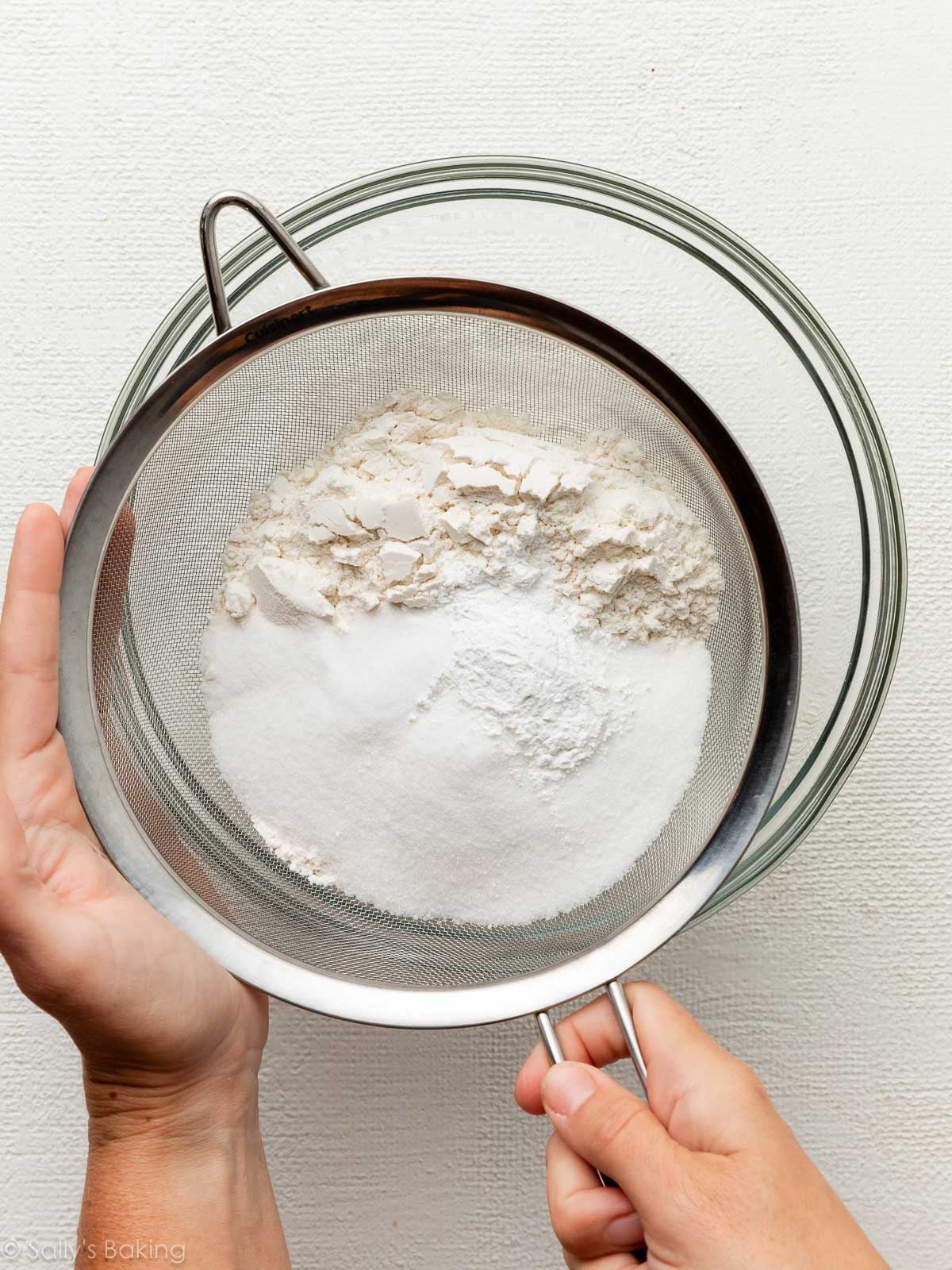
- Cake Flour: This finely milled flour, with its lower protein content compared to all-purpose flour, is fundamental. It develops less gluten, resulting in a tenderer, more delicate crumb, which is crucial for the chiffon cake’s signature lightness. Sifting the flour, often with half of the sugar and baking powder, ensures even distribution and prevents lumps, contributing to a smoother batter and consistent texture.
- Granulated Sugar: Beyond sweetness, sugar plays a vital structural role. In the meringue, it stabilizes the whipped egg whites, allowing them to hold more air and create those stiff, glossy peaks. In the yolk batter, it contributes to tenderness and moisture.
- Baking Powder: This chemical leavening agent works in conjunction with the aerated egg whites, providing an additional boost of lift. When activated by moisture and heat, it releases carbon dioxide gas, which expands, contributing to the cake’s overall volume and airy texture.
- Salt: A flavor enhancer, salt balances the sweetness and brings out the subtle vanilla notes, creating a more well-rounded taste profile.
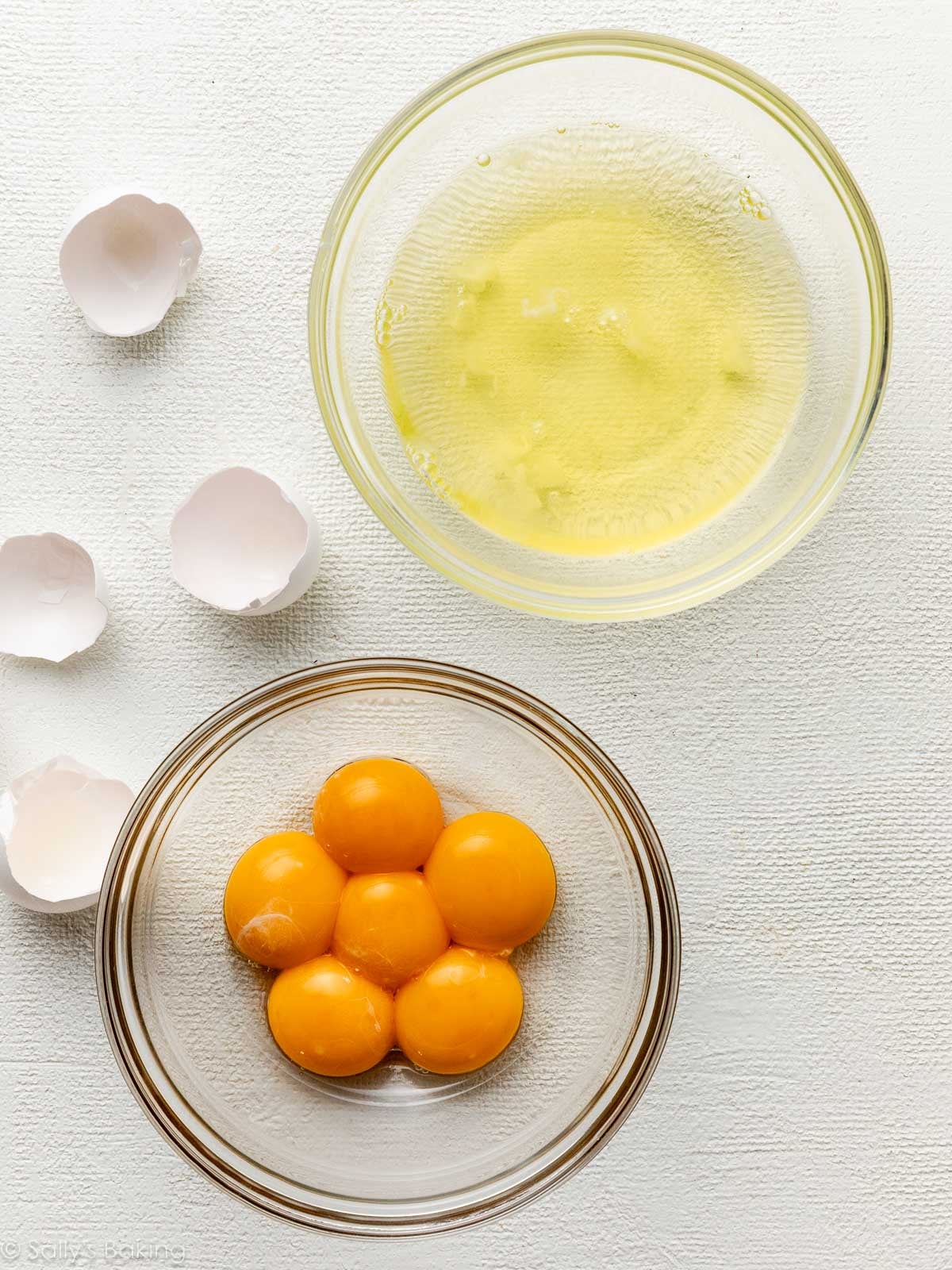
- Large Eggs (Separated): The separation of eggs is perhaps the most critical step.
- Egg Whites: When whipped, egg whites form a stable foam (meringue) that traps a vast amount of air. This air is the primary source of the cake’s extraordinary volume and lightness. The proteins in the egg whites denature and unfold, creating a network that holds the air bubbles.
- Egg Yolks: The yolks provide richness, color, and emulsifying properties. Their fat content contributes to the cake’s tenderness and moistness, distinguishing it from the fat-free angel food cake.
- Neutral Oil (e.g., vegetable, canola): This is the game-changer. Unlike butter, which contains water and milk solids, oil is 100% fat. Its liquid state at room temperature contributes to a cake that is exceptionally moist and remains soft even when chilled, due to its ability to coat flour particles and inhibit gluten development without solidifying. This also extends the cake’s shelf life.
- Whole Milk: Adds moisture, richness, and contributes to the tenderness of the crumb, further enhancing the cake’s "buttery" feel without using butter.
- Vanilla Extract: Provides the classic, comforting flavor profile that complements the cake’s delicate texture.
- Cream of Tartar: An acidic salt, cream of tartar is essential for stabilizing egg whites. It helps the whites whip up faster, achieve greater volume, and form a more stable meringue that is less prone to weeping or collapsing, ensuring the cake maintains its lofty height.
Mastering the Method: Key Techniques for Chiffon Perfection
Achieving the chiffon cake’s legendary texture relies on a series of precise steps and specialized equipment, each contributing to its unique outcome.
- Egg Separation: The process begins with carefully separating egg whites from yolks. Even a trace of yolk fat can prevent egg whites from whipping properly, making this a crucial first step.
- Sifting Dry Ingredients: The dry ingredients, including flour, baking powder, salt, and half of the sugar, are thoroughly sifted together. This aerates the flour, prevents clumping, and ensures an even distribution of leavening agents and sugar throughout the mixture.
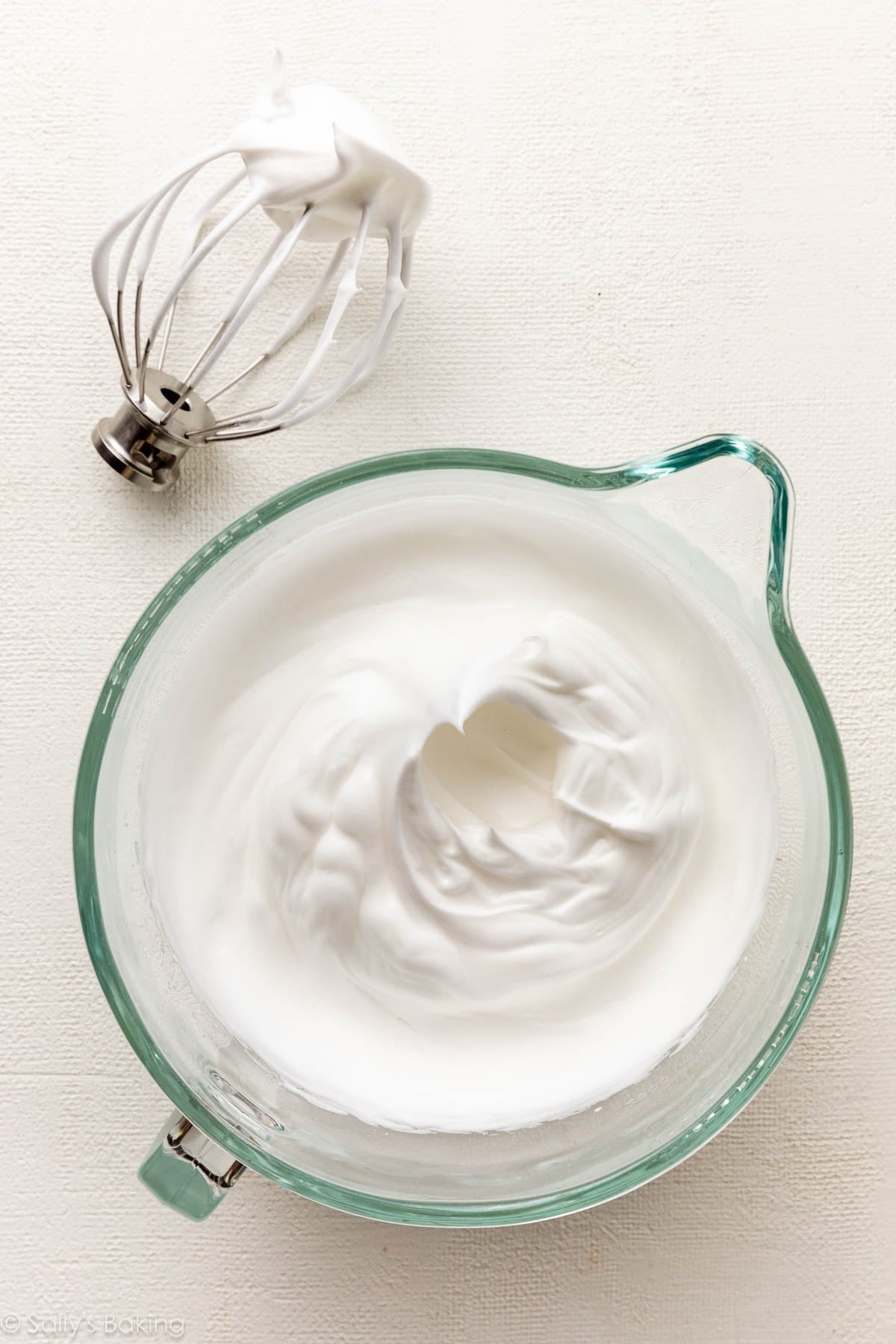
- Whipping the Meringue: This is the heart of the chiffon cake’s structure. Egg whites are whipped with cream of tartar until foamy, then the remaining sugar is gradually added. Continuous beating at high speed results in stiff, glossy peaks. This meringue is responsible for the cake’s significant lift and airy texture. The cream of tartar ensures stability, allowing the meringue to hold its volume and incorporate maximum air.
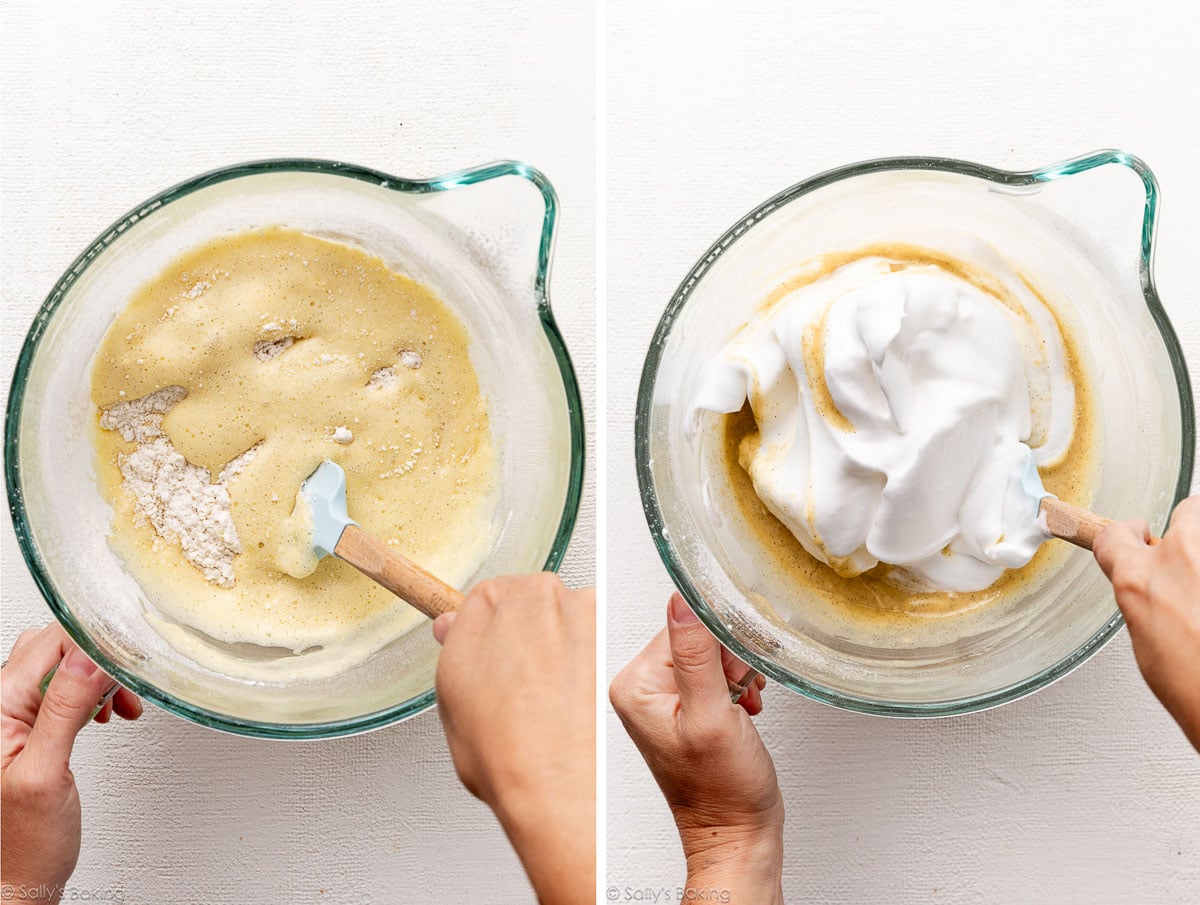
- Combining Wet Ingredients and Dry: While the meringue is set aside, the egg yolks are whisked with oil, milk, and vanilla. The sifted dry ingredients are then incorporated into this yolk mixture, whisked until just combined to avoid over-developing gluten.
- Gentle Folding: The final stage of batter preparation involves carefully folding the meringue into the yolk batter. This is done in two stages: first, a portion of the meringue is folded in to lighten the heavier yolk mixture, then the remaining meringue is gently incorporated. The key is to maintain as much of the air in the meringue as possible, avoiding overmixing which would deflate the precious volume. A few streaks of meringue are acceptable initially; complete homogenization without sacrificing aeration is the goal.
The Indispensable Tube Pan and the Art of Ungreased Baking
The choice of baking vessel and its preparation are non-negotiable for chiffon cake success. A tube pan with a removable bottom is essential. For this recipe, a 10-inch tube pan is typically recommended.
Crucially, the pan must NOT be greased. This instruction often surprises novice bakers, as greasing is standard practice for most cakes. However, for chiffon cake, the batter needs to cling to the tall, ungreased sides of the pan as it bakes and rises. This adhesion provides the necessary traction for the cake to climb upwards, resulting in its impressive height and characteristic airy structure. If the pan were greased, the delicate batter would slide down the sides, preventing it from achieving its full potential volume and leading to a denser, shorter cake.
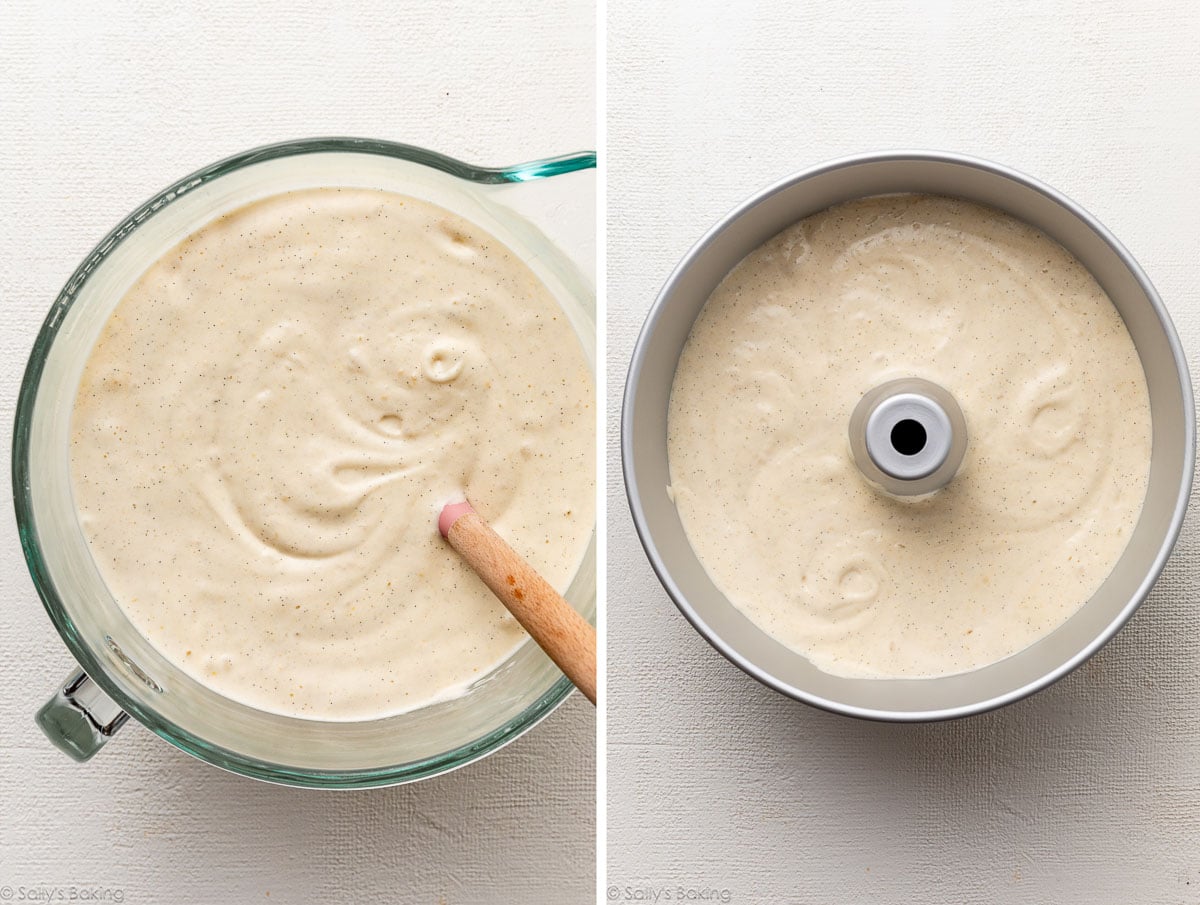
Furthermore, the central tube of the pan serves a vital function. It allows heat to circulate evenly through the thick layer of batter, ensuring that the cake bakes uniformly from the center outwards. Without this central conduit, the outer edges of the cake would inevitably bake and dry out long before the thick center could cook through properly.
The Upside-Down Cool: A Critical Final Step
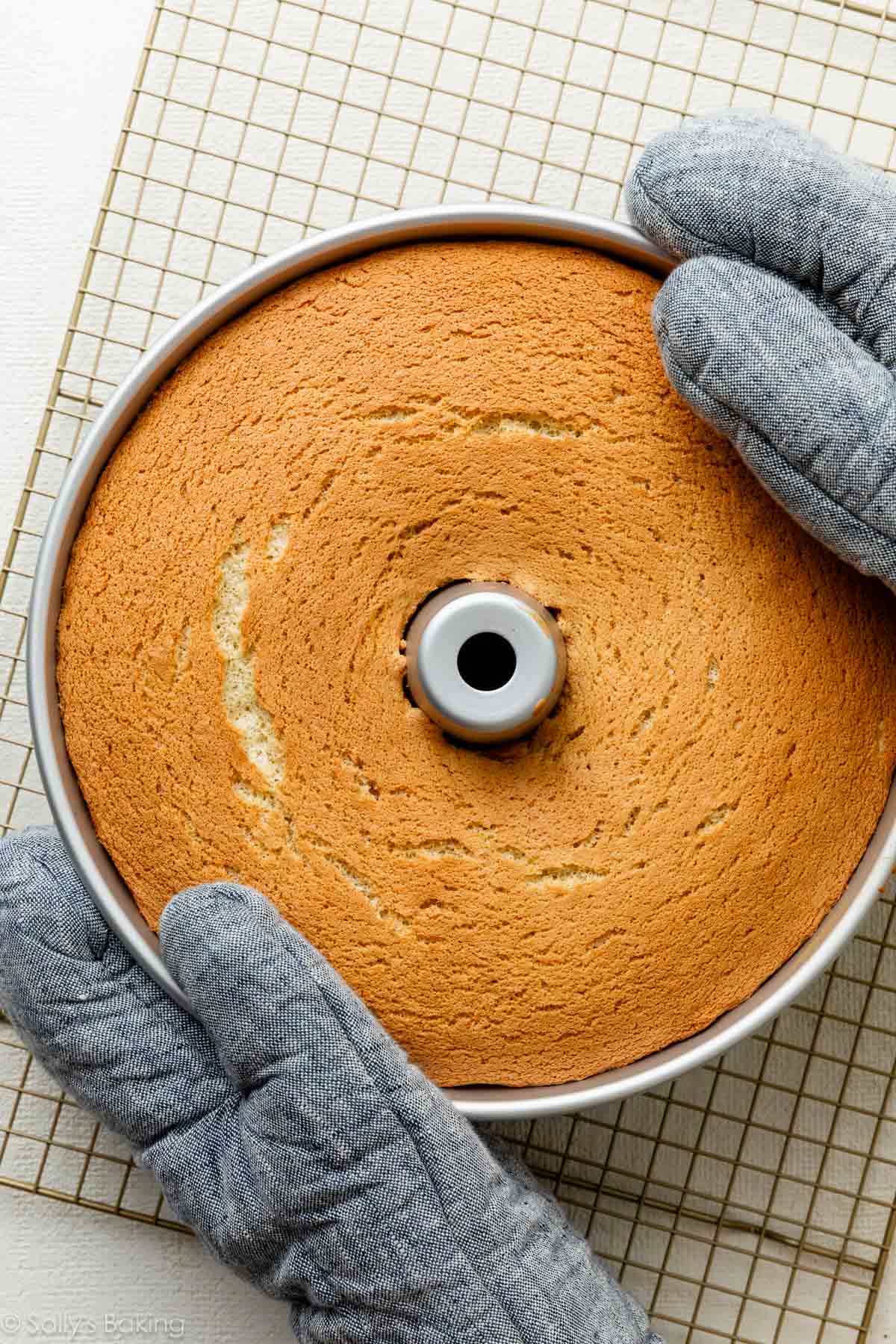
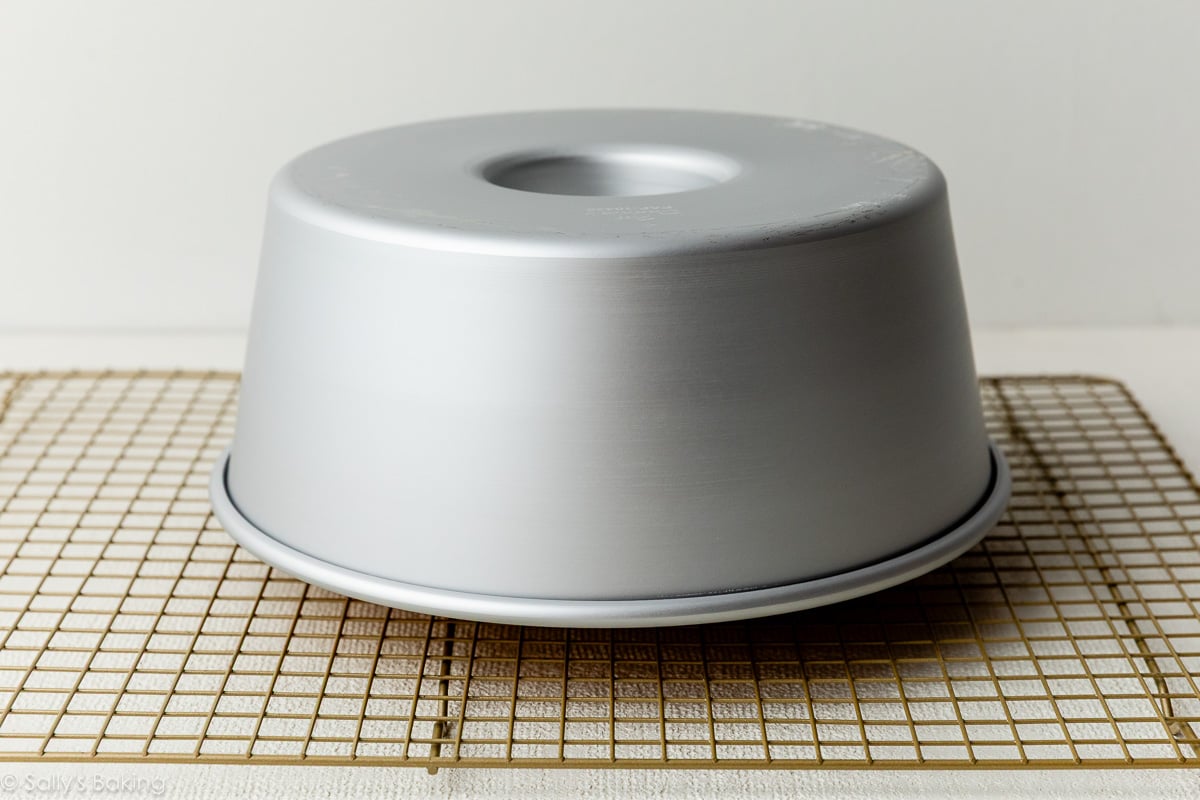
Upon removal from the oven, the chiffon cake pan must be immediately inverted. Many tube pans come with small "feet" for this purpose, or it can be inverted over the neck of a bottle. Cooling the cake upside down is a critical step that prevents the delicate, still-setting structure from collapsing under its own weight. The inverted position allows the cake to stretch and stabilize as it cools, locking in its impressive height and airy crumb. Skipping this step would almost certainly result in a deflated, denser cake.
Culinary Versatility and Serving Suggestions
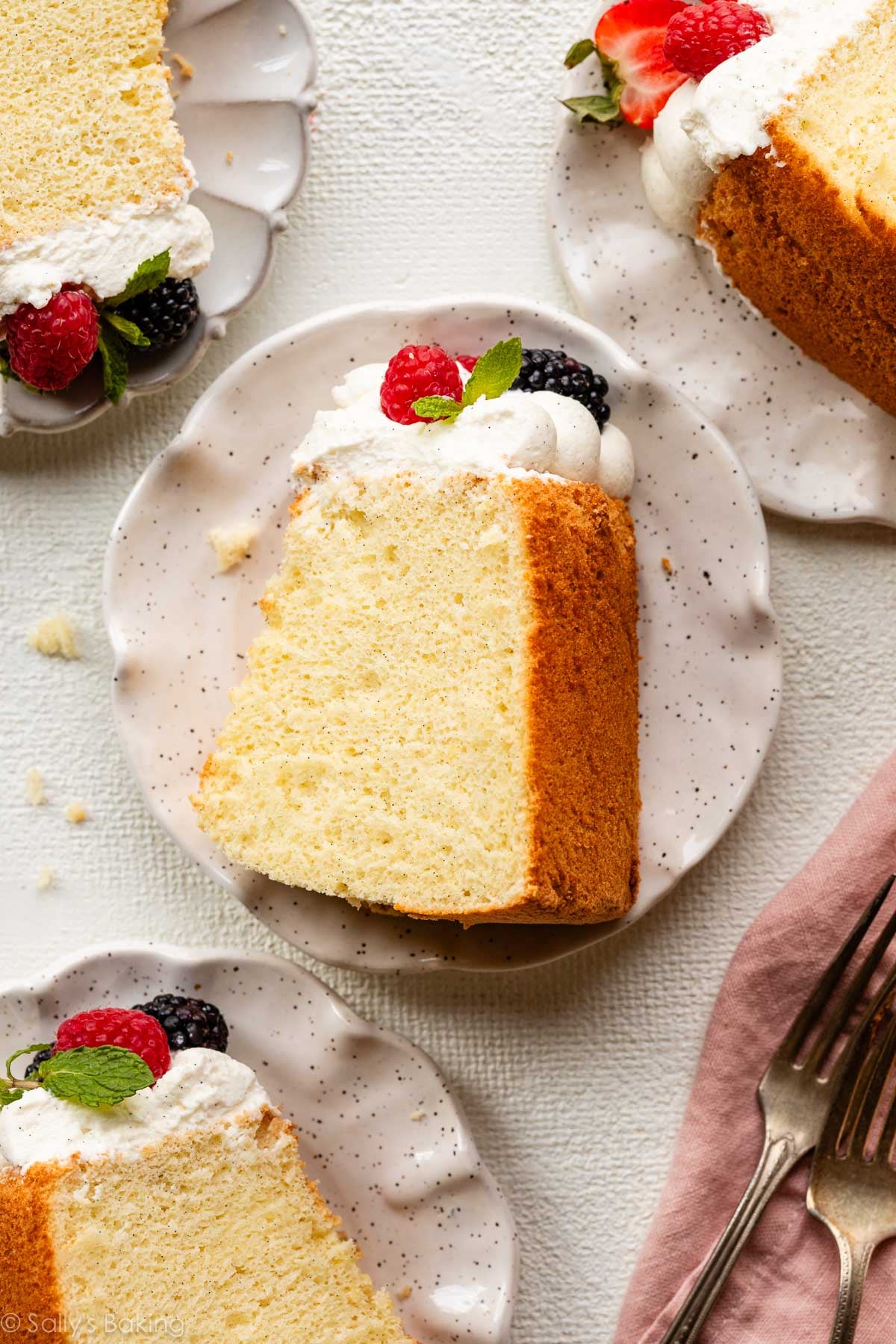
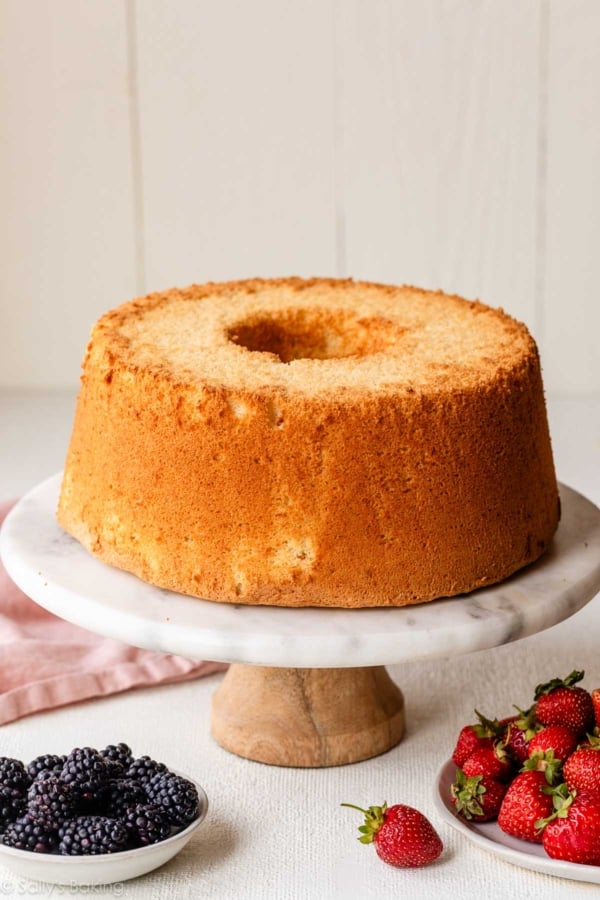
The classic chiffon cake, with its subtle vanilla essence, is remarkably versatile. It is delightful served simply with a dusting of confectioners’ sugar, allowing its exquisite texture to take center stage. However, it truly shines when paired with fresh accompaniments. A favorite serving suggestion involves generous dollops of whipped cream and a vibrant medley of fresh berries, offering a refreshing contrast to the cake’s delicate richness.
For those seeking a sturdier, more stable topping, a cream cheese whipped cream offers an excellent alternative. This variation, akin to a not-so-sweet whipped frosting, provides a creamier, slightly tangy counterpoint to the cake’s sweetness, and holds up better for extended serving periods.
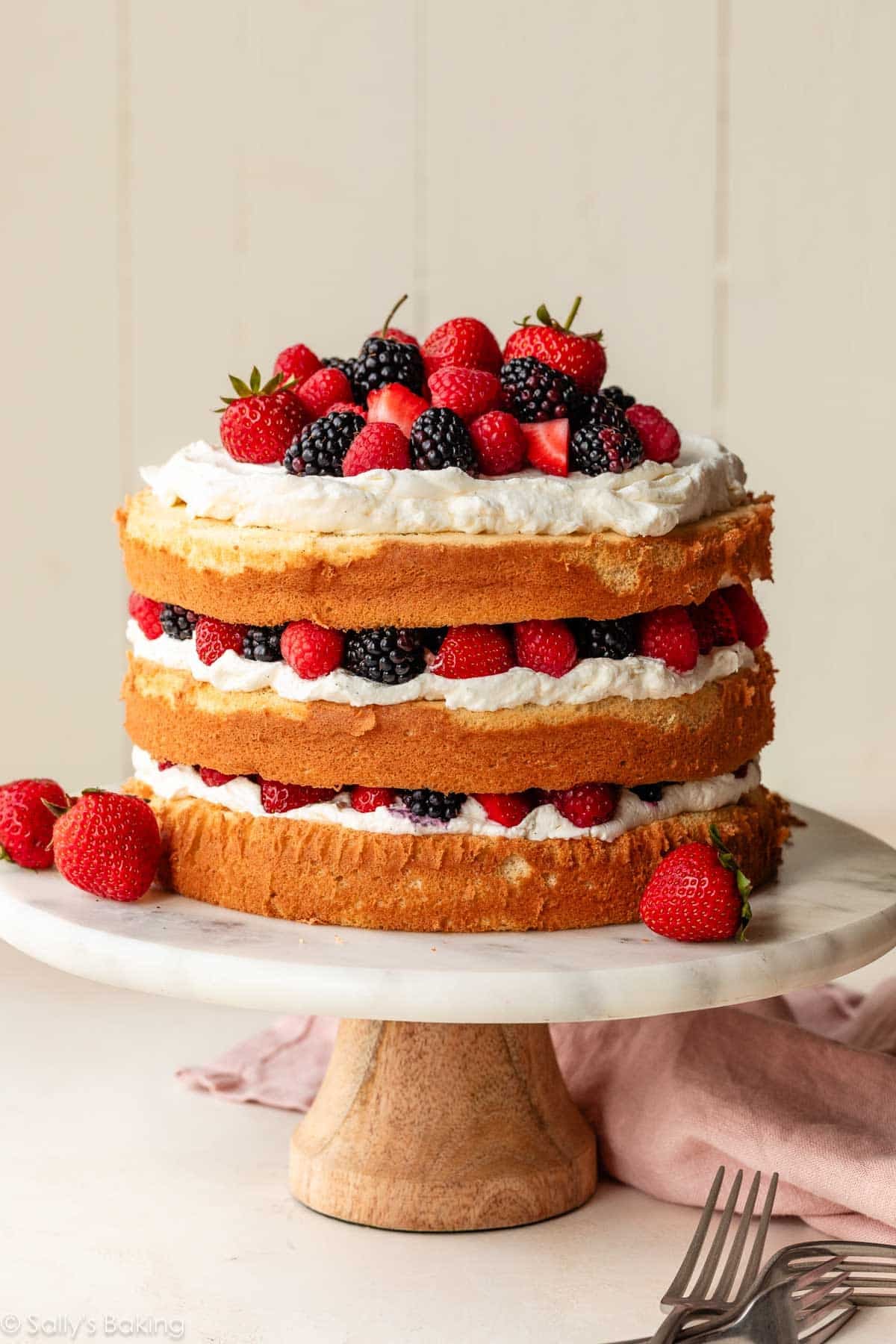
Beyond individual slices, the chiffon cake is also an exceptional foundation for layered celebration cakes. Its inherent sturdiness, despite its lightness, allows it to be stacked without crumbling. The cooled cake can be horizontally sliced into multiple layers, or the batter can be baked directly in three 8-inch round cake pans for a more traditional layer cake construction. This adaptability makes it a popular choice for birthdays, anniversaries, and other festive occasions, where it can be adorned with various frostings, fillings, and decorations.
Important Pan Considerations: Avoiding the Bundt
A crucial piece of advice for any baker attempting a chiffon cake is to avoid using a Bundt pan. While Bundt pans also feature a central tube, their intricate designs and fluted interiors make it incredibly difficult to release the delicate chiffon cake in one piece. The cake’s tender structure is prone to tearing and sticking in the crevices of a Bundt pan. The straight, smooth sides of a tube pan are essential for both the cake’s ascent during baking and its clean release once cooled.
Expert Perspectives and Broader Impact
Leading culinary historians and pastry chefs often cite the chiffon cake as a marvel of modern baking. Dr. Evelyn Clarke, a renowned food scientist, often remarks, "The chiffon cake is a brilliant example of how understanding the science of ingredients – particularly the role of oil and aerated egg proteins – can revolutionize a classic dessert. Its ability to retain moisture and tenderness, even when refrigerated, was a game-changer for home bakers and professional kitchens alike."
Its widespread adoption, particularly in Asian countries, has led to numerous delightful regional variations, incorporating flavors like pandan, matcha, and taro, demonstrating its global appeal and adaptability. This cultural integration underscores the chiffon cake’s enduring legacy as a versatile and universally beloved dessert.
Keys to Consistent Success
To consistently achieve a perfect chiffon cake, several fundamental techniques must be diligently observed:
- Precise Egg White Whipping: The meringue must be whipped to stiff, glossy peaks. Under-whipped whites will not provide enough lift, while over-whipped whites can become dry and crumbly, making them difficult to fold in without deflating.
- Gentle Folding: The act of folding the meringue into the yolk batter is paramount. Use a gentle hand and a rubber spatula, employing an upward motion to incorporate without crushing the air bubbles. Overmixing will cause the meringue to deflate, resulting in a dense cake.
- Ungreased Tube Pan: As detailed, this is non-negotiable for the cake to climb and achieve its height.
- Thorough Baking: Ensure the cake is fully baked. An under-baked chiffon cake will likely collapse during cooling. A skewer inserted into the center should come out clean.
- Inverted Cooling: This final, crucial step prevents the delicate cake from compressing and losing its volume as it cools and sets.
In summary, the chiffon cake is more than just a recipe; it is a culinary experience rooted in scientific principles and refined techniques. By mastering the delicate art of whipping egg whites, understanding the unique role of oil, and adhering to the critical steps of ungreased baking and inverted cooling, home bakers can consistently produce a dessert that elicits gasps of delight and appreciative inquiries of, "You really made this yourself?!" Its enduring appeal lies in this perfect harmony of lightness, moisture, and richness, a classic that continues to captivate palates worldwide.
