
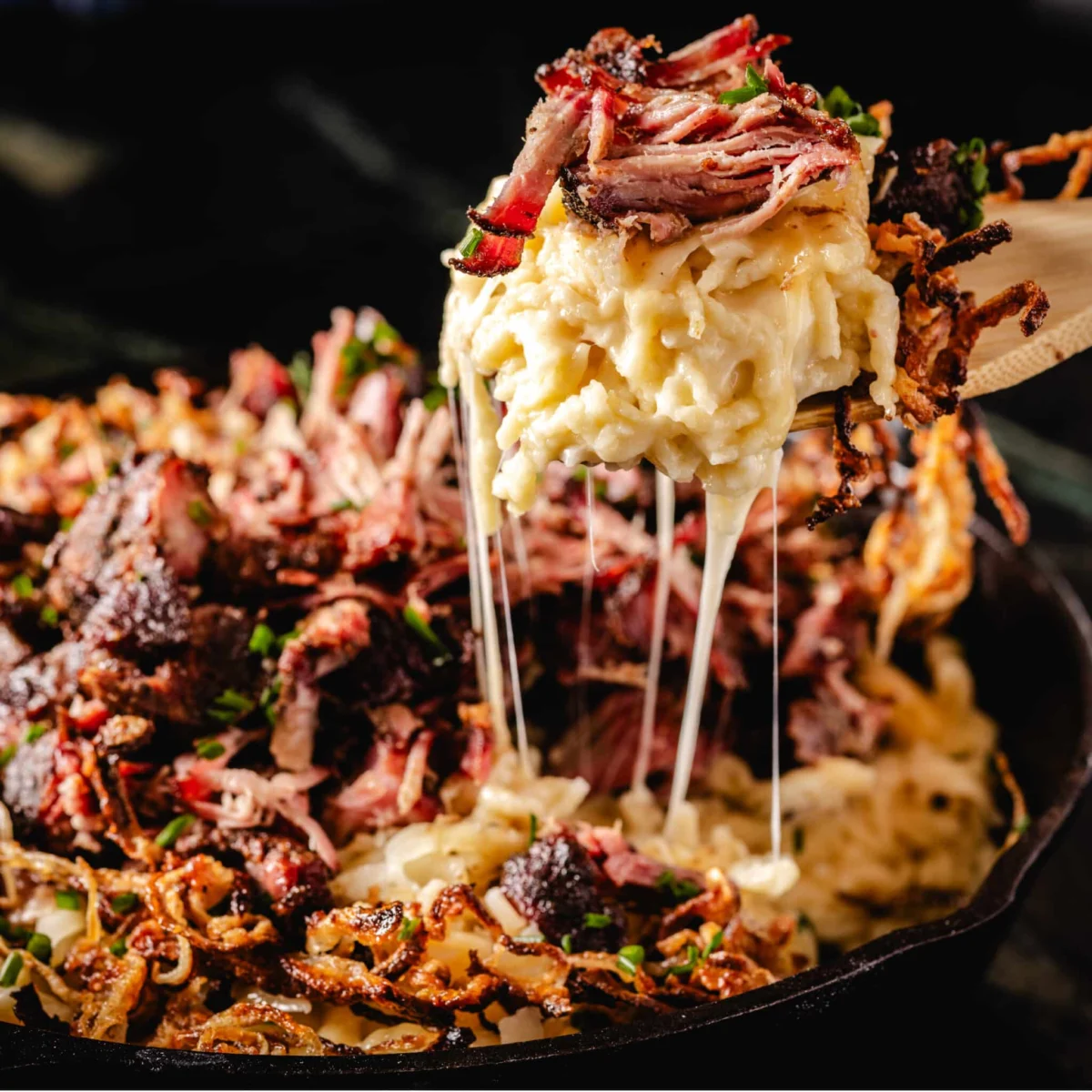
The culinary landscape has witnessed a significant trend toward the fusion of traditional European comfort food and American barbecue methods. Among the most notable examples of this cross-cultural integration is the emergence of Smoked Pulled Pork Kasespatzle, a dish that bridges the gap between Alpine heritage and Southern-style smokehouse preparation. This dish, popularized recently by professional pitmasters, reimagines the classic German cheese noodle—traditionally a vegetarian staple—by incorporating the deep, complex flavors of slow-smoked pork shoulder.

The Origins of Kasespatzle and Its Evolution
Kasespatzle, often colloquially referred to as German macaroni and cheese, is a traditional staple of Southern German, Austrian, and Swiss cuisine. Unlike American mac and cheese, which relies on a béchamel-based roux, authentic Kasespatzle is constructed through the thermal interaction between hot, freshly boiled egg noodles and aged, high-melting-point cheeses. The traditional preparation is deceptively simple: layers of cooked spaetzle noodles are tossed with shredded cheese—typically Emmental, Gruyère, or Bergkäse—allowing the residual heat to create a rustic, elastic, and savory consistency.
The modern iteration of the dish, which has gained traction in competitive barbecue circuits, introduces smoked protein as a foundational component rather than a secondary topping. By integrating smoked gouda into the cheese blend and folding in tender, shredded country-style pork ribs, the dish transforms from a side-course noodle preparation into a robust, protein-heavy entrée.

Chronology of the Pitmasters Fusion
The development of this specific fusion recipe can be traced to the production cycles of Food Network’s competitive series, Pitmasters. During recent filming, competing pitmasters sought to elevate traditional German fare through the application of live-fire techniques. The process involved a multi-stage cooking timeline:
- The Smoke Phase (0-6 Hours): Rather than utilizing a full pork shoulder, which requires extended smoking times often exceeding 12 hours, chefs utilized country-style pork ribs. These cuts, derived from the pork shoulder, offer a higher fat-to-meat ratio and reach the desired tenderness for shredding in approximately six hours.
- The Noodle Preparation (Minutes 0-15): Simultaneously, the spaetzle production occurs. The dough—a simple mixture of flour, eggs, and a liquid component like sparkling water or milk—is forced through a colander or specialized spaetzle maker into boiling salted water.
- The Assembly (Final 20 Minutes): The final stage involves the rapid integration of the components. The hot noodles, shredded cheese, and caramelized fried onions are combined in a pre-heated cast-iron skillet, allowing the heat to melt the cheese without breaking the emulsion.
Nutritional and Technical Analysis
From a nutritional standpoint, the addition of smoked pulled pork significantly alters the profile of the traditional dish. While standard Kasespatzle is rich in carbohydrates and fats, the inclusion of pork adds a substantial increase in protein density. Data indicates that a standard portion of this fusion dish contains approximately 439 calories, with a macronutrient distribution of 26 grams of protein, 28 grams of fat, and 21 grams of carbohydrates per serving.

The technical success of the dish relies heavily on the quality of the smoke. Pitmasters note that the use of hardwoods—such as hickory or oak—provides the necessary tannin-rich smoke profile to cut through the heavy creaminess of the cheese. The choice of smoked gouda, specifically, acts as a bridge between the smoky pork and the mild, nutty profile of the traditional cheeses.
Industry and Competitive Impact
The inclusion of such dishes in high-level culinary competitions reflects a broader trend in the food industry: the "premiumization" of comfort foods. By applying the rigorous standards of barbecue competition—where smoke ring, bark texture, and tenderness are paramount—to traditional European peasant food, chefs are creating new categories of menu items that appeal to both traditionalists and modern barbecue enthusiasts.

Market analysis of culinary trends suggests that consumers are increasingly seeking "experience-based" comfort food. The, the fusion of German, Swiss, and American influences provides a narrative-driven dining experience that resonates well with home cooks and restaurant patrons alike. The adoption of this recipe by prominent pitmasters has prompted a measurable increase in searches for "spaetzle makers" and "German-fusion recipes" across digital culinary platforms.
Expert Perspectives on Execution
Professional chefs who have experimented with this fusion emphasize the importance of texture. The primary challenge in executing the dish is maintaining the distinct identity of the noodles under the weight of the cheese and pork. Culinary experts advise that the onions—traditionally fried until dark and crispy—provide the necessary structural contrast to the otherwise soft components of the dish.

Furthermore, the shift from traditional pork cheek to country-style ribs for this recipe represents a strategic adjustment for home cooks. While pork cheek offers a unique texture and flavor profile, it is notoriously difficult to source for the average consumer. The use of country-style ribs achieves a comparable flavor profile while ensuring that the recipe remains accessible to a wider demographic, effectively democratizing a dish that might otherwise be relegated to fine-dining or specialty barbecue establishments.
Broader Implications for Barbecue Culture
The rise of Smoked Pulled Pork Kasespatzle signifies that the definition of "barbecue" is becoming increasingly fluid. For decades, the American barbecue canon was strictly defined by regional classics such as Texas-style brisket, Carolina-style pulled pork, or Kansas City-style ribs. The current era, however, is defined by the integration of these techniques into global cuisines.

This evolution is not without its critics. Traditionalists argue that the dilution of heritage recipes with barbecue elements risks obscuring the origins of the dish. However, supporters contend that this is a natural progression in the history of food, noting that most beloved comfort foods were born from the necessity of combining locally available ingredients with imported techniques. As professional chefs continue to experiment with these combinations, it is likely that the "backyard barbecue" aesthetic will continue to influence global kitchens, leading to further innovations in both flavor and presentation.
Ultimately, the enduring success of this dish lies in its simplicity and its ability to provide a hearty, satisfying meal that leans on established techniques rather than complex culinary trends. By blending the precision of German noodle-making with the patience of American smokehouse methods, practitioners have created a dish that is as technically sound as it is palate-pleasing, serving as a testament to the versatility of smoke-based cooking in the modern era.
