
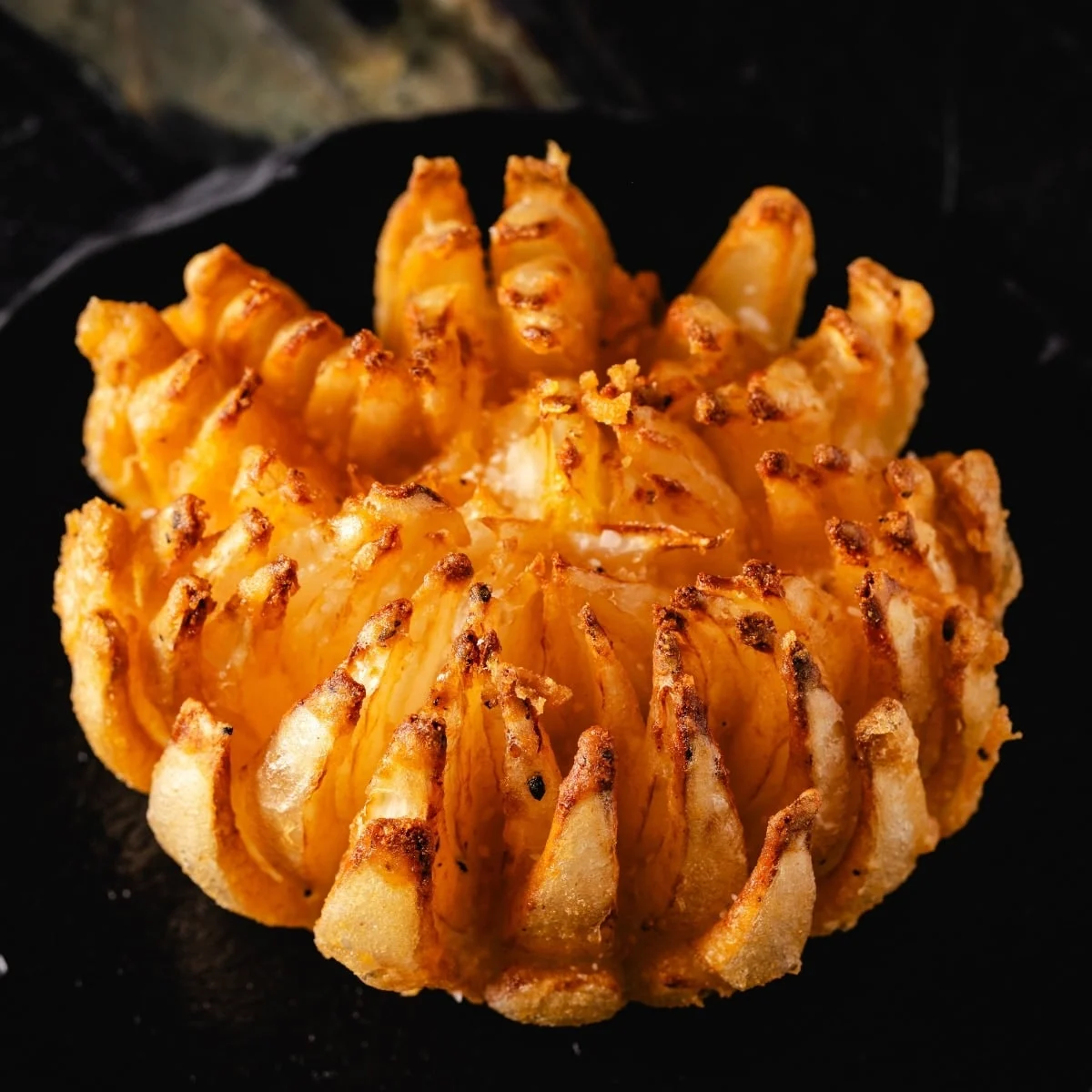
The evolution of backyard barbecue has transitioned from simple grilling to a sophisticated culinary discipline, and the Smoke-Fried Onion Blossom represents the latest fusion of traditional smoke-infusion techniques and high-heat frying. This dish, popularized by culinary expert and "Hey Grill Hey" founder Susie Bulloch, offers a departure from the standard steakhouse appetizer by introducing a two-stage thermal process designed to maximize both flavor profile and structural integrity. By combining the low-and-slow methodology of the American South with the crispy textures of classic deep-frying, the smoke-fried method addresses common criticisms of traditional blooming onions, such as raw centers or lack of aromatic depth.
The Smoke-Fried Onion Blossom utilizes a Sweet Vidalia onion as its primary substrate, which is then subjected to a 45-minute smoking period before being battered and flash-fried. This approach reflects a broader trend in the outdoor cooking industry, where enthusiasts are increasingly looking for ways to utilize their pellet grills and smokers for side dishes and appetizers that traditionally belonged in the indoor kitchen. According to industry data from the Hearth, Patio & Barbecue Association (HPBA), nearly 70% of U.S. households own a grill or smoker, and there is a growing demand for "hybrid" recipes that bridge the gap between different cooking styles.

The Anatomy of the Smoke-Fried Method
The methodology behind the Smoke-Fried Onion Blossom is rooted in food science, specifically the interaction between smoke particles and vegetable moisture. Unlike meats, which contain high levels of protein and fat to trap smoke, onions are high in water and natural sugars. By smoking the onion at a consistent 225 degrees Fahrenheit for approximately 45 minutes, the cook achieves two critical objectives. First, the heat begins to break down the pectin in the onion’s cell walls, causing the "petals" to soften and fan out—a process essential for even batter distribution. Second, the smoke penetrates the layers of the onion, providing a savory counterpoint to the natural sweetness of the Vidalia variety.
Following the smoking phase, the onion is coated in a dry batter mix and a signature BBQ rub. This is where the "smoke-fried" nomenclature earns its distinction. The transition from the 225-degree smoker to 350-degree frying oil triggers the Maillard reaction rapidly on the surface of the batter. Because the onion is already partially cooked and softened from the smoker, the frying time is reduced to a mere three to four minutes. This prevents the exterior from burning while ensuring the interior is tender, avoiding the common "crunch" of undercooked onion often found in poorly executed restaurant versions.
Chronology of Preparation and Execution
The execution of a Smoke-Fried Onion Blossom follows a strict timeline to ensure the structural stability of the vegetable. The process begins with the selection of a large Sweet Vidalia onion. The root end is kept intact to serve as the anchor for the petals, while the top is removed. A series of vertical cuts are made, stopping just short of the root, typically resulting in 12 to 16 segments.

- The Pre-Smoke (0–10 Minutes): The smoker is preheated to 225 degrees Fahrenheit. Standard wood choices include fruitwoods like apple or cherry, which complement the sweetness of the onion without overpowering it.
- The Infusion Phase (10–55 Minutes): The sliced onion is placed directly on the grill grates. During this 45-minute window, the heat allows the onion to "bloom," expanding the gaps between the petals.
- The Batter Application (55–65 Minutes): Once removed from the smoker, the onion is allowed to cool slightly. It is then coated in a dry batter mix, often a combination of flour, cornstarch, and spices. A secondary coating of BBQ rub is applied to enhance the color and provide a "bark-like" appearance to the fried petals.
- The Flash Fry (65–70 Minutes): High-heat oil, such as peanut or canola oil, is brought to 350 degrees Fahrenheit. The onion is submerged for 3–4 minutes until the exterior achieves a golden-brown hue.
- Resting and Service (70–75 Minutes): The blossom is drained of excess oil and served immediately, often accompanied by a dipping sauce such as BBQ ranch to balance the salt and smoke.
Supporting Data and Market Trends
The rise of the Smoke-Fried Onion Blossom coincides with a significant shift in consumer behavior regarding outdoor cooking equipment. Market research indicates that the pellet grill segment has seen double-digit growth over the last five years, largely due to the "set-it-and-forget-it" temperature control that makes recipes like this possible for the average homeowner.
Furthermore, the choice of the Vidalia onion is not merely a culinary preference but a nod to a highly regulated agricultural product. Vidalia onions can only be grown in a specific 20-county region in Georgia, where the low sulfur content of the soil prevents the onions from developing a sharp, pungent taste. According to the Vidalia Onion Committee, these onions are available only from April through August, making the Smoke-Fried Onion Blossom a seasonal staple of the peak summer BBQ months.
From a nutritional perspective, the dish is designed as a shared appetizer. A single serving (approximately one-quarter of a large blossom) contains roughly 163 calories, 37 grams of carbohydrates, and 672 milligrams of sodium. While indulgent, the smoking process allows for a more flavorful interior without relying solely on the fat content of the frying oil for taste.

Expert Analysis and Culinary Implications
Culinary professionals suggest that the "smoke-fry" technique is a response to the "texture fatigue" often associated with traditional barbecue. While smoked brisket and pulled pork offer tender, succulent textures, they often lack a crispy element. The Smoke-Fried Onion Blossom provides that necessary tactile contrast.
"The challenge with traditional blooming onions has always been the center," says one industry analyst. "By the time the middle of the onion is cooked, the tips of the petals are often burnt. The smoking phase acts as a par-cooking step that ensures thermal consistency. It’s a technical solution to a common frying problem."
Moreover, the inclusion of a BBQ rub in the battering process allows for regional customization. A Kansas City-style rub might add more sweetness and mahogany color, while a Texas-style rub would emphasize black pepper and savory notes. This versatility has made the recipe a favorite among competitive BBQ teams who use the blossom as a "showstopper" side dish during cook-offs.

Broader Impact on Home Entertaining
The democratization of professional-grade BBQ techniques through creators like Susie Bulloch has fundamentally changed the "Backyard BBQ Hero" archetype. Home cooks are no longer content with simple hamburgers; there is a drive toward "theatrical" food—dishes that are visually impressive and technically complex. The Onion Blossom, with its flower-like appearance and the dramatic story of being both smoked and fried, fits this niche perfectly.
The social media impact of the dish cannot be understated. Platforms like Instagram and TikTok have seen a surge in "food theater" content, where the visual "reveal" of a blooming onion or a sliced brisket drives high engagement. By adding the element of smoke, creators are able to tap into the "outdoor lifestyle" aesthetic that has become a multi-billion dollar industry.
Conclusion and Future Outlook
The Smoke-Fried Onion Blossom is more than just a recipe; it is a microcosm of the current state of American outdoor cooking. It represents a move toward precision, a respect for regional ingredients like the Vidalia onion, and a desire for multi-sensory culinary experiences. As smoker technology continues to advance—incorporating features like sear stations and higher temperature ranges—the line between smoking and frying will likely continue to blur.

For the home cook, the success of the dish relies on the balance of the three simple ingredients: the onion, the batter, and the rub. However, the true value lies in the 75-minute process that transforms a humble root vegetable into a centerpiece of backyard hospitality. As the BBQ season progresses, the smoke-fried method is expected to expand to other vegetables, including cauliflower and corn, as the "low-and-slow" community continues to innovate beyond the traditional confines of the meat smoker.
