
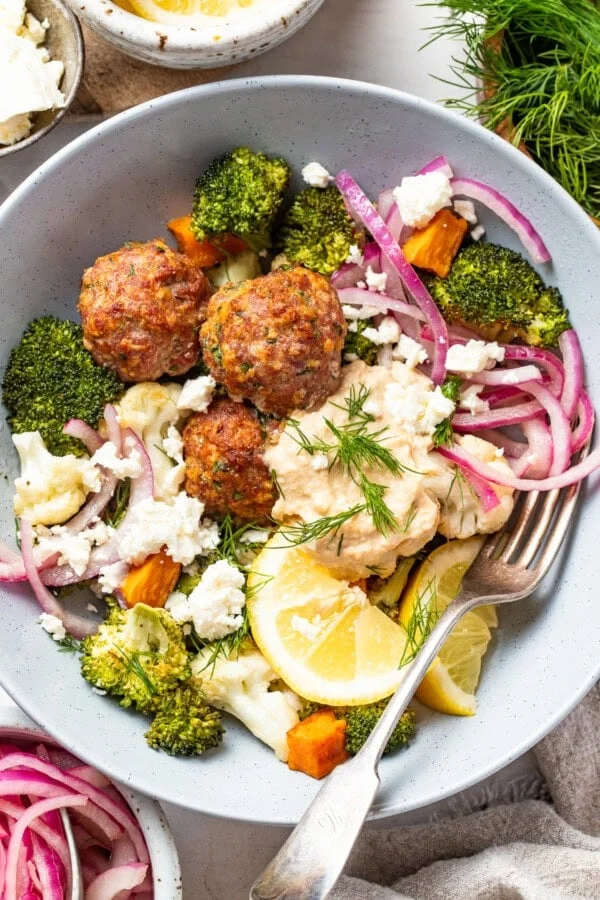
A distinctive culinary creation, the Sheet Pan Mediterranean Meatball Bowl, featuring juicy turkey meatballs alongside a vibrant array of roasted sweet potatoes, cauliflower, and broccoli, has rapidly emerged as a notable favorite among home cooks seeking nutritious and convenient meal solutions. This dish, completed with creamy hummus and tangy pickled red onions, offers a compelling combination of flavors and textures, designed for both immediate enjoyment and efficient meal preparation. Its profile as a high-fiber, high-protein, and grain-free option aligns perfectly with contemporary dietary preferences and health-conscious lifestyles, making it a repeated choice for many.
The inspiration for this particular rendition of Mediterranean-style bowls stems from the increasing popularity of fast-casual dining establishments that champion fresh, customizable, and health-focused options. Drawing parallels to the vibrant and wholesome offerings found at popular eateries like CAVA, this recipe successfully translates those bold and satisfying elements into an accessible, weeknight-friendly format for the home kitchen. The emphasis on a sheet pan cooking method underscores a broader trend towards simplified culinary processes that minimize cleanup while maximizing flavor and nutritional integrity. By foregoing a grain-based foundation in favor of a generous portion of roasted vegetables, the dish inherently becomes more nutrient-dense and naturally high in fiber, contributing to satiety and overall digestive wellness.

The growing interest in the Mediterranean diet, recognized globally for its substantial health benefits, provides a significant backdrop for the success of dishes like these meatball bowls. Characterized by an abundance of vegetables, fruits, whole grains, legumes, nuts, seeds, olive oil, and lean proteins, the Mediterranean diet has been consistently linked to improved cardiovascular health, reduced risk of chronic diseases, and enhanced longevity. This recipe serves as an exemplary model of how these principles can be integrated into daily meals in a practical and appealing manner, reflecting a consumer-driven demand for dishes that are both flavorful and functionally beneficial.
Deconstructing the Bowl: A Symphony of Ingredients
At the core of the Sheet Pan Mediterranean Meatball Bowls is a carefully selected array of ingredients, each contributing to the dish’s nutritional density and complex flavor profile. Understanding the role of each component elucidates why this recipe works so effectively as a balanced meal.

The Heart of the Meal: Juicy Turkey Meatballs
Turkey, particularly lean ground turkey, serves as the primary protein source in these meatballs. As a lean protein, turkey is an excellent choice for individuals monitoring their fat intake while aiming to increase protein consumption. Protein is crucial for muscle repair, growth, and overall bodily function, contributing significantly to satiety. The "juicy" quality of the meatballs indicates thoughtful seasoning and preparation, preventing the common issue of dry turkey. Incorporating herbs and spices typical of Mediterranean cuisine, such as oregano, garlic, and onion, enhances the flavor profile, making the meatballs a flavorful anchor for the entire bowl.
Roasted Vegetable Medley: Sweet Potatoes, Cauliflower, and Broccoli
The inclusion of sweet potatoes, cauliflower, and broccoli is a strategic choice, offering a diverse range of micronutrients and dietary fiber.
- Sweet Potatoes: These vibrant root vegetables are rich in complex carbohydrates, providing sustained energy, and are an excellent source of beta-carotene, which the body converts to Vitamin A, essential for vision and immune function. They also contribute Vitamin C and manganese. Their natural sweetness caramelizes beautifully when roasted, adding a depth of flavor.
- Cauliflower: A cruciferous vegetable, cauliflower is packed with Vitamin C, Vitamin K, and B vitamins, alongside a substantial amount of fiber. It is also known for its potential anti-inflammatory properties and its role in digestive health. When roasted, cauliflower develops a slightly nutty and tender texture.
- Broccoli: Another powerhouse cruciferous vegetable, broccoli is renowned for its high content of Vitamin C, Vitamin K, and fiber. It also contains various antioxidants and compounds that support detoxification pathways in the body. Roasting broccoli brings out its natural sweetness and provides a satisfying tender-crisp texture.
Together, these vegetables ensure a high-fiber content, which is vital for digestive health, blood sugar regulation, and prolonged feelings of fullness.
Creamy Hummus and Tangy Pickled Red Onions: The Flavor Enhancers
These two components are critical for tying the entire bowl together, adding layers of texture and taste.

- Creamy Hummus: A staple of Mediterranean cuisine, hummus provides healthy fats from tahini (sesame paste) and olive oil, along with plant-based protein and fiber from chickpeas. Its creamy texture offers a delightful contrast to the roasted vegetables and meatballs, while its savory, slightly nutty flavor enriches the overall experience.
- Pickled Red Onions: The addition of quick pickled red onions introduces a crucial element of brightness and acidity. The pickling process mellows the raw onion’s pungency, transforming it into a crisp, tangy condiment that cuts through the richness of the hummus and the savory notes of the meatballs, providing a refreshing counterpoint in every bite. This element highlights the importance of balancing flavors in Mediterranean cooking.
The Art of Preparation: A Step-by-Step Guide to Sheet Pan Efficiency
The methodology behind preparing these Mediterranean Meatball Bowls emphasizes efficiency and simplicity, primarily through the use of a single sheet pan. This approach is highly valued in modern home cooking for its convenience and minimal cleanup.
Initial Preparations: The process begins with the preparation of the turkey meatballs. This typically involves combining ground turkey with binders (such as breadcrumbs or eggs, though often omitted for grain-free versions), finely chopped aromatics (like onion, garlic), and a blend of Mediterranean spices. Forming uniform meatballs ensures even cooking. Simultaneously, the vegetables—sweet potatoes, cauliflower, and broccoli—are chopped into bite-sized pieces, ensuring they cook at a similar rate to achieve optimal tenderness and caramelization.

The Sheet Pan Method: A defining feature of this recipe is its utilization of a sheet pan. The prepped vegetables are typically tossed with olive oil and seasonings, then spread in a single layer on one section of the sheet pan. The turkey meatballs are then arranged on another section of the same pan. This allows all primary components to roast simultaneously in the oven, leveraging dry heat to create tender interiors and slightly crisped exteriors for both the vegetables and the meatballs. The recommended cooking time of approximately 35 minutes at a specific temperature (usually around 400°F/200°C) is designed to ensure thorough cooking and flavor development. This method reduces the need for multiple cooking vessels, aligning with the "easy, weeknight-friendly" goal.
Crafting the Quick Pickled Onions: While the main components are roasting, the quick pickled red onions are prepared. This typically involves thinly slicing red onions and submerging them in a simple brine of vinegar (such as apple cider or white wine vinegar), water, a touch of sugar, and salt. The acidity of the brine rapidly softens the onions and infuses them with a piquant flavor, providing a fresh, tangy contrast to the warm, roasted elements. This step, while seemingly minor, significantly elevates the dish’s overall complexity and authentic Mediterranean character.
Assembly and Presentation: Once the meatballs and vegetables are cooked to perfection, the bowls are assembled. A generous scoop of creamy hummus forms the base, topped with the roasted vegetables and juicy turkey meatballs. A final flourish of the bright, tangy pickled red onions completes the dish, adding both visual appeal and a burst of flavor. This layered approach ensures that each spoonful offers a harmonious blend of textures and tastes.

Nutritional Profile and Dietary Benefits
The Sheet Pan Mediterranean Meatball Bowls are not merely delicious; they are also a powerhouse of nutrition, aligning with widely recognized healthy eating guidelines. Based on the provided nutritional data for one serving (3 meatballs, 1 ½ cups vegetables):
- Calories: 489.5 kcal
- Carbohydrates: 37 g
- Protein: 33.5 g
- Fat: 24.5 g
- Saturated Fat: 6.5 g
- Cholesterol: 140.5 mg
- Sodium: 974 mg
- Fiber: 7.5 g
- Sugar: 7 g
This nutritional breakdown highlights several key advantages. The high protein content (33.5g per serving) is particularly noteworthy. Dietary guidelines from organizations such as the USDA and the World Health Organization emphasize the importance of adequate protein intake for muscle maintenance, satiety, and metabolic health. This makes the dish an excellent choice for athletes, individuals managing weight, or those simply seeking to build or preserve lean muscle mass.

Furthermore, the substantial fiber content (7.5g per serving) is critical for digestive health, promoting regularity and contributing to a healthy gut microbiome. Fiber also plays a significant role in moderating blood sugar levels and lowering cholesterol. Given that many Western diets are deficient in fiber, a meal providing such a generous amount is highly beneficial. The carbohydrates primarily come from the complex carbohydrates in the sweet potatoes and the fiber in all the vegetables, providing sustained energy rather than quick sugar spikes.
The fat content, at 24.5g, includes healthy fats from sources like olive oil (used in roasting) and tahini in the hummus, which are integral to the Mediterranean diet and support heart health. The moderate saturated fat and cholesterol levels are also within recommended limits for a balanced diet. The sodium content, while requiring consideration, is typical for a seasoned meal and can often be adjusted by controlling added salt during preparation. The low sugar content is another positive, indicating that the sweetness primarily comes from natural sources like sweet potatoes rather than added sugars.
Versatility and Customization: Adapting the Recipe

One of the strengths of the Sheet Pan Mediterranean Meatball Bowl concept is its inherent versatility, allowing for numerous variations to suit individual preferences, dietary restrictions, and ingredient availability. This adaptability contributes to its broad appeal and encourages repeated preparation.
Protein Alternatives: While turkey meatballs are featured, the recipe can easily accommodate other protein sources. Chicken or lamb meatballs would offer different flavor profiles, both traditional in Mediterranean cuisine. For a red meat option, lean ground beef could be used. Plant-based alternatives are also readily integrated; lentil or chickpea-based "meatballs" or even pan-fried falafel patties could serve as excellent vegetarian or vegan substitutes, maintaining the high-protein and fiber elements.
Expanding the Vegetable Palette: The roasted vegetable medley can be customized with seasonal or preferred vegetables. Zucchini, bell peppers (red, yellow, orange), eggplant, cherry tomatoes, or asparagus would all roast beautifully alongside the existing components, adding further diversity in nutrients and flavors. Root vegetables like parsnips or carrots could also be incorporated.

Base and Topping Enhancements: While the recipe emphasizes a grain-free, vegetable-loaded base, individuals desiring a more substantial meal could add a portion of cooked quinoa, brown rice, or a whole-wheat couscous as a base. For additional toppings, crumbled feta cheese provides a salty, tangy counterpoint, while Kalamata olives introduce a briny depth. A drizzle of a light lemon-tahini dressing or a sprinkle of fresh herbs like parsley or mint can further brighten the flavors. Spicy elements, such as a dash of harissa or red pepper flakes, can be added for those who enjoy a kick.
The Power of Meal Prep: Convenience for Modern Lifestyles
Beyond its immediate culinary appeal, the Sheet Pan Mediterranean Meatball Bowl shines as an exemplary meal prep option. The ability to prepare multiple servings in advance, which remain fresh and palatable for several days, addresses a critical need in today’s fast-paced society.

Storage and On-the-Go Lunches: All cooked components—the turkey meatballs, roasted vegetables, hummus, and pickled red onions—can be stored separately in airtight containers in the refrigerator for up to four days. For individuals preparing meals for the week, this means a consistent supply of healthy, pre-portioned meals. For on-the-go lunches, the components can be packed into bento-style containers or multi-compartment food storage containers, keeping the hummus and pickled onions separate until serving to maintain optimal texture and prevent sogginess. Reheating the meatballs and vegetables gently (either in a microwave or oven) ensures a warm, satisfying meal, with the fresh additions added just before consumption.
Broader Implications of Meal Prepping: The practice of meal prepping, facilitated by recipes like this, offers significant advantages. It saves time during busy weekdays, reduces the likelihood of resorting to less healthy takeout or convenience foods, and often proves more cost-effective than daily meal purchases. Furthermore, it supports adherence to specific dietary goals, whether for weight management, athletic performance, or managing health conditions, by providing consistent access to balanced, homemade meals. This recipe’s design makes it an ideal candidate for batch cooking, underscoring its relevance in contemporary meal planning strategies.
The Mediterranean Diet in a Bowl: Broader Health Implications

The Sheet Pan Mediterranean Meatball Bowls serve as a tangible example of how the principles of the Mediterranean diet can be deliciously and practically applied. The Mediterranean diet, often cited by health professionals as one of the healthiest eating patterns, emphasizes nutrient-rich, whole foods, and a balanced macronutrient profile.
This dish embodies several pillars of the Mediterranean dietary pattern:
- Emphasis on Vegetables: The generous quantity of sweet potatoes, cauliflower, and broccoli aligns with the diet’s recommendation for abundant daily vegetable intake.
- Lean Protein: Turkey meatballs provide a lean protein source, consistent with the diet’s preference for poultry and fish over red meat in moderation.
- Healthy Fats: Olive oil (used for roasting) and tahini (in hummus) are primary sources of monounsaturated and polyunsaturated fats, crucial for heart health, reducing inflammation, and nutrient absorption.
- Legumes: Chickpeas in hummus are a cornerstone of the Mediterranean diet, offering plant-based protein and fiber.
- Herbs and Spices: The use of various seasonings enhances flavor without relying on excessive salt, a hallmark of Mediterranean cooking.
By offering a high-protein, high-fiber, and grain-free meal, these bowls contribute to several positive health outcomes. The sustained energy from complex carbohydrates and protein helps prevent energy crashes, while the fiber aids in maintaining stable blood sugar levels. The rich array of vitamins, minerals, and antioxidants from the diverse vegetables supports overall cellular health and disease prevention.

In conclusion, the Sheet Pan Mediterranean Meatball Bowls Loaded with Roasted Vegetables represent more than just a recipe; they symbolize a convergence of culinary trends, health-conscious eating, and practical home cooking solutions. Their popularity underscores a collective shift towards meals that are not only deeply satisfying and flavorful but also demonstrably beneficial for well-being and adaptable to modern, busy lifestyles. This dish exemplifies how robust nutritional content and culinary convenience can coexist, offering a powerful tool for those committed to a vibrant, healthy diet.
