
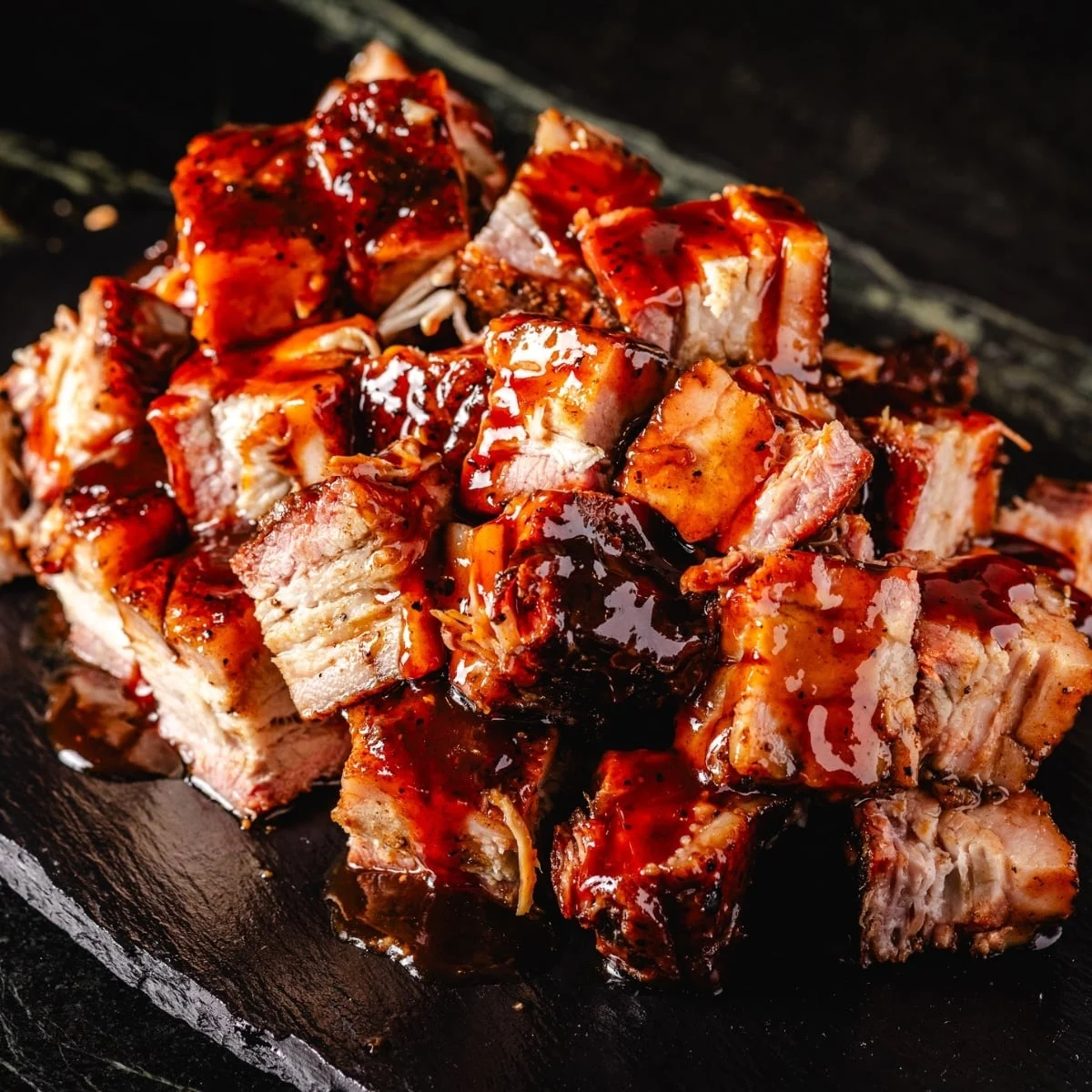
The culinary landscape of American barbecue has undergone a significant transformation over the last decade, with artisanal techniques once reserved for professional pitmasters now becoming staples in backyard kitchens. Central to this movement is the preparation of pork belly, a rich and versatile cut that has moved beyond its traditional role as the source of sliced bacon to become a standalone centerpiece. Among the most sought-after variations of this dish is the Maple Bourbon BBQ Pork Belly, a preparation that emphasizes the synergy between the deep, savory notes of smoked pork and the complex sweetness of a maple-bourbon reduction. This specific culinary approach, popularized by experts like Susie Bulloch of Hey Grill Hey, focuses on a streamlined four-ingredient methodology that prioritizes temperature control and patience over ingredient complexity.
The Evolution of Pork Belly in Modern Barbecue
Historically, pork belly was often relegated to the status of a commodity meat, used primarily for curing into bacon or salt pork. However, the rise of "meat candy" or "pork belly burnt ends" in the competitive BBQ circuit has elevated the cut to a gourmet status. The Maple Bourbon BBQ Pork Belly represents a refined version of this trend, utilizing a whole or cubed belly that is subjected to a multi-stage cooking process.

The appeal of pork belly lies in its high fat-to-meat ratio. When cooked at low temperatures, the intramuscular fat and connective tissue—primarily collagen—undergo a slow breakdown. This process, known as gelatinization, transforms the tough fibers into a tender, succulent texture that is unique to the belly. The integration of bourbon and maple syrup into the glazing stage adds a layer of sophistication; the bourbon provides oaky, vanillic undertones, while the maple syrup offers a rich, earthy sweetness that complements the smoke profile of the wood.
Chronological Methodology of the Maple Bourbon Smoke
The preparation of Maple Bourbon BBQ Pork Belly is a time-intensive process that requires approximately six to seven hours of active and passive cooking. Achieving the desired "melt-in-your-mouth" consistency requires a strict adherence to a three-phase chronological framework.
Phase One: The Initial Smoke and Bark Formation
The process begins with the preparation of the raw pork belly. Pitmasters typically recommend scoring the fat cap or dicing the belly into uniform cubes to increase the surface area for seasoning and smoke penetration. The meat is coated in a signature rib rub—a blend of salt, sugar, and spices—which serves as the foundation for the "bark," the flavorful outer crust. The smoker is stabilized at a consistent temperature of 225 degrees Fahrenheit. The pork is then subjected to three hours of indirect smoke. During this phase, the meat absorbs nitrogen dioxide from the wood smoke, creating the characteristic pink "smoke ring" just beneath the surface.

Phase Two: The Braising Period
After the initial three hours, the pork belly often reaches a "stall" where evaporative cooling prevents the internal temperature from rising. To overcome this and accelerate the breakdown of connective tissue, the meat is transitioned into a braising environment. It is placed in a foil pan or wrapped tightly with a liquid medium, such as apple juice or apple cider. This "Texas Crutch" method creates a localized steam environment, tenderizing the meat over the course of two to three hours until the internal temperature reaches approximately 190 to 195 degrees Fahrenheit.
Phase Three: The Glazing and Setting
The final hour is dedicated to the application of the Maple Bourbon Glaze. The braising liquid is drained, and the pork is coated in the thick, spirit-infused sauce. The meat is returned to the smoker uncovered. This allows the sugars in the maple syrup and the BBQ sauce to undergo the Maillard reaction and caramelization, creating a tacky, glass-like finish that adheres to the meat. The process is complete when the internal temperature hits a final target of 200 to 205 degrees Fahrenheit.
Technical Specifications and Temperature Management
In professional barbecue, the margin between a successful cook and a failed one is measured in degrees. For pork belly, the "doneness" is not determined by color but by the rendering of fat. Data suggests that 225 degrees Fahrenheit is the optimal ambient temperature for this cut, as it is high enough to render fat but low enough to prevent the sugars in the rub from burning.

According to internal temperature guidelines, the following milestones are critical:
- 160-165°F: The point at which the meat should be wrapped to preserve moisture.
- 190°F: The point at which glazing should begin.
- 203°F: The "gold standard" for pulled or bite-sized pork, where the collagen has fully converted to gelatin.
The use of high-precision thermometry, such as the Thermapen ONE, has been cited as a necessity for home cooks looking to replicate professional results. These devices provide near-instantaneous readings, allowing the pitmaster to check multiple points of the belly without losing significant heat from the smoker chamber.
Economic and Market Context
The popularity of recipes like Maple Bourbon BBQ Pork Belly has had a measurable impact on the meat industry. According to USDA market reports, the demand for pork bellies has seen significant volatility due to their dual role in the bacon market and the BBQ sector. While once considered a "cheap" cut, the "burnt end" craze has driven retail prices upward.

Furthermore, the rise of "ready-to-use" artisanal glazes and rubs has created a secondary market in the outdoor cooking industry. Consumers are increasingly seeking out high-quality maple syrups and premium bourbons specifically for culinary applications, rather than just consumption. This shift reflects a broader trend toward "foodie" culture in the domestic sphere, where the quality of raw ingredients is prioritized.
Nutritional Analysis and Dietary Considerations
From a nutritional standpoint, pork belly is an energy-dense food. A standard serving of Maple Bourbon BBQ Pork Belly contains approximately 1,241 calories, primarily derived from its 121 grams of fat. The dish is high in saturated fats (44g) and monounsaturated fats (56g). While it provides a significant amount of protein (22g) and essential minerals like potassium and iron, it is categorized as an indulgent or "treat" food rather than a dietary staple.
The inclusion of maple syrup and BBQ glaze adds a carbohydrate load of approximately 16 grams per serving, with 12 grams of sugar. For those monitoring caloric intake or macronutrient ratios, the richness of the dish often dictates smaller portion sizes, frequently served as an appetizer or "taster" in a multi-course BBQ spread.

Broader Implications for Home Culinary Trends
The success of the Maple Bourbon BBQ Pork Belly recipe highlights a significant shift in how information is disseminated in the digital age. Culinary influencers like Susie Bulloch have democratized professional-grade techniques. By breaking down complex processes—like braising and glazing—into four-ingredient frameworks, these recipes have lowered the barrier to entry for novice cooks.
Industry analysts suggest that this trend toward "at-home gourmet" is likely to continue as outdoor cooking technology, such as pellet grills and digital smokers, becomes more accessible. The Maple Bourbon BBQ Pork Belly is more than just a meal; it is a demonstration of the "backyard hero" phenomenon, where the ability to produce restaurant-quality smoked meats serves as a form of social currency and community building.
As the BBQ community continues to grow, the emphasis is expected to remain on the fusion of traditional smokehouse flavors with modern, sophisticated glazes. The combination of maple and bourbon remains a benchmark in this category, representing a perfect balance of Americana flavors that appeal to a wide demographic of palates. Through careful temperature management and the use of high-quality ingredients, the preparation of pork belly has been successfully translated from the professional pit to the suburban patio.
