
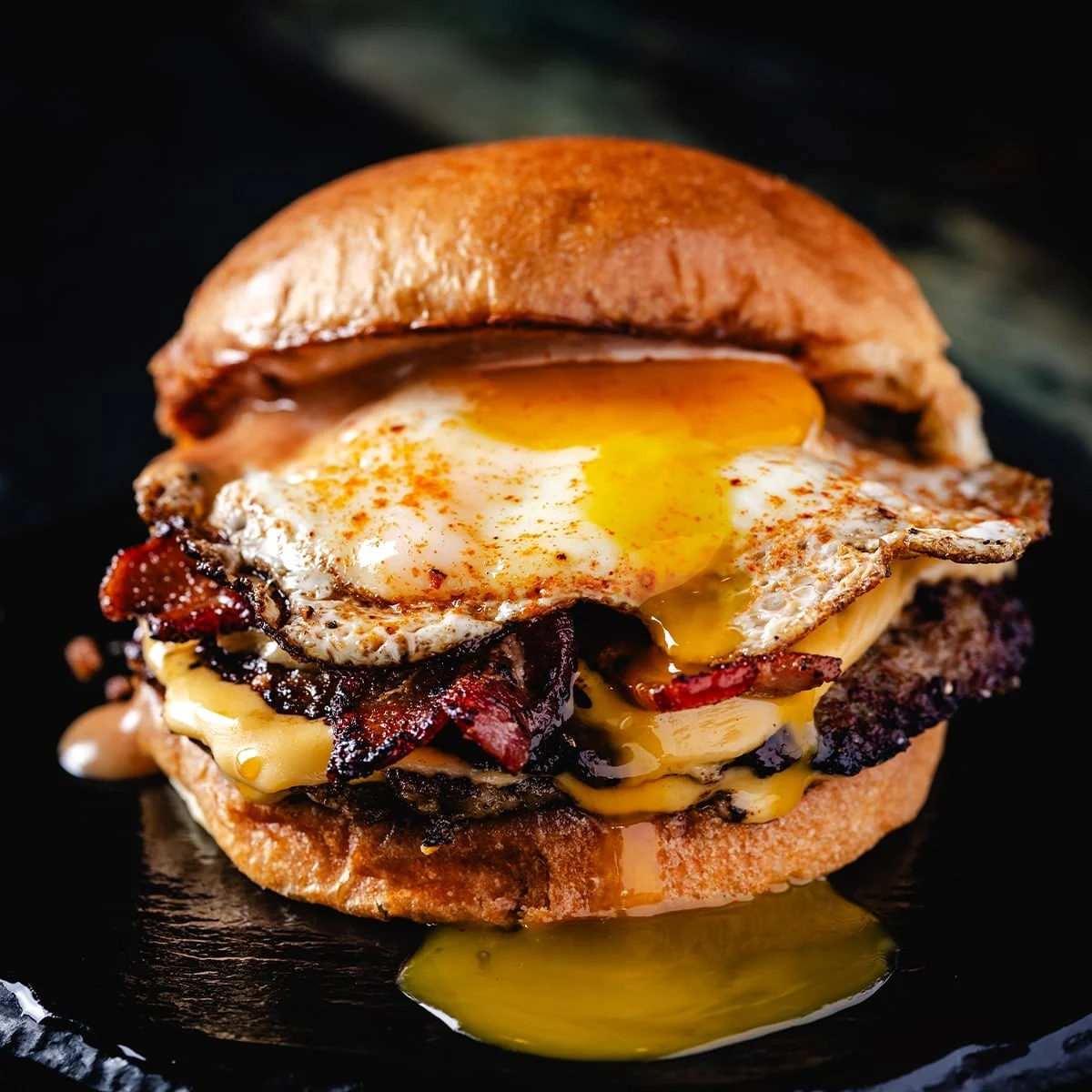
The culinary landscape of American breakfast has undergone a significant transformation over the last decade, shifting from traditional sit-down diner fare toward high-concept, artisanal creations that can be replicated in a domestic outdoor setting. At the forefront of this movement is the Breakfast Smash Burger, a dish that synthesizes the textural appeal of a classic lunchtime smash burger with the flavor profile of a traditional hearty breakfast. This specific iteration, developed by culinary expert Susie Bulloch of Hey Grill Hey, utilizes a combination of smashed sausage patties, candied bacon, American cheese, a sunny-side-up egg, and a specialized maple-infused mayonnaise sauce, all served on a toasted brioche bun. The emergence of this recipe reflects broader trends in the outdoor cooking industry, specifically the rising popularity of the flat-top griddle as a primary backyard appliance.
The Evolution of the Smash Burger Technique
The "smash" technique, once a niche method used by regional burger joints in the American Midwest, has become a global phenomenon. The scientific principle behind the success of the smash burger is the Maillard reaction—a chemical reaction between amino acids and reducing sugars that gives browned food its distinctive flavor. By applying high pressure to a ball of ground meat (in this case, breakfast sausage) against a hot, flat surface, the cook maximizes the surface area in contact with the heat. This results in a dense, caramelized crust that provides a textural contrast to the juicy interior of the patty.

In the context of breakfast, using pork sausage instead of ground beef introduces a different fat content and spice profile. Sausage typically contains a higher ratio of fat and seasonings such as sage, black pepper, and red pepper flakes, which react differently under the pressure of a burger press. The result is a patty that is significantly more flavorful than a standard breakfast link or pre-formed patty, offering the "lacy" crispy edges that have become the hallmark of the smash burger trend.
Culinary Components and Structural Integrity
A professional analysis of the Breakfast Smash Burger reveals a sophisticated balance of flavors and textures, often referred to as "culinary architecture." Each component serves a specific functional and gastronomic purpose:
- The Protein Base: The use of dual sausage patties provides a substantial foundation. By smashing them thin, the chef ensures that the meat-to-bun ratio remains balanced while doubling the surface area for caramelization.
- The Fat and Salt Profile: Thick-cut bacon, often prepared with a "candied" finish using BBQ rubs or maple elements, adds a secondary layer of crunch and a smoky saltiness that cuts through the richness of the sausage.
- The Emollient: American cheese is selected specifically for its melting point and emulsifying properties. Unlike aged cheddars, which can become oily when melted, American cheese creates a cohesive "glue" that binds the patties together.
- The Viscosity Factor: The fried egg, ideally prepared with a runny yolk, serves as a natural sauce. When the burger is consumed, the yolk breaks, coating the other ingredients in a rich, velvety liquid that enhances the "mouthfeel" of the sandwich.
- The Acid and Sweetness Balance: The "Breakfast Burger Sauce"—a mixture of mayonnaise, maple syrup, and hot sauce or BBQ rub—is critical for flavor equilibrium. The fat in the mayo carries the flavors, the maple syrup mirrors the sweetness of the brioche, and the acidity in the mustard or hot sauce provides the necessary "brightness" to prevent the palate from being overwhelmed by salt and fat.
- The Vessel: The brioche bun is an intentional choice. Its high egg and butter content allows it to stand up to the moisture of the runny yolk and the weight of the double patties without disintegrating, a common failure in lower-quality white bread buns.
Chronology of Preparation: From Prep to Plating
The preparation of a Breakfast Smash Burger requires precise timing to ensure all components reach the ideal temperature simultaneously.

- Phase 1: Mise en Place. The process begins with the formation of sausage "balls" (approximately 2–3 ounces each) and the preparation of the maple mayo sauce. Cold sausage is easier to handle and retains its shape better before hitting the heat.
- Phase 2: The Griddle Setup. The outdoor griddle is preheated to medium-high heat. Unlike a traditional grill, the solid surface of the griddle is essential for the smashing process.
- Phase 3: Initial Searing. Bacon is typically the first item to hit the surface, as it requires the longest rendering time and provides residual fat that can be used to toast the buns.
- Phase 4: The Smash. The sausage balls are placed on the griddle, covered with parchment paper to prevent sticking, and flattened with a heavy press. They are seasoned immediately with a savory BBQ rub.
- Phase 5: Assembly on the Heat. Once the patties are flipped, cheese is applied to allow for melting. Simultaneously, eggs are cracked onto a cooler zone of the griddle. Buns are toasted in the bacon fat or butter.
- Phase 6: Final Construction. The sauce is applied to the buns, followed by the double-stacked patties, bacon, and finally the egg. The burger is served immediately to preserve the integrity of the runny yolk.
Market Trends and the Rise of Outdoor Griddling
The popularity of recipes like the Breakfast Smash Burger is intrinsically linked to the explosive growth of the outdoor griddle market. Data from the Hearth, Patio & Barbecue Association (HPBA) indicates a significant uptick in the purchase of flat-top grills, with brands like Blackstone, Camp Chef, and Weber leading the charge. This shift represents a move away from traditional "low and slow" smoking or high-heat charbroiling toward "flattop" cooking, which offers more versatility for meals like breakfast, stir-fry, and smash burgers.
Industry analysts suggest that the "Blackstone Effect" has democratized professional-grade short-order cooking. Home cooks are now able to replicate the high-output, high-heat environment of a commercial kitchen in their backyards. This has led to a surge in "breakfast tailgating" and outdoor morning social gatherings, where the Breakfast Smash Burger has become a centerpiece dish.
Nutritional Analysis and Consumer Health Considerations
While the Breakfast Smash Burger is a staple of "indulgence cooking," it carries a significant nutritional profile that consumers must consider. According to data provided by the recipe’s creator, a single serving contains approximately 1,209 calories.

The breakdown of macronutrients is as follows:
- Total Fat: 95g (including 27g of saturated fat)
- Cholesterol: 344mg
- Sodium: 4,639mg
- Protein: 41g
- Carbohydrates: 44g
The high sodium content (nearly 200% of the FDA’s recommended daily value) is largely attributed to the processed nature of breakfast sausage, bacon, and American cheese. The high caloric density makes this dish a "luxury" or "occasional" meal rather than a daily breakfast staple. However, for the "active outdoor" demographic often associated with grilling culture, the high protein and fat content are often viewed through the lens of a "cheat meal" or a high-energy start to a day of physical activity.
Expert Perspectives: The Susie Bulloch Influence
Susie Bulloch, the founder of Hey Grill Hey, has become a pivotal figure in the modern BBQ community. Her approach focuses on making professional-level outdoor cooking accessible to the average homeowner. By breaking down complex techniques—like the physics of the smash burger—into repeatable steps, she has influenced a generation of backyard cooks.

Bulloch’s background, which includes appearances on the Food Network and multiple Guinness World Records in the realm of grilling, lends a high degree of authority to the recipe. Her emphasis on "taking the intimidation out of BBQ" is a key driver in why the Breakfast Smash Burger has gained such traction. It is a dish that looks and tastes "gourmet" but relies on fundamental techniques that can be mastered with minimal specialized equipment beyond a heavy press and a flat surface.
Broader Implications for the Food Industry
The rise of the homemade Breakfast Smash Burger has broader implications for the fast-food and casual dining sectors. For decades, the breakfast sandwich market was dominated by major chains like McDonald’s and Burger King. However, as consumers become more proficient in outdoor cooking and have better access to high-quality ingredients (such as artisanal sausage and brioche), the "value proposition" of the drive-thru is being challenged.
There is a growing segment of the population that prefers "experiential cooking"—the act of preparing a high-quality meal outdoors with family—over the convenience of fast food. This shift is forcing commercial restaurants to innovate, leading to the introduction of more "smashed" and "artisanal" items on mainstream menus.

Furthermore, the social media impact of such dishes cannot be overstated. The visual appeal of a "yolk break" over a crispy sausage patty is tailor-made for platforms like Instagram and TikTok, where food content drives significant consumer behavior. The Breakfast Smash Burger is not just a meal; it is a visual and social currency in the modern digital age.
In conclusion, the Breakfast Smash Burger represents more than just a trend in morning dining; it is a confluence of culinary science, market shifts in outdoor appliances, and a changing social dynamic regarding how and where we consume our most important meal of the day. As outdoor kitchens continue to evolve, dishes that bridge the gap between professional technique and backyard accessibility will likely continue to dominate the American culinary consciousness.
