
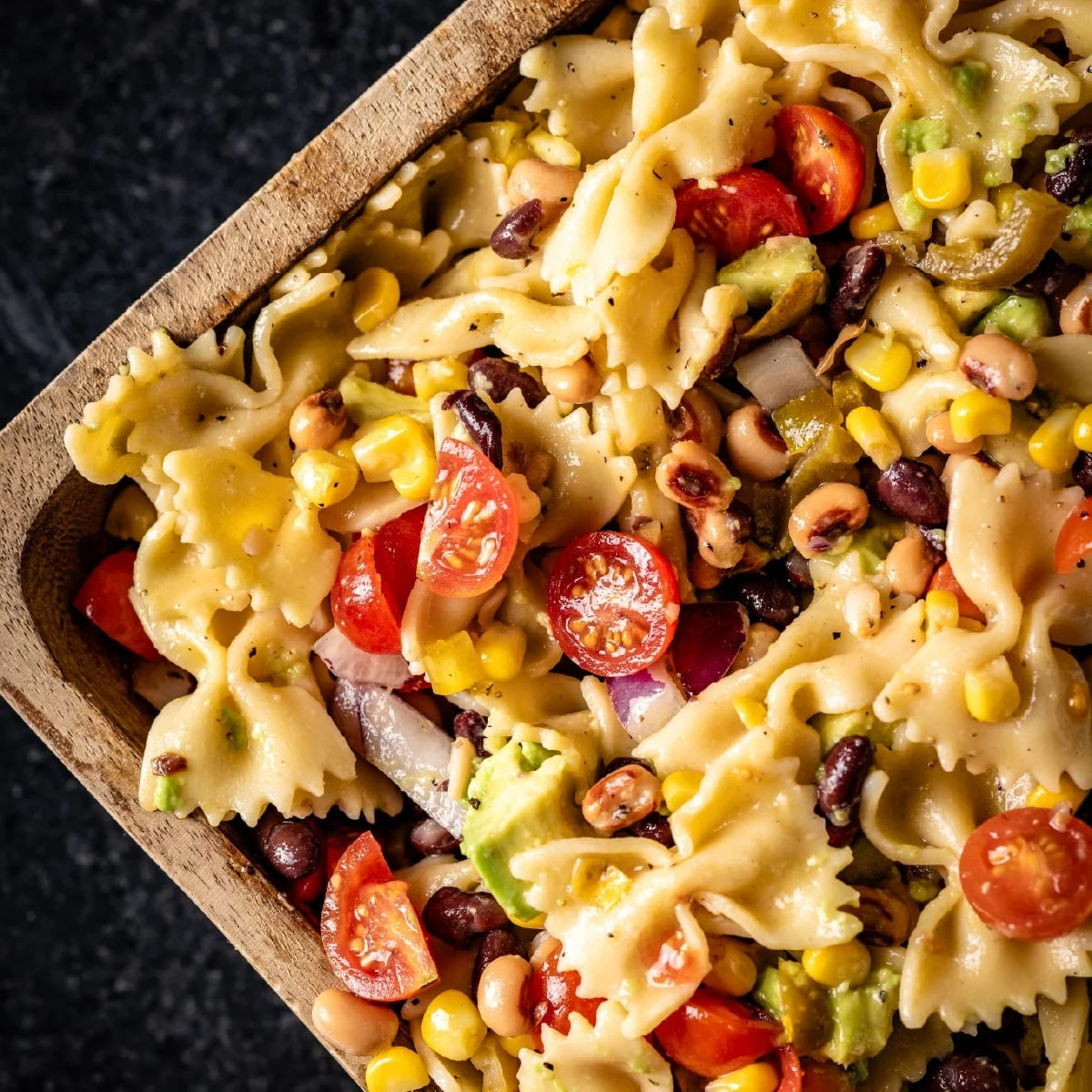
The Cowboy Pasta Salad represents a significant shift in contemporary American outdoor culinary culture, moving away from heavy, mayonnaise-based side dishes toward vibrant, acid-forward, and vegetable-centric alternatives. Characterized by its inclusion of bowtie pasta, black beans, sweet corn, and creamy avocado, all bound together by a tangy lime and red wine vinegar dressing, this dish serves as a hybrid of the traditional pasta salad and the Southwestern-inspired "Cowboy Caviar." As the backyard barbecue industry continues to evolve into a multi-billion dollar sector, the demand for versatile side dishes that can accommodate various dietary preferences while providing a refreshing contrast to smoked meats has reached an all-time high.
The Composition and Culinary Framework of Cowboy Pasta Salad
At its core, the Cowboy Pasta Salad is a study in texture and balanced flavor profiles. The recipe utilizes Farfalle, commonly known as bowtie pasta, as its structural foundation. This specific pasta shape is chosen not merely for its aesthetic appeal but for its functional ability to "cradle" smaller ingredients like corn kernels and black beans within its folds, ensuring a consistent distribution of flavors in every bite.

The vegetable components provide a spectrum of textures: the creaminess of ripe avocado, the slight snap of sweet corn, the velvety density of black beans, and the crispness of red onions. The inclusion of pickled jalapeños introduces a controlled element of heat and acidity, which is further amplified by a dressing composed of fresh lime juice, red wine vinegar, olive oil, and a touch of honey. This dressing is seasoned with a traditional Southwestern palette of garlic, cumin, and chili powder, creating a flavor profile that is simultaneously earthy, spicy, and bright.
Nutritional Profile and Dietary Analysis
From a nutritional standpoint, the Cowboy Pasta Salad offers a more complex macro-nutrient profile than many of its counterparts. According to data associated with the recipe, a standard serving contains approximately 383 calories. The carbohydrate content sits at 57 grams, primarily derived from the pasta and the fiber-rich black beans. Notably, the dish provides 11 grams of protein and 16 grams of fat, with a significant portion of that fat being monounsaturated, thanks to the inclusion of avocado and olive oil.
The dish is also a source of essential vitamins and minerals, providing 514 IU of Vitamin A and 17 mg of Vitamin C per serving, largely due to the fresh produce like cherry tomatoes and lime juice. For modern consumers who are increasingly health-conscious, the Cowboy Pasta Salad presents a "flexitarian" option; while it is traditionally vegetarian in the version popularized by culinary experts like Susie Bulloch, it remains modular enough to include proteins such as ground beef or bacon for those seeking a more traditional "cowboy" experience.

The Chronology of the "Cowboy" Culinary Aesthetic
To understand the rise of the Cowboy Pasta Salad, one must look at the timeline of its predecessors. The "Cowboy" prefix in American side dishes is most famously associated with "Cowboy Caviar" (also known as Texas Caviar), which was created in the late 1940s by Helen Corbitt, a former director of food services for Neiman Marcus in Dallas. Originally a simple mixture of black-eyed peas, onions, and oil-and-vinegar dressing, the dish was designed to be a humorous take on expensive sturgeon roe.
Over the subsequent decades, Cowboy Caviar evolved to include corn, bell peppers, and black beans. The transition from a bean dip to a pasta salad likely occurred during the late 20th-century "pasta salad boom," when American home cooks began experimenting with cold noodle dishes as easy-to-transport potluck staples. By the early 2020s, the "Cowboy" branding had become synonymous with a specific set of Southwestern ingredients, leading to the current iteration of the pasta salad which prioritizes zest and freshness over the heavy dairy bases of the 1980s.
The Role of Digital Creators and the "Hey Grill Hey" Influence
The modernization and viral success of the Cowboy Pasta Salad can be attributed in part to the influence of digital culinary platforms. Susie Bulloch, the founder of Hey Grill Hey and a prominent figure in the barbecue community, has played a pivotal role in repositioning side dishes as essential components of the BBQ experience rather than mere afterthoughts. Bulloch’s approach emphasizes efficiency—noting that the salad can be assembled in as little as ten minutes if the pasta is pre-cooked—and pantry-staple versatility.

In the digital age, the success of a recipe is often measured by its "shareability" at social gatherings. Bulloch has noted that this specific salad frequently results in guests requesting the recipe, a phenomenon that drives organic growth for digital food brands. By simplifying complex flavor profiles into accessible, quick-prep instructions, creators have empowered home cooks to elevate their backyard hosting capabilities.
The Science of Flavor Pairing in Outdoor Cooking
The popularity of the Cowboy Pasta Salad is also supported by the science of taste. Barbecue frequently involves rich, fatty, and smoky proteins such as brisket, pulled pork, or ribs. These meats stimulate the palate with umami and salt but can lead to "palate fatigue" due to their intensity.
The Cowboy Pasta Salad serves as a culinary "reset." The high acidity from the lime juice and red wine vinegar cuts through the fat of the meat, while the cold temperature of the salad provides a sensory contrast to the heat of the grill. Furthermore, the capsaicin in the jalapeños and the aromatic qualities of the cumin stimulate salivation, which enhances the overall perception of flavor across the entire meal. This synergy explains why the dish has moved from a niche regional variation to a mainstream staple of the American cookout.

Broader Socioeconomic Impact and Potluck Culture
The rise of dishes like Cowboy Pasta Salad reflects broader shifts in American social behavior. The "potluck" remains a cornerstone of community building in the United States, and the economic efficiency of pasta-based dishes makes them attractive during periods of fluctuating food prices. Beans and pasta are shelf-stable, cost-effective staples that, when combined with fresh seasonal produce, create a high-volume dish capable of feeding large groups at a low per-head cost.
Furthermore, the adaptability of the recipe addresses the increasing complexity of modern dietary requirements. In a setting where hosts may need to accommodate vegetarians, the Cowboy Pasta Salad provides a substantial, protein-rich option that does not feel like a compromise. This inclusivity is a key driver in the dish’s widespread adoption across different demographic groups.
Analysis of Implications for the Food Industry
The trend toward "Cowboy" style fusion dishes has significant implications for the retail and grocery sectors. Data suggests a growing consumer preference for "complete meal solutions" and ingredients that support Southwestern flavor profiles. Grocery stores have responded by increasing the shelf space dedicated to canned beans, specialized pasta shapes, and pre-made zesty dressings.

Additionally, the success of these recipes highlights the power of "pantry-raiding" culinary styles. As consumers face busier schedules, recipes that allow for the substitution of ingredients—such as using whatever beans are on hand or opting for different pasta shapes—see higher rates of retention and repeat preparation. The Cowboy Pasta Salad is a prime example of a "resilient recipe" that survives and thrives regardless of specific ingredient availability.
Conclusion: The Future of the Backyard Hero
As the American BBQ landscape continues to diversify, the Cowboy Pasta Salad stands as a testament to the enduring appeal of fusion cuisine. It honors the history of Texas-inspired bean salads while embracing the modern preference for fresh, zesty, and visually appealing components. By bridging the gap between a quick pantry meal and a "show-stopping" social dish, it has secured its place in the pantheon of great American side dishes.
For the aspiring "Backyard BBQ Hero," the lesson of the Cowboy Pasta Salad is clear: the most successful dishes are those that balance tradition with innovation, providing a refreshing counterpoint to the smoke and fire of the grill. As long as there are summer gatherings and communal tables, the zesty, lime-infused bowtie pasta will likely remain a requested guest, proving that sometimes, the most memorable part of the meal is the one that was initially intended as a simple side.
