
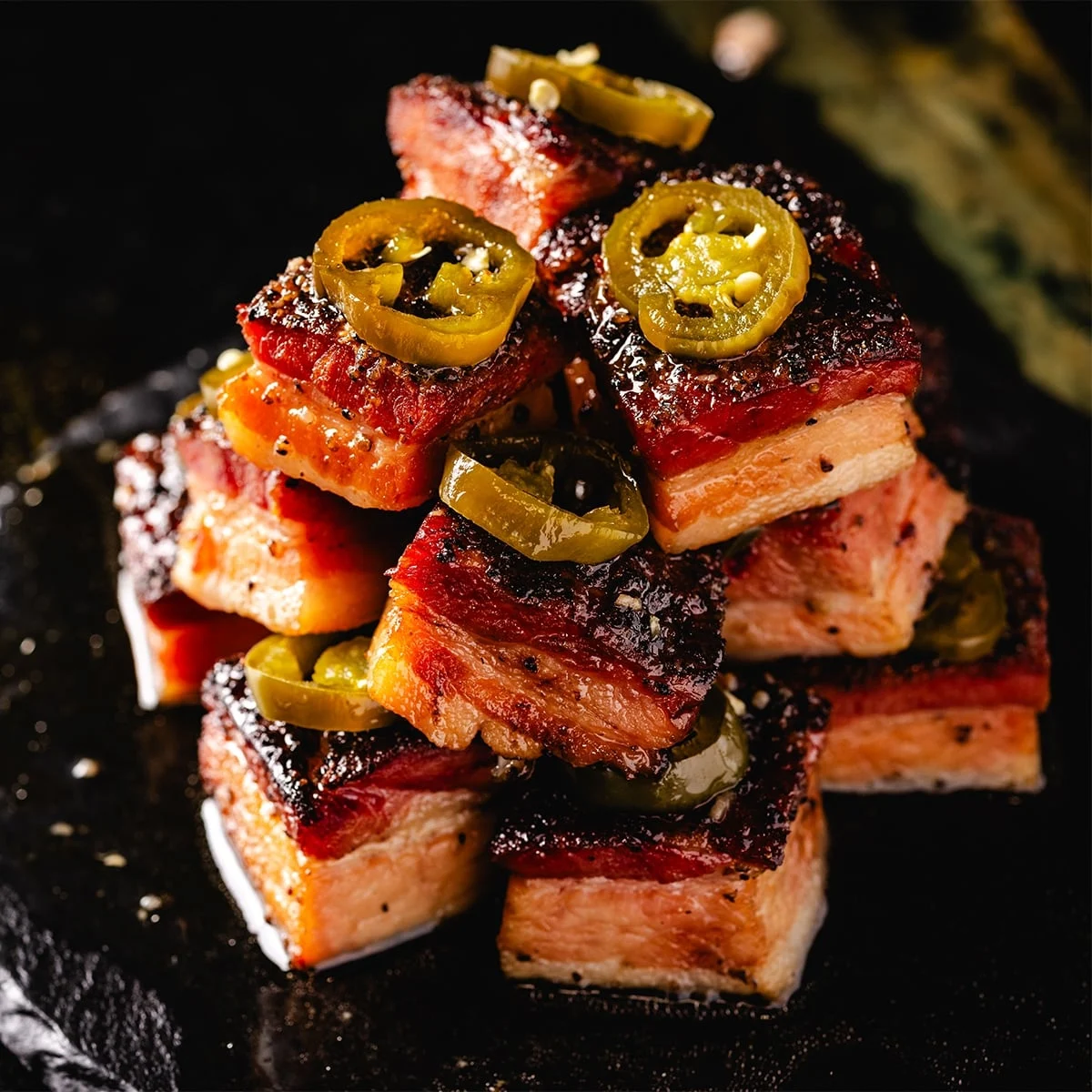
The culinary landscape of American barbecue has undergone a significant transformation over the last decade, transitioning from traditional regional staples to innovative, high-flavor profiles often referred to as meat candy. Among the most prominent examples of this evolution are pork belly burnt ends, a dish that adapts the classic Kansas City brisket tradition to the rich, fatty medium of the pork belly. A specific iteration of this dish, featuring a glaze derived from candied jalapeños and a savory seasoning profile known as Beefy Sprinkles, has emerged as a quintessential example of the "sweet-heat" flavor trend currently dominating the backyard smoking community and competitive barbecue circuits.
The Evolution of the Burnt End
Traditionally, burnt ends were a byproduct of the brisket smoking process. In Kansas City barbecue pits, the thin, pointed end of the brisket (the "point") would often become charred and overcooked while the thicker "flat" reached perfection. Pitmasters would trim these fatty, flavorful pieces and offer them as scraps to waiting customers or incorporate them into baked beans. Over time, these morsels became so popular that they evolved into a standalone menu item.

The adaptation of this technique to pork belly represents a more recent shift in barbecue culture. Pork belly, the same cut used to produce bacon, offers a higher fat-to-meat ratio than brisket, allowing for a more consistent "melt-in-your-mouth" texture. By cubing the belly before or during the smoking process, pitmasters maximize the surface area for seasoning and glaze, creating a bite-sized appetizer that balances smoke, salt, sweetness, and fat.
Technical Preparation and Chronology
The preparation of Candied Jalapeño Pork Belly Burnt Ends follows a rigorous thermodynamic process designed to render intramuscular fat while maintaining structural integrity. The process begins with a whole pork belly, which is typically seasoned with a complex dry rub. In this specific method, "Beefy Sprinkles"—a seasoning blend designed to enhance umami notes—is applied liberally to the meat.
The chronology of the cook is divided into three distinct phases:

- The Initial Smoke: The pork belly is placed in a smoker at a low temperature, typically between 225°F and 250°F. During this phase, which lasts approximately 2.5 to 3 hours, the meat absorbs nitrogen dioxide from the wood smoke, creating the characteristic pink "smoke ring." This phase continues until the internal temperature of the pork reaches approximately 160°F to 165°F.
- The Braising and Glazing Phase: Once the initial bark has set, the pork cubes are moved into a pan or tightly wrapped. It is during this stage that the candied jalapeño glaze is introduced. The glaze is prepared by simmering jalapeño rings in a mixture of sugar, apple cider vinegar, and spices (including garlic powder, onion powder, celery seed, and cayenne pepper). The liquid is reduced until it reaches a syrupy consistency.
- The Setting Phase: The glazed cubes are returned to the heat for an additional 30 to 60 minutes. This allows the sugars in the glaze to caramelize through the Maillard reaction, creating a sticky, tacky exterior that adheres to the rendered fat of the pork.
The Science of Fat Rendering and Temperature
A critical component of this recipe is the distinction between food safety temperatures and culinary perfection temperatures. According to the United States Department of Agriculture (USDA), pork is safe for consumption once it reaches an internal temperature of 145°F. However, for pork belly burnt ends, stopping at this temperature would result in a tough, unappealing texture.
Barbecue science dictates that connective tissues and dense fat deposits require higher temperatures to break down. Collagen begins to denature into gelatin at approximately 160°F, but the process is time-dependent. By pushing the pork belly to an internal temperature of 195°F to 203°F, the pitmaster ensures that the fat has fully rendered, resulting in a "jammy" consistency. This requires a reliable instant-read thermometer, as the window between "rendered" and "mushy" can be narrow.
Ingredient Analysis and Flavor Profiles
The success of the candied jalapeño variant lies in its complex flavor matrix. Each ingredient serves a specific chemical and sensory purpose:

- Pork Belly: Provides the fatty base and rich mouthfeel.
- Apple Cider Vinegar: The acidity in the vinegar acts as a foil to the heavy fat, cutting through the richness and brightening the overall palate.
- Capsaicin (Jalapeños): Provides the "heat" component. When combined with sugar, the perceived burn of the capsaicin is moderated, allowing the floral notes of the pepper to shine through.
- Sugar: Beyond sweetness, sugar is essential for the glaze’s viscosity and the eventual caramelization on the smoker.
- Celery Seed and Garlic/Onion Powder: These provide the savory "backbone" of the glaze, ensuring it does not become cloyingly sweet.
Market Trends and the Influence of Digital Pitmasters
The rise of recipes like Candied Jalapeño Pork Belly Burnt Ends is inextricably linked to the growth of the digital barbecue community. Figures such as Susie Bulloch, the founder of the "Hey Grill Hey" platform, have played a pivotal role in democratizing professional barbecue techniques for the average homeowner. Bulloch, a prominent figure in the industry who has appeared on the Food Network and held Guinness World Records for grilling, represents a shift toward accessible, high-quality home cooking.
The "Hey Grill Hey" model reflects a broader trend in the multi-billion dollar barbecue industry. According to the Hearth, Patio & Barbecue Association (HPBA), over 70% of American adults own a grill or smoker, and there has been a significant increase in the purchase of pellet grills, which allow for the precise temperature control necessary for complex recipes like burnt ends. The availability of specialized rubs and sauces through online storefronts has further fueled this hobbyist explosion.
Nutritional and Social Context
From a nutritional perspective, pork belly burnt ends are a calorie-dense food. Data indicates that a standard serving can contain upwards of 1,000 calories, with a significant portion derived from fats (97g) and sugars (21g). Consequently, these are traditionally served as appetizers or "treat" foods during social gatherings rather than daily staples.

The social implications of the dish are also noteworthy. Barbecue has long been a communal activity in American culture, serving as a centerpiece for backyard gatherings, holidays, and community events. The "burnt end" has transitioned from a discarded scrap to a "hero" dish—a centerpiece that signals the host’s proficiency with a smoker.
Broader Culinary Impact
The "swicy" (sweet and spicy) flavor profile highlighted in this recipe is currently one of the fastest-growing trends in the global food industry. Market research suggests that consumers are increasingly seeking out complex heat profiles that offer more than just a burning sensation. By combining the traditional smoke of American barbecue with the preserved heat of candied jalapeños, this dish aligns with global culinary shifts toward fusion and bold experimentation.
As the barbecue season continues, industry experts expect to see further variations of the pork belly burnt end. Innovations involving different fruit-based glazes (such as peach or cherry) and alternative spice profiles (such as gochujang or chipotle) are already beginning to appear in professional competitions. However, the candied jalapeño version remains a gold standard for its balance of traditional technique and modern flavor.

In conclusion, Candied Jalapeño Pork Belly Burnt Ends represent more than just a popular recipe; they are a synthesis of historical barbecue evolution, precise thermodynamic science, and contemporary flavor trends. For the backyard enthusiast, they offer a gateway into the technical world of low-and-slow smoking, providing a tangible—and edible—reward for the patience required to master the flame. As digital platforms continue to share these techniques, the line between professional pitmaster and home cook continues to blur, further enriching the American barbecue tradition.
