
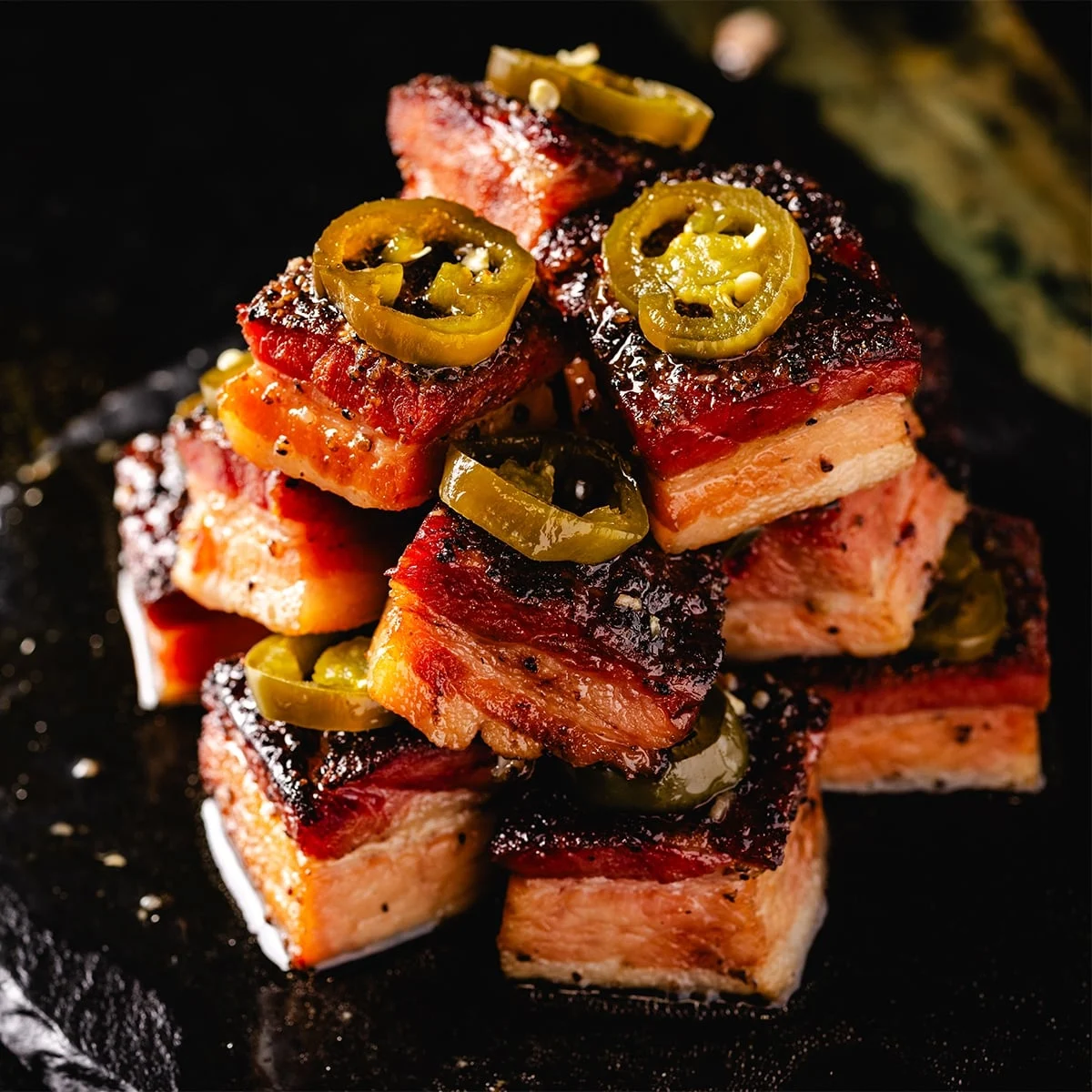
The Technical Framework of Pork Belly Burnt Ends
The concept of the "burnt end" originated in Kansas City, historically referring to the flavorful, crusty tips of a smoked beef brisket. However, in the last decade, the culinary industry has seen a shift toward using pork belly as the primary medium for this dish. Unlike brisket, which can be prone to dryness if not managed correctly, pork belly is characterized by its high ratio of intramuscular fat and skin-side fat layers. When cubed and subjected to prolonged thermal processing, these fats render down, softening the connective tissues and creating a decadent, jammy consistency.
The preparation begins with a high-quality slab of pork belly, typically seasoned with a robust dry rub. In this specific methodology, the use of a "beefy" seasoning profile—traditionally reserved for red meats—is employed to provide a savory counterpoint to the inherent sweetness of the pork and the subsequent glaze. The smoking process is conducted at a consistent low temperature, usually between 225 and 250 degrees Fahrenheit, allowing the smoke to penetrate the meat while the fat slowly liquifies.

The Chemistry of the Candied Jalapeño Glaze
The defining characteristic of this dish is the integration of a candied jalapeño reduction. The glaze is a product of a specific chemical reaction between capsaicin, acetic acid, and sucrose. The jalapeño rings are simmered in a mixture of apple cider vinegar and sugar, supplemented by turmeric, celery seed, garlic powder, and cayenne pepper.
During the simmering process, the sugar acts as a preservative and a texturizer, drawing moisture out of the peppers while infusing them with sweetness. The vinegar provides necessary acidity to balance the richness of the pork fat. From a technical standpoint, the reduction of this liquid into a syrupy glaze is critical. The glaze must reach a specific viscosity to adhere to the pork cubes during the final stages of smoking, where the heat triggers the Maillard reaction—a chemical reaction between amino acids and reducing sugars that gives browned food its distinctive flavor.
Chronology of the Smoking Process
The production of Candied Jalapeño Pork Belly Burnt Ends follows a strict timeline to ensure the desired structural integrity and flavor absorption:

- Preparation and Cubing: The raw pork belly is sliced into uniform cubes, typically 1 to 1.5 inches in size. Uniformity is essential for consistent heat distribution and simultaneous completion.
- Seasoning Phase: The cubes are coated in a dry rub. Professional pitmasters recommend a resting period after seasoning to allow the salt to penetrate the meat through osmosis, which helps retain moisture during the smoke.
- Initial Smoke: The cubes are placed on the smoker. This phase typically lasts several hours. The objective is to reach an internal temperature of approximately 160 to 165 degrees Fahrenheit, at which point the "bark" or outer crust has begun to set.
- The Braising/Glazing Phase: The pork cubes are transferred to a pan and tossed with the candied jalapeño glaze. This stage often involves covering the pan with foil to accelerate the breakdown of collagen.
- Final Rendering and Tacky Finish: The cubes are uncovered for the final 30 to 60 minutes of cooking. This allows the glaze to caramelize and become "tacky," adhering firmly to the meat. The process is considered complete when the internal temperature reaches approximately 195 degrees Fahrenheit.
Data Analysis: Nutritional and Economic Factors
From a nutritional perspective, pork belly burnt ends are a high-calorie, high-fat food item. According to automated nutritional calculations for this specific preparation, a standard serving can contain upwards of 1,033 calories, with 97 grams of total fat. Of this, 35 grams are saturated fats. However, the dish also provides approximately 17 grams of protein per serving. The sugar content, largely driven by the glaze, sits at roughly 21 grams.
Economically, the rise of pork belly burnt ends has mirrored the broader trends in the pork industry. Historically, pork belly was a lower-cost commodity, primarily utilized for bacon production. However, as "burnt ends" and "pork belly sliders" became staple items on artisanal BBQ menus, the wholesale price of pork belly has seen periodic spikes. Market data suggests that the versatility of the cut has made it a favorite for home cooks looking to replicate restaurant-quality results with a relatively forgiving piece of meat compared to the more temperamental beef brisket.
Industry Trends and Influencer Impact
The proliferation of this recipe is partly attributed to the growth of the digital culinary influencer economy. Figures like Susie Bulloch, founder of Hey Grill Hey, have played a pivotal role in democratizing professional smoking techniques for the "backyard BBQ hero." By providing accessible, step-by-step instructions and proprietary seasoning blends, these influencers have shifted the landscape of American outdoor cooking.

The trend toward "sweet-heat" (the combination of sugary glazes with spicy peppers) has become a dominant flavor profile in the 2020s. Consumer research in the condiment and snack sectors indicates a growing preference for complex heat over pure capsaicin burn. The candied jalapeño profile fits perfectly within this consumer demand, offering a sophisticated balance that appeals to a wide demographic.
Safety Standards and Regulatory Guidelines
The United States Department of Agriculture (USDA) maintains strict guidelines for the preparation of pork products. While the USDA states that pork is safe to consume at an internal temperature of 145 degrees Fahrenheit (followed by a three-minute rest), the culinary standard for burnt ends is significantly higher.
To achieve the "jammy" texture required for this specific dish, the meat must be pushed to 195 degrees Fahrenheit. This is not a matter of food safety, but of food science; the higher temperature is required to fully render the dense connective tissues found in the belly. Pitmasters emphasize the use of reliable instant-read thermometers to ensure accuracy, as the window between "perfectly rendered" and "melted into grease" can be narrow.

Broader Culinary Implications
The success of Candied Jalapeño Pork Belly Burnt Ends highlights a broader shift in American barbecue culture toward fusion and experimentation. While regional purists in places like Central Texas or Eastern North Carolina may emphasize meat and salt alone, the modern BBQ scene is increasingly defined by its willingness to incorporate diverse ingredients like turmeric, cider vinegar, and jalapeños into traditional formats.
Furthermore, the dish serves as a case study in the "zero-waste" philosophy of modern cooking. By utilizing the liquid from candied jalapeños—which might otherwise be discarded—as a primary glazing agent, the recipe demonstrates an efficient use of pantry staples to create high-value flavor profiles.
In conclusion, Candied Jalapeño Pork Belly Burnt Ends is more than a mere recipe; it is a manifestation of current gastronomic trends that prioritize rich textures, balanced flavors, and technical precision. As the backyard BBQ movement continues to evolve, the integration of sweet-heat glazes and high-fat cuts of meat is expected to remain a staple of the American culinary identity, offering a sophisticated take on traditional smokehouse fare. For the home cook, the dish represents an achievable yet impressive feat of culinary engineering, turning a simple slab of pork into a complex, multi-layered gastronomic experience.
