
The fourth episode of the Food Network series Pitmasters marked a definitive pivot in the program’s competitive structure, moving away from standard elimination rounds toward a high-stakes, head-to-head format that emphasized whole-animal utilization. For remaining contestants Susie Bulloch of Hey Grill Hey and Christie Vanover of Girls Can Grill, the episode—titled for its demanding "Big Burn" and "Flash Burn" segments—represented a tactical test of culinary heritage, butchery skills, and time management under extreme pressure.
A Transformation in Competition Format
Historically, Pitmasters has functioned as a cumulative challenge series. However, Episode Four introduced a bracket-style elimination phase. As a reward for their performance in the previous "Big Burn," Bulloch and Vanover were granted the authority to dictate the matchups for the six remaining teams. This strategic advantage allowed them to assign specific animals—goat, lamb, or pig—to their competitors.

Choosing to face off against colleagues Matt and Max in the pig bracket, Bulloch and Vanover utilized a calculated approach to their menu planning. By opting for a German-inspired theme, the team sought to leverage historical regional cooking techniques that emphasize the use of diverse cuts, which aligns with the judges’ focus on sustainability and nose-to-tail consumption.
The Big Burn: Technical Requirements and Challenges
The primary challenge, the "Big Burn," allotted ten hours for teams to transform a whole pig into two distinct main courses and two accompanying side dishes. Andrew Zimmern, serving as a lead voice for the judging panel, established clear expectations: the meat must be the centerpiece of every dish, and the utilization of the animal must be deliberate and comprehensive.
For the main courses, the team prepared a smoked sauerbraten, utilizing the pork shoulder and shanks. This traditional German dish requires a methodical braising process, which the team adapted for an open-fire environment. The process was noted by the production staff and judges for its aromatic intensity, with pitmaster Ernest Servantes acknowledging the technical proficiency required to maintain flavor profiles over a long-duration cook.

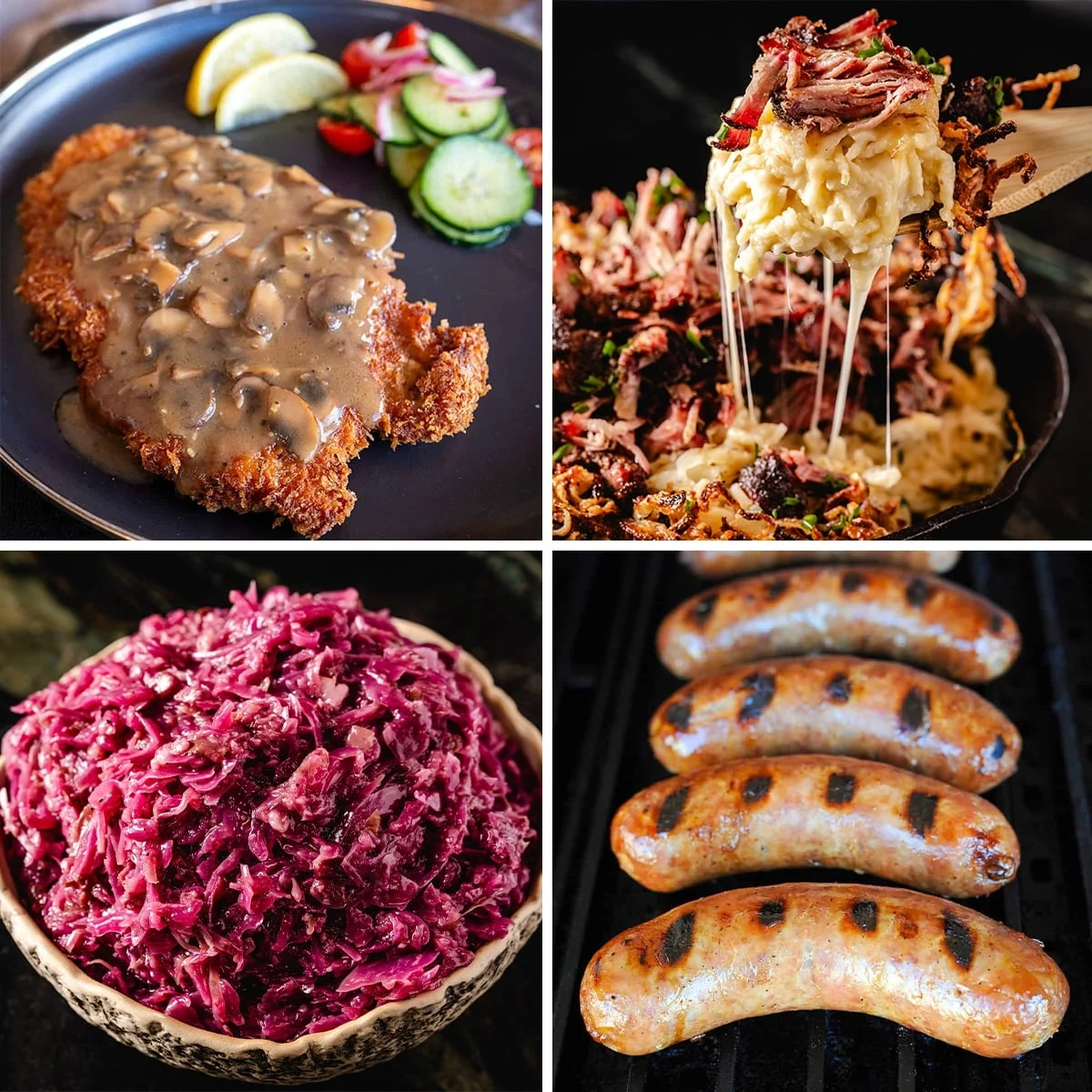
The second main dish was a pork loin jagerschnitzel. This required a high degree of precision, as the team chose to produce a pork stock from scratch, utilizing the rib bones of the animal. This decision to avoid pre-prepared ingredients underscored the "nose-to-tail" requirement, ensuring that the bone marrow and collagen provided the necessary depth for the accompanying mushroom gravy.
Culinary Execution and Side Dish Integration
The supporting dishes were designed to complement the acidity and richness of the pork. The team prepared a traditional rotkohl (braised red cabbage) enhanced with smoked pork belly, and a handmade käsespätzle. The spätzle, a classic German egg noodle, was topped with smoked pig cheeks.
From an operational standpoint, the preparation of handmade noodles over an open fire represents one of the more significant technical hurdles in competitive outdoor cooking. The thermal volatility of wood-fire pits makes consistent starch preparation difficult, requiring constant temperature monitoring. The success of this dish relied on the synergy between the lean proteins and the high-fat content of the pig cheeks, which provided the necessary mouthfeel to round out the meal.

The Flash Burn: High-Speed Charcuterie
Following the ten-hour main challenge, the "Flash Burn" segment intensified the pressure by restricting teams to a single hour to produce a specialized sausage link. The rules for this segment were strict: the product had to be fully cased, properly seasoned, and ground on-site, with no shortcuts allowed.
The team developed a beer-braised pork bratwurst, incorporating caramelized onions and pickled mustard seeds. The inclusion of pickled mustard seeds served a specific culinary purpose: the high acidity cuts through the heavy fat content of the sausage, providing a balance that is essential in professional sausage making. This segment underscored the logistical difficulty of the competition, as the teams had to process the raw meat, case the links, and achieve internal cooking temperatures within a sixty-minute window.
Implications of the Bracket System
The shift to a head-to-head format carries significant implications for the remainder of the season. In this model, the winner of each specific matchup earns immunity from the immediate elimination, while the loser remains subject to the cumulative scoring system. This structure forces contestants to balance the desire for culinary experimentation with the need for high-scoring, safe performances.

For the viewing audience, this format highlights the discrepancy between "backyard" barbecue and professional-level competition. While the ingredients may remain familiar to home cooks, the requirement to utilize a whole animal while maintaining high-end restaurant standards creates a pressurized environment that often leads to failure in even the most seasoned competitors.
Judging Standards and Professional Feedback
The judging panel, which evaluated the entries based on flavor, texture, and adherence to the "nose-to-tail" philosophy, noted that the teams who successfully integrated the animal into every aspect of the meal—including the stocks and sauces—ranked significantly higher. The ability to articulate the "why" behind the choice of specific cuts was as important as the final product.
The competition remains ongoing, with episodes airing on Monday evenings. The cumulative scores from the "Big Burn" rounds will determine which teams advance to the season finale. The performance of the remaining contestants in the upcoming weeks will likely hinge on their ability to adapt to varying protein requirements, as the series continues to rotate through different livestock, testing the versatility of the remaining pitmasters.

Broader Impact on the Barbecue Industry
The focus on whole-animal cooking in media reflects a broader shift within the professional barbecue industry. As meat costs fluctuate and consumers show increased interest in sustainable butchery, the ability to utilize "off-cuts"—such as cheeks, shanks, and organ meats—is becoming a mark of a skilled pitmaster. By showcasing these techniques on a platform like the Food Network, the series is helping to normalize the use of diverse animal parts in the American barbecue lexicon.
The production of these dishes under competitive time constraints provides a unique case study for culinary students and professionals alike. The transition from a traditional "three-meat" competition format to one that demands total animal utilization signals that the evolution of competitive barbecue is trending toward more technical, labor-intensive, and thoughtful culinary practice. As the season progresses, the teams that demonstrate the most efficient use of their available resources will undoubtedly maintain their position in the brackets.
