
The Food Network has officially launched its latest culinary competition series, Pitmasters, a high-stakes program that shifts the traditional barbecue competition format into a grueling outdoor environment. The series premiere introduces a rigorous structure where nine teams of two are transported to a remote, high-elevation location to compete in a seven-day open-fire cooking marathon. Among the featured competitors are Susie Bulloch, founder of the prominent barbecue resource Hey Grill Hey, and Christie Vanover, the creator of Girls Can Grill. The debut episode sets a demanding precedent, requiring participants to navigate unpredictable weather, fluctuating temperatures, and the physical limitations of high-altitude cooking while facing critique from a panel of industry legends.
The inaugural episode establishes the two-tier challenge system that defines the competition: the "Flash Burn" and the "Big Burn." These segments are designed to test both the speed and the endurance of the pitmasters, forcing them to manage long-term smoking projects while simultaneously executing short-term, high-pressure tasks. The competition is overseen by a four-member judging panel consisting of Emmy-winning personality Andrew Zimmern, veteran pitmaster Big Moe Cason, championship cook Ernest Servantes, and meat specialist Jess Pryles.
The Flash Burn Challenge: Precision Under Pressure
The first segment of the competition, the Flash Burn, presented a significant logistical hurdle for the teams. Contestants were given exactly one hour to produce a "one-bite" dish that encapsulated their culinary identity and technical skill. In the context of professional barbecue judging, the one-bite format is critical; it mimics the sensory experience of a judge who must evaluate the flavor, texture, and balance of a dish based on a single sample.
Bulloch and Vanover opted for a fusion approach, combining their respective family backgrounds and regional influences. Their entry, Buffalo Chicken Lumpia, served as a bridge between traditional American barbecue flavors and Filipino cuisine. Vanover’s expertise in Filipino-inspired dishes—rooted in her husband’s heritage—provided the structural basis of the lumpia, a thin, savory spring roll. Bulloch contributed the flavor profile of Buffalo chicken thighs, a staple of her "Hey Grill Hey" brand.

The preparation involved searing chicken thighs on planchas over an open flame, a technique requiring constant heat management to avoid charring while ensuring the meat remained succulent. Once the chicken was cooked and shredded, it was hand-rolled into lumpia wrappers and deep-fried in a Dutch oven positioned directly over hot coals. The dish was finished with a cooling cabbage slaw and a creamy Buffalo ranch dressing. Despite initial skepticism from judge Andrew Zimmern regarding the fusion concept, the dish received positive feedback for its execution and flavor balance. The Flash Burn carries a $2,000 prize for the winning team, providing an immediate financial incentive and a psychological advantage as the teams transition into the more labor-intensive portion of the episode.
The Big Burn: A Ten-Hour Test of Endurance
The primary challenge of the episode, the Big Burn, required the teams to produce two proteins and at least one side dish within a ten-hour window. This segment emphasizes the "low and slow" philosophy central to American barbecue but complicates it with the variables of open-fire cooking. Unlike controlled indoor kitchens or even standard backyard smokers, the open-fire pits used in the show are subject to wind, humidity, and oxygen levels, all of which affect the combustion of wood and the consistency of the heat.
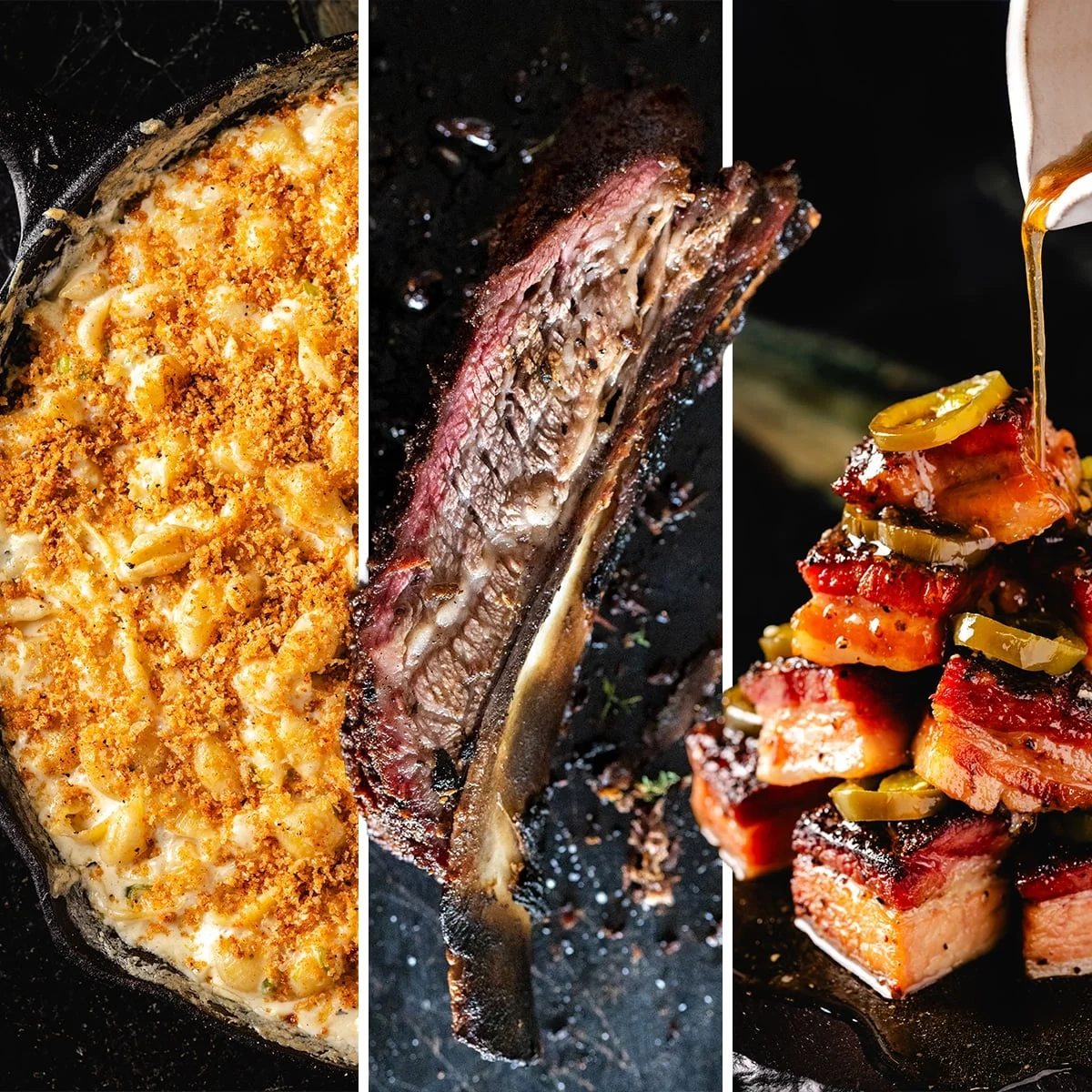
Bulloch and Vanover divided the responsibilities to maximize their output. Bulloch focused on Candied Jalapeño Pork Belly Burnt Ends, a dish characterized by its sweet and spicy glaze. Pork belly, which is high in fat content, requires precise rendering to achieve a "melt-in-the-mouth" texture without becoming greasy. However, the team encountered a common but stressful phenomenon known as "the stall." This occurs when the internal temperature of the meat stops rising as the moisture on the surface evaporates, cooling the meat as quickly as the pit heats it.
To overcome the stall at high elevation, the team employed the "Texas Crutch" method. This involves wrapping the meat in foil to trap moisture and heat, effectively steaming the protein through the temperature plateau. This technical decision was vital in ensuring the pork belly reached the necessary tenderness within the ten-hour limit. Accompanying the pork was a Smoked Poblano Shells and White Cheddar dish, utilizing extra sharp white cheddar and smoked gouda to provide a robust flavor profile that could stand up to the intensity of the smoked meats.
Simultaneously, Vanover prepared "Dino Ribs"—massive beef plate short ribs known for their impressive visual presentation and rich marbling. Vanover utilized a specialized brisket rub to build a "bark" (the flavorful, dark crust on the exterior of smoked meat) before cooking them until they reached a probe-tender state. To add further complexity to the platter, she sliced medallions from the finished ribs and seared them on a plancha to introduce a Maillard-reaction-driven crust, balancing the richness of the beef with a bright, acidic spinach salad.

Technical Hurdles and Environmental Factors
The production of Pitmasters in a remote mountain setting introduced environmental variables that significantly impacted the cooking process. High elevation affects the boiling point of water and the behavior of fire. At higher altitudes, the air is thinner, meaning there is less oxygen to fuel the fire and less atmospheric pressure, which can cause moisture to evaporate more quickly from the meat.
Furthermore, the chronology of the episode highlights the physical toll on the contestants. As the ten-hour cook progressed into the evening, temperatures dropped significantly. Footage from the judging segment showed both competitors and judges wearing multiple layers of heavy clothing. The transition from the heat of the pits to the near-freezing mountain air creates a challenging environment for maintaining the serving temperature of the food, a critical component of the judges’ criteria.
The judging process itself is an exhaustive affair. Unlike many culinary shows where feedback is delivered in a brief, edited sequence, the Pitmasters format involves a communal meal where judges and competitors discuss the nuances of the cook. This provides a platform for technical critiques on smoke rings, fat rendering, and spice balance, offering viewers a deeper look into the science of barbecue.
Broader Impact on the Barbecue Industry
The premiere of Pitmasters reflects a broader trend in the American culinary landscape. Barbecue has transitioned from a regional craft to a multi-billion dollar industry fueled by digital media and competitive television. According to market research, the global barbecue grill market was valued at approximately $5.5 billion in 2023, with a significant portion of that growth driven by the "backyard pro" demographic—consumers who invest in professional-grade equipment and follow digital creators like Bulloch and Vanover.
For digital-first personalities, appearing on a Food Network production provides mainstream validation and expands their reach beyond social media platforms. Bulloch’s "Hey Grill Hey" and Vanover’s "Girls Can Grill" have already established significant footprints in the digital space, providing recipes, tutorials, and specialized products to millions of home cooks. Their participation in Pitmasters highlights the professionalization of the "influencer" role, as they compete on equal footing with traditional restaurant chefs and seasoned competition circuit veterans.

The show also serves as an educational tool for the public. By showcasing techniques like the Texas Crutch or the use of planchas in open-fire cooking, the series demystifies the complexities of barbecue. It emphasizes that high-quality results are the product of thermal dynamics, meat science, and environmental adaptation rather than just "secret sauces" or intuition.
Future Outlook for the Season
As Pitmasters continues its inaugural season, the stakes are expected to rise. The elimination format ensures that only the most adaptable teams will survive the week-long gauntlet. The show’s emphasis on open-fire cooking distinguishes it from previous barbecue competitions that allowed for more automated pellet smokers or electric rigs. This return to "primitive" cooking methods, combined with modern culinary sensibilities, positions Pitmasters as a flagship program for the Food Network’s outdoor cooking block.
The results of the first episode remain a point of intrigue for viewers, as the show balances the drama of competition with the celebration of barbecue culture. With experts like Andrew Zimmern—who is known for his deep knowledge of global food traditions—and Big Moe Cason—a titan of the competition circuit—the adjudication remains rooted in high standards of authenticity and technical excellence.
The series airs weekly on Food Network and is available for streaming on Discovery+, catering to a global audience interested in the intersection of outdoor adventure and gourmet craftsmanship. As the competition progresses, viewers will see if the strategic partnership of Bulloch and Vanover can continue to navigate the elements and the high expectations of the judging panel. Regardless of the final outcome, the series has already succeeded in elevating the discourse surrounding open-fire cooking to a national stage.
