

The bustling aisles of Aldi, a rapidly expanding grocery chain, often give the impression of a well-oiled machine operating with remarkable efficiency. While customers might perceive the job as a series of straightforward tasks like stocking shelves and scanning groceries, the reality for Aldi employees is a demanding environment governed by a strict set of rules designed to maintain the company’s signature speed and customer service. From rigorous time targets for seemingly simple tasks to the necessity of maintaining an unwavering positive demeanor, Aldi employees navigate a unique operational landscape that prioritizes efficiency above many other considerations. This behind-the-scenes scrutiny, often unobserved by the average shopper, reveals a high-pressure work environment that is both physically and mentally taxing.
The company’s commitment to efficiency is deeply ingrained in its operational philosophy, a strategy honed over decades since its founding in Germany in 1913. Aldi’s business model, characterized by a limited product selection, private-label brands, and a focus on cost-saving measures, relies heavily on the speed and productivity of its workforce. This model, which has seen significant growth in the United States, with the company operating nearly 2,700 stores and employing tens of thousands, necessitates a highly disciplined approach to daily operations. A deep dive into employee accounts, often shared on platforms like Reddit, and an examination of company policies shed light on the specific regulations that shape the workday for thousands of individuals across the country.

The Unrelenting Pace of the Checkout
One of the most visible and talked-about aspects of the Aldi employee experience is the extraordinary speed required at the checkout counter. The perception of a grocery checkout feeling like an "extreme sport" is not an exaggeration for those behind the scanner. Aldi cashiers are not merely scanning items; they are engaged in a meticulously timed performance. Every transaction is monitored, with key performance indicators including the number of items scanned per hour and the average time taken to move from one customer to the next. For many, the target is to scan an item every second, a pace that is both physically demanding and requires an exceptional level of focus.
The consequences of failing to meet these stringent speed targets can be significant. Employees may be subjected to retraining to improve their efficiency. However, persistent underperformance can lead to more severe repercussions, including potential termination. This high-stakes environment explains the almost frantic, yet highly coordinated, manner in which groceries are processed. To assist their cashiers in meeting these demanding targets, customers can play a crucial role. Utilizing cart dividers to clearly separate different orders and organizing items for efficient scanning, such as placing heavier goods first, can significantly streamline the checkout process. This symbiotic relationship between customer cooperation and employee efficiency is a cornerstone of Aldi’s checkout strategy, a tactic that has been instrumental in its ability to move large volumes of customers through its stores rapidly.
The seated cashier model, a hallmark of Aldi’s checkout experience, is a direct consequence of this emphasis on speed and efficiency. Unlike many traditional American grocery stores where cashiers stand, Aldi cashiers are seated. This practice, common in European grocery stores, is not merely for comfort. It is a strategic decision aimed at reducing employee fatigue and maximizing scanning speed. Workers have reported that the ability to remain seated allows for less movement and a more direct, efficient motion for scanning items. This translates into a tangible difference in productivity. One Aldi employee shared on the r/Aldi_employees subreddit that while working at conventional grocery stores where cashiers stand, they would typically ring 15-20 items per minute, even with a bagger. At Aldi, however, they routinely see cashiers, themselves included, achieving 40-50 rings per minute. This nearly doubling of efficiency per cashier underscores the effectiveness of the seated model in achieving Aldi’s operational goals.

Beyond the Register: Speed in Every Task
The pressure to perform at an accelerated pace extends far beyond the checkout lanes. Employees responsible for unloading inventory from pallets also operate under strict time constraints. According to employee accounts on Reddit, the average time target for unloading a single pallet is approximately 30 minutes. This target, however, is not applied uniformly to all employees. New hires are typically given a more lenient timeframe, around 45 minutes for unloading a chiller pallet, allowing them to acclimate to the demands of the job. As employees gain experience, with those working for more than 18 weeks expected to consistently meet the 30-minute benchmark. Some stores, driven by local performance metrics or specific operational needs, may even impose stricter deadlines, expecting pallets to be completed in as little as 25 minutes.
The operational rhythm of Aldi often begins hours before the store opens its doors to the public. Employees typically arrive about three hours prior to opening to ensure all stock is unloaded from pallets and meticulously placed on shelves. This pre-opening rush is critical for presenting a fully stocked and appealing store environment to the first customers of the day. While failing to meet these pallet unloading targets may not always result in immediate termination, it can lead to reassignment to different shift times, a consequence that can disrupt personal schedules and add further pressure.
The relentless pursuit of speed and efficiency has, for some employees, become an overwhelming burden. Comments on forums like r/Aldi_employees express feelings of being perpetually pushed to meet what are perceived as unrealistic demands. One former employee shared, "Pushing constantly for [unrealistic] times, goals, and demands on a daily basis will kill your soul." This sentiment highlights a significant implication for the workforce: the constant pressure can lead to burnout and a diminished sense of job satisfaction, regardless of an employee’s inherent efficiency. The takeaway for customers is clear: a little kindness and understanding directed towards Aldi employees can go a long way, acknowledging the significant effort and dedication required to maintain the store’s operational standards.

The Physical Demands of the Job
The demanding nature of working at Aldi is not solely about speed; it is also inherently physical. While cashiers benefit from the seated checkout system, many other roles within the store involve strenuous activity. Unloading pallets, for instance, requires significant physical exertion, involving the lifting and rapid movement of heavy stock to its designated location within the store. Even the daily tasks of navigating the store, assisting customers, and performing general duties contribute to a substantial number of steps accumulated throughout a shift. Some employees have noted that the physical nature of the job has even led to weight loss. One Redditor commented on the r/Aldi_employees subreddit, stating, "At [Aldi I] hit a MINIMUM of 10,000 steps a day… But most [of] the time [it’s] over that. [T]hat combined with throwing pallets is enough exercise to last me my entire life."
This demanding physical requirement is so integral to the job that Aldi reportedly screens potential hires for their physical capabilities. Several employees have recounted being asked to demonstrate their ability to lift heavy boxes during the hiring process. In more extreme, though reportedly less common, instances, job candidates, such as one individual in Australia, claimed to have been asked to perform physical exercises like push-ups and star jumps during a virtual interview. This suggests that Aldi, while not always overtly stringent, does assess a candidate’s physical readiness for the role.
Maintaining a Positive Front: The Art of Customer Interaction
In an environment where speed and efficiency are paramount, the ability of Aldi employees to maintain a consistently positive and professional demeanor during customer interactions is a non-negotiable rule. According to the official Aldi Code of Conduct, every employee is mandated to handle all customer inquiries and requests in a positive manner, explicitly prohibiting actions such as eye-rolling. This rule is particularly challenging given the nature of some customer interactions.
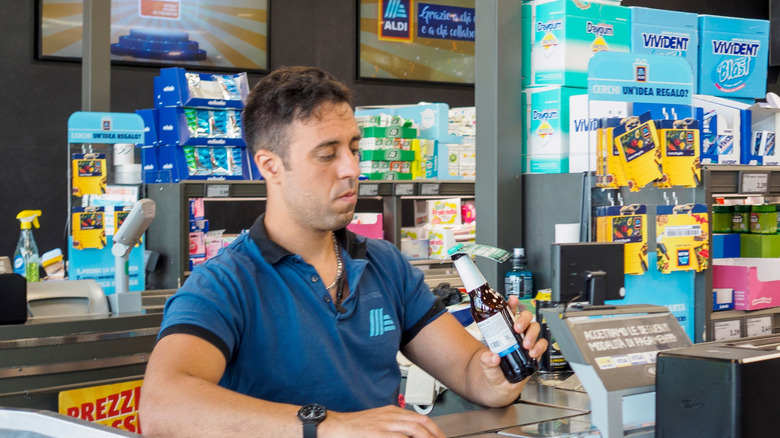
Aldi employees frequently encounter unusual and sometimes nonsensical questions. Anecdotes shared by workers on Reddit include inquiries about whether the store sells live birds or if customers require assistance unloading their groceries onto the checkout counter. One particularly memorable exchange involved a customer asking if a tub of butter, clearly labeled as "table spread," was, in fact, yogurt. Beyond the quirky, employees also contend with outright rudeness from customers, making the requirement to remain positive a significant test of their composure and professionalism.
The online forums dedicated to Aldi employees serve as a crucial outlet for sharing coping mechanisms and advice for navigating these challenging interactions. Some workers advocate for adopting a stoic approach, while others suggest projecting confidence can effectively disarm confrontational customers. The underlying implication is that the customer experience is a critical component of Aldi’s brand, and employees are expected to be its ambassadors, regardless of the circumstances.
The Code of Silence: Protecting Company Secrets
Aldi’s operational success is built on a foundation of carefully guarded trade secrets, and employees are bound by strict confidentiality agreements. While some employees may share harmless tips and tricks on social media, such as the readily available quarter for cart rental or optimal shopping times, anything deemed proprietary information is strictly off-limits. This confidentiality extends even after an employee leaves the company. The ramifications of violating this rule can be severe, as evidenced by Aldi’s history of taking legal action.
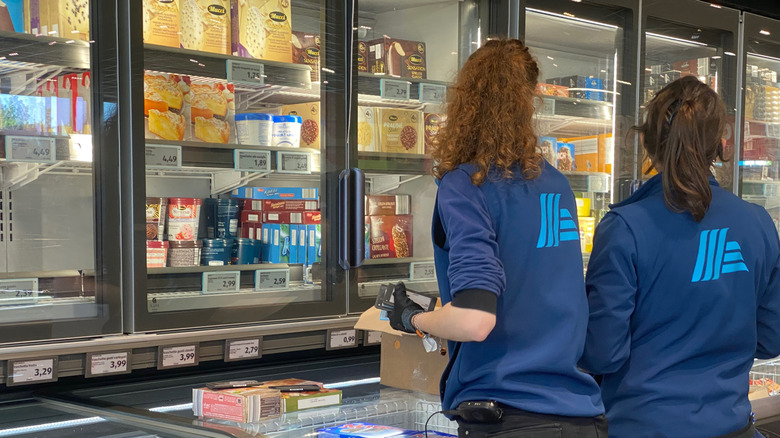
A notable instance occurred in March 2019 when Aldi filed a lawsuit against two former employees and a competitor, Lidl U.S. The lawsuit alleged that the former employees had shared confidential information, including expansion plans, sales data, and marketing strategies, with Lidl, another German discount retailer with a remarkably similar business model. Given that both Aldi and Lidl are direct competitors with closely aligned operational strategies, the disclosure of such information posed a significant threat to Aldi’s competitive advantage. Despite the alleged intelligence, Aldi has maintained a dominant presence in the U.S. market, with a significantly larger store footprint than Lidl.
Dress Code and Presentation: The Smart-Casual Standard
Aldi maintains a clear dress code for its employees, emphasizing a smart-casual appearance that aligns with the company’s brand image. Employees are expected to be presentable at all times and are not permitted to wear everyday casual clothing. While jeans are acceptable, they must be clean, free of holes or rips, and present a smart appearance. Slacks, chinos, and cropped pants are also permitted, as are dress shirts, knee-length dresses, and sweaters. Many Aldi stores provide employees with branded polo shirts to further standardize their appearance.
However, Aldi appears to balance its dress code with a degree of employee individuality. Tattoos, piercings, and dyed hair in vibrant colors are often allowed. This approach suggests a company that values a professional appearance while also recognizing the importance of allowing employees to express their personal style, fostering a more inclusive and comfortable work environment. One employee shared on Reddit that their store’s management embraced their ever-changing hair colors, indicating a relaxed attitude towards personal expression within the smart-casual framework.

The Generous Return Policy: A Customer-Centric Approach
Aldi’s return policy is notably customer-friendly, with employees generally expected to accept returns with minimal fuss. The primary conditions for a return include the item being brought back within 60 days of purchase, being in resalable condition (unless defective), and being accompanied by the original packaging and a valid receipt. This policy, while beneficial to customers, can sometimes lead to unusual situations.
Employees have shared instances of customers returning items for seemingly minor reasons. One anecdote recounts a customer returning three packets of unopened carrot salads because they contained "too many carrots." Another customer returned approximately $130 worth of groceries because their doctor advised against consuming snacks and chips, presenting a large bag filled with receipts. While the policy is broad, there are limits; employees are empowered to refuse returns of items like half-empty bottles of wine or spoiled produce that has clearly passed its prime, exercising reasonable judgment in such cases. This approach highlights Aldi’s commitment to customer satisfaction, even when faced with the occasional eccentric return request.
