
The Food Network has expanded its culinary programming with the premiere of Pitmasters, a high-stakes competition that shifts the focus from traditional indoor kitchens to the demanding environment of open-fire cooking. The series features nine teams of two, composed of seasoned barbecue experts from across the United States, competing in a grueling seven-day outdoor tournament. Set in a remote, high-elevation location, the competition subjects participants to volatile weather conditions, including intense heat, wind, and fluctuating temperatures, while requiring them to produce world-class barbecue using primitive fire-management techniques. Among the featured competitors in the inaugural episode were Susie Bulloch, founder of the prominent barbecue platform Hey Grill Hey, and Christie Vanover, the creator of Girls Can Grill. Their participation highlights a significant shift in the competitive barbecue landscape, where female pitmasters are increasingly taking center stage in a historically male-dominated industry.
The premiere episode established a rigorous two-tier challenge format designed to test both the speed and the endurance of the competitors. The competition is divided into the "Flash Burn," a high-pressure short-form challenge, and the "Big Burn," a marathon cook requiring long-term fire management and complex flavor development. Presiding over the competition is a panel of four esteemed figures in the culinary and barbecue worlds: Andrew Zimmern, an Emmy-winning television personality and food critic; Big Moe Cason, a renowned competition pitmaster; Ernest Servantes, a world-champion barbecue chef; and Jess Pryles, a meat scientist and live-fire cooking expert. This panel provides a multi-faceted critique, evaluating dishes on technical execution, flavor profiles, and the ability of the chefs to adapt to the environmental stressors of the outdoor arena.
The Flash Burn: High-Speed Precision Under Pressure
The first segment of the competition, the Flash Burn, required teams to produce a single, impactful "one-bite" dish within a strict one-hour timeframe. In the world of professional barbecue judging, the "one-bite" philosophy is a standard metric; judges often determine the quality of a protein based on the initial sensory experience. The stakes for this challenge were immediate, with a $2,000 cash prize awarded to the first-place team, while those who underperformed faced the looming threat of elimination.
For their entry, Bulloch and Vanover developed a fusion concept that combined their respective culinary backgrounds and family influences. They presented a Buffalo Chicken Lumpia, a dish that integrated traditional Filipino techniques with classic American barbecue flavors. Vanover, whose husband is Filipino, managed the preparation of the lumpia—a thin, crepe-like pastry skin common in Southeast Asian cuisine—while Bulloch focused on the protein. The chicken thighs were grilled over an open flame on planchas, a style of flat-top grilling that allows for high-heat searing while maintaining moisture.

The dish was finished with a cool cabbage slaw and a creamy buffalo ranch dressing. The technical execution of the lumpia was a point of focus for the judges, particularly Andrew Zimmern, who initially expressed skepticism regarding the fusion concept. However, upon tasting the dish, Zimmern acknowledged the successful balance of flavors, marking a positive start for the team. The Flash Burn served as a demonstration of how professional pitmasters must pivot from long-form smoking to rapid-fire culinary execution without sacrificing the "smoke-kissed" profile essential to the genre.
The Big Burn: Technical Endurance and Environmental Adaptation
Following the conclusion of the Flash Burn, the competition transitioned into the Big Burn, a 10-hour marathon challenge. Teams were tasked with preparing two distinct proteins and at least one side dish. This segment of the show highlights the logistical complexities of open-fire cooking, where maintaining a consistent temperature over a decade of hours requires constant vigilance and an intimate understanding of wood combustion.
One of the primary obstacles encountered during the premiere was the high elevation of the competition site. In culinary science, higher altitudes result in lower atmospheric pressure, which in turn lowers the boiling point of water and causes moisture to evaporate more quickly from food. For barbecue, this can lead to "the stall," a period during the cooking process where the internal temperature of the meat stops rising as moisture evaporates from the surface, cooling the protein.
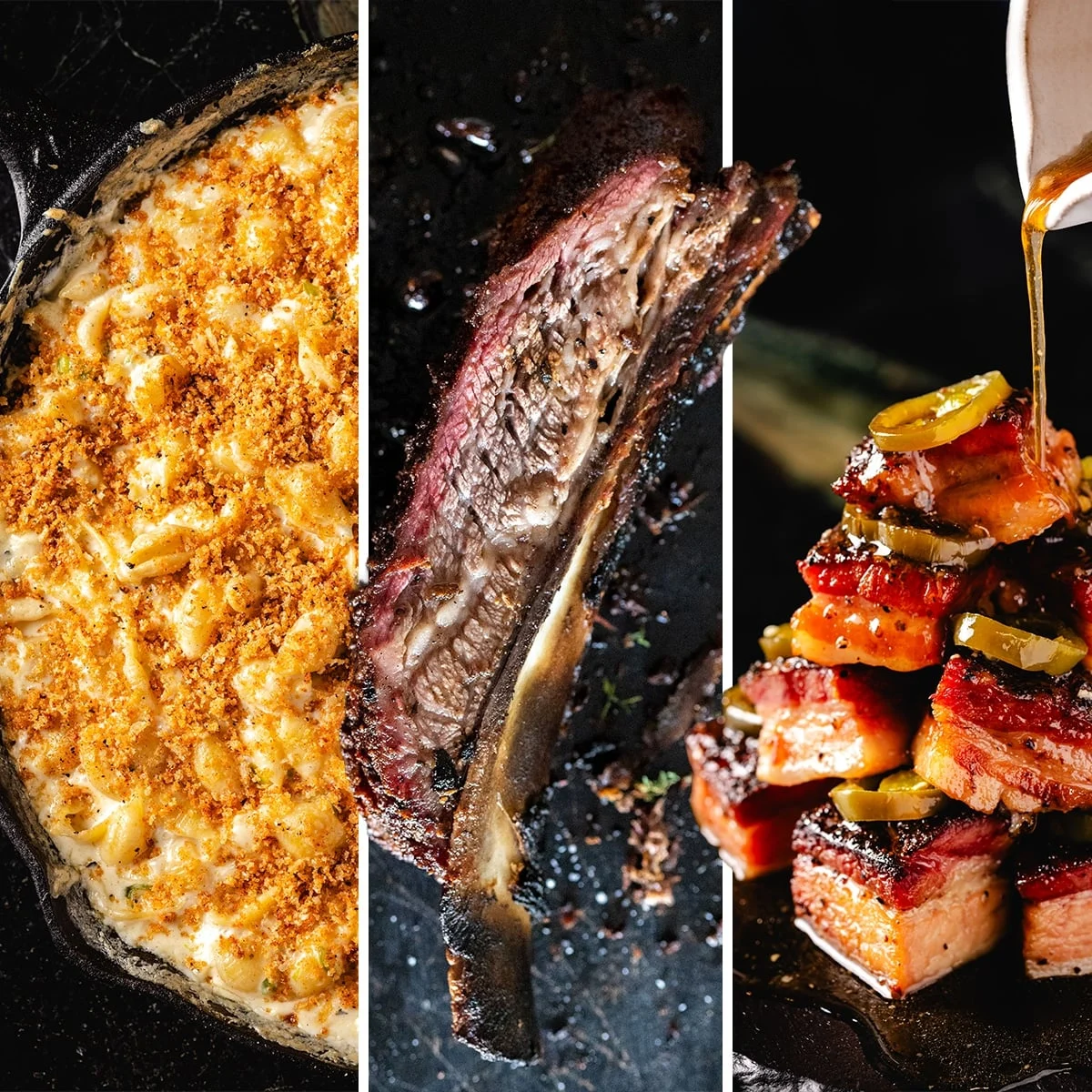
Bulloch’s primary protein, Candied Jalapeño Pork Belly Burnt Ends, fell victim to this environmental factor. To mitigate the risk of the meat becoming dry or failing to reach the necessary internal temperature for collagen breakdown, the team employed the "Texas Crutch" method. This technique involves wrapping the meat in heavy-duty aluminum foil or butcher paper with a small amount of liquid to trap steam and accelerate the cooking process through the stall. This tactical decision was critical in ensuring the pork belly reached a "probe-tender" state in time for the judges’ evaluation.
Strategic Menu Composition and Side Dish Execution
To complement the pork belly, the team prepared Smoked Poblano Shells and White Cheddar, a variation of mac and cheese designed to stand up to the robust flavors of smoked meat. The dish utilized extra-sharp white cheddar and smoked gouda to provide a complex fat profile, while smoked poblano peppers added an earthy heat. The final presentation involved layering the candied jalapeño pork belly atop the pasta, creating a dish that balanced sweetness, heat, and acidity.

Simultaneously, Vanover prepared "Dino Ribs," which are large beef plate short ribs known for their impressive size and rich marbling. These ribs require a significant amount of time to render the intramuscular fat and connective tissue. Vanover utilized a specialized brisket rub to develop a "bark"—the dark, flavorful crust that forms on the exterior of smoked meat—and finished the ribs by slicing them into medallions and crisping them on a plancha. To provide a necessary contrast to the heavy, fat-forward proteins, the team included a bright spinach salad, a strategic inclusion intended to cleanse the palate of the judges.
Analysis of the Judging Panel and Criteria
The judging process on Pitmasters is designed to be as grueling as the cooking itself. Unlike studio-based cooking shows, the judging for the Big Burn took place after nightfall in the mountains, with temperatures dropping significantly. The judges evaluated the entries based on four primary criteria: appearance, texture, tenderness, and taste.
- Andrew Zimmern: Brought a global perspective, focusing on the innovation and the narrative of the dishes.
- Big Moe Cason: Represented the traditionalist view, looking for classic smoke penetration and proper wood-fire flavor.
- Ernest Servantes: Evaluated the technical proficiency and the "competition-style" balance of salt, sweet, and heat.
- Jess Pryles: Applied a scientific lens to the meat’s doneness and the structural integrity of the proteins.
The feedback provided to Bulloch and Vanover was constructive, focusing on the successful integration of heat and the team’s ability to salvage the pork belly under difficult atmospheric conditions. The interaction between the competitors and the judges during the final meal underscored the communal aspect of barbecue culture, even within a competitive framework.
Broader Implications for the Barbecue Industry
The launch of Pitmasters on the Food Network reflects a broader cultural trend toward "live-fire" cooking and the professionalization of backyard barbecue. According to industry data from the Hearth, Patio & Barbecue Association (HPBA), interest in wood-fired cooking has seen a steady increase over the last five years, with consumers moving away from gas grills in favor of smokers and charcoal-based systems.
Furthermore, the prominence of female pitmasters in the premiere episode highlights the changing demographics of the industry. Historically, barbecue was marketed and perceived as a masculine pursuit. However, the success of figures like Susie Bulloch and Christie Vanover—both of whom have built massive digital empires around grilling—indicates that the "pitmaster" title is increasingly gender-neutral. This shift is expected to influence future marketing and product development within the outdoor cooking sector.

Conclusion and Seasonal Outlook
The premiere of Pitmasters episode 1 serves as a technical case study in the difficulties of outdoor culinary production. The combination of high-altitude physics, open-fire management, and elite-level judging creates a unique environment that tests the limits of professional chefs. While the specific results of the elimination were reserved for the broadcast’s conclusion, the episode demonstrated that success in modern barbecue requires a blend of traditional fire-starting skills and modern culinary innovation.
As the season progresses, the remaining teams will likely face increasingly complex challenges that test their ability to source local ingredients and manage diverse wood types. The show’s emphasis on "open fire" excludes the use of automated pellet grills or electric smokers, forcing a return to the foundational elements of the craft. Pitmasters airs weekly on Food Network, with streaming availability on Discovery+, providing a platform for the next generation of barbecue talent to showcase their skills on a global stage. The series is poised to become a benchmark for outdoor cooking competitions, emphasizing the raw intersection of nature and gastronomy.
