
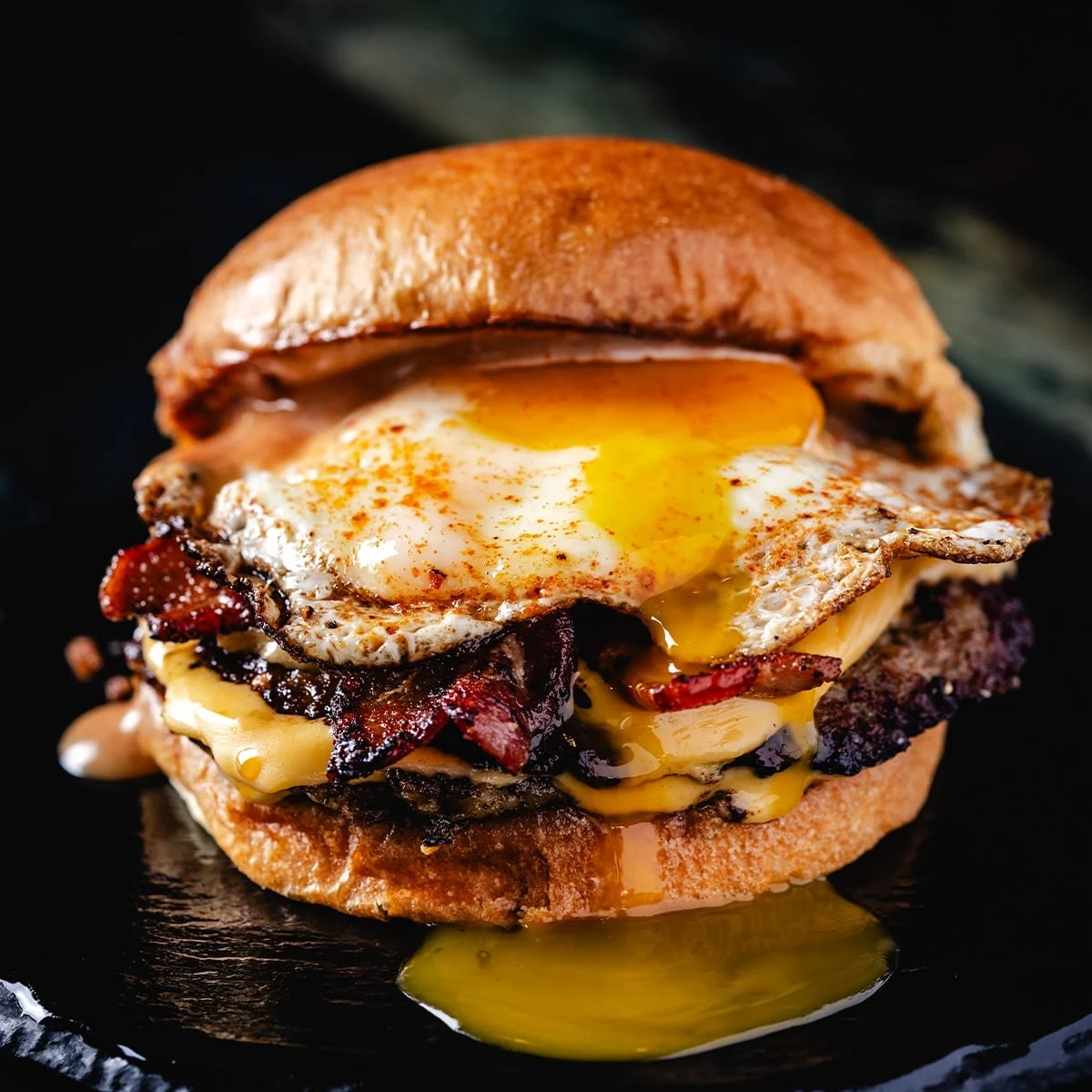
The Breakfast Smash Burger has emerged as a significant culinary trend, blending the traditional American breakfast with the high-heat techniques of gourmet burger preparation to create a dish that challenges the dominance of commercial fast-food chains. This specific iteration of the breakfast sandwich—characterized by crispy smashed sausage patties, candied bacon, melted American cheese, and a fried egg with a runny yolk on a brioche bun—represents a shift in consumer behavior toward elevated, home-cooked comfort food. Utilizing a specialized maple mayo burger sauce, the recipe focuses on the Maillard reaction to deliver a depth of flavor that is often absent in mass-produced morning meals. As outdoor griddling continues to grow in popularity, this dish has become a staple for enthusiasts seeking to replicate restaurant-quality results in a residential setting.
The Evolution of the Smash Burger Technique
The "smash" technique, traditionally applied to ground beef, involves pressing a ball of meat onto a scorching hot flat-top surface with significant force. This process maximizes the surface area in contact with the heat, leading to an accelerated Maillard reaction—a chemical reaction between amino acids and reducing sugars that gives browned food its distinctive flavor. Applying this method to breakfast sausage is a relatively recent innovation. Unlike standard sausage patties, which are often thick and rubbery when pre-cooked, a smashed sausage patty develops a lacy, ultra-crispy edge while remaining juicy in the center.
In the context of the Breakfast Smash Burger, the use of two thin, smashed patties instead of one thick one increases the ratio of caramelized "crust" to meat. This textural contrast is the hallmark of the dish. When paired with high-fat components like American cheese and a runny egg yolk, the crispy edges of the sausage provide a necessary structural and sensory counterpoint.

Core Components and Ingredient Analysis
The success of the Breakfast Smash Burger relies on the synergy of five primary components, each serving a specific culinary purpose:
- The Protein Base: The recipe utilizes high-quality breakfast sausage rolled into balls before being smashed. The high fat content of the sausage is essential for achieving the "lace" effect on the griddle.
- The Candied Element: Bacon is treated with a sweet-and-savory rub, often containing brown sugar or maple elements, to create "candied bacon." This provides a sweet note that balances the heavy salinity of the sausage and cheese.
- The Emollient: American cheese is selected specifically for its melting point and emulsifying salts, which allow it to become completely liquid without separating into oil, effectively acting as a binder for the two patties.
- The "Liquid Gold": A sunny-side-up egg with a runny yolk serves as a natural sauce. When the burger is bitten into, the yolk breaks and coats the other ingredients, adding a rich, velvety mouthfeel.
- The Carrier: A brioche bun is used for its high butter and egg content. Its soft texture prevents the ingredients from being squeezed out of the back of the sandwich, a common issue with crustier breads like English muffins or hard rolls.
The inclusion of a "Breakfast Burger Sauce"—a mixture of mayonnaise, maple syrup, and proprietary seasonings—further bridges the gap between the savory meat and the sweet elements of a traditional breakfast.
Chronology of Preparation and Culinary Execution
The preparation of a Breakfast Smash Burger is a time-sensitive process that requires a sequence of high-heat maneuvers.
Phase 1: Preparation and Sauce Integration
The process begins with the creation of the maple mayo sauce, allowing the flavors to meld while the griddle preheats. The sausage is portioned into roughly 2-ounce balls, and the bacon is prepared for its initial sear.

Phase 2: The Griddle Sequence
The bacon is the first to hit the heat, as it requires the longest time to render fat and achieve crispness. Once the bacon is partially cooked, the sausage balls are placed on the griddle. Using a heavy press or a spatula reinforced with a second tool, the chef applies maximum pressure to the sausage, flattening it to approximately a quarter-inch thickness. A square of parchment paper is often placed between the meat and the press to prevent sticking.
Phase 3: Seasoning and Flipping
While the first side of the sausage sears, seasonings—often a blend of salt, pepper, garlic, and onion powder—are applied. After approximately two minutes, once the edges are visibly browned and crispy, the patties are flipped. Slices of American cheese are immediately placed on the hot patties to ensure total melting.
Phase 4: The Final Assembly
In the final minutes, eggs are cracked onto a cooler zone of the griddle to fry, and brioche buns are toasted in the residual bacon fat. The assembly follows a strict architecture: sauce on the bottom bun, followed by two cheesy sausage patties, two slices of candied bacon, the fried egg, and the top bun.
Supporting Data: Nutritional and Economic Impact
The Breakfast Smash Burger is a high-calorie, nutrient-dense meal designed for occasional indulgence rather than daily consumption. According to nutritional analysis, a single serving contains approximately 1,209 calories. The breakdown of macronutrients reveals a profile high in lipids and proteins:

- Total Fat: 95g (including 27g of saturated fat)
- Protein: 41g
- Carbohydrates: 44g
- Sodium: 4,639mg
The high sodium content is largely attributed to the processed nature of breakfast sausage, bacon, and American cheese. From an economic perspective, however, the cost of producing this burger at home is significantly lower than the market price of a "gourmet" brunch item at a restaurant. While a similar dish might retail for $18 to $24 in an urban bistro, the cost of ingredients per unit when purchased in bulk is estimated at approximately $4.50 to $6.00.
Market Trends: The Rise of the Outdoor Griddle
The popularity of recipes like the Breakfast Smash Burger is inextricably linked to the explosive growth of the outdoor griddle market. Manufacturers like Blackstone, Camp Chef, and Weber have seen record sales in the "flat-top" category over the last five years. Unlike traditional grated grills, griddles allow for the cooking of eggs, bacon, and smashed meats simultaneously, making them the ideal tool for breakfast preparation.
Industry analysts suggest that the shift toward outdoor griddling is part of a broader "outdoor kitchen" trend that accelerated during the 2020-2022 period. Consumers began investing in equipment that allowed them to recreate the "short-order cook" experience at home. Susie Bulloch, a prominent figure in the grilling community and founder of Hey Grill Hey, has been a leading advocate for this movement, emphasizing that the backyard griddle turns breakfast into an "event" rather than a chore.
Official Responses and Culinary Expert Insights
Susie Bulloch, often referred to as the "BBQ Boss Lady," has noted that the appeal of the Breakfast Smash Burger lies in its "transgressive" nature. "Forget the drive-thrus and diners," Bulloch states. "This beats the pants off anything you’re going to find on their menus. The best part is you can make them right in your own backyard."

Culinary experts agree that the success of the dish is found in its "pro-tips"—small technical adjustments that yield significant results. For instance, using room-temperature cheese ensures a faster melt, and using a high-smoke-point oil or residual bacon fat for the eggs prevents sticking and adds flavor. These "micro-adjustments" are what separate a standard breakfast sandwich from a "smash burger" experience.
Broader Impact and Cultural Implications
The rise of the Breakfast Smash Burger is a testament to the democratization of culinary techniques. Methods that were once the exclusive domain of diner cooks with industrial flat-tops are now being mastered by home cooks. This has led to a "de-institutionalization" of breakfast; consumers no longer feel the need to visit a professional establishment to satisfy a craving for high-end brunch.
Furthermore, the dish reflects a cultural desire for "maximalist" comfort food. In an era where health trends often dominate the conversation, the unapologetic indulgence of a 1,200-calorie breakfast burger represents a form of culinary rebellion. It is a dish designed for social sharing—both in person and on social media platforms like Instagram and TikTok, where the "yolk break" has become a viral visual trope.
As the outdoor cooking season expands and griddle technology becomes even more accessible, the Breakfast Smash Burger is expected to remain a dominant force in the amateur culinary landscape. It represents the perfect intersection of chemistry, technique, and the universal human craving for a hearty, savory start to the day.
