
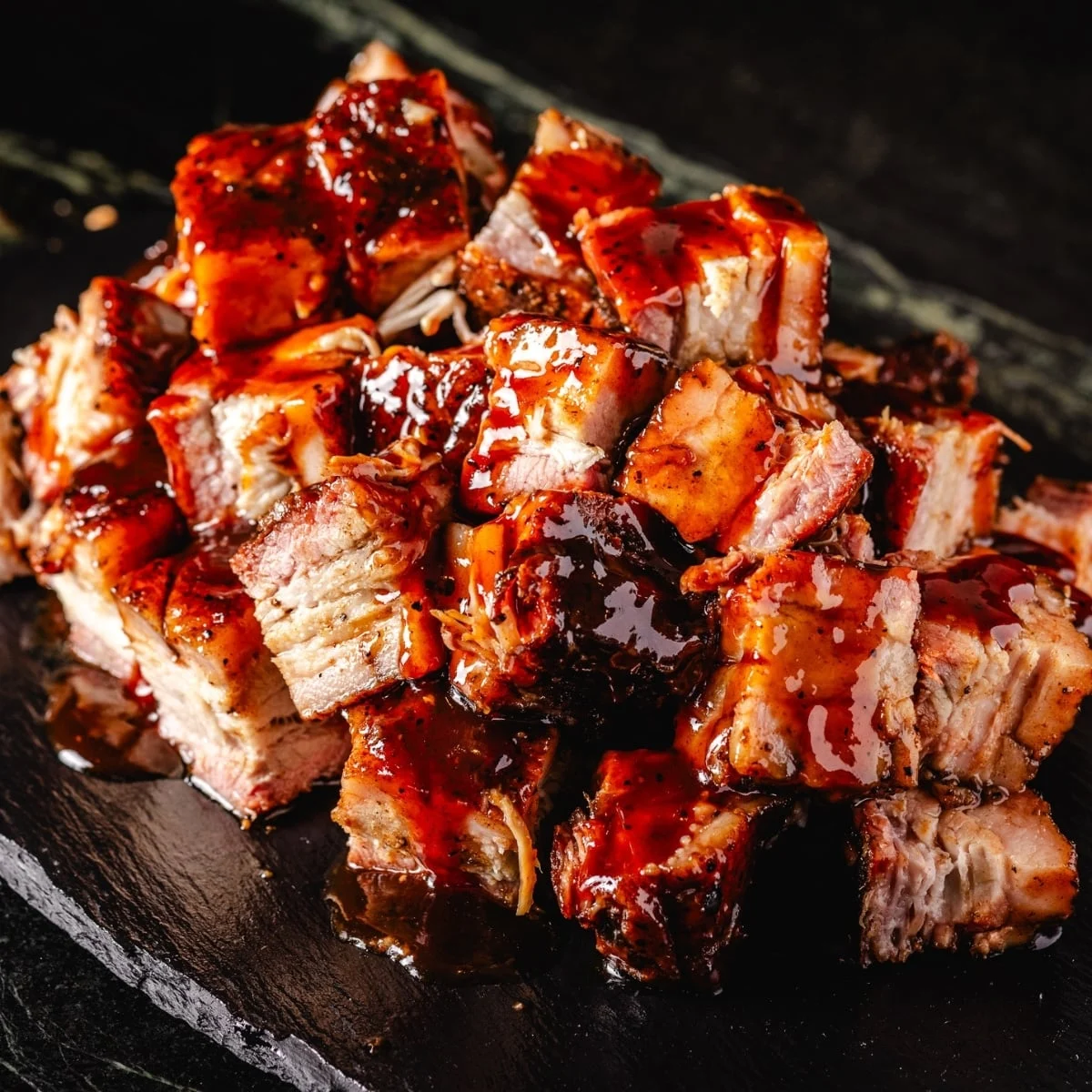
The culinary landscape of American barbecue has undergone a significant transformation over the last decade, transitioning from traditional regional staples like brisket and ribs to more experimental and indulgent cuts, most notably the pork belly. Among the most sought-after iterations of this cut is the Maple Bourbon BBQ Pork Belly, a dish that harmonizes the high-fat content of the pork with the complex sugars of maple syrup and the oaky depth of bourbon. This specific preparation, popularized by culinary expert Susie Bulloch of Hey Grill Hey, utilizes a strategic four-ingredient approach to achieve a balance of smoke, salt, and sweetness. The process relies on the "low and slow" smoking methodology, a cornerstone of traditional barbecue that ensures the rendering of intramuscular fat while maintaining the integrity of the protein.
The rise of pork belly in the domestic grilling circuit reflects a broader trend in the meat industry where once-overlooked cuts have been elevated to premium status. Historically, pork belly was primarily utilized for bacon production or salt pork. However, the emergence of "pork belly burnt ends"—often referred to as "meat candy" by enthusiasts—has shifted consumer demand. The Maple Bourbon BBQ Pork Belly represents a refined version of this trend, focusing on a multi-stage cooking process that includes seasoning, smoking, braising, and glazing to create a product that is both deeply savory and structurally tender.

Technical Methodology and the Four-Ingredient Philosophy
The efficacy of the Maple Bourbon BBQ Pork Belly recipe is rooted in its simplicity, utilizing only four primary components: a high-quality pork belly, a signature rib rub, a specialized maple bourbon glaze, and the application of hardwood smoke. In a professional culinary context, the reduction of ingredients allows the natural profile of the pork to remain the focal point. The pork belly, characterized by its alternating layers of fat and muscle, provides a unique canvas for smoke absorption.
The preparation begins with the scoring of the meat. This is not merely an aesthetic choice but a functional one; by cutting a crosshatch pattern into the fat cap, the pitmaster increases the surface area exposed to the seasoning and smoke. This allows the signature rib rub—typically a blend of salt, brown sugar, paprika, and garlic—to penetrate deeper into the fat layers. Furthermore, scoring facilitates the rendering process, allowing liquified fat to escape and baste the meat during the initial smoking phase.
Chronology of the Smoking Process
Achieving the desired texture in pork belly requires a strict adherence to a chronological smoking schedule. The process is divided into three distinct phases: the smoke set, the braise, and the glaze finish.

-
The Smoke Set (Initial Phase): The smoker is preheated to a consistent 225 degrees Fahrenheit (107 degrees Celsius). The seasoned pork belly is placed on the grates, where it remains for approximately three to four hours. During this period, the meat undergoes the Maillard reaction, a chemical reaction between amino acids and reducing sugars that gives browned food its distinctive flavor. The objective of this phase is to reach an internal temperature of 165 degrees Fahrenheit. At this point, the exterior has developed a "bark"—a dark, flavorful crust—and has absorbed a significant amount of smoke particulate.
-
The Braising Phase: Once the pork reaches 165 degrees Fahrenheit, it is transitioned into a braising environment. This involves placing the meat in a pan or wrapping it in foil with a portion of the Maple Bourbon Glaze. The enclosure traps steam, which accelerates the breakdown of collagen into gelatin. This phase continues until the internal temperature reaches approximately 200 degrees Fahrenheit. This specific temperature is the "sweet spot" for pork belly, where the fat has fully rendered, and the connective tissues have softened to a point where the meat can be easily sliced or cubed.
-
The Glaze and Caramelization: The final phase involves removing the meat from the braising liquid and applying a final layer of the glaze. The pork is returned to the heat for a short duration, allowing the sugars in the maple syrup and the resins in the bourbon to tack up and caramelize. This creates a glossy, sticky finish that serves as a counterpoint to the smoky interior.

Supporting Data and Nutritional Analysis
From a nutritional and chemical standpoint, the Maple Bourbon BBQ Pork Belly is a high-caloric, energy-dense dish. Based on standardized calculations for this preparation, a single serving (estimated at approximately one-eighth of a standard pork belly slab) contains approximately 1,241 calories. The macronutrient breakdown is heavily weighted toward fats, with 121 grams of total fat per serving, of which 44 grams are saturated.
The protein content remains significant at 22 grams, while the carbohydrates (16 grams) and sugars (12 grams) are primarily derived from the maple-based glaze. The presence of bourbon in the glaze contributes to the flavor profile through the evaporation of ethanol, leaving behind concentrated notes of vanilla and toasted oak. This chemical interaction is vital for cutting through the richness of the 163 milligrams of cholesterol and the high monounsaturated fat content (56 grams) inherent in the cut.
The Role of Precision Instrumentation
In modern pitmastery, the reliance on tactile cues has been largely supplanted by precision instrumentation. Experts like Bulloch emphasize the use of high-speed digital thermometers, such as the Thermapen ONE, to ensure food safety and textural consistency. Because pork belly has a high fat-to-meat ratio, traditional "feel" tests can be deceptive. A digital reading ensures that the internal temperature has bypassed the "stall"—a thermodynamic plateau where evaporative cooling slows the cooking process—and reached the necessary 200-degree threshold for optimal tenderness.

This focus on data-driven cooking has democratized high-level barbecue, allowing amateur cooks to replicate professional results. The integration of technology in the backyard has been a primary driver in the growth of the outdoor cooking industry, which has seen a steady increase in market value over the last five years.
Industry Context and the Influence of Digital Media
The proliferation of recipes like the Maple Bourbon BBQ Pork Belly is a testament to the power of digital culinary platforms. Susie Bulloch, the founder of Hey Grill Hey, has become a central figure in this movement. Her background includes appearances on the Food Network and the establishment of Guinness World Records in the grilling category. The transition of BBQ knowledge from guarded competitive secrets to accessible, four-ingredient digital recipes has fundamentally changed how consumers interact with the meat industry.
This "Hey Grill Hey" effect has led to increased retail demand for whole pork bellies, a product that was previously difficult to find in standard grocery stores outside of pre-sliced bacon. Market analysts note that the "DIY BBQ" movement has encouraged consumers to invest in higher-quality cuts and specialized equipment, including pellet grills and offset smokers, which are designed to maintain the 225-degree temperature required for this specific dish.

Broader Impact and Implications
The popularity of Maple Bourbon BBQ Pork Belly has broader implications for the culinary world and the agricultural economy. By increasing the value of the pork belly, the "carcass value" of the hog is maximized, benefiting producers and processors. Furthermore, the dish represents a fusion of American flavors—maple from the North, bourbon from the South, and pork, which is a staple across the Midwest.
As an appetizer or a main course, the dish has also found a home in the "game day" food category. Its ability to be cubed into bite-sized "burnt ends" makes it a versatile option for social gatherings. The social aspect of barbecue—often shared via platforms like Facebook and Instagram—further fuels the cycle of trend-based cooking. When home cooks share images of their "caramelized pork cubes," they contribute to a global community of pitmasters who prioritize the slow-cooking tradition.
In conclusion, the Maple Bourbon BBQ Pork Belly is more than a simple recipe; it is a manifestation of modern barbecue’s evolution. It combines rigorous temperature control, an understanding of meat chemistry, and a simplified ingredient list to produce a dish that is both a technical achievement and a popular success. As the BBQ industry continues to expand, the focus on specific, high-quality cuts and precise cooking methods will likely remain the standard for both professional chefs and backyard enthusiasts alike. Through the guidance of experts and the use of modern technology, the art of the smoke has become a science that is accessible to all.
