
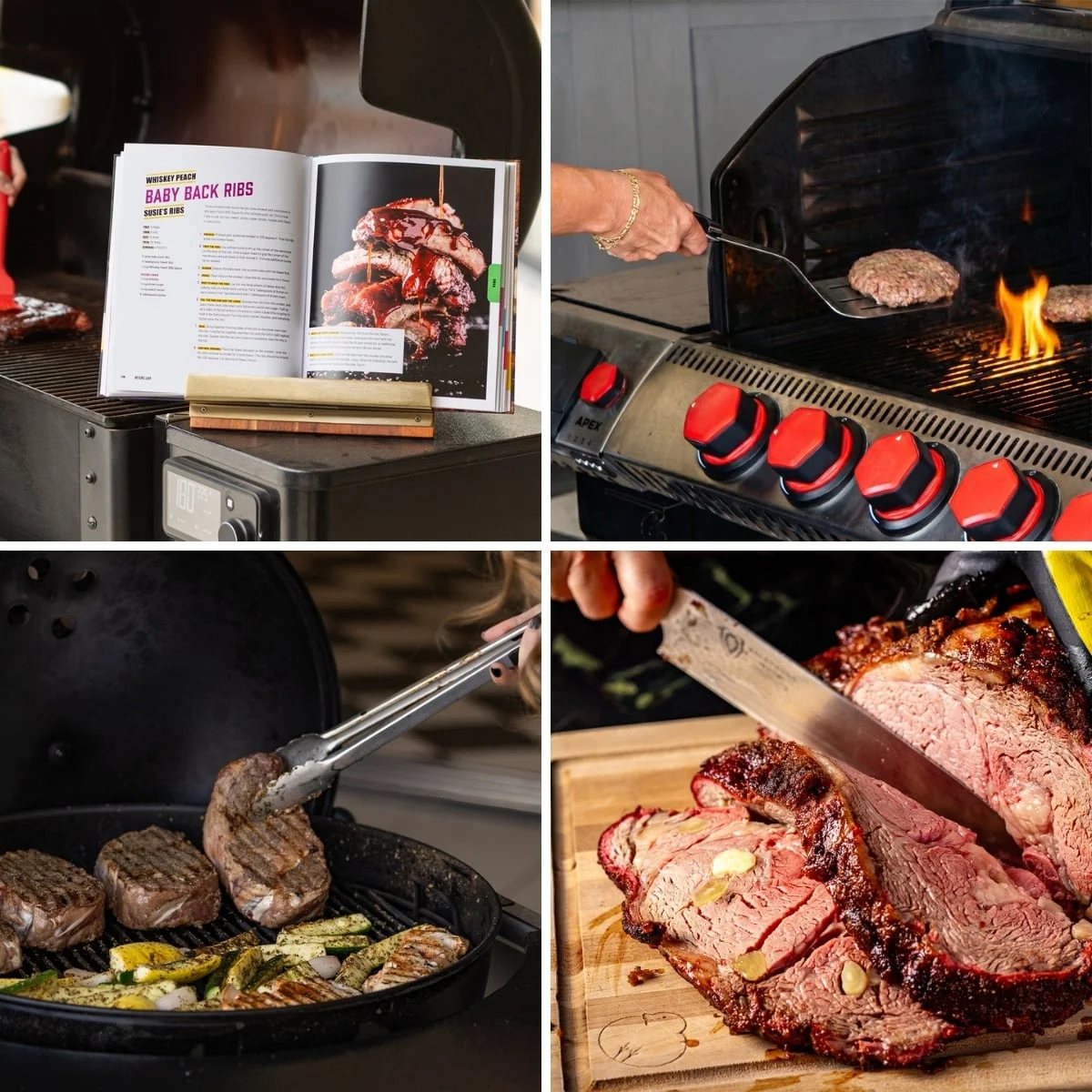
The landscape of outdoor culinary arts has undergone a significant transformation leading into the 2026 summer season, marked by a convergence of traditional techniques and high-precision instrumentation. As backyard grilling evolves from a casual weekend pastime into a sophisticated hobby—and for many, a lifestyle—the demand for professional-grade equipment has reached unprecedented heights. Industry experts and market analysts suggest that the "Backyard BBQ Hero" phenomenon is no longer just a marketing catchphrase but a reflection of a consumer base that prioritizes food safety, culinary precision, and durable hardware. This comprehensive analysis examines the essential tools required for the modern griller, the economic trends driving the outdoor cooking market, and the technical specifications that separate amateur attempts from professional-grade results.

The Economic and Cultural Shift in Outdoor Cooking
The outdoor grill market, which saw a meteoric rise during the early 2020s, has stabilized into a multi-billion dollar industry characterized by high consumer expectations. According to market data from 2024 and 2025, homeowners have increasingly invested in "outdoor kitchens," moving beyond the simple portable charcoal unit to integrated backyard systems. This shift has necessitated a corresponding upgrade in hand tools and accessories. The modern consumer is less likely to purchase "all-in-one" toolkits of questionable quality, opting instead for a curated selection of high-performance items.
A central figure in this educational shift is Susie Bulloch, founder of the "Hey Grill Hey" platform and a prominent voice in the BBQ community. Her approach highlights a fundamental truth in the 2026 market: the most valuable tool is not the grill itself, but the knowledge and precision instrumentation used to operate it. This "essentialist" philosophy focuses on ten core categories that address safety, efficiency, and flavor.

1. The Digital Foundation: Educational Resources and Software
In 2026, the first "tool" in a pitmaster’s arsenal is no longer physical, but digital. The integration of mobile applications and specialized cookbooks has become the baseline for success. The "Hey Grill Hey" App and physical publications like "Backyard BBQ Hero" represent a shift toward standardized processes.
Culinary experts note that having a reliable recipe acts as a "cheat code" for beginners, providing a framework for wood types, temperature control, and timing. The reliance on digital tools allows for real-time updates and community-driven troubleshooting, which has significantly lowered the barrier to entry for complex tasks like smoking briskets or whole-hog roasting.

2. Precision Instrumentation: The Instant-Read Thermometer
If there is a single point of failure in backyard grilling, it is the reliance on visual cues or "touch" to determine meat doneness. In the professional sphere, the instant-read thermometer is considered the most critical hardware investment. The Thermapen ONE, produced by ThermoWorks, has emerged as the industry standard for 2026.
Technically, the move toward high-speed thermocouples—which provide readings in under one second—has revolutionized food safety. Data from the USDA suggests that accurate internal temperature monitoring is the only definitive way to prevent foodborne illness while ensuring the moisture retention of the protein. From a financial perspective, a high-end thermometer costing approximately $100 is often viewed as "insurance" against the loss of a prime rib roast or Wagyu steak, which can exceed the cost of the tool itself in a single meal.

3. Specialized Apparel: The Evolution of Heat Protection
Traditional oven mitts have largely been phased out of the professional backyard setup in favor of high-dexterity, multi-functional gloves. The "Pitmaster Glove" represents a significant advancement in material science, offering heat resistance up to 500 degrees Fahrenheit while remaining waterproof and machine-washable.
The importance of dexterity cannot be overstated in the 2026 grilling environment. Whether a cook is shredding pork shoulder by hand or handling a hot cast-iron skillet, the ability to maintain a firm grip while protected from thermal energy is a safety requirement. Market trends show a preference for gloves that are food-safe and dishwasher-compatible, reflecting a broader consumer demand for low-maintenance, high-performance gear.

4. Metallurgy in the Kitchen: The High-Carbon Chef’s Knife
The 2026 grilling season sees a move away from specialized "BBQ knife sets" toward a single, high-quality 8-inch chef’s knife. The Dalstrong Gladiator series is frequently cited by professionals for its balance of edge retention and durability.
The physics of a sharp blade are essential for both safety and presentation. A dull knife requires more downward pressure, increasing the risk of the blade slipping. In the context of BBQ, where trimming silver skin from a brisket or slicing through a crusty bark is common, a forged high-carbon steel blade provides the necessary control. Analysts point out that the longevity of such a tool makes it more cost-effective over a five-year period than the frequent replacement of cheaper, stamped-steel alternatives.

5. Mechanical Advantage: Tongs and Spatulas
While seemingly basic, the engineering of tongs and spatulas has seen incremental improvements. For 2026, the industry emphasizes "locking tongs" with a minimum length of 12 to 16 inches. This length is a calculated safety feature, keeping the operator’s hands outside the "burn zone" of high-heat infrared burners or charcoal beds.
Similarly, the heavy-duty spatula has become a staple for the "smash burger" trend, which continues to dominate backyard menus. A high-gauge stainless steel spatula provides the leverage needed to press meat against a hot griddle surface to initiate the Maillard reaction—the chemical process responsible for the savory crust on grilled meats.

6. Expanding the Menu: Grill Baskets and Skewers
As plant-based grilling and seafood gain market share, the grill basket has become an essential accessory. This tool prevents small items—such as asparagus, shrimp, or diced peppers—from falling through the grates into the fuel source.
Skewers, available in both reusable metal and disposable bamboo formats, offer a different culinary advantage: increased surface area for heat exposure and a structured presentation. For bamboo options, the "30-minute soak" remains a critical pre-cooking step to prevent combustion, a fact-based practice that remains unchanged even as other technologies advance.

7. Fuel Management: The Charcoal Chimney
For the charcoal purist, the 2026 season marks the continued decline of liquid lighter fluid. The charcoal chimney has become the standard for ignition, utilizing the "stack effect" (a phenomenon of physics where hot air rises to create a draft) to light briquettes or lump charcoal evenly and quickly.
This method is not only faster but also preserves the flavor profile of the food by eliminating petroleum-based chemical odors. Furthermore, the chimney allows for precise "two-zone grilling," a technique where fuel is concentrated on one side of the grill to create a searing zone and an indirect roasting zone. This methodology is scientifically proven to provide better results for thick-cut proteins like thick-cut pork chops or "reverse-seared" steaks.

8. The Microplane and Finishing Tools
A surprising entry into the top ten essential grill tools for 2026 is the grater or microplane. This reflects a shift toward "gourmet" backyard cooking, where zesting citrus, grating hard cheeses over grilled corn (elotes), or finely mincing garlic for wet rubs is standard practice. The ability to incorporate fresh aromatics at the finishing stage of a cook is what distinguishes modern backyard BBQ from the more simplistic "meat-and-salt" approach of previous decades.
Chronology of Innovation: 2020–2026
The timeline of how these tools became "essential" follows a clear trajectory of consumer education. In 2020, the focus was on basic equipment during a period of forced home-confinement. By 2022, the "YouTube Pitmaster" era led to a surge in specialized tool sales. In 2024, the market saw a "flight to quality," where consumers began replacing entry-level gear with the professional items listed above. Entering 2026, the focus has shifted to "smart" integration and extreme durability.

Industry Response and Market Implications
Manufacturers have responded to these trends by focusing on "prosumer" gear. Companies that once only sold to restaurants are now marketing directly to the backyard enthusiast. This democratization of professional tools has led to a significant increase in the average quality of home-cooked BBQ.
From a public health perspective, the widespread adoption of instant-read thermometers and food-safe gloves is a positive development. "The reduction in undercooked poultry cases and cross-contamination incidents can be directly linked to the better availability of professional-grade tools for the home cook," says one food safety analyst.

Final Analysis: The Future of the Backyard Hero
As we look toward the 2026 season and beyond, the definition of a "Backyard BBQ Hero" is clearly tied to the mastery of these ten essential categories. The investment in high-quality tools reflects a broader cultural appreciation for the craft of outdoor cooking. By prioritizing precision, safety, and durability over gimmicks and cheap multi-packs, the modern griller is better equipped than ever to produce restaurant-quality results in a domestic setting.
The synergy between a good recipe, a sharp knife, and a fast thermometer creates a foundation for culinary creativity. While the grills themselves may become more automated with WiFi controllers and pellet-fed systems, the manual tools—the tongs, the gloves, and the chimney—remain the tactile link between the cook and the fire. For the 2026 season, success is measured not just by the final plate, but by the efficiency and safety of the process used to get there.
