
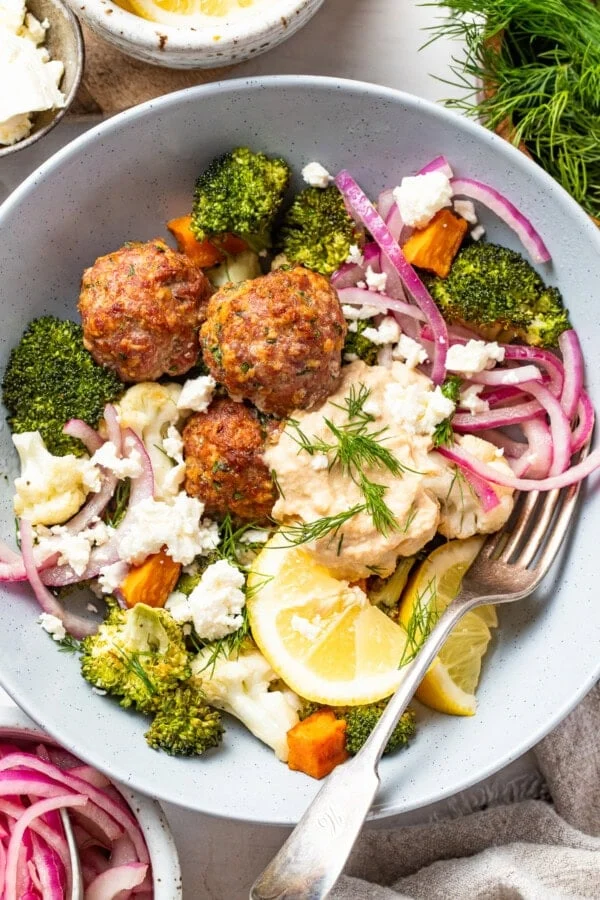
The culinary landscape continues to evolve with a sustained focus on healthy, convenient, and flavorful meal solutions. A recent development gaining traction in home kitchens is the Mediterranean Meatball Bowl, a dish designed to offer a balanced, high-protein, and high-fiber meal, largely inspired by popular fast-casual dining experiences. This particular iteration features juicy turkey meatballs, a vibrant medley of roasted sweet potatoes, cauliflower, and broccoli, complemented by creamy hummus and the bright tang of pickled red onions. This dish not only addresses contemporary dietary preferences but also simplifies meal preparation through its sheet-pan friendly methodology, making it an attractive option for busy individuals seeking nutritious weeknight dinners or efficient meal prep solutions.

The Enduring Appeal of Mediterranean Cuisine
The Mediterranean diet, upon which this dish is fundamentally based, has long been lauded by nutritionists and health organizations worldwide for its profound health benefits. Recognized by UNESCO as an Intangible Cultural Heritage of Humanity, this dietary pattern emphasizes whole foods, including a high intake of vegetables, fruits, legumes, nuts, seeds, and olive oil, moderate consumption of fish and poultry, and limited red meat and processed foods. Studies have consistently linked adherence to the Mediterranean diet with reduced risks of heart disease, stroke, type 2 diabetes, certain cancers, and improved cognitive function and longevity. The inclusion of roasted vegetables and lean protein sources like turkey meatballs in this bowl directly aligns with these well-established principles, offering a palatable entry point for individuals looking to incorporate more Mediterranean-inspired meals into their routines. The dietary framework’s emphasis on fiber-rich plant foods and lean protein contributes significantly to satiety and overall well-being, characteristics central to the design of the Mediterranean Meatball Bowl.

Meeting Modern Dietary Demands: Protein, Fiber, and Convenience
In an era defined by demanding schedules and an increased awareness of nutritional intake, consumers are actively seeking meals that are both wholesome and easy to prepare. This particular Mediterranean Meatball Bowl addresses several key dietary trends simultaneously. With a reported 33.5 grams of protein per serving (based on a portion of three meatballs and 1.5 cups of vegetables), it qualifies as a high-protein meal, a characteristic vital for muscle maintenance, repair, and sustained satiety. Protein-rich diets are often recommended for weight management and for individuals with active lifestyles. Furthermore, the dish provides a substantial 7.5 grams of fiber per serving, primarily from the roasted sweet potatoes, cauliflower, and broccoli. Dietary fiber is crucial for digestive health, helps regulate blood sugar levels, and contributes to a feeling of fullness, which can aid in preventing overeating.

The convenience factor is paramount. The "sheet pan" methodology, which involves cooking multiple components on a single baking sheet, significantly reduces preparation time and simplifies cleanup, a compelling benefit for individuals with limited time for cooking. This method resonates with the growing demand for efficient cooking techniques that do not compromise on flavor or nutritional value. The total preparation and cook time of approximately one hour makes it accessible even on busy weeknights, aligning with the needs of a demographic increasingly reliant on quick, yet healthy, home-cooked options.
Culinary Inspirations and the "CAVA Effect"

The development of this Mediterranean Meatball Bowl draws explicit inspiration from the menu offerings of popular fast-casual restaurants like CAVA. CAVA, known for its customizable Mediterranean-style bowls, has significantly influenced consumer preferences for fresh, vibrant, and health-conscious meals. This phenomenon, often termed the "CAVA effect," highlights a broader trend where restaurant innovations quickly permeate home cooking, as consumers seek to replicate beloved dining experiences in their own kitchens. Food bloggers and recipe developers play a crucial role in this translation, adapting complex restaurant dishes into simplified, home-friendly recipes. The inclusion of elements like creamy hummus and pickled red onions, characteristic of CAVA’s flavor profile, allows home cooks to achieve a similar taste experience without the need to dine out. This not only offers a cost-effective alternative but also provides greater control over ingredients and portion sizes, further supporting health goals.
Deconstructing the Bowl: A Nutritional and Flavorful Profile

Each component of the Mediterranean Meatball Bowl contributes uniquely to its overall nutritional value and flavor complexity.
- Turkey Meatballs: Utilizing lean ground turkey provides a lower-fat protein source compared to traditional beef or pork meatballs, while still delivering a satisfying texture and flavor. The reported 140.5 mg of cholesterol per serving indicates a moderate cholesterol content, which is typical for lean poultry.
- Roasted Sweet Potatoes: These contribute complex carbohydrates, dietary fiber, and essential vitamins such as Vitamin A and C. Roasting caramelizes their natural sugars, adding a subtle sweetness that balances the savory elements of the dish.
- Cauliflower and Broccoli: These cruciferous vegetables are nutritional powerhouses, rich in fiber, Vitamin C, Vitamin K, and various antioxidants. Roasting enhances their nutty flavor and tender texture.
- Hummus: A staple of Mediterranean cuisine, hummus (made from chickpeas, tahini, lemon juice, and olive oil) offers healthy monounsaturated fats, plant-based protein, and additional fiber. Its creamy texture provides a luxurious counterpoint to the roasted vegetables and meatballs. The reported 24.5 grams of fat per serving (6.5 grams saturated fat) includes the healthy fats from hummus and olive oil used in roasting.
- Pickled Red Onions: These provide a crucial element of acidity and brightness, cutting through the richness of the hummus and the savory meatballs. Their sharp, tangy flavor adds a refreshing contrast and elevates the overall taste profile, a common technique in many global cuisines to balance flavors.
The decision to forgo grains as a base, opting instead for a generous portion of roasted vegetables (1.5 cups per serving), makes this bowl naturally gluten-free and lower in carbohydrates, appealing to those following specific dietary restrictions or preferences.

Practical Implications: Meal Prep and Storage
The design of the Mediterranean Meatball Bowl makes it particularly well-suited for meal preparation, a strategy increasingly adopted by consumers to maintain healthy eating habits throughout the week. The various components—meatballs, roasted vegetables, hummus, and pickled onions—can be prepared in advance and stored separately. The article notes that all ingredients will last up to four days in the refrigerator, providing ample time for planned consumption. For on-the-go lunches, storing the components in separate compartments or containers prevents sogginess and maintains ingredient integrity until consumption. This longevity and ease of storage underscore the dish’s utility beyond a single meal, transforming it into a foundation for consistent healthy eating. The ability to assemble these bowls quickly from pre-prepared components significantly reduces the daily effort required for healthy meals, making it a sustainable practice for many.

Broader Impact and Future Culinary Trends
The emergence and popularity of recipes like the Mediterranean Meatball Bowl highlight several broader trends within the food industry and home cooking. Firstly, there is a clear consumer preference for transparency and control over ingredients, driving a shift from purely processed foods towards whole, identifiable components. Secondly, the blending of global flavors with practical cooking methods continues to expand the culinary repertoire of home cooks. This recipe, with its Mediterranean roots and CAVA-inspired presentation, exemplifies this fusion. Finally, the role of online platforms and food blogs in disseminating these innovative and accessible recipes cannot be overstated. They empower individuals with the knowledge and confidence to experiment with healthy cooking, democratizing access to diverse culinary techniques and dietary information. As lifestyles become increasingly demanding, the demand for nutrient-dense, flavorful, and easy-to-prepare meals will only continue to grow, positioning dishes like the Mediterranean Meatball Bowl at the forefront of future culinary innovation. Such recipes not only provide sustenance but also contribute to a more informed and health-conscious food culture.
