
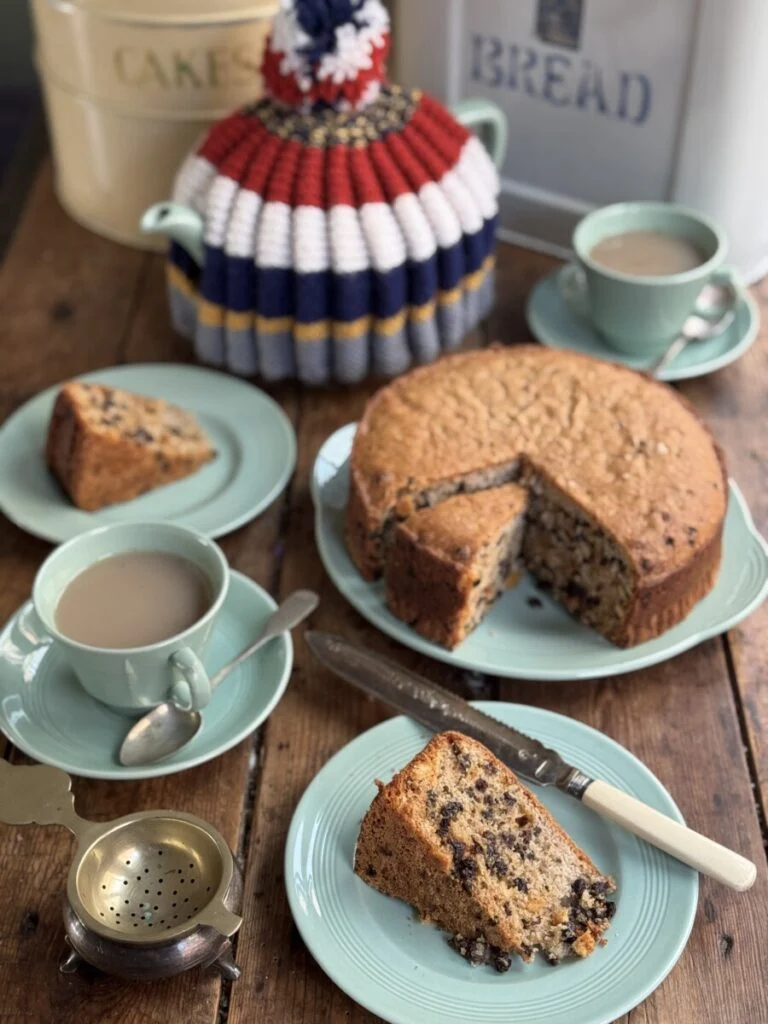
The culinary landscape of 2026 is experiencing a fascinating revival of historical recipes, bringing forgotten flavours and traditions back to modern tables. Among these, the "St George’s Hall Cake," a unique fruit cake originating from the esteemed "Liverpool School of Cookery Recipe Book" first published in 1900, has recently been brought back into the spotlight by food historian and author Karen Burns-Booth. Her rediscovery, highlighted in an article published on April 10, 2026, offers a tangible link to early 20th-century British domestic life and presents a delightful addition to contemporary baking repertoires, particularly fitting for the upcoming St George’s Day celebrations on April 23rd.

A Glimpse into Edwardian Baking: The St George’s Hall Cake Profile
The St George’s Hall Cake is distinguished by its unconventional ingredient profile and preparation method, setting it apart from many traditional rich fruit cakes of its era. Unlike more opulent recipes laden with various dried fruits, this cake focuses primarily on currants, complemented by the sharp zest of mixed peel, the warm spice of grated fresh ginger, and the distinctive anise-like notes of caraway seeds. This combination yields a cake that is both aromatic and subtly spiced, reflecting the popular flavour preferences of the late Victorian and Edwardian periods.

A notable characteristic that contributes to its unique texture is the separation of eggs during preparation. The recipe specifically calls for the egg whites to be beaten separately and then lightly folded into the batter. This technique, uncommon in many dense fruit cakes, imparts a "lighter crumb," as noted by Burns-Booth, resulting in a less heavy and more delicate texture than typical tea loaves or fruit cakes. The mixed peel further enhances this by contributing both moisture and textural interest. While acknowledging its drier nature compared to richer modern fruit cakes, Burns-Booth and her companion found it highly enjoyable, especially when buttered a few days after baking, suggesting a maturing of flavours. The recipe also offers flexibility for modern palates; those not fond of caraway seeds can substitute them with mixed spice or ground cinnamon, allowing for a personalized adaptation while retaining its historical essence.
The Genesis of the Recipe: The Liverpool School of Cookery

The "Liverpool School of Cookery Recipe Book" is more than just a collection of culinary instructions; it is a historical artifact reflecting the burgeoning domestic science movement in Britain at the turn of the 20th century. First published in 1900, the book served as a vital resource for "young housekeepers," providing practical recipes deemed "most needed under all conditions and circumstances of everyday life." This focus underscores the role of cookery schools in empowering women with essential household skills and promoting dietary knowledge.
The Liverpool School of Cookery itself was part of a broader trend of such institutions emerging across the UK, following the establishment of the Glasgow School of Cookery in 1875. These schools played a pivotal role in standardizing recipes, introducing hygienic practices, and elevating the status of domestic work through structured education. They taught not only cooking techniques but also principles of nutrition, household management, and economy, making their recipe books invaluable guides for managing a Victorian or Edwardian household. The inclusion of a recipe like the St George’s Hall Cake in such a publication suggests its widespread appeal and suitability for everyday consumption, perhaps for afternoon tea, elevenses, or as a portable treat for packed lunches and picnics, as Burns-Booth suggests.

St George’s Hall: An Icon and a Name
The name "St George’s Hall Cake" strongly suggests a connection to Liverpool’s iconic St George’s Hall. This magnificent neoclassical building, opened in 1854, is one of the most prominent architectural landmarks in the city. Designed by Harvey Lonsdale Elmes and completed by Charles Robert Cockerell, it served as a grand public hall and law courts, symbolizing Liverpool’s prosperity and civic pride during the Victorian era. It has hosted countless significant events, concerts, and public gatherings, embedding itself deeply into the city’s cultural identity.

The naming of a cake after such a significant local landmark would have been a common practice, bestowing a sense of local pride and familiarity upon the recipe. It implies that the cake was either created by the school in homage to the hall, or perhaps became a popular item served at events held within its walls or in its vicinity. This connection adds another layer of historical intrigue to the recipe, linking it directly to Liverpool’s vibrant past and its grand civic architecture.
The Culinary Details: Ingredients and Method

The original recipe for St George’s Hall Cake from the 1900 "Liverpool School of Cookery Recipe Book" provides a clear snapshot of baking practices from over a century ago.
Original Ingredients:

- ¾ lb flour
- 2 oz. lard
- 2 oz. butter
- 6 oz. sifted sugar
- 2 oz. candied peel
- ½ lb. cleaned currants
- 1 teaspoonful grated ginger
- ½ oz. caraway seeds, if liked
- 1 teaspoonful baking powder
- 3 eggs (separated)
- About ¼ pint of milk
Instructions:
- Rub the butter into the flour; add the rest of the dried ingredients and mix well.
- Mix a little milk with the yolks of eggs and stir in; add more milk gradually until the mixture is stiff, but moist enough to be beaten.
- Give a quick, vigorous beating, then mix in very lightly the beaten egg whites.
- Spoon into a well-greased or lined 8-inch cake tin.
- Bake in a moderate oven for about 2 hours.
The recipe’s instruction to "rub the butter into the flour" is a classic method for creating a short pastry-like base, which would have been familiar to bakers of the period. The use of both butter and lard is also characteristic of early 20th-century baking, with lard contributing to flakiness and a unique texture. The term "moderate oven" requires translation for modern ovens, and the original cookbook helpfully provided a guide for this, which today correlates to approximately 180°C or 350-375°F (Gas Mark 4-5). The two-hour baking time suggests a fairly substantial cake, allowing the flavours to meld and the texture to develop.

Nutritional Insights (per serving, estimated):
For those interested in the nutritional aspect of this vintage treat, an estimated breakdown per serving (assuming 12 servings from an 8-inch cake) is provided:
- Calories: 117
- Total Fat: 6g (Saturated Fat: 3g, Unsaturated Fat: 3g)
- Cholesterol: 64mg
- Sodium: 92mg
- Carbohydrates: 13g
- Fiber: 1g
- Sugar: 6g
- Protein: 4g
These figures suggest a relatively modest treat, especially when compared to some richer contemporary desserts, reflecting a time when ingredients were often used more sparingly and portion sizes might have been different.

St George’s Day and Culinary Celebrations
The timing of this recipe’s revival is particularly poignant as it coincides with the approach of St George’s Day on April 23rd. St George, the patron saint of England, is celebrated annually with various events, parades, and traditional English fare. For many, St George’s Day is an opportunity to embrace English heritage and culture, and what better way to do so than through traditional cuisine? Karen Burns-Booth herself plans to bake the cake again for the occasion, underscoring its potential as a meaningful culinary tribute.

The St George’s Hall Cake, with its historical roots in a prominent English city and its direct link to an iconic landmark, serves as an ideal centrepiece for such celebrations. It offers a taste of history and a connection to a bygone era of English domesticity. Its unique flavour profile, combining currants, mixed peel, ginger, and caraway, stands as a testament to the distinct culinary preferences that have shaped English baking over centuries.
The Broader Impact: Preserving Culinary Heritage

The work of food historians and enthusiasts like Karen Burns-Booth in unearthing and sharing these historical recipes extends beyond mere culinary curiosity. It represents a vital effort in preserving culinary heritage, offering insights into societal norms, economic conditions, and cultural values of past generations. Cookbooks like the "Liverpool School of Cookery Recipe Book" are invaluable primary sources that document the evolution of food, ingredients, and cooking techniques.
The digital age, with platforms like Leeds University’s online archives (where Burns-Booth downloaded the cookbook), facilitates wider access to these historical documents, allowing more people to engage with and recreate dishes from the past. This accessibility not only enriches our understanding of culinary history but also inspires new generations of home bakers and professional chefs to explore and adapt these foundational recipes. The "St George’s Hall Cake" is a prime example of how a simple recipe can tell a complex story about a city, an institution, and a nation’s enduring culinary traditions. As Burns-Booth suggests, this cake is likely just one of many "interesting recipes" hidden within such historical volumes, waiting to be rediscovered and enjoyed once more.
