
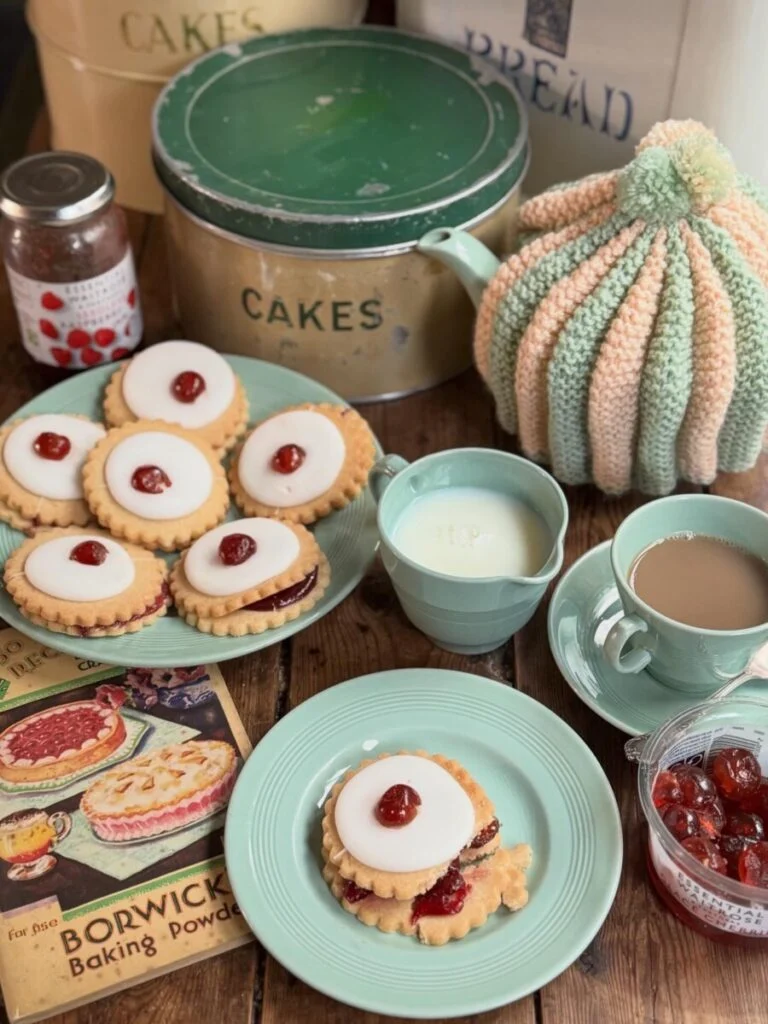
On February 13, 2026, culinary enthusiast and author Karen Burns-Booth captivated food historians and home bakers alike with her meticulous revival of the Empire Biscuit, a treat steeped in British history and personal nostalgia. Burns-Booth, renowned for her dedication to heritage recipes, embarked on a quest to recreate this beloved confection after a poignant encounter in Northumberland, successfully tracing its origins back to a 1928 vintage magazine and drawing parallels with contemporary culinary figures. Her efforts not only bring a cherished recipe back into the spotlight but also illuminate the intricate relationship between food, memory, and national identity.

The impetus for Burns-Booth’s deep dive into the world of Empire Biscuits was a fleeting moment of longing during a recent visit to Alnwick, Northumberland. Spotting the familiar biscuits for sale at a local Greggs bakery, she was instantly transported back to her childhood, recalling the comforting aroma of her maternal grandmother’s kitchen, where these jam-filled delights were a regular fixture in the family biscuit tin. This powerful connection to the past, however, was quickly punctuated by disappointment when she returned to purchase one, only to find they had all sold out. This serendipitous unavailability ignited a culinary mission: to bake a batch herself, not just any batch, but one that echoed the authenticity of her grandmother’s era.

Burns-Booth’s extensive collection of vintage cookbooks initially yielded no definitive recipe for the elusive Empire Biscuit. It was within the pages of an antique "Woman’s Companion" magazine, dated 1928, that she finally unearthed what appeared to be the quintessential formula for these jammy treats. This discovery was further corroborated by a contemporary recipe from James Morton, "The Hebridean Baker," a culinary personality Burns-Booth greatly admires. The striking similarity between Morton’s modern interpretation and the nearly century-old instructions underscored the enduring nature of this particular biscuit’s composition.

The recipe itself, while seemingly straightforward, presented subtle challenges, particularly in achieving the perfect balance of elements. The delicate act of sandwiching two shortbread-style biscuits with a generous dollop of jam, followed by the precise application of icing that would neither drip nor harden unevenly, required a meticulous hand. Burns-Booth’s personal preference for glacé cherries as a topping, in line with her grandmother’s method, diverged from Morton’s suggestion of gummy sweets, highlighting the subtle evolution of a recipe through generations and individual tastes. This choice reflects a broader sentiment among those who seek to preserve the authentic character of heritage foods.

A Biscuit’s Journey: From German Roots to Imperial Identity

The history of the Empire Biscuit is far richer and more politically charged than its innocent appearance suggests. While widely celebrated in Scotland and the North East of England, culinary historians trace its lineage back to the Austrian Linzer Biscuit. Linzer biscuits, or Linzer Augen as they are often known, are characterized by their shortbread-like texture, a sweet jam filling, and a distinctive cut-out shape on the top biscuit, often revealing the vibrant jam beneath. This European heritage points to a cross-cultural exchange of culinary ideas that has long shaped British baking traditions.

However, the biscuit’s most significant historical pivot occurred during the tumultuous period of World War I. Originally known in the United Kingdom as "German Biscuits" or "Deutsch Biscuits," the name was officially changed to "Empire Biscuits" in the aftermath of the conflict. This rebranding was a direct response to widespread anti-German sentiment that swept across Britain and its allied nations. The Great War, a period of profound nationalistic fervor and deep-seated animosity towards Germany, led to a systematic purging of German-associated names from various aspects of British life, from street names and royal titles to everyday food items. This renaming was not merely a superficial alteration but a symbolic act, aligning the biscuit with the British Empire and projecting a sense of national unity and pride in a post-war landscape.

The shift in nomenclature highlights how deeply intertwined food can be with socio-political events. This period saw other German-named products similarly rebranded, a testament to the pervasive influence of wartime propaganda and public opinion on consumer culture. The new name, "Empire Biscuit," resonated with the prevailing imperial identity of Britain, making the sweet treat palatable and patriotic in a nation grappling with the emotional and economic aftermath of the war.

Regional Popularity and Enduring Appeal

Despite its historical origins and name change, the Empire Biscuit has cemented its place as a beloved staple, particularly in Scottish bakeries and homes, and across the North East of England. Its comforting combination of crumbly biscuit, sweet jam, and delicate icing has ensured its enduring popularity, making it a familiar sight in tea rooms and biscuit tins for generations. The biscuit’s appeal lies in its simplicity and the nostalgic comfort it evokes, often serving as a gateway to childhood memories and traditional British tea times.

Beyond its primary designation, the Empire Biscuit boasts a multitude of regional aliases, further illustrating its widespread adoption and adaptation. In some circles, it is simply known as a "Double Biscuit," a straightforward description of its layered construction. More intriguingly, in New Zealand, a similar confection is often referred to as a "Belgium Biscuit," owing to its white icing and cherry topping, features reminiscent of Belgium Buns. These diverse names underscore the biscuit’s journey and its ability to integrate into various culinary landscapes, taking on new identities while retaining its core characteristics.

The Craft of the Classic: Ingredients and Technique

The Empire Biscuit, at its heart, is a testament to the elegance of simple ingredients expertly combined. While specific ingredient lists were not provided in the original content, the description implies a classic shortbread-style base, typically comprising flour, butter, and sugar. The use of jam, most commonly raspberry or strawberry, provides a vibrant, fruity counterpoint to the rich biscuit, while a thin layer of white icing and a glacé cherry complete the iconic look.

Burns-Booth’s unearthed 1928 recipe, along with notes from other vintage sources, reveals subtle variations in technique. Some historical recipes suggest incorporating cornflour or rice flour into the plain flour mix, typically at a ratio of one ounce to eight ounces of flour. This addition, a classic baking trick, serves to make the biscuits "shorter" – a term used to describe a more crumbly, tender texture, distinct from a crispier biscuit. This detail offers a glimpse into the subtle refinements that bakers applied to achieve desired textural qualities, even in seemingly humble recipes.

The choice of jam is also crucial. While raspberry is a traditional favorite, strawberry jam is a perfectly acceptable alternative. The emphasis, as Burns-Booth notes, is on using a "good commercial jam or homemade jam," ensuring the filling contributes significantly to the overall flavor profile. The final flourish of icing and the cherry is where personal touches often come into play, with the debate between traditional glacé cherries and modern gummy sweets reflecting a gentle tension between preserving heritage and embracing contemporary tastes.

Broader Implications and Cultural Resonance

Karen Burns-Booth’s recreation of the Empire Biscuit transcends a mere recipe revival; it serves as a powerful reminder of how food acts as a cultural anchor, connecting us to our past, our communities, and our shared heritage. The quest for this particular biscuit underscores several broader implications:

- The Power of Nostalgia: Food’s ability to evoke strong memories and emotions is undeniable. The Empire Biscuit, for Burns-Booth, is a direct link to her grandmother and a bygone era, illustrating how certain dishes become intertwined with personal and familial histories.
- Culinary History as Social Commentary: The evolution of the Empire Biscuit’s name is a stark example of how culinary practices can reflect significant historical events and prevailing societal attitudes, offering a palatable lens through which to understand complex pasts.
- The Enduring Appeal of Comfort Food: In an ever-changing world, traditional baked goods like the Empire Biscuit offer a sense of stability and comfort. Their consistent presence on tea tables and in bakeries speaks to a universal human need for familiar and reassuring tastes.
- The Role of Food Bloggers and Enthusiasts: Individuals like Karen Burns-Booth play a vital role in preserving and disseminating culinary heritage. Their dedication to researching, recreating, and sharing vintage recipes ensures that these traditions are not lost but continue to be enjoyed by new generations.
The Empire Biscuit, with its rich history and enduring appeal, remains a delectable choice for any occasion, from a casual "elevenses" break to a formal Sunday tea tray. Its journey from a German-named treat to an Empire classic, and its continued evolution in regional variations and modern adaptations, makes it a fascinating subject for both culinary exploration and historical reflection. Karen Burns-Booth’s recent endeavor serves as a delicious reminder of the stories baked into every bite of this iconic British biscuit.

Nutritional Information
For those mindful of their dietary intake, the Empire Biscuit offers a hearty treat. Based on a yield of 12 servings, each serving (one biscuit) contains approximately:

- Calories: 265
- Total Fat: 11g
- Saturated Fat: 7g
- Unsaturated Fat: 4g
- Cholesterol: 31mg
- Sodium: 91mg
- Carbohydrates: 39g
- Fiber: 1g
- Sugar: 24g
- Protein: 2g
This nutritional profile reflects a rich, satisfying confection, perfectly suited for an occasional indulgence or as part of a balanced diet.
