
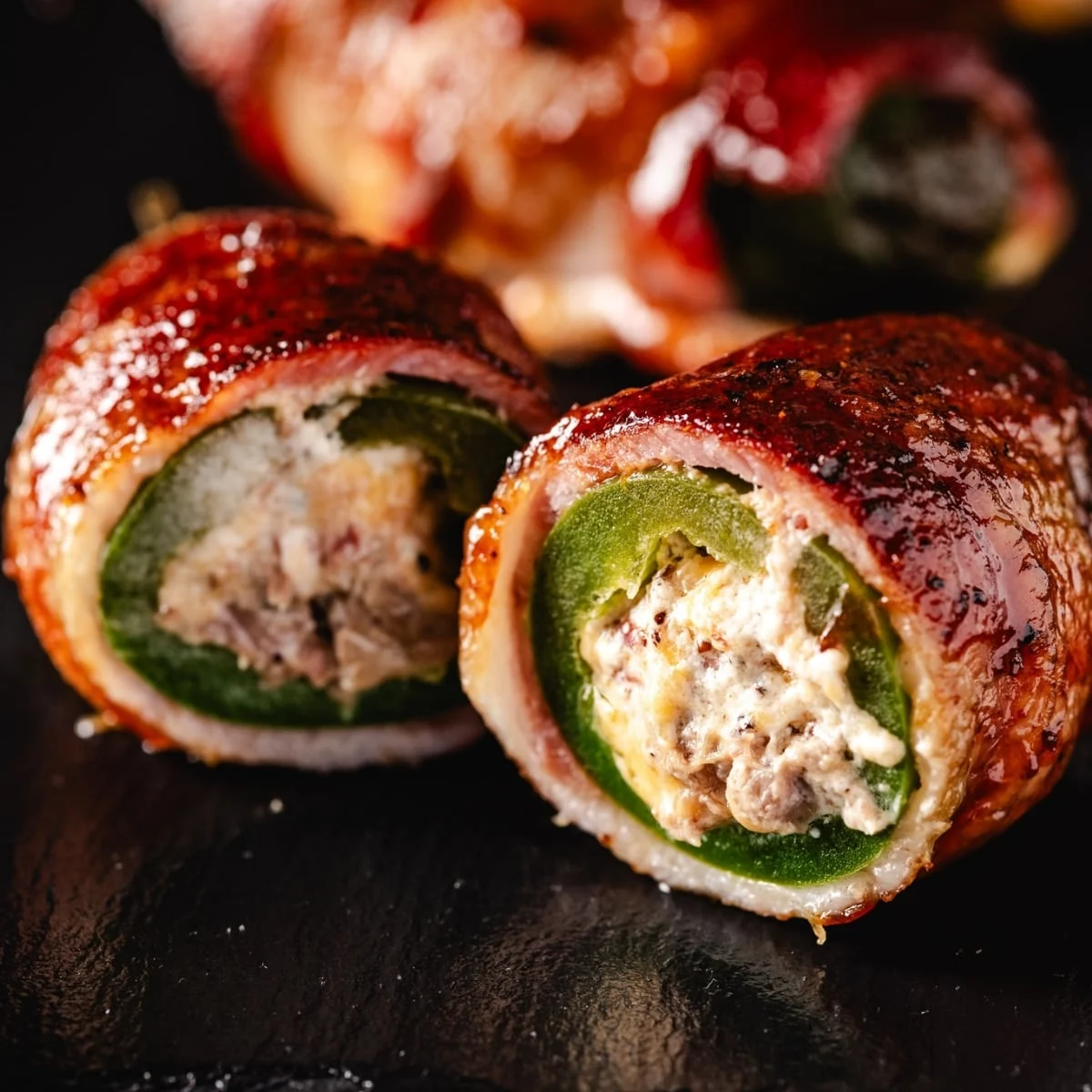
The culinary landscape of American barbecue has undergone a significant transformation over the last decade, transitioning from traditional smoked meats served on butcher paper to a sophisticated culture of "barbecue fusion" and "viral appetizers." Central to this movement is the Smoked Texas Twinkie—a decadent, high-protein reimagining of the classic jalapeño popper that has become a staple of Texas pitmaster culture and backyard smoking enthusiasts alike. This dish, characterized by large jalapeños stuffed with cream cheese and leftover smoked brisket, then wrapped in thick-cut bacon and glazed with barbecue sauce, represents the intersection of traditional low-and-slow techniques with modern creative flair. As consumer interest in artisanal barbecue continues to grow, the Texas Twinkie has emerged not merely as a side dish, but as a primary draw for both commercial smokehouses and home cooks.
The Genesis and Chronology of the Texas Twinkie
The origins of the Texas Twinkie can be traced specifically to the North Texas barbecue scene, most notably to Hutchins BBQ in McKinney and Frisco, Texas. While the "jalapeño popper" has existed in various forms for decades—rooted in the Mexican culinary tradition of chiles rellenos and later popularized as a breaded, deep-fried appetizer in the 1980s and 1990s—the "Twinkie" variation introduced a distinctly Texan element: the integration of prime smoked brisket.
In the mid-2010s, Hutchins BBQ began offering these oversized, bacon-wrapped peppers as a specialty item. The name "Twinkie" was a playful nod to the iconic snack cake, suggesting a stuffed, elongated treat, though the savory profile is entirely removed from its namesake. By 2017 and 2018, as social media platforms like Instagram and TikTok began to prioritize visually striking food content, the Texas Twinkie went viral. The sight of a glistening, bacon-wrapped jalapeño being sliced to reveal a core of melted cheese and smoky beef became a hallmark of "foodie" culture.

The timeline of the dish’s evolution reflects a broader trend in the barbecue industry:
- Early 2000s: Pitmasters began experimenting with "ABTs" (Atomic Buffalo Turds), a predecessor to the Texas Twinkie often involving cocktail sausages or pulled pork.
- 2014-2015: The specific "Texas Twinkie" branding gains traction in North Texas, utilizing premium brisket trimmings.
- 2019: Major barbecue influencers, including Susie Bulloch of Hey Grill Hey, began adapting the recipe for home smokers, democratizing a dish that was previously exclusive to professional smokehouses.
- 2021-Present: The dish has reached a level of commercial maturity where pre-made versions are now shipped nationwide via specialty food purveyors, reflecting its transition from a regional secret to a national phenomenon.
Technical Composition and Culinary Science
The Smoked Texas Twinkie is a study in the balance of contrasting flavors and textures. From a culinary perspective, the dish relies on the harmony of capsaicin (heat), fat (cream cheese and bacon), and smoke.
The foundation of the dish is the jalapeño. For a Texas Twinkie, larger peppers are preferred to accommodate the maximum amount of filling. The heat of the pepper is mitigated by the removal of the seeds and pith, but more importantly, by the presence of casein in the cream cheese. Casein is a protein that binds with capsaicin, effectively neutralizing the burning sensation on the palate.
The inclusion of smoked brisket is what elevates the dish from a standard appetizer to a "luxury" barbecue item. Typically, pitmasters use brisket "point" or finely chopped fatty brisket, which ensures that the filling remains moist during the second smoking process. The addition of sharp cheddar cheese provides a necessary acidity and saltiness that cuts through the richness of the cream cheese and the smoky beef.

The final layer, the bacon wrap, serves two purposes: it provides a salty, crispy exterior and acts as a self-basting mechanism. As the fat renders from the bacon, it permeates the jalapeño, softening the pepper and infusing it with flavor. The application of a "Sweet Rub" and a "Texas Style BBQ Sauce" adds a caramelized glaze, introducing a sweet-savory profile that is characteristic of modern Texas barbecue.
Supporting Data and Market Impact
The rise of the Texas Twinkie is supported by significant shifts in the barbecue and outdoor cooking markets. According to data from the Hearth, Patio & Barbecue Association (HPBA), nearly 70% of U.S. households own a grill or smoker, with a marked increase in the purchase of pellet grills over the last five years. These automated smokers have made complex, multi-step recipes like the Texas Twinkie accessible to the average consumer.
Economic data from the restaurant sector indicates that "appetizer innovation" is a key driver for revenue in barbecue establishments. While brisket prices have fluctuated significantly—seeing a 20-30% increase in wholesale costs during various market cycles—the Texas Twinkie allows pitmasters to utilize brisket trimmings and "leftover" meat effectively. This reduces food waste and creates a high-margin product. A single Texas Twinkie in a professional BBQ joint can retail for anywhere between $7.00 and $12.00, depending on the size and meat quality.
From a nutritional standpoint, the dish is calorie-dense, reflecting its status as an indulgent "game-day" snack. Standard nutritional estimates for a single smoked Texas Twinkie include:

- Calories: 479 kcal
- Total Fat: 34g (Saturated Fat: 15g)
- Protein: 24g
- Sodium: 819mg
- Carbohydrates: 20g
These figures underscore the dish’s role as a centerpiece appetizer rather than a side dish, often serving as a bridge between the light snacks of a tailgate and the heavy main course of a barbecue feast.
Expert Perspectives and Industry Responses
Susie Bulloch, a prominent figure in the outdoor cooking space and founder of Hey Grill Hey, has noted that the appeal of the Texas Twinkie lies in its "over-the-top" nature. Bulloch, whose background includes multiple Guinness World Records and appearances on the Food Network, emphasizes that the dish allows home cooks to showcase their skills with leftover brisket, which is often considered the "gold standard" of smoked meats.
Pitmasters across Texas have responded to the Twinkie’s popularity by creating their own proprietary versions. Some have experimented with different proteins, such as smoked turkey or pulled pork, while others have introduced "Texas-sized" versions using poblano peppers. The general consensus among industry experts is that the Texas Twinkie represents the "new school" of barbecue—one that respects the traditional 12-hour smoke but isn’t afraid to wrap the results in bacon and cheese for a viral-ready presentation.
Official responses from barbecue competitions also reflect this shift. While traditional categories focus on ribs, chicken, and brisket, "Anything But" categories in various sanctioned BBQ cook-offs frequently see entries inspired by the Texas Twinkie, as judges look for creativity and the technical ability to maintain the integrity of the jalapeño without overcooking the bacon.

Broader Implications for Barbecue Culture
The Texas Twinkie is more than just a recipe; it is a symbol of the democratization of barbecue. For decades, the secrets of the smokehouse were closely guarded by "old-school" pitmasters. However, the rise of digital platforms and creators like Bulloch has shifted the power dynamic. The availability of high-quality rubs, sauces, and step-by-step instructions means that a backyard cook in Minnesota can replicate a specialty item from a renowned Texas smokehouse with a high degree of accuracy.
Furthermore, the dish highlights the evolution of Texas food identity. It reflects a culture that is increasingly comfortable with "fusion"—taking the heat of the Southwest, the beef-centric traditions of the Texas plains, and the indulgent, cheese-heavy preferences of the American Midwest.
The success of the Texas Twinkie also suggests a future where "meat-within-meat" appetizers become a standard expectation at high-end barbecue venues. As consumers become more educated about barbecue techniques, they are seeking out items that require labor-intensive preparation. The process of de-seeding, stuffing, wrapping, seasoning, smoking, and glazing a single jalapeño is time-consuming, and consumers have shown a willingness to pay a premium for that craftsmanship.
In conclusion, the Smoked Texas Twinkie stands as a testament to the vibrant, evolving nature of American culinary traditions. It is a dish born of necessity (utilizing brisket scraps), propelled by social media, and sustained by a genuine love for the complex flavors of wood-fired cooking. As the barbecue industry continues to innovate, the Texas Twinkie will likely remain a benchmark for how simple ingredients can be transformed through technique and creativity into a cultural icon of the smoker. For the backyard hero or the professional pitmaster, it remains the ultimate expression of what happens when Texas tradition meets modern appetite.
