
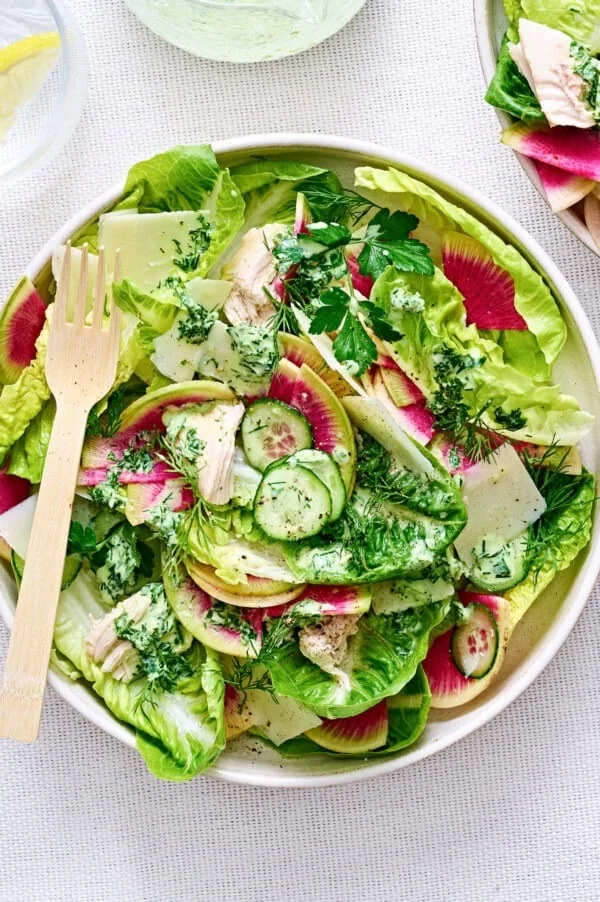
The culinary landscape continues to evolve with a strong emphasis on health, convenience, and innovative flavor profiles. A recent notable development in this space is the Green Goddess Caesar Salad with Rotisserie Chicken, a recipe published by the popular health-focused food blog, Skinnytaste. This creation successfully merges the vibrant, herby essence of Green Goddess dressing with the classic, savory notes of a Caesar, while significantly enhancing its nutritional profile through the strategic use of Greek yogurt and lean protein. Positioned as a high-protein, satisfying, and meal-prep-friendly option, this salad exemplifies contemporary healthy eating trends and the ongoing "healthification" of beloved dishes.
The Evolution of Iconic Salad Dressings: A Culinary Fusion

To fully appreciate the Green Goddess Caesar Salad, it is essential to understand the distinct histories and enduring appeal of its namesake dressings. The Caesar salad, an undisputed icon of American cuisine, traces its origins back to the 1920s, specifically to Caesar Cardini, an Italian immigrant who owned restaurants in Tijuana, Mexico, and San Diego, California. Legend has it that on a busy Fourth of July weekend, with kitchen supplies running low, Cardini improvised a salad from available ingredients: romaine lettuce, olive oil, raw egg, Worcestershire sauce, garlic, Parmesan cheese, and croutons. The salad’s simple yet robust flavor quickly captivated diners, particularly Hollywood elites who frequented his establishments. Over decades, the Caesar salad evolved, with variations incorporating anchovies and lemon juice becoming standard, cementing its status as a global favorite.
Parallel to the Caesar’s rise, the Green Goddess dressing emerged from the kitchens of the Palace Hotel in San Francisco in the early 1920s. Created by chef Philip Roemer for actor George Arliss, who was starring in William Archer’s play "The Green Goddess," the dressing was an homage to the play and quickly became a local sensation. Its signature verdant hue and complex flavor profile came from a blend of mayonnaise, sour cream, chives, parsley, tarragon, anchovies, lemon juice, and sometimes garlic or vinegar. While the original recipe was rich and creamy, its distinctive herby freshness has made it a versatile and much-loved condiment, inspiring countless adaptations over the years.
The fusion of these two culinary giants into a single dish, the Green Goddess Caesar, represents a modern trend where classic flavors are reimagined to meet contemporary dietary preferences. This particular rendition, incorporating a healthier base and additional fresh herbs, showcases an innovative approach to familiar tastes.

Skinnytaste’s Health-Conscious Innovation
Skinnytaste, founded by Gina Homolka, has long been a leading platform for making traditionally indulgent recipes lighter without sacrificing flavor. The Green Goddess Caesar Salad with Chicken perfectly aligns with this philosophy. Recognizing the widespread appeal of both Caesar and Green Goddess, Homolka embarked on creating a version that is "lighter than a traditional Caesar but still delivers that rich, tangy flavor." The core innovation lies in the dressing, which utilizes a Greek yogurt base, a hallmark of many Skinnytaste recipes.
Greek yogurt, known for its high protein content and creamy texture, serves as an excellent substitute for the mayonnaise or sour cream often found in traditional dressings. This substitution significantly reduces the fat content while simultaneously boosting the protein, contributing to a more satiating meal. By blending in fresh parsley, dill, and basil into her existing yogurt Caesar dressing, Homolka successfully captures the bright, aromatic "green goddess vibe" without relying on heavy creams or oils. This approach not only enhances the nutritional value but also introduces a vibrant freshness that elevates the overall dish.

The choice of rotisserie chicken as the protein source further underscores the recipe’s commitment to convenience. Rotisserie chicken is a widely available, pre-cooked option that drastically cuts down preparation time, making the salad ideal for "busy days when you want something quick but satisfying." This caters directly to consumers who prioritize both health and efficiency in their meal planning.
Key Components and Nutritional Analysis
The Green Goddess Caesar Salad with Chicken is constructed with a careful balance of ingredients designed to maximize flavor, texture, and nutritional benefit.

- Green Goddess Caesar Dressing: The foundation of this salad’s unique appeal. It combines the tang of a traditional Caesar (likely including elements like Worcestershire, garlic, and Parmesan) with the fresh, herbaceous complexity of Green Goddess. The Greek yogurt provides probiotics and calcium, while fresh herbs like parsley, dill, and basil offer vitamins (K, C, A), antioxidants, and anti-inflammatory properties.
- Rotisserie Chicken: A lean and convenient protein source. Chicken is an excellent source of high-quality protein, essential for muscle repair and growth, satiety, and overall bodily function. Utilizing pre-cooked chicken makes this recipe accessible even for novice cooks or those with limited time.
- Crisp Romaine Lettuce: Provides a crunchy base and is a good source of vitamins A and K, as well as folate. Its sturdy texture stands up well to dressing without wilting immediately.
- Crunchy Cucumbers: Adds a refreshing element and hydration to the salad. Cucumbers are low in calories and provide vitamins K and C, and potassium.
- Shaved Parmesan: Contributes a salty, umami depth characteristic of Caesar salads. Using shaved rather than grated Parmesan allows for bursts of flavor without an overly dense cheese layer, managing calorie intake while enhancing taste.
- Peppery Radishes: A distinctive addition that provides a welcome crunch and a pungent, slightly spicy kick, complementing the creamy dressing and fresh herbs. Radishes are rich in vitamin C and antioxidants.
- Omission of Croutons: A deliberate choice to keep the salad lighter and lower in carbohydrates. While croutons offer texture, their absence allows the fresh flavors of the vegetables, chicken, and dressing to shine, aligning with a more health-conscious approach.
The provided nutritional data for one serving of this salad is compelling: 432 kcal, 12 g Carbohydrates, 55 g Protein, 17.5 g Fat (5.5 g Saturated Fat), 138 mg Cholesterol, 559 mg Sodium, 3 g Fiber, and 4 g Sugar. This profile clearly positions it as a high-protein, relatively low-carb, and nutrient-dense meal, making it an attractive option for individuals monitoring their macronutrient intake or seeking satisfying, health-supportive dishes. The 55 grams of protein per serving is particularly noteworthy, significantly contributing to daily protein requirements and promoting satiety, which is crucial for weight management and overall well-being.
Chronology of Meal Prep and Culinary Adaptation
The contemporary food landscape is heavily influenced by the meal prep movement, a practice that has gained significant traction over the past decade. Driven by busy lifestyles, a desire for healthier eating, and cost-effectiveness, meal prepping involves preparing components or entire meals in advance. This recipe is explicitly designed with meal prep in mind, offering practical advice for storage.

The dressing and chicken can be prepared and stored separately for up to four days in the refrigerator. This ensures that fresh salads can be assembled quickly throughout the week, preventing sogginess and maintaining optimal texture. For effective meal prepping, it is recommended to store the dressing in a separate container, the cooked chicken in another, and the chopped vegetables (romaine, cucumbers, radishes) in a third, preferably with a paper towel to absorb excess moisture. This modular approach allows for customization and ensures freshness when ready to eat.
This focus on meal prep is not merely a convenience factor; it reflects a broader societal shift towards planned eating and proactive health management. As consumers become more aware of the link between diet and health, recipes that facilitate consistent healthy eating, such as this Green Goddess Caesar, become increasingly valuable.
Statements and Broader Implications

Gina Homolka, the creator behind Skinnytaste, articulates her motivation for this recipe: "This chicken salad recipe combines the bright, herby flavors of green goddess dressing with the savory, creamy notes of Caesar dressing. The final result is a healthy salad that’s lighter but still delicious." This statement underscores the primary objective: to deliver a dish that is both nutritionally superior and gastronomically satisfying, challenging the perception that healthy food must compromise on taste.
The publication of this recipe by Skinnytaste, a platform with a vast and engaged audience, carries broader implications for home cooking and the food industry. It reinforces several ongoing trends:
- "Healthification" of Classics: The ongoing demand for healthier versions of popular comfort foods and classic dishes. This trend drives innovation in ingredient substitution and cooking methods.
- Protein-Centric Diets: The sustained popularity of high-protein diets for weight management, muscle building, and satiety. Recipes like this Green Goddess Caesar meet this demand directly.
- Convenience and Efficiency: The need for quick, easy, and adaptable meal solutions for time-pressed individuals and families. The use of rotisserie chicken and meal-prep guidance addresses this directly.
- Flavor Fusion: The increasing willingness of home cooks and chefs to experiment with combining distinct flavor profiles, leading to exciting new culinary experiences.
- Role of Food Blogs and Online Media: Platforms like Skinnytaste play a crucial role in disseminating these trends and providing accessible recipes to a wide audience, influencing purchasing decisions and cooking habits.
The success of such recipes also signals to food manufacturers and retailers the consumer demand for ingredients that support these trends—such as a wider variety of Greek yogurt products, pre-chopped vegetables, and quality rotisserie chickens. The emphasis on fresh herbs also encourages local sourcing and home gardening, further contributing to a more holistic approach to food.

Variations and Customization
The inherent versatility of salads means that the Green Goddess Caesar with Chicken can be adapted to various tastes and dietary needs. While the original recipe omits croutons for a lighter profile, individuals seeking additional crunch could add whole-grain croutons or toasted nuts/seeds. Other vegetable additions, such as cherry tomatoes, bell peppers, or thinly sliced carrots, could introduce different textures and nutrients. For those preferring alternatives to rotisserie chicken, grilled chicken breast, baked salmon, or even plant-based proteins like chickpeas or grilled tofu could be incorporated. The dressing itself could be customized with additional herbs, a touch of spice, or a different type of vinegar to suit personal preferences. The recipe notes specifically mention watermelon radishes, in season from fall through late winter and early spring, highlighting an opportunity for seasonal adaptation and variety.
Conclusion

The Green Goddess Caesar Salad with Chicken by Skinnytaste stands as a compelling example of modern culinary innovation. By artfully blending the historical richness of Caesar and Green Goddess dressings, while simultaneously prioritizing health, convenience, and flavor, this recipe addresses the evolving demands of today’s consumers. Its high-protein content, use of Greek yogurt, and meal-prep friendly nature position it as more than just a salad; it is a strategic response to the ongoing societal shift towards healthier, more efficient, and deliciously satisfying eating habits. As such, it is likely to resonate with a broad audience, further solidifying the "healthification" trend within mainstream cuisine and inspiring continued creativity in the pursuit of balanced, flavorful meals.
