
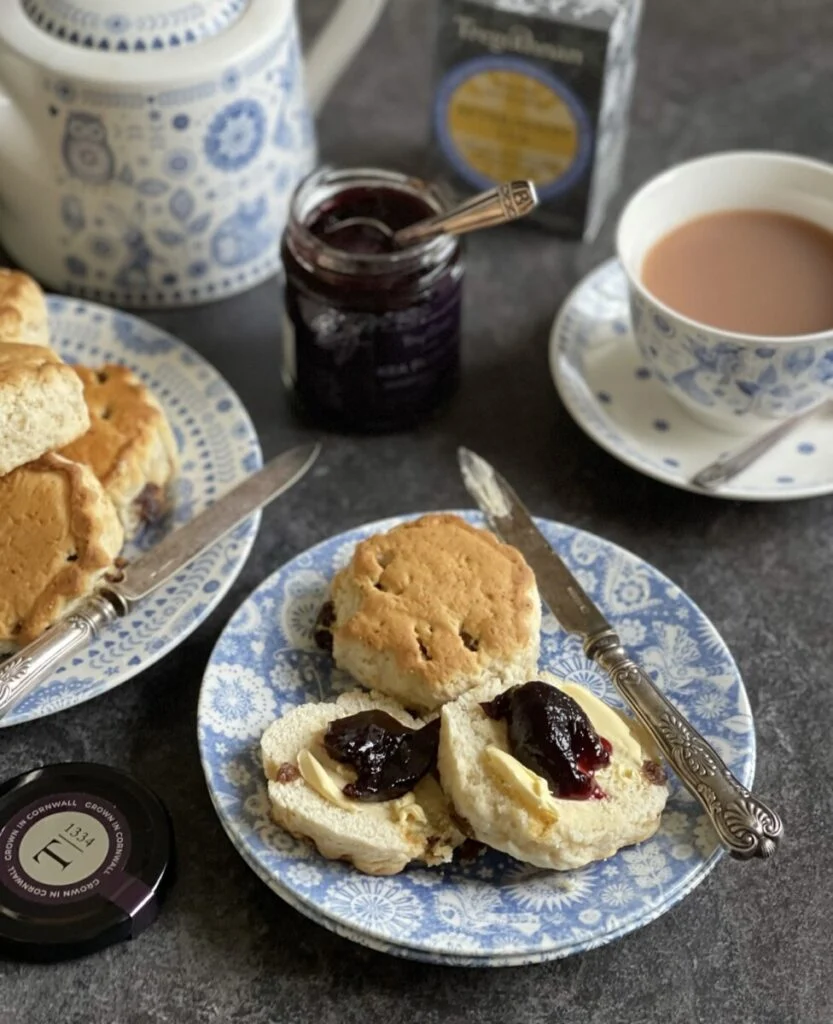
Karen Burns-Booth, a renowned culinary writer, announced on May 27, 2026, the release of her latest recipe, Earl Grey Fruit Scones, a delightful creation deeply infused with the distinctive bergamot notes of Earl Grey tea. This innovative twist on a British classic draws its inspiration from a memorable excursion to the Tregothnan Estate in Cornwall, the birthplace of commercial tea cultivation in the United Kingdom. The recipe, originally developed for Viking’s Explore Magazine, promises to transport enthusiasts to the heart of British tea culture with every bite, perfectly complemented by a pot of loose-leaf tea, jam, and clotted cream.

The Genesis of a Recipe: A Cornish Expedition
The inspiration for these unique scones stems from a captivating journey Burns-Booth undertook in 2021 aboard the Viking Venus. As part of an included excursion, she experienced the rugged beauty of Cornwall, specifically the Tregothnan Estate near Falmouth. Her account describes an invigorating walk through "bucolic country lanes and paths, past beehives and over wooden stiles," culminating in a breathtaking view of the River Fal upon reaching the estate’s famed tea terraces. This immersive experience, wandering amongst wild meadow flowers, ancient orchards, and grassy countryside tracks, evidently left a profound impression, marrying the natural beauty of Cornwall with its burgeoning tea heritage. It was within this enchanting landscape that the seeds for the Earl Grey Fruit Scones recipe were sown, aiming to capture the essence of a truly British tea experience.

Tregothnan Estate: Cultivating Britain’s First Home-Grown Tea
The Tregothnan Estate holds a unique and prestigious position in British agricultural history. Situated in the temperate microclimate of Cornwall, its pioneering efforts led to the first significant crop for Britain’s first home-grown tea in 2005. This landmark achievement debunked the long-held belief that tea could not be commercially cultivated in the UK, creating what has since been heralded as the "new Darjeeling." The estate’s success is a testament to meticulous horticultural research, understanding local weather patterns, and identifying suitable tea varietals that thrive in the mild, humid conditions akin to traditional tea-growing regions.

The history of tea in Britain dates back to the 17th century, primarily imported from China and later India. For centuries, the idea of domestic tea production remained a distant dream. However, the unique environmental factors at Tregothnan, including shelter from prevailing winds, ample rainfall, and acidic soil, proved ideal for camellia sinensis, the tea plant. The estate’s commitment extends beyond just tea, encompassing a diverse botanical collection and a strong focus on sustainability and biodiversity, evident in the beehives and ancient orchards Burns-Booth encountered. The cultivation process at Tregothnan is painstaking, often involving hand-picking the delicate leaves to ensure the highest quality. This dedication to craft and origin directly influences the flavour profile of their teas, providing a robust and nuanced base for recipes such as Burns-Booth’s scones. The estate now produces a range of black, green, and herbal teas, contributing significantly to local employment and positioning Cornwall as a unique destination for agro-tourism.
The Allure of Earl Grey: A Timeless Classic

Earl Grey tea itself boasts a rich history, dating back to the early 19th century. Traditionally, it is a black tea blend flavoured with oil of bergamot, a citrus fruit primarily grown in Calabria, Italy. The tea is widely believed to be named after Charles Grey, 2nd Earl Grey, who was Prime Minister of the United Kingdom in the 1830s. Legend has it that the tea was specially blended for him to offset the taste of lime in the water at his Northumberland estate, Howick Hall, using bergamot to mimic the flavour of a particular Chinese tea. Regardless of its exact origin, Earl Grey quickly became a beloved staple in British tea culture, admired for its distinctive aromatic and citrusy profile.
In Burns-Booth’s Earl Grey Fruit Scones, this characteristic bergamot flavour is not merely an accent but a foundational element. The recipe cleverly incorporates the tea in two ways: infusing the scone dough directly and soaking the dried fruit in hot Earl Grey tea. This dual infusion ensures a deep, pervasive flavour that elevates the traditional scone. The tea-soaked fruit becomes extra plump, adding an additional layer of citrusy and floral notes that complement the richness of the scone itself. This method highlights the versatility of Earl Grey tea, moving it beyond a beverage to a key ingredient in sophisticated baking.

The Art of Scone Making: A British Tradition Reimagined
Scones are an iconic element of British culinary tradition, intrinsically linked to the ritual of afternoon tea. Their history can be traced back to Scotland in the early 16th century, though they have evolved significantly over time. Originally, they were often made with oats and baked on a griddle, resembling a flatbread. With the advent of baking powder in the 19th century, scones became lighter, fluffier, and easier to produce, cementing their place as a teatime favourite.

The proper serving of scones, particularly in a "cream tea," is a subject of passionate debate, famously divided between Cornwall and Devon. In Cornwall, the tradition dictates that jam is spread first, followed by a generous dollop of clotted cream. Devon, conversely, prefers cream first, then jam. Burns-Booth, aligning with her Cornish inspiration, explicitly states, "Don’t forget it’s jam first in Cornwall too!" This adherence to regional custom underscores the cultural significance of the scone and its accompaniments.
Burns-Booth’s recipe breathes new life into this tradition by integrating the unique flavour of Earl Grey. The texture of a perfect scone—a crisp exterior yielding to a soft, fluffy interior—is paramount. The addition of fruit, now plumped with tea, ensures moisture and bursts of flavour. While the recipe was created using Tregothnan Earl Grey tea, acknowledging its "ultimate Britishness," Burns-Booth notes that any high-quality Earl Grey tea will suffice, making the recipe accessible while championing local produce.

Nutritional Profile and Dietary Considerations
The Earl Grey Fruit Scones, as prepared by Burns-Booth, offer a delightful indulgence. Based on a yield of 10 scones, each serving (one scone) contains approximately:

- Calories: 249
- Total Fat: 8g (Saturated Fat: 4g, Unsaturated Fat: 3g)
- Cholesterol: 54mg
- Sodium: 230mg
- Carbohydrates: 39g (Fiber: 1g, Sugar: 10g)
- Protein: 6g
This nutritional breakdown suggests a moderately energy-dense treat, typical for baked goods. The presence of fiber and protein contributes to satiety, while the sugar content is in line with a traditional scone recipe. For those mindful of dietary intake, these figures provide a helpful guide for enjoying the scones as part of a balanced diet. The rich flavour profile, enhanced by the Earl Grey, may also allow for a satisfying experience with a single scone, making it a mindful indulgence.
Viking Cruises: Curating Immersive Culinary Experiences

The collaboration between Karen Burns-Booth and Viking Cruises highlights a growing trend in the travel industry: the integration of immersive cultural and culinary experiences. Viking Cruises, known for its destination-focused itineraries, often includes excursions that connect passengers with local traditions, landscapes, and gastronomy. Burns-Booth’s journey on the Viking Venus in 2021 exemplifies this approach, providing a unique opportunity to explore the Tregothnan Estate, a site of significant British heritage and innovation.
As a regular contributor to Viking’s Explore Magazine, Burns-Booth plays a crucial role in enhancing the cruise line’s narrative of exploration and discovery. Her recipes and travel stories are designed to inspire readers and travellers, offering a taste of the destinations Viking visits. The Earl Grey Fruit Scones recipe is a perfect illustration of how travel can directly influence culinary creativity, allowing the flavours and stories of a place to be brought into the home kitchen. This partnership not only promotes Burns-Booth’s culinary expertise but also enriches the Viking brand by offering authentic, culturally resonant content.

Beyond the Recipe: Broader Implications
The creation and promotion of Earl Grey Fruit Scones, inspired by Tregothnan, carry broader implications for British culinary tourism, agricultural innovation, and the evolution of traditional recipes.

Firstly, it shines a spotlight on Cornwall as a region of significant gastronomic interest, moving beyond its traditional pasties and seafood to include its burgeoning tea industry. Tregothnan Estate’s success encourages other local producers and fosters a sense of pride in Cornish produce, potentially boosting tourism to the area. Visitors can now connect the taste of their tea or scones with a tangible, beautiful landscape.
Secondly, the recipe underscores the ongoing innovation within British agriculture. The ability to successfully cultivate tea in the UK is a remarkable feat, demonstrating resilience and adaptability in a changing climate. Tregothnan’s journey from an experimental garden to a commercial producer serves as an inspiring model for other niche agricultural ventures.

Finally, Burns-Booth’s recipe exemplifies how traditional dishes can be reimagined and revitalized through the incorporation of new, locally sourced ingredients. It encourages home bakers to explore flavour pairings and to consider the provenance of their ingredients, fostering a deeper appreciation for the culinary heritage and natural bounty of the British Isles. The Earl Grey Fruit Scones are not just a recipe; they are a narrative, weaving together history, geography, and flavour into a truly British experience.
Brewing the Perfect Cup: The Complementary Experience

No scone experience is complete without the perfect cup of tea. Burns-Booth implicitly acknowledges this by providing guidance on "Brewing Times for Proper British Tea." While the specific brewing times are not detailed in the provided text, the mere mention underscores the importance of the tea-drinking ritual. Different types of tea, from delicate green teas to robust black teas, require specific brewing temperatures and steeping times to release their optimal flavour. For an Earl Grey, typically 3-5 minutes in hot, but not boiling, water (around 90-95°C) is recommended to bring out its characteristic bergamot aroma without bitterness. This attention to detail ensures that the accompanying beverage complements the nuanced flavours of the scones, creating a harmonious and authentic cream tea experience.
Karen Burns-Booth’s Earl Grey Fruit Scones represent more than just a baked good; they embody a culinary narrative rooted in British heritage and innovation. From the pioneering tea gardens of Tregothnan Estate to the tables where cream tea traditions are savoured, this recipe offers a delicious journey, inviting everyone to taste the rich tapestry of British culture.
