
Historical Context and Culinary Heritage
The gooseberry, Ribes uva-crispa, has been cultivated in Europe for centuries, with its popularity peaking in Victorian England. During the 19th century, gooseberry shows were a staple of community life, particularly among the working classes in industrial northern towns. These events focused on the cultivation of massive, show-quality berries, often categorized by color: red, yellow, green, and white.

Jane Grigson, in her seminal work English Food (1974), documented the importance of these fruits not merely as a novelty for show, but as a reliable crop for the home kitchen. Grigson’s influence on British gastronomy cannot be overstated; she championed the use of simple, local ingredients and preserved recipes that might otherwise have been lost to the encroaching convenience of the post-war industrial food complex. The Baked Gooseberry Pudding serves as an enduring testament to this philosophy, requiring minimal, high-quality components to achieve a result that relies on the natural pectin and acidity of the gooseberry.

The Geography of the Gooseberry
For many, the gooseberry is synonymous with the landscape of County Durham and the wider North East. The region’s temperate climate and cool, damp springs provide ideal conditions for the hardy bushes. Historically, these bushes were a vital asset to households. They served a dual purpose: providing fruit for jams, pies, and puddings, and acting as a modest, supplemental source of income.

In the mid-20th century, it was common for families to cultivate these bushes in large numbers. As noted by culinary historians, the practice of selling surplus yield from galvanized buckets at the roadside was a recognized form of "pin-money" for retirees. This micro-economy of local fruit production highlights a period of British history defined by self-sufficiency and communal trade, long before the rise of centralized supply chains and globalized fruit imports.

Nutritional Profile and Ingredient Analysis
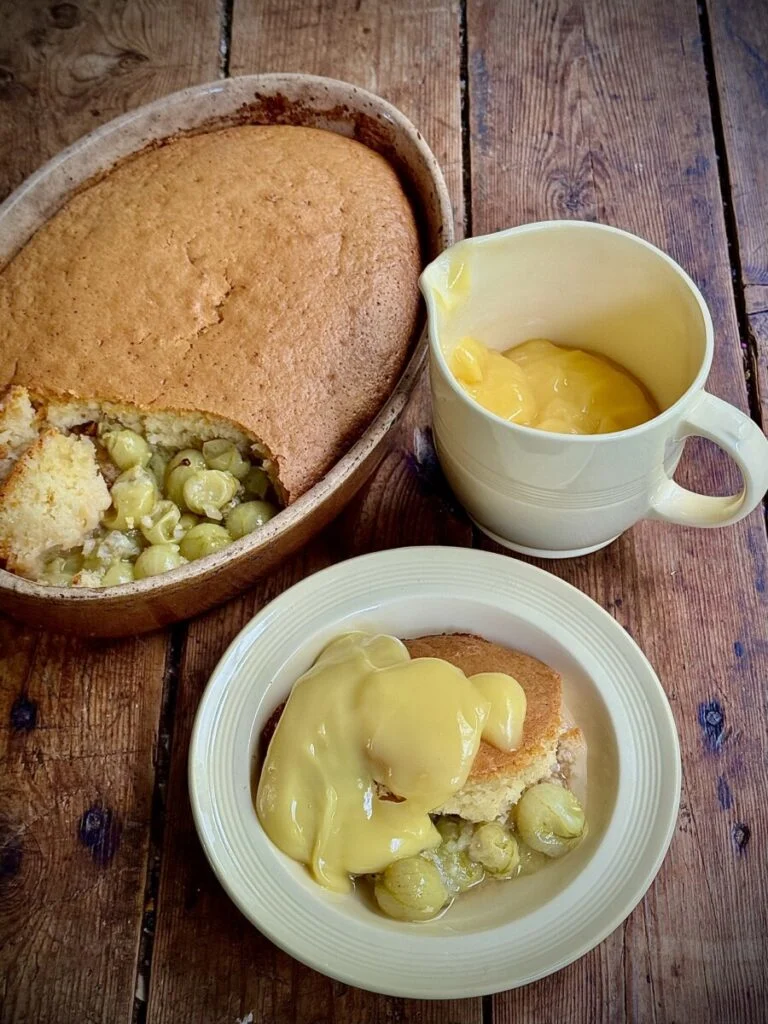
The Baked Gooseberry Pudding is traditionally composed of a base of stewed gooseberries topped with an "all-in-one" sponge. From a nutritional standpoint, the dish provides a caloric density of approximately 344 calories per serving. The primary fat content, totaling 20g, is derived from the butter used in both the fruit maceration process and the sponge mixture.

While the sugar content is significant—averaging 21g per serving—the tartness of the gooseberry requires this counterbalance to make the fruit palatable. Gooseberries themselves are a rich source of Vitamin C and dietary fiber, though the baking process often reduces the bioavailability of certain heat-sensitive nutrients. The inclusion of eggs and flour provides a modest protein content of 4g per serving, making it a satiating, albeit indulgent, comfort food.

The Preparation Process: A Technical Overview
The success of a traditional Baked Gooseberry Pudding relies on two distinct phases of thermal application. The first phase involves the "pre-baking" of the gooseberries with sugar and butter. This step is critical; it breaks down the tough skins of the fruit and releases a natural, tart syrup. Without this initial stage, the moisture content of the fruit would remain too high, resulting in a soggy sponge.

The second phase involves the application of the sponge topping. The technique used—a creamed mixture of butter, sugar, flour, and eggs—must be handled with precision to ensure an even rise. The "all-in-one" method, favored by many home cooks for its efficiency, requires that the ingredients be incorporated in a way that traps air, providing the necessary lift during the 30 to 35-minute baking period at 180°C (350°F).

Modern Implications and Market Availability
Despite its historical prominence, the gooseberry has seen a decline in commercial farming. Data from seasonal produce organizations indicates that while the fruit is still available in specialty greengrocers and independent markets, it has largely vanished from the shelves of major national retailers. This shift is attributed to the fruit’s short shelf life, its thorny harvesting requirements, and changing consumer tastes that favor sweeter, less acidic berries.

However, a resurgence of interest in heirloom gardening and "slow food" movements has kept the gooseberry relevant. Many home gardeners now view the plant as a staple of sustainable horticulture. For those unable to source fresh fruit, frozen alternatives are widely accepted in culinary circles. The nutritional integrity of frozen gooseberries is comparable to fresh, as they are typically flash-frozen at the peak of ripeness, preserving the essential acidity that defines the fruit’s character.

Comparative Analysis: Baked Puddings
The Baked Gooseberry Pudding belongs to a broader family of British baked fruit desserts, such as the Eve’s Pudding (typically apple-based) or the Rhubarb Charlotte. The fundamental architecture—a bottom layer of fruit topped with a cake-like batter—is a hallmark of 19th-century British baking. The primary differentiator is the acidity of the fruit. Unlike apples, which have a neutral sweetness, gooseberries offer a sharp, citrus-like profile that necessitates a more robust custard or cream pairing to balance the flavor profile.

Culinary Recommendations
Culinary professionals suggest that the serving of the pudding is as important as the preparation. The traditional pairing of "lashings of golden custard" is not merely a matter of preference but a functional requirement to mitigate the sharp tannins in the cooked gooseberries. Alternatives such as heavy cream or high-quality vanilla bean ice cream are also effective.

For those attempting this recipe in a modern kitchen, the use of a temperature-controlled oven is recommended. The transition from the "fruit-stewing" phase to the "sponge-rising" phase is sensitive to oven calibration. Furthermore, the use of a deep, oven-proof ceramic dish is advised, as it retains heat more effectively than metal tins, ensuring the base of the sponge cooks through without burning the top.

Conclusion: A Legacy Preserved
The endurance of the Baked Gooseberry Pudding is a reflection of the British public’s attachment to traditional, seasonal foodways. While the socio-economic conditions that once made gooseberry bushes a necessity for retired workers have shifted, the cultural memory associated with the dish remains vibrant. By continuing to bake these puddings, modern cooks maintain a direct, tangible link to the domestic history of the 20th century. Whether served as a nostalgic nod to the gardens of County Durham or as a discovery of a forgotten fruit, the dish remains a sophisticated, albeit simple, achievement in the annals of British baking. The continued availability of the recipe, documented by the likes of Jane Grigson, ensures that the gooseberry will remain a fixture of the British dessert table for generations to come.
