
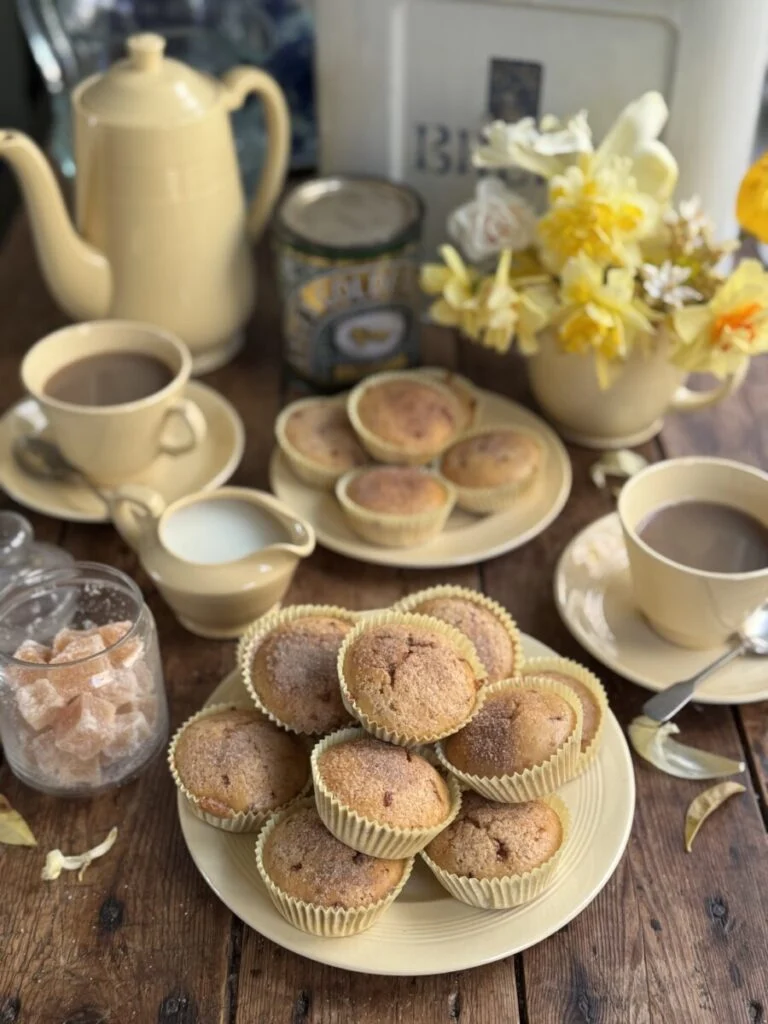
A century-old recipe for "Afternoon Tea Cakes with Golden Syrup," discovered within a vintage Lyle’s Golden Syrup booklet, has been meticulously recreated by culinary blogger and food historian Karen Burns-Booth. Dating back to approximately 1926, the recipe offers a charming glimpse into the era’s home baking traditions, featuring the quintessential British ingredient, golden syrup, alongside crystallised ginger. The revival of this dainty confection highlights the enduring appeal of heritage recipes and the cultural significance embedded in simple, comforting bakes.

Unearthing a Culinary Gem: The 100-Year-Old Recipe
The rediscovery of this specific recipe comes at a timely moment, coinciding with its centenary. Karen Burns-Booth, known for her dedication to preserving and sharing vintage culinary practices through her platform Lavender and Lovage, brought this historical bake to modern attention. The recipe, originally intended to promote Lyle’s Golden Syrup, served as a practical guide for homemakers a century ago, demonstrating the versatility and appeal of the product in everyday baking. Its survival in a dedicated booklet underscores the marketing strategies of food manufacturers in the early 20th century, which often involved distributing recipes to encourage product use and foster brand loyalty.

The Roaring Twenties: A Snapshot of Home Baking
The 1920s, often dubbed the "Roaring Twenties," was a period of significant social and economic change following the First World War. While marked by burgeoning modernity and cultural shifts, home baking remained a cornerstone of domestic life, particularly in Britain. Ingredients like flour, sugar, and butter were staples, and the availability of commercial products like baking powder and golden syrup made more elaborate (yet still accessible) recipes possible. Cookbooks and recipe booklets, like the one from which these Afternoon Tea Cakes originate, were invaluable resources for cooks, offering tested methods and inspiration. The emphasis on "dainty little fairy cakes" speaks to the prevailing aesthetic of the time, where presentation and portion control were valued, especially for social occasions like afternoon tea. These cakes were not just food; they were part of a ritual, symbolizing hospitality and refinement.

Lyle’s Golden Syrup: A Sweet British Icon
Central to this vintage recipe is Lyle’s Golden Syrup, a product with a storied history deeply intertwined with British culinary identity. First produced in 1883 by Abram Lyle & Sons, it is the world’s oldest brand and product packaging, recognized by the iconic green and gold tin featuring a dead lion being swarmed by bees, and the biblical motto "Out of the strong came forth sweetness" (Judges 14:14). This distinctive packaging has remained largely unchanged for over a century, a testament to its enduring recognition and heritage.

Golden syrup, a thick, amber-coloured inverted sugar syrup, is celebrated for its unique buttery-caramel flavour and distinct viscosity, which differs from treacle or molasses. Its properties make it ideal for baking, contributing moisture, a rich golden hue, and a subtle sweetness that complements a wide range of ingredients. In the 1920s, as today, golden syrup was an affordable and readily available sweetener, making it a staple in British kitchens for everything from puddings and flapjacks to, evidently, these charming tea cakes. Its inclusion in this 100-year-old recipe not only highlights its historical importance but also its consistent quality and suitability for classic bakes.
The Ritual of Afternoon Tea: A Cultural Cornerstone

The term "Afternoon Tea Cakes" immediately places the recipe within the revered British tradition of afternoon tea. Originating in the mid-19th century, afternoon tea evolved from a private social custom among the aristocracy to a widespread ritual enjoyed by various social classes. It typically involves a light meal taken in the late afternoon, comprising sandwiches, scones with clotted cream and jam, and an assortment of small cakes and pastries, all accompanied by tea.
These "dainty little fairy cakes" perfectly align with the ethos of afternoon tea. Their small, individual size makes them easy to handle, elegant to serve, and suitable for a leisurely repast. They represent the sweet component of the tea tray, offering a satisfying counterpoint to the savoury elements. The simplicity of the ingredients, yet the care taken in their preparation, embodies the spirit of home comfort and gentle indulgence that defines afternoon tea.

The Ingredients and Their Significance
The recipe calls for golden syrup and crystallised ginger, a classic flavour combination that offers both sweetness and a gentle warmth. Crystallised ginger, also known as candied ginger, has been used in confectionery and baking for centuries, valued for its pungent, spicy-sweet taste and chewy texture. In the 1920s, exotic spices and preserved fruits, though perhaps more expensive than staples, were still accessible enough to be incorporated into home baking for a touch of luxury or unique flavour. The pairing with golden syrup creates a harmonious balance, where the syrup’s mellow caramel notes soften ginger’s piquant kick.

However, the recipe’s inherent flexibility is also a key feature. Recognizing varied palates, particularly those of younger eaters, the recipe suggests omitting the ginger and substituting it with raisins or currants. This adaptability speaks to the practical nature of vintage recipes, designed to be modified based on available ingredients, personal preference, or dietary considerations within a household. This foresight in recipe design ensures its continued relevance across generations and diverse tastes.
Preparation and Presentation: A Timeless Appeal

The instructions for these cakes detail baking them in a "small cake tin" or "patty tin" within "paper fairy cake cases." This method is consistent with traditional fairy cake preparation, ensuring individual, perfectly portioned treats. The use of paper cases not only aids in presentation but also makes handling and serving hygienic and convenient, particularly in a social setting. Karen Burns-Booth’s recreation produced 18 small cakes from the batter, suggesting a generous yield suitable for a family or small gathering.
The recommendation to use self-raising flour in place of plain flour and baking powder, or cinnamon sugar for a topping, demonstrates the iterative nature of recipe development and adaptation over time. These small adjustments can enhance flavour or simplify the baking process, making the vintage recipe more approachable for contemporary bakers.

Nutritional Profile and Practicality
According to the provided nutritional information, each serving (one cake) contains approximately 75 calories, 3g total fat (1g saturated, 2g unsaturated), 38mg sodium, 12g carbohydrates (3g sugar), and 1g protein. While modest, this profile reflects a small treat designed to accompany a beverage rather than serve as a substantial meal component. The relatively low sugar content for a sweet cake, compared to many modern counterparts, might be an artifact of 1920s rationing or a general preference for less intensely sweet confections.

From a practical standpoint, the cakes are noted for their excellent keeping qualities, remaining fresh in a cake tin for three to four days. Furthermore, they freeze well, offering a convenient option for batch baking and future consumption. These characteristics underscore the efficiency and foresight embedded in older recipes, designed for homemakers who needed to manage household supplies and minimize waste. This practicality resonates with contemporary concerns for food preservation and meal planning.
Beyond the Recipe: Preserving Culinary Heritage

The act of recreating and sharing a 100-year-old recipe like these Afternoon Tea Cakes with Golden Syrup transcends mere baking; it is an act of culinary archaeology. It connects modern generations with their gastronomic past, offering insights into ingredients, techniques, and dietary habits of a bygone era. Culinary historians and food enthusiasts often emphasize the importance of such efforts in understanding cultural evolution and the role of food in shaping identity.
Karen Burns-Booth’s project serves as a bridge between the past and present, inviting home bakers to experience a taste of history. Her dedication to serving these cakes on vintage Woodsware Jasmine china, adorned with fresh spring flowers from her cottage garden, further amplifies the nostalgic and romantic appeal of the endeavor. This holistic approach to presenting the recipe emphasizes the entire experience surrounding food – from preparation to consumption and presentation.

Implications for Contemporary Baking
The revival of this vintage recipe has several implications for contemporary baking. Firstly, it champions simplicity. In an age of complex, multi-layered desserts, these cakes offer a refreshing return to straightforward ingredients and techniques. Secondly, it highlights the enduring quality of classic flavour combinations. Golden syrup and ginger remain popular pairings, demonstrating that some tastes are truly timeless. Thirdly, it encourages exploration of culinary heritage. Many home bakers are increasingly interested in rediscovering forgotten recipes, appreciating their authenticity and often healthier, less processed nature compared to some modern alternatives.

Moreover, the versatility of the recipe, allowing for substitutions like raisins for ginger, encourages creative adaptation, a skill valued in modern kitchens. It suggests that even traditional recipes are not rigid but can be personalized to suit individual preferences or dietary needs, making them accessible to a broader audience.
Conclusion: A Sweet Legacy Endures

The Afternoon Tea Cakes with Golden Syrup, now celebrating their centenary, stand as a testament to the timeless appeal of simple, well-crafted baked goods. Through the diligent efforts of culinary historians like Karen Burns-Booth, such recipes are not merely preserved but are brought back to life, allowing new generations to savour the flavours and traditions of the past. This particular recipe, with its humble ingredients and delightful character, perfectly encapsulates the charm of British home baking and the enduring legacy of a beloved ingredient, Lyle’s Golden Syrup. It serves as a sweet reminder that sometimes, the best recipes are those that have stood the test of time, continuing to bring comfort and joy a century after their creation.
