
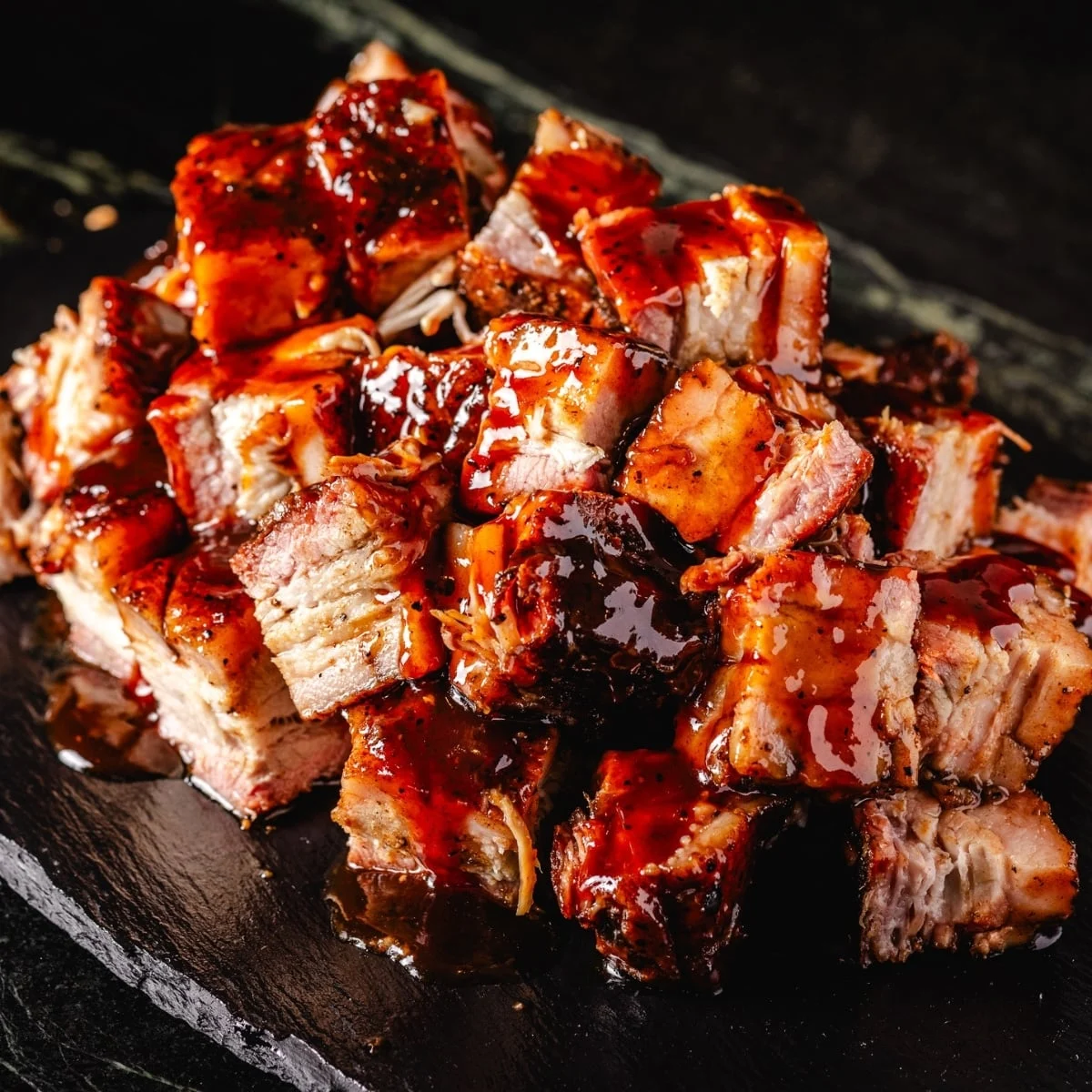
The culinary landscape of American barbecue has seen a significant shift toward the utilization of pork belly, a cut once primarily reserved for bacon production but now celebrated as a standalone delicacy. Often referred to as "meat candy" within the competitive smoking circuit, the Maple Bourbon BBQ Pork Belly represents a sophisticated intersection of traditional low-and-slow technique and artisanal flavor profiling. This specific preparation method, popularized by culinary experts such as Susie Bulloch of Hey Grill Hey, emphasizes a four-ingredient minimalist approach that relies on high-quality proteins and precise thermal management to achieve a product that is simultaneously rich in texture and complex in flavor.
The Evolution of Pork Belly in Modern Gastronomy
Historically, pork belly was a commodity cut, valued for its high fat-to-meat ratio and its utility in curing. However, the rise of the "nose-to-tail" eating movement and the professionalization of backyard barbecue have elevated the cut to a premium status. In a commercial context, pork belly is the anatomical region remaining after the loin and ribs are removed. It is characterized by heavy layers of subcutaneous and intramuscular fat, which, when treated with wood smoke and controlled heat, undergo a transformative process of rendering and collagen breakdown.
The Maple Bourbon BBQ Pork Belly recipe leverages these physical properties. By introducing a signature rib rub and a specialized glaze, the recipe addresses the inherent richness of the pork with acidity, sweetness, and the complex tannins found in bourbon. This approach has become a staple for social gatherings and competitive events, where the visual appeal of "burnt ends"—the cubed, caramelized results of the smoking process—serves as a hallmark of pitmaster proficiency.

Technical Specifications and Ingredient Composition
While the final product suggests a complex preparation, the methodology is grounded in four primary components: the raw pork belly, a signature dry rub, a braising liquid, and a maple bourbon glaze.
- The Protein: The foundation of the dish is a whole or sliced pork belly. Selection is critical; experts recommend looking for a "center-cut" piece with even thickness to ensure uniform cooking. The ratio of lean meat to fat should be approximately 50/50 to allow for sufficient rendering without the meat becoming overly dry.
- The Signature Rib Rub: A balanced rub typically consists of salt, brown sugar, paprika, and aromatics like garlic and onion powder. The salt acts as a dry brine, drawing moisture to the surface where it dissolves the rub into a tacky film known as a "pellicle," which is essential for smoke adhesion.
- Braising Liquid: During the secondary stage of cooking, the pork is often enveloped in a liquid—frequently apple juice or cider—to facilitate a "steaming" effect within a foil wrap. This accelerates the breakdown of tough connective tissues.
- Maple Bourbon Glaze: The finishing element introduces a high sugar content and alcoholic complexity. The bourbon provides a smoky, oak-influenced depth, while the maple syrup ensures a glossy, viscous coating that caramelizes under high heat or prolonged exposure to the smoker’s environment.
Procedural Chronology: The Low-and-Slow Methodology
The preparation of Maple Bourbon BBQ Pork Belly is a multi-hour commitment that requires adherence to specific chronological stages.
Phase I: Preparation and Scoring
The process begins with the preparation of the meat. Pitmasters often recommend scoring the fat cap in a diamond pattern. This serves two purposes: it increases the surface area for the rub to penetrate and provides channels for rendered fat to escape, preventing the meat from becoming "greasy." The rub is applied generously on all sides, ensuring full coverage to facilitate bark formation.
Phase II: The Initial Smoke
The smoker is preheated to a consistent 225 degrees Fahrenheit (107 degrees Celsius). The pork belly is placed on the grates, typically fat-side up. During this phase, which lasts approximately three to four hours, the meat is exposed to hardwood smoke (often hickory, apple, or cherry). The goal of Phase II is to reach an internal temperature of approximately 165 degrees Fahrenheit. At this point, the exterior should have developed a dark, mahogany "bark."

Phase III: The Braise and Tenderization
Once the internal temperature reaches the 165-degree threshold, the pork belly is removed and placed in a foil pan or wrapped tightly in heavy-duty aluminum foil with a braising liquid. This stage, often called the "Texas Crutch," bypasses the "stall"—a period where evaporative cooling slows the rise of internal temperature. The pork remains in this environment until it reaches an internal temperature of 200 to 205 degrees Fahrenheit, the point at which collagen fully liquefies into gelatin.
Phase IV: Cubing and Glazing
The final stage involves slicing the tenderized belly into bite-sized cubes. These cubes are then tossed in the Maple Bourbon Glaze and returned to the smoker for an additional 20 to 30 minutes. This "sets" the sauce, allowing the sugars to tack up and create a sticky, professional finish.
Thermal Dynamics and Food Safety Standards
In professional barbecue, the use of time as a primary indicator of doneness is discouraged in favor of internal temperature monitoring. Factors such as ambient humidity, wind, and the specific density of the pork slab can cause cooking times to fluctuate by as much as 20%.
Culinary professionals emphasize the use of high-precision tools, such as the Thermapen ONE, which provides near-instantaneous readings. For pork belly, the safety minimum is 145 degrees Fahrenheit, but for the desired "melt-in-your-mouth" texture, the target remains above 200 degrees. This high temperature is necessary because the belly is a muscle of motion (the abdominal wall), which contains significant connective tissue that does not soften at lower temperatures.

Economic and Agricultural Context of Pork Production
The popularity of recipes like the Maple Bourbon BBQ Pork Belly has direct implications for the agricultural economy. According to data from the USDA, pork belly prices often experience seasonal volatility, peaking during "bacon season" and the summer grilling months. The rise of "burnt ends" as a trendy appetizer has increased the demand for fresh, non-cured belly, which was once a secondary market behind the industrial bacon industry.
Furthermore, the "craft BBQ" movement has spurred a market for heritage breeds, such as Berkshire or Duroc pigs. These breeds are prized for their superior intramuscular fat (marbling), which enhances the flavor profile of smoked dishes compared to standard commodity pork. For the consumer, this means a wider variety of price points and quality levels available at local butcher shops and specialty retailers.
Nutritional Analysis and Dietary Implications
From a nutritional standpoint, pork belly is a calorie-dense food. Data provided for a standard serving of this recipe indicates approximately 1,241 calories, with a significant portion derived from fat.
Detailed Nutritional Breakdown per Serving:

- Total Fat: 121g (186% of the Daily Value)
- Saturated Fat: 44g
- Cholesterol: 163mg
- Sodium: 260mg
- Carbohydrates: 16g (primarily from the maple glaze and rub)
- Protein: 22g
While high in calories, the dish is notable for its low sodium content relative to processed bacon and its high protein density. It fits within certain high-fat, low-carb dietary frameworks, such as the ketogenic diet, provided the maple syrup and sugar in the rub are substituted with sugar-free alternatives. However, in its traditional form, it remains a celebratory or "indulgence" food rather than a daily staple.
Expert Insights and Industry Reception
Susie Bulloch, the founder of Hey Grill Hey and a recognized figure in the BBQ community—having appeared on the Food Network and contributed to Guinness World Records—notes that the accessibility of pork belly is what makes it a "win-win" for backyard cooks. "Pork belly might sound intimidating, but it is deeply savory and takes smoke beautifully," Bulloch states. Her methodology focuses on empowering the "Backyard BBQ Hero," a demographic that has grown exponentially since 2020.
The reception of maple and bourbon as a flavor pairing has been overwhelmingly positive in the culinary world. The natural sweetness of maple syrup complements the pork’s fat, while the alcohol in the bourbon acts as a solvent, helping to carry flavor molecules deeper into the meat. The tannins from the bourbon also provide a counterpoint to the richness, preventing the palate from becoming fatigued by the high fat content.
Broader Impact and Implications for the BBQ Community
The proliferation of high-quality, accessible smoking recipes has democratized a style of cooking that was once shrouded in secrecy. Platforms like the Hey Grill Hey App and YouTube have turned complex meat science into a manageable hobby for millions. This shift has not only impacted home kitchens but has also influenced the restaurant industry, where pork belly appetizers are now a standard offering in both casual and fine-dining establishments.

As the BBQ community continues to grow, the emphasis on precision, such as internal temperature monitoring and wood-type selection, has elevated the standard of American outdoor cooking. The Maple Bourbon BBQ Pork Belly stands as a testament to this evolution—a dish that requires minimal ingredients but demands a high degree of technical respect. It represents a bridge between the rustic origins of smoke-cooking and the refined expectations of the modern gourmet.
