
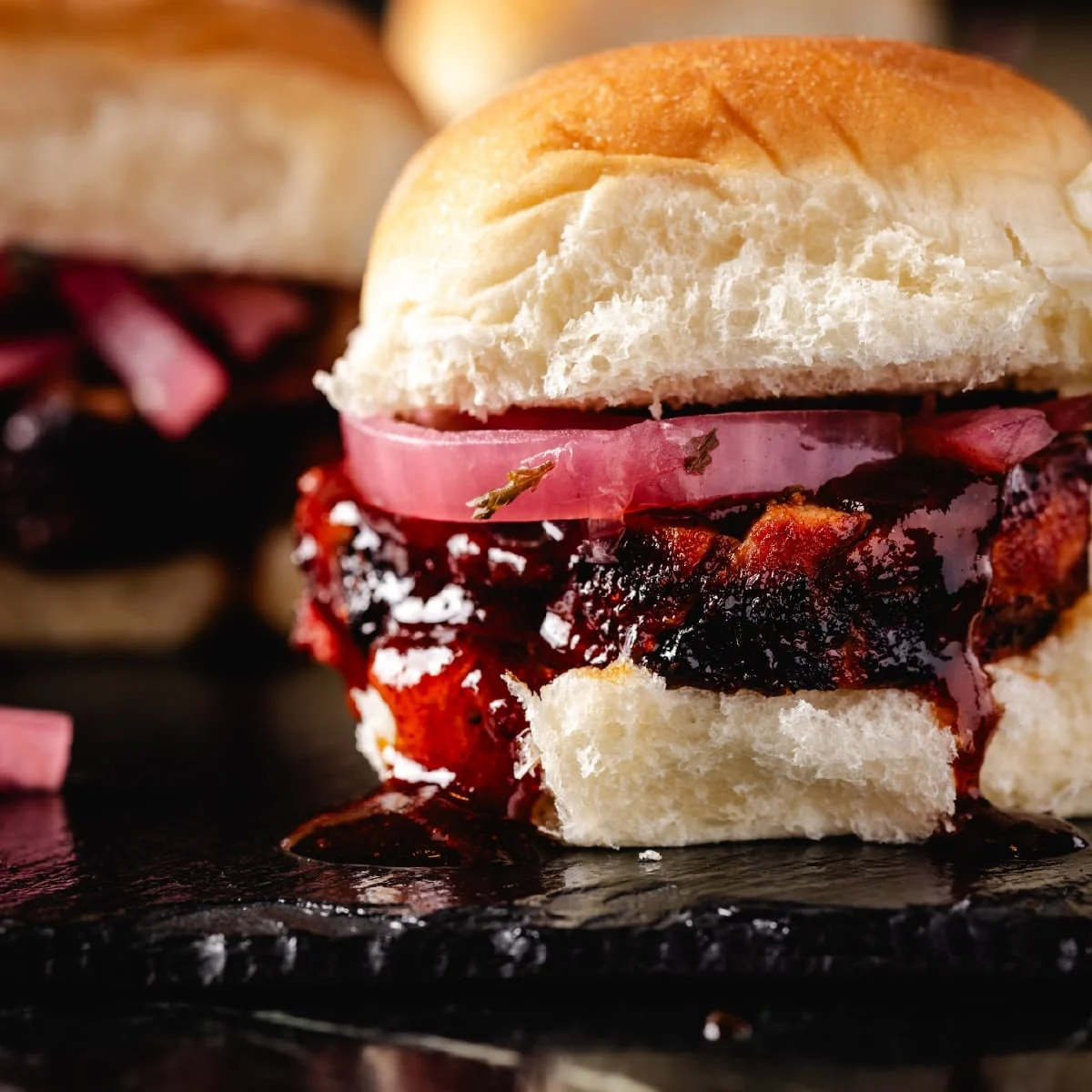
The culinary landscape of the early 21st century has been increasingly defined by the intersection of high-end gourmet flavors and accessible home preparation, a trend exemplified by the recent popularization of the Hot Honey Pork Tenderloin Slider. This dish, which gained significant traction following a high-profile demonstration at the Winter Fancy Food Show in San Diego, represents a shift in how home cooks approach the traditional American barbecue. By utilizing pork tenderloin—a lean, efficient, and often underutilized cut—culinary developers are providing a blueprint for "backyard barbecue" that prioritizes flavor complexity and time efficiency over the long, labor-intensive smoking processes traditionally associated with the genre.
The Evolution of the BBQ Slider
The barbecue slider has long been a staple of American casual dining, typically featuring pulled pork shoulder or brisket. However, the introduction of pork tenderloin into this format marks a notable evolution in texture and preparation. Unlike the pork shoulder, which requires hours of slow cooking to break down connective tissue, the tenderloin is a lean muscle that responds best to high-heat grilling and precise temperature management.
The recipe’s rise to prominence can be traced back to its showcase at the Specialty Food Association’s Winter Fancy Food Show. As one of the premier events for the specialty food industry, the San Diego-based exhibition serves as a barometer for upcoming food trends. The "Hot Honey" variant of the pork slider was identified by industry analysts as a prime example of the "sweet-heat" flavor profile that continues to dominate the condiment and snack sectors.

Culinary Composition and Flavor Profile
The success of the Hot Honey Pork Tenderloin Slider is rooted in a deliberate balance of four primary taste pillars: sweetness, heat, acidity, and salt.
- The Protein: The pork tenderloin is seasoned with a proprietary "Sweet Rub," which utilizes sugars to encourage the Maillard reaction—a chemical reaction between amino acids and reducing sugars that gives browned food its distinctive flavor.
- The Glaze: The application of Hot Honey BBQ Sauce introduces a contemporary twist. Hot honey, a combination of honey and chili peppers, has seen a 187% increase in menu appearances over the last four years, according to market research data. The sauce provides a viscous, spicy-sweet coating that adheres to the lean meat, compensating for the lack of intramuscular fat found in other pork cuts.
- The Vessel: The use of Hawaiian rolls, a sweet bread of Portuguese influence, provides a soft, pillowy contrast to the charred exterior of the pork. The sugar content in the rolls complements the honey in the glaze.
- The Tangy Contrast: To prevent the sweetness from overwhelming the palate, the sliders are topped with pickled red onions. The acetic acid from the pickling process acts as a palate cleanser, cutting through the richness of the pork and the sugar of the sauce.
Technical Preparation and Chronology
Achieving the professional-grade results seen at industry demonstrations requires a strict adherence to temperature-based cooking rather than time-based cooking. The chronology of the preparation is as follows:
Phase I: Preparation and Seasoning
The process begins with the removal of the silver skin—a tough connective tissue—from the pork tenderloin. The meat is then coated in a dry rub. Experts recommend allowing the seasoned meat to sit for at least 15 to 30 minutes to allow the salt in the rub to penetrate the surface through osmosis, which enhances moisture retention during the cook.
Phase II: The Grilling Process
The grill is preheated to a medium-high temperature (approximately 400°F). The tenderloin is placed on the grates and turned every 5 to 7 minutes to ensure even browning and internal cooking.

Phase III: The Glazing Interval
Timing the application of the sauce is critical. Sugary sauces, such as the Hot Honey BBQ Sauce, have a low smoke point and will burn if applied too early. The glaze is applied when the meat reaches an internal temperature of 135°F. This allows the sauce to caramelize and "set" on the meat without scorching during the final few minutes of cooking.
Phase IV: Final Internal Temperature and Resting
The pork is removed from the heat exactly when it reaches 145°F, the United States Department of Agriculture (USDA) recommended safe internal temperature for pork. A mandatory resting period of 10 minutes follows. During this time, the muscle fibers relax, allowing the juices to redistribute, ensuring a tender final product.
Phase V: Assembly
The tenderloin is sliced into rounds and placed onto the Hawaiian rolls, followed by an additional drizzle of sauce and a portion of pickled red onions.
Economic and Nutritional Analysis
The pivot toward pork tenderloin is also a reflection of current economic pressures on the consumer. While beef prices, particularly for prime cuts like brisket or ribeye, have seen significant inflation over the last 24 months, pork tenderloin remains one of the most cost-effective proteins available.

From a nutritional standpoint, the pork tenderloin is comparable to a skinless chicken breast. A standard serving of these sliders contains approximately 425 calories, with 38 grams of protein and only 10 grams of fat. This profile appeals to a growing demographic of "health-conscious grillers" who seek the indulgence of barbecue without the caloric density of traditional high-fat cuts.
Supporting Data and Market Trends
The rise of the "Backyard BBQ Hero" is more than a marketing slogan; it is a measurable shift in the $15 billion global barbecue grill market. Data suggests that 70% of U.S. households own a grill or smoker, and there is an increasing demand for recipes that bridge the gap between "fast food" and "slow food."
The specific popularity of the Hot Honey Pork Tenderloin Slider can be attributed to the "social media viability" of the dish. Food photography metrics indicate that "pull-apart" sliders and vibrant toppings like pickled onions generate higher engagement rates on visual platforms such as Instagram and TikTok. This digital word-of-mouth was a significant factor in the recipe’s transition from a trade show demo to a viral home-cooking staple.
Official Responses and Expert Insights
Susie Bulloch, the founder of the "Hey Grill Hey" brand and the developer behind this specific iteration of the slider, has frequently emphasized the accessibility of the dish. In statements regarding the recipe’s development, Bulloch noted that the goal was to demystify the grilling of lean meats, which are often prone to overcooking and becoming dry.

Industry experts at the Winter Fancy Food Show noted that the "kit-based" approach to flavor—using pre-made rubs and sauces—allows home cooks to achieve a level of consistency previously reserved for professional kitchens. This "curated convenience" is expected to be a primary driver in the specialty food market through 2026.
Broader Impact and Implications
The success of the Hot Honey Pork Tenderloin Slider has broader implications for the meat industry and the culinary arts. First, it encourages the diversification of pork consumption, moving away from a reliance on bacon and ribs. By promoting the tenderloin, the industry can better utilize the entire animal, supporting more sustainable agricultural practices.
Second, the recipe serves as a case study in "flavor layering." The combination of a dry rub, a wet glaze, and a fermented topping (the onions) demonstrates to amateur cooks how professional chefs build depth in a dish. This educational aspect of modern recipe sharing is elevating the baseline of home cooking across the country.
Finally, the transition of this dish from a San Diego trade show to a common weeknight dinner or game-day snack illustrates the rapid speed of the modern "culinary lifecycle." Trends that once took years to filter from professional circles to the public now do so in weeks, driven by digital platforms and the democratization of culinary expertise.

As the barbecue season continues, the Hot Honey Pork Tenderloin Slider stands as a testament to the enduring appeal of the slider format and the innovative spirit of modern American outdoor cooking. It is a dish that meets the moment: affordable, efficient, nutritionally balanced, and, most importantly, designed for the communal experience of sharing a meal.
