
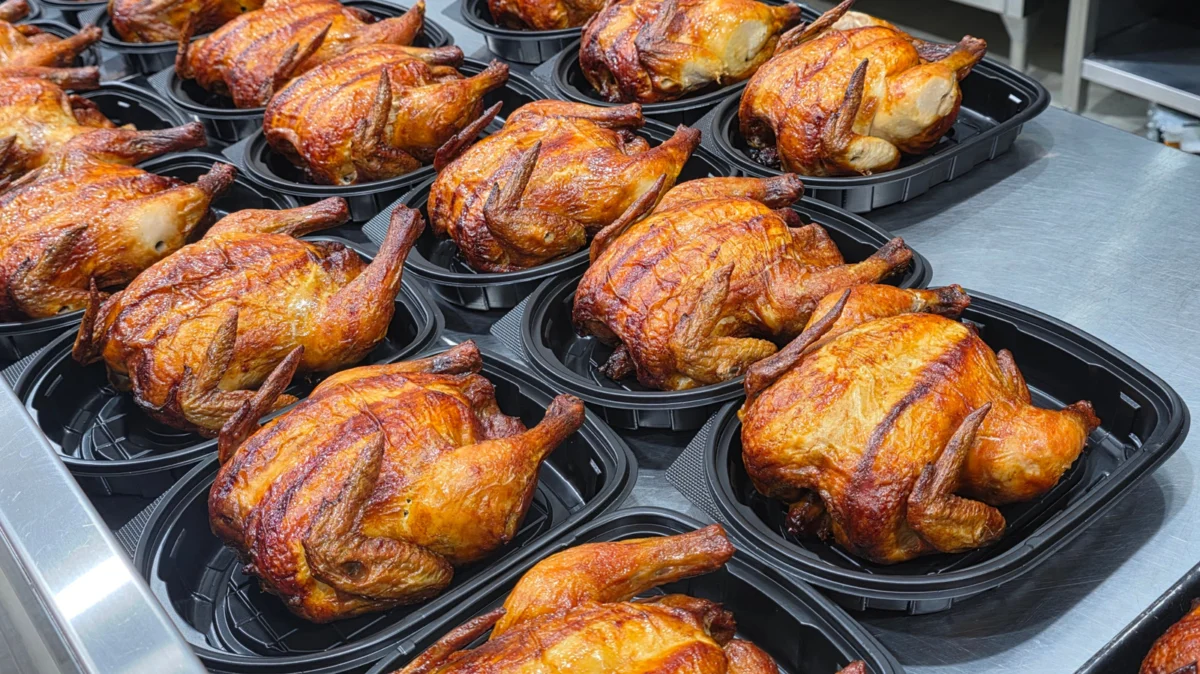
Rotisserie chicken, a ubiquitous staple in grocery store delis, offers unparalleled convenience and versatility for busy households. Its golden-brown, savory appeal transforms weeknight dinners from a chore into a delight, whether served as a standalone entrée or skillfully repurposed into an array of culinary creations. However, beneath its tempting exterior lies a critical detail that consumers often overlook, a potential red flag that speaks volumes about its freshness and safety. Experts are urging shoppers to scrutinize rotisserie chicken packaging for a crucial piece of information: the cook time.
The absence of a clearly indicated cook time on the packaging can be a significant indicator that the chicken may have been sitting under heat lamps for an extended period, compromising both its quality and, more importantly, its safety. This oversight by retailers can expose consumers to potential foodborne illnesses, a risk that can be easily mitigated with a simple act of vigilance. The "cook time" serves as a timestamp, a direct communication from the retailer to the consumer about when the chicken was last prepared and placed for sale. Without it, discerning the freshness of a rotisserie chicken becomes a matter of guesswork, a gamble with one’s health.
The Critical Importance of Cook Time Disclosure
Mark McShane, a seasoned chef and food safety expert with Level 3 Food Hygiene Certificate, emphasizes the significance of this overlooked detail. "Paying attention to the cook time is a good idea to ensure that you’re getting a rotisserie chicken that hasn’t been sitting out for too long," McShane stated in an interview with Tasting Table. "But at some grocery stores, you might run into another problem: There’s no cook time listed at all." This lack of disclosure is not merely an inconvenience; it represents a potential lapse in transparent food handling practices.
The two-hour rule is a fundamental tenet of food safety, a guideline established by health organizations worldwide. McShane reiterates this critical principle: "Once a product sits outside of refrigeration for longer than two hours, regardless of what temperature it has maintained at, both quality and safety begin to decline." This timeframe is crucial because it marks the point at which bacteria, if present, can begin to multiply rapidly to dangerous levels. Rotisserie chicken, being a cooked product, is still susceptible to spoilage and bacterial contamination if not kept at appropriate temperatures or if held for too long after cooking. The heat lamps used in most grocery stores are designed to maintain a safe serving temperature, but they are not a substitute for proper refrigeration and are only effective for a limited duration.
Navigating the Deli Aisle: Strategies for Informed Purchasing
When confronted with a rotisserie chicken lacking a cook time, McShane advises a proactive approach. "Your first step should be to ask someone working at the deli," he suggests. "They might be able to tell you when the last batch of rotisserie chickens was put out." This direct inquiry is essential for gathering the information that the packaging has failed to provide. A knowledgeable deli staff member should be able to recall the cooking schedule and offer an accurate estimate of how long the chicken has been available for purchase.
The implications of this simple inquiry extend beyond mere taste preference. While a chicken that has been sitting for several hours may be drier and less appealing, the primary concern is the potential presence of harmful bacteria such as Salmonella, E. coli, or Listeria. These pathogens can cause severe foodborne illnesses, characterized by symptoms like nausea, vomiting, diarrhea, fever, and abdominal cramps. In vulnerable populations, including the elderly, young children, pregnant women, and individuals with compromised immune systems, these illnesses can be particularly dangerous and even life-threatening. Therefore, the seemingly minor detail of a missing cook time can have significant health ramifications.
The Broader Context of Food Safety in Retail
The issue of missing cook times on rotisserie chicken highlights a broader challenge in the retail food industry: maintaining consistent and transparent food safety standards across all establishments. While many grocery stores adhere to rigorous protocols, others may fall short, either due to oversight, lack of training, or inadequate systems for tracking food holding times. Regulatory bodies, such as the Food and Drug Administration (FDA) in the United States, set guidelines for food safety, but the day-to-day implementation and enforcement largely rest with individual businesses.
The presence or absence of a cook time label is a tangible indicator of a store’s commitment to transparency and food safety. It suggests whether the retailer prioritizes informing consumers about the provenance and freshness of the products they offer. In an era where consumers are increasingly health-conscious and demand greater accountability from food providers, such omissions can erode trust.
Analyzing the Implications: Consumer Empowerment and Retailer Responsibility
The implications of this red flag are twofold. For consumers, it underscores the importance of being an informed and empowered shopper. By understanding the basic principles of food safety, such as the two-hour rule, and by knowing what information to look for on product labels, shoppers can make healthier choices for themselves and their families. The act of questioning a deli employee or seeking out the cook time is a small but significant step in advocating for personal well-being.
For retailers, the absence of cook time labels represents an opportunity for improvement. Implementing clear and consistent labeling practices is not just a matter of compliance but a demonstration of good corporate citizenship. It fosters trust with customers and contributes to a safer food supply chain. Investing in staff training on food safety protocols and ensuring that tracking systems for prepared foods are robust can prevent potential health hazards and enhance the store’s reputation.
Historical Context and Evolving Food Safety Standards
The focus on rotisserie chicken’s freshness is part of a larger, ongoing evolution in food safety awareness. Throughout history, foodborne illnesses have been a persistent threat, leading to the development of increasingly sophisticated safety measures. From early sanitation efforts to modern hazard analysis and critical control points (HACCP) systems, the food industry has continually adapted to mitigate risks. The convenience of prepared foods like rotisserie chicken, while a modern boon, also introduces new complexities in ensuring safety from preparation to consumption.
The historical prevalence of foodborne outbreaks linked to inadequately handled cooked foods serves as a stark reminder of the importance of adhering to established safety guidelines. Each outbreak, while regrettable, has often led to a re-evaluation of existing practices and the implementation of stricter regulations or industry best practices. The emphasis on visible indicators of freshness, such as cook times, can be seen as a practical application of these lessons learned over decades of experience and scientific research in food microbiology and public health.
The Versatility of Rotisserie Chicken: Maximizing its Culinary Potential
Beyond the critical aspect of freshness, rotisserie chicken is celebrated for its incredible culinary adaptability. Once deemed safe and fresh, its pre-cooked nature dramatically simplifies meal preparation. Home cooks can leverage the tender, flavorful meat for an almost endless list of dishes. For instance, it’s an ideal shortcut for homemade enchiladas, requiring only minimal preparation—deboning and shredding—to create a delicious and authentic filling.
The convenience of rotisserie chicken extends to virtually any recipe that calls for cooked chicken. It can be seamlessly incorporated into hearty soups and stews, adding depth of flavor and protein. For quick lunches or dinners, it can be piled high on sandwiches, tossed into vibrant salads, or used as a base for chili. This remarkable versatility makes it a go-to ingredient for busy individuals and families seeking nutritious and satisfying meals without the extensive time commitment of cooking chicken from scratch. The ability to transform a whole rotisserie chicken into multiple meals or components of dishes further enhances its value proposition, making it an economical choice as well.
The Future of Prepared Food Labeling
The ongoing dialogue around food safety and transparency in the retail sector suggests a potential shift towards more comprehensive labeling practices for prepared foods. As consumer awareness grows and regulatory bodies continue to refine food safety standards, it is plausible that requirements for disclosing cook times or holding periods for items like rotisserie chicken could become more widespread, if not mandated.
This trend towards greater transparency aligns with a broader movement in the food industry to provide consumers with more information about the origin, preparation, and nutritional content of their food. Whether through QR codes that link to detailed provenance information or clearer on-package indicators of freshness, the future of prepared food labeling is likely to be more informative and consumer-centric. The humble rotisserie chicken, often an impulse purchase, may soon carry even more detailed information, empowering shoppers to make truly informed decisions every time they reach for it.
In conclusion, the next time you find yourself in the grocery store deli, eyeing that enticing rotisserie chicken, take a moment to look for the cook time. If it’s absent, don’t hesitate to inquire with the deli staff. This simple act of diligence is a small but powerful step in ensuring that you are bringing home not just a convenient meal, but a safe and high-quality one. The convenience of rotisserie chicken should never come at the expense of your health, and by being mindful of this critical red flag, you can continue to enjoy this popular and versatile food with confidence.
