
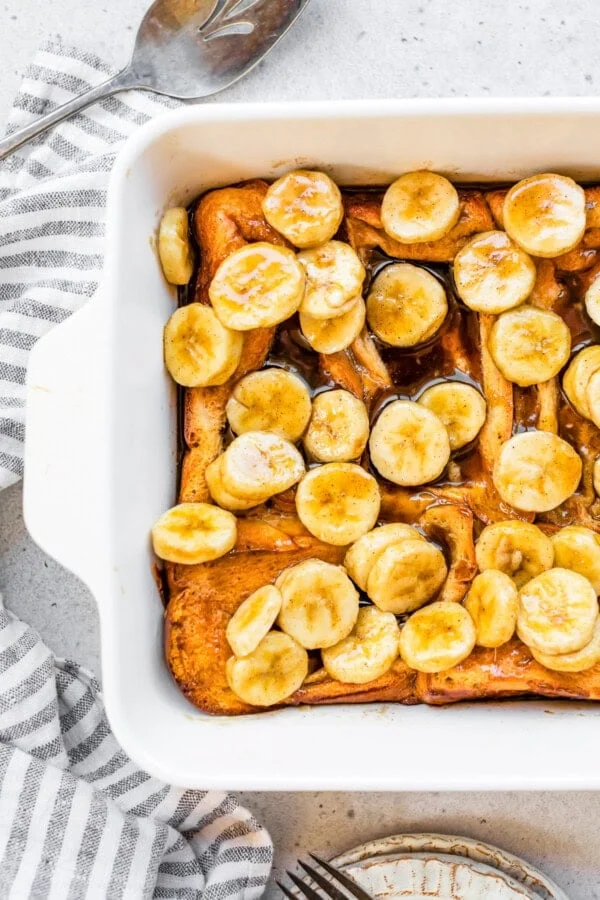
This innovative culinary creation, a lighter, make-ahead overnight baked French toast casserole crowned with a decadent Bananas Foster topping, stands out as a sophisticated yet convenient option for celebratory breakfasts and brunches. Designed to impress guests without demanding excessive morning-of preparation, this dish marries the comforting familiarity of classic French toast with the exotic elegance of a New Orleans dessert, making it an ideal centerpiece for events such as Easter morning, holiday gatherings, or any special occasion deserving of an elevated culinary experience. Its unique structure allows for significant pre-preparation, alleviating pressure on hosts and enabling them to enjoy their guests more fully.
The Genesis of a Brunch Masterpiece: Blending Comfort and Elegance

The core appeal of this particular recipe lies in its ingenious two-part construction. The French toast casserole component begins with challah bread, renowned for its rich, slightly sweet, and incredibly soft texture, which is cubed and arranged in a baking dish. This bread is then thoroughly soaked overnight in an eggy custard, generously flavored with warm vanilla and aromatic cinnamon. This extended soaking period is crucial; it allows the challah to fully absorb the liquid, transforming it into a supremely moist and tender base that bakes up almost like a bread pudding—a characteristic that even suggests its suitability as a dessert. The "overnight" aspect is not merely a suggestion but a fundamental design choice, ensuring maximum flavor infusion and a melt-in-your-mouth consistency that cannot be achieved with quick preparation.
The true marvel, however, emerges the following morning. While the soaked French toast casserole bakes to golden perfection in the oven, the simple yet transformative Bananas Foster topping is freshly prepared. This warm, caramelized banana sauce, with its rich, buttery, and often subtly spiced notes, is poured generously over the baked casserole, instantly elevating the entire dish from a simple breakfast item to a gourmet offering. The contrast between the soft, custardy French toast and the warm, luscious banana topping creates a harmonious balance of textures and flavors that captivates the palate.
A Confluence of Culinary Histories: French Toast’s Enduring Legacy

To fully appreciate the significance of this Bananas Foster French Toast Casserole, one must consider the deep historical roots of its constituent parts. French toast, despite its misleading name, does not originate solely from France. Its history stretches back to the Roman Empire, where a similar dish called Pan Dulcis involved soaking bread in milk and egg, then frying it. Throughout medieval Europe, such preparations were common, serving as a practical way to utilize stale bread, preventing waste. It was often known as "poor knight’s pudding" or "pain perdu" (lost bread) in France, highlighting its economical origins.
Over centuries, French toast evolved, gaining popularity across various cultures. In France, it became a beloved breakfast or dessert item, often served with fruit or syrup. In America, it cemented its status as a breakfast and brunch staple, evolving from a humble utility dish into a versatile canvas for sweet and savory accompaniments. Its enduring appeal lies in its simplicity, adaptability, and the comforting satisfaction it provides. The choice of challah bread in this recipe is a nod to quality and tradition, as challah’s brioche-like richness and structure are particularly well-suited for absorbing the custard without becoming soggy, leading to a superior final texture.
The Allure of Bananas Foster: A New Orleans Tradition

The Bananas Foster topping brings a touch of sophisticated flair, rooted in the vibrant culinary landscape of New Orleans. This iconic dessert was created in 1951 by Paul Blangé, the executive chef at Brennan’s restaurant in New Orleans, at the request of Owen Brennan, who challenged his chefs to create a new dessert featuring bananas to promote the fruit, which was then a prominent import through the port of New Orleans. Chef Blangé named the dish after Richard Foster, a friend of Owen Brennan and the chairman of the New Orleans Crime Commission.
The original Bananas Foster recipe typically involves sautéing bananas in butter, brown sugar, cinnamon, and rum, then flambéing the mixture before serving it hot over vanilla ice cream. The theatrical flambéing process adds a dramatic touch and a distinctive depth of flavor from the caramelized sugars and alcohol. This rich, sweet, and slightly boozy topping has become synonymous with upscale American dessert cuisine, particularly associated with Southern hospitality and fine dining. Its inclusion in a French toast casserole transforms a breakfast classic into a gourmet brunch experience, demonstrating a clever fusion of comfort food with high-end dessert artistry.
Innovation in the Kitchen: Crafting a Lighter Indulgence

The Skinnytaste rendition of this classic combination introduces a crucial modern element: a focus on a "lightened-up" profile. In an era where consumers increasingly seek healthier alternatives without compromising on taste, this recipe demonstrates how traditional indulgences can be adapted to fit contemporary dietary preferences. The original author, Gina, recounts her inspiration stemming from a New Year’s morning experience with her cousin Kat, who improvised a Bananas Foster topping for Gina’s Crème Brûlée French Toast. This serendipitous culinary moment sparked the development of a lighter version, notably by reducing the sugar content.
Modern adaptations, such as the use of monk fruit sweetener, further illustrate this commitment to health-conscious cooking. Monk fruit sweetener is a natural, zero-calorie sweetener derived from monk fruit, offering a sweet taste without the glycemic impact of traditional sugar. This choice allows the dish to retain its inherent sweetness and appeal while making it more accessible to those monitoring sugar intake or following specific dietary plans. The iterative process of recipe development, as highlighted by Gina’s personal anecdote, underscores the dedication to achieving a balance between flavor, texture, and nutritional considerations. This approach resonates with a growing demographic of home cooks who prioritize both enjoyment and well-being.
The Strategic Advantage: Make-Ahead Meal Solutions

Beyond its flavor profile and historical lineage, the practical advantage of this Bananas Foster Topped Overnight French Toast Casserole cannot be overstated. The "make-ahead" functionality is a significant benefit for anyone hosting a special brunch or breakfast. Preparing the French toast base the night before drastically reduces morning-of stress and labor. This allows hosts to awaken to a nearly complete dish, requiring only the final baking and the quick preparation of the banana topping.
This strategy aligns perfectly with modern lifestyle demands, where time is a premium commodity. It empowers home cooks to create elaborate, impressive meals without being confined to the kitchen during social gatherings. The popularity of overnight casseroles, generally, stems from this convenience factor. From savory breakfast bakes to sweet bread puddings, the ability to assemble a dish hours in advance and simply pop it into the oven when needed is invaluable for holiday entertaining, weekend brunches, or even busy weekday mornings when a special treat is desired. This recipe thus serves not only as a delicious meal but also as a testament to efficient and thoughtful meal planning.
Nutritional Profile and Dietary Considerations

A key aspect of the "lightened-up" approach is reflected in the nutritional data provided for this recipe. Per serving (one slice with bananas), the dish offers:
- Calories: 252 kcal
- Carbohydrates: 52 g
- Protein: 11 g
- Fat: 8 g
- Saturated Fat: 2 g
- Cholesterol: 195.5 mg
- Sodium: 285.5 mg
- Fiber: 2.5 g
- Sugar: 12 g
These figures illustrate a conscious effort to balance indulgence with nutritional awareness. While French toast and Bananas Foster are traditionally high in sugar and fat, this adaptation manages to provide a satisfying experience with a comparatively moderate calorie count. The 11 grams of protein contribute to satiety, while the 2.5 grams of fiber aid digestion. The reduced sugar content, facilitated by alternatives like monk fruit, is particularly noteworthy for individuals managing blood sugar levels or simply seeking to reduce overall sugar intake. This nutritional transparency provides consumers with the information needed to make informed dietary choices, further solidifying the recipe’s appeal in a health-conscious market.
Ingredients and Preparation: A Detailed Overview

The successful execution of this dish hinges on a carefully selected array of ingredients and a streamlined preparation process. For the French toast casserole, key components include:
- Challah Bread: The foundation, providing structure and a rich flavor.
- Eggs: Essential for the custard, binding the bread and providing protein.
- Milk: Contributes to the custardy texture; often, lighter milk options are used in "lightened-up" recipes.
- Vanilla Extract: Enhances the overall sweetness and aroma.
- Cinnamon: A classic spice pairing with French toast and bananas, adding warmth.
- Monk Fruit Sweetener: The preferred sugar substitute for a lighter profile.
The Bananas Foster topping, while decadent, also utilizes a relatively simple set of ingredients:
- Bananas: Ripe but firm, providing the primary fruit element.
- Butter: For sautéing and creating the rich sauce base.
- Brown Sugar (or Monk Fruit Blend): For caramelization and depth of flavor.
- Rum (optional, or rum extract): For the characteristic Bananas Foster flavor.
The preparation unfolds in two main phases. The night before, the challah bread is cubed and placed in a baking dish. The egg, milk, sweetener, vanilla, and cinnamon are whisked together to form the custard, which is then poured over the bread, ensuring full saturation. The dish is then covered and refrigerated overnight, allowing the bread to absorb the liquid thoroughly. The following morning, the casserole is baked until puffed and golden. Concurrently, the bananas are sautéed with butter, sweetener, and spices to create the warm, syrupy topping. This topping is then spooned over the hot French toast casserole, completing the dish. This methodical approach ensures both optimal texture for the French toast and freshness for the Bananas Foster.

Culinary Versatility and Serving Suggestions
The versatility of this Bananas Foster Topped Overnight French Toast Casserole extends beyond its role as a breakfast or brunch item. Its rich, custardy texture and sweet, fruity topping make it an excellent candidate for a sophisticated dessert, akin to a bread pudding. Served with a dollop of whipped cream, a scoop of vanilla bean ice cream, or even a drizzle of caramel sauce, it can easily transition from a morning feast to an evening treat.
Furthermore, the recipe offers opportunities for customization. While bananas are central to the Bananas Foster theme, similar fruit toppings could be explored for variation, such as caramelized apples or peaches. A sprinkle of chopped pecans or walnuts could add a delightful crunch and nutty flavor. For those who enjoy a hint of spice, a pinch of nutmeg or cardamom in the custard could enhance the aromatic profile. The ability to adapt and personalize such a robust recipe further contributes to its broad appeal among home cooks looking to experiment and cater to diverse preferences.

Storage and Reheating Protocols
For optimal enjoyment and to prevent food waste, proper storage and reheating of leftovers are crucial. Any remaining French toast casserole, particularly without the topping if possible, should be stored in an airtight container in the refrigerator. It typically remains fresh for up to 3-4 days. The Bananas Foster topping is best enjoyed fresh, as bananas can oxidize and soften considerably upon storage. However, if stored separately in an airtight container, it might last for a day or two in the refrigerator, though its texture and vibrant flavor may diminish.
When reheating, individual portions of the French toast casserole can be gently warmed in a microwave for convenience, or in an oven preheated to a moderate temperature (around 300-325°F or 150-160°C) until heated through. Reheating in the oven can help maintain a slightly crisper exterior, if desired. If reheating the Bananas Foster topping, a brief warm-up on the stovetop over low heat is recommended to restore its saucy consistency. These guidelines ensure that even leftovers can provide a delightful culinary experience, extending the pleasure of this exceptional dish.

Broader Culinary Trends and the Home Cook
The Bananas Foster Topped Overnight French Toast Casserole is more than just a recipe; it’s a reflection of several enduring culinary trends. It caters to the growing desire for gourmet experiences at home, where consumers seek restaurant-quality dishes that are achievable in a domestic kitchen. The "lightened-up" aspect speaks to the increasing health consciousness and the demand for recipes that offer nutritional balance without sacrificing flavor.
Moreover, the emphasis on make-ahead convenience addresses the realities of modern life, where busy schedules often necessitate efficient meal preparation strategies. The rise of influential food blogs and online recipe platforms, such as Skinnytaste, plays a significant role in disseminating these innovative and adaptable recipes, empowering home cooks with knowledge, inspiration, and practical solutions. This particular dish exemplifies how traditional comfort foods can be reimagined, refined, and integrated into contemporary eating habits, solidifying its place as a sophisticated yet approachable option for any special occasion. It represents a harmonious blend of historical culinary richness, modern health considerations, and practical home entertaining solutions.
