
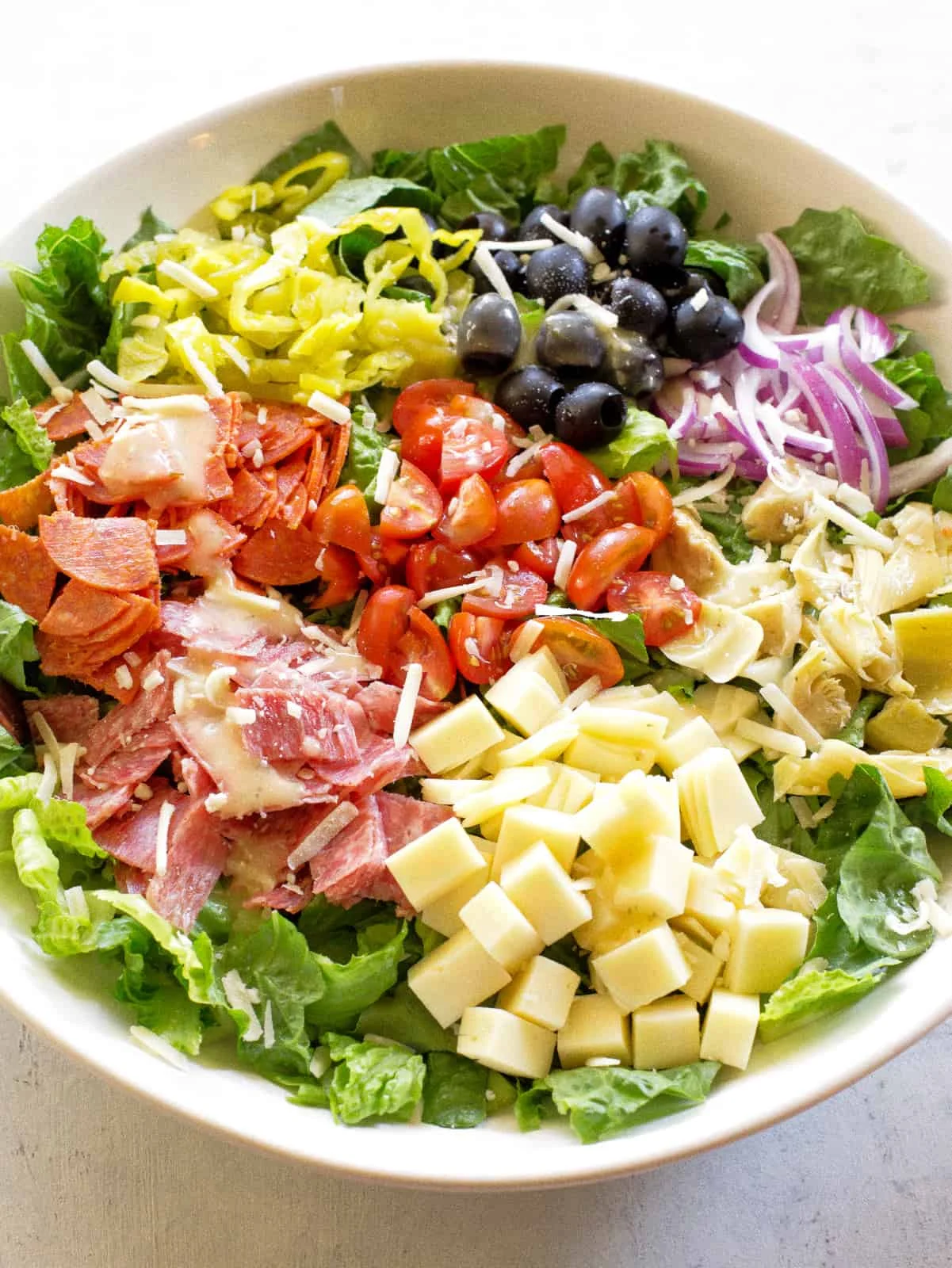
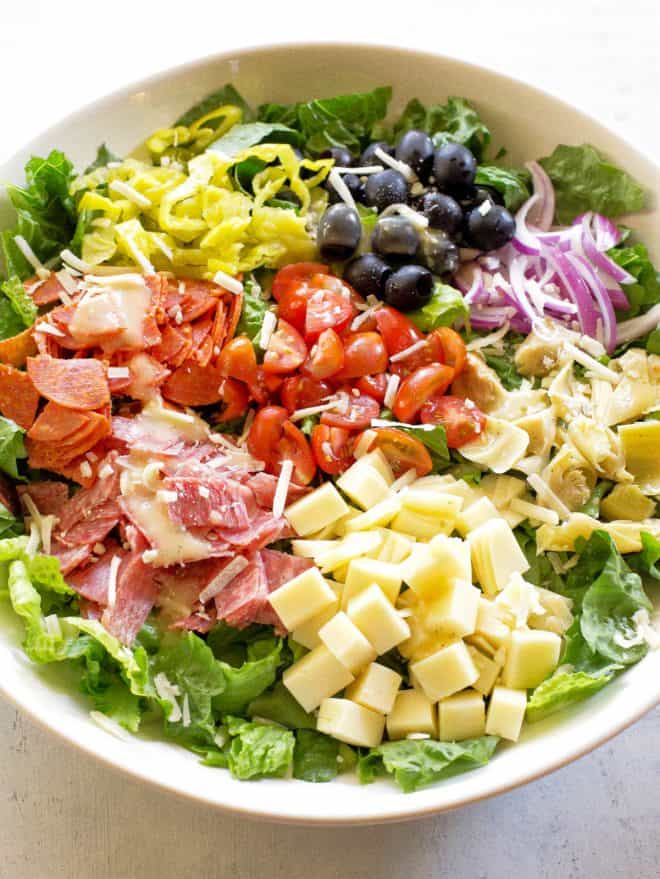
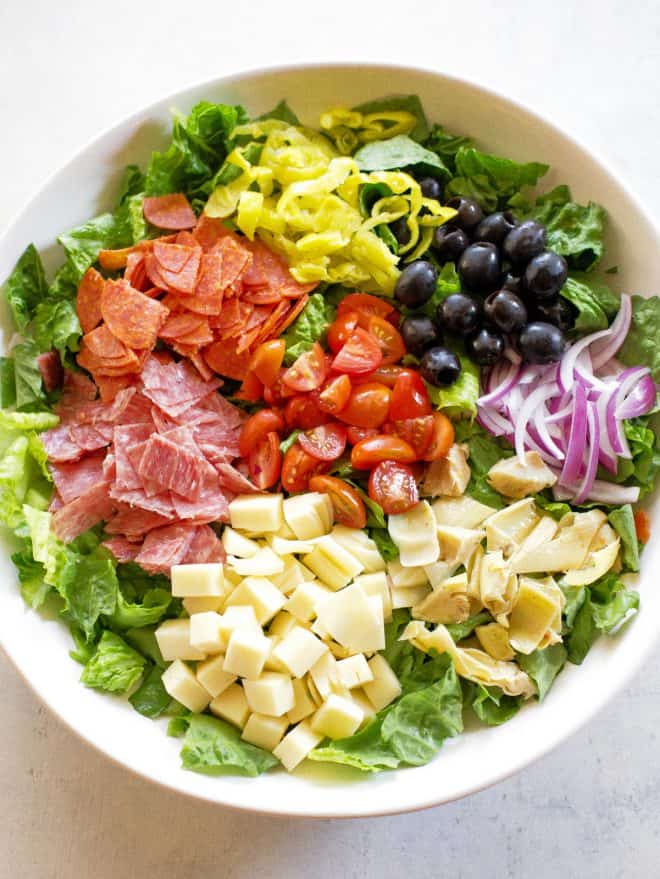
The Antipasto Salad, a vibrant and satisfying Italian creation, is more than just a side dish; it’s a declaration of flavor and a testament to the art of simple, fresh ingredients. This meticulously crafted salad, featuring a generous medley of Genoa salami, pepperoni, black olives, provolone cheese, sweet grape tomatoes, sharp red onions, briny artichoke hearts, and zesty pepperoncini peppers, stands as a cornerstone of Italian-American cuisine. Its appeal transcends dietary preferences, offering a robust and filling experience that is particularly well-suited for those adhering to a ketogenic or low-carbohydrate lifestyle. The salad’s inherent versatility allows it to function equally as a hearty main course or a substantial accompaniment to any gathering, promising a culinary experience that is both accessible and deeply satisfying.
A Culinary Tradition Reimagined
The concept of "antipasto" itself is deeply rooted in Italian dining culture, traditionally serving as the opening act to a multi-course meal. The term, literally translating to "before the meal," encompasses a diverse array of appetizers designed to stimulate the palate and set the stage for the courses to follow. These platters often showcase a curated selection of cured meats, artisanal cheeses, marinated vegetables, olives, and sometimes seafood, presenting a microcosm of regional Italian flavors. The Antipasto Salad, as it has evolved, captures the essence of these traditional platters, deconstructing their components and presenting them in a fresh, cohesive salad format. This adaptation not only simplifies preparation but also allows for a more dynamic and adaptable culinary expression, making it a popular choice for potlucks, family dinners, and catered events.
The genesis of the Antipasto Salad’s popularity can be traced to the increasing embrace of Italian-American cuisine in mainstream dining, alongside a growing appreciation for versatile, shareable dishes. As home cooks sought to replicate the vibrant flavors of their favorite Italian restaurants, recipes for salads that mimicked the complexity of antipasto platters began to gain traction. The inclusion of robust, flavorful ingredients like cured meats and sharp cheeses made it a standout option, offering a departure from lighter, more conventional green salads. Furthermore, the inherent adaptability of the salad, allowing for easy adjustments in ingredients and proportions, has cemented its status as a go-to recipe for various occasions.
A Symphony of Flavors and Textures
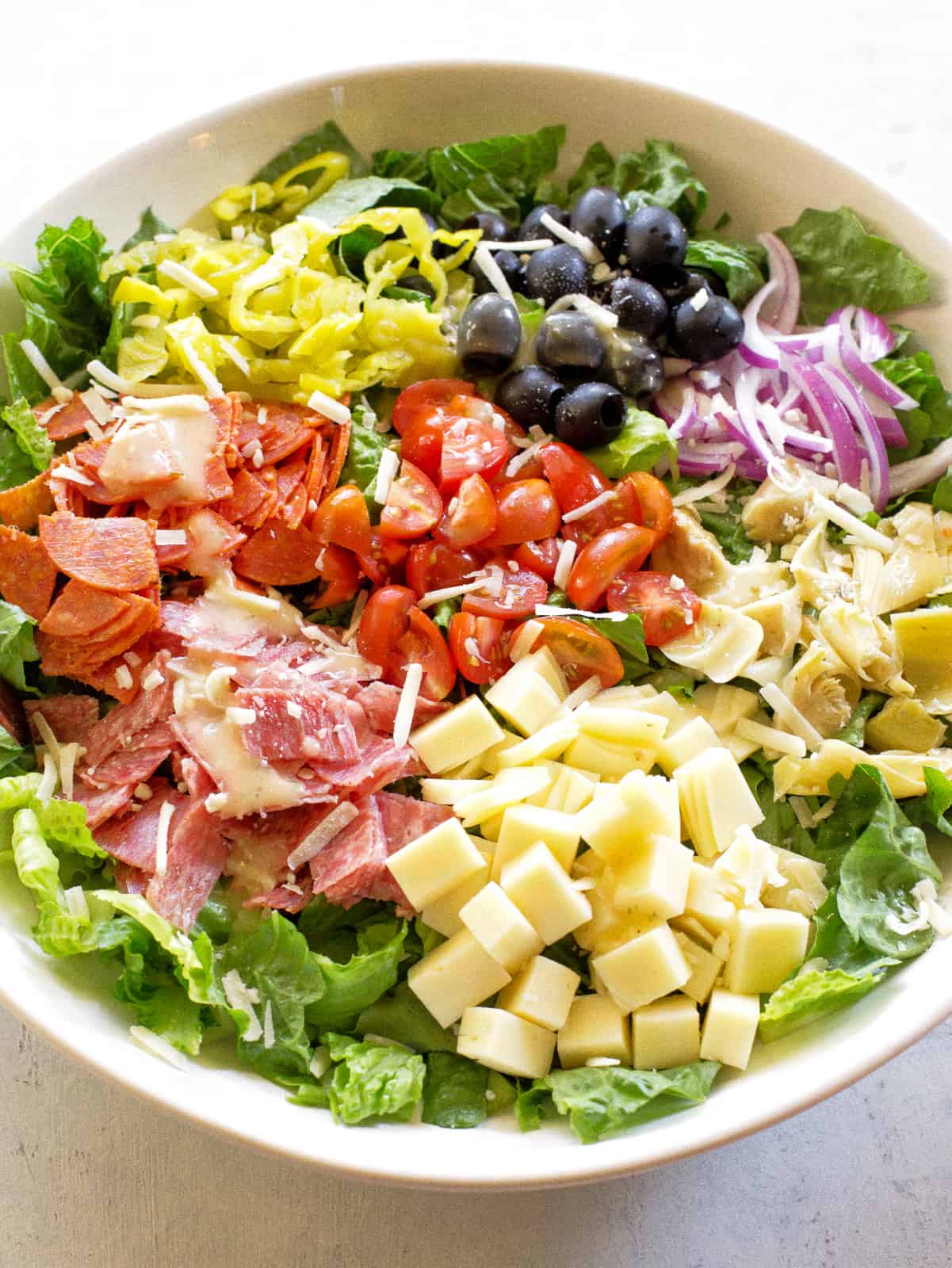
At its core, the Antipasto Salad is a celebration of contrasts. The savory, cured notes of Genoa salami and pepperoni provide a rich, meaty foundation, their distinct spice profiles adding layers of complexity. These are beautifully complemented by the creamy, mild tang of provolone cheese, which melts slightly from the ambient temperature, infusing the salad with a delightful richness. The black olives contribute a briny, slightly bitter counterpoint, while the bright, juicy burst of grape tomatoes adds a touch of sweetness and acidity. Crisp slivers of red onion offer a pungent kick, awakening the senses, and the tender, slightly tangy artichoke hearts introduce a unique textural element and a subtle, earthy flavor. Finally, the piquant bite of pepperoncini peppers cuts through the richness, providing a welcome warmth and zest that elevates the entire ensemble.
The salad’s visual appeal is as compelling as its taste. The diverse colors – the deep reds of the meats and tomatoes, the creamy whites of the provolone, the dark hues of the olives, and the vibrant greens of any added leafy base – create a visually stunning presentation. This vibrant palette makes the Antipasto Salad an attractive centerpiece, capable of drawing attention and sparking conversation at any gathering.
Dietary Adaptability and Culinary Versatility
One of the most significant aspects of the Antipasto Salad’s enduring appeal is its inherent flexibility, particularly concerning dietary needs. For individuals following a ketogenic lifestyle, the salad presents a near-perfect solution. By emphasizing protein-rich meats, healthy fats from the cheese and potentially a well-chosen dressing, and low-carbohydrate vegetables, it provides a satisfying and nutrient-dense meal that aligns with the principles of keto eating. The absence of high-carbohydrate ingredients like pasta or croutons (unless intentionally added) makes it a guilt-free indulgence for those managing their carbohydrate intake.
Beyond its keto-friendliness, the Antipasto Salad is remarkably adaptable. For those seeking a more substantial, traditional Italian-American experience, the addition of cooked and cooled pasta transforms it into an Antipasto Pasta Salad. This iteration is particularly well-suited for feeding larger crowds and offers a delightful balance of textures and flavors, with the pasta acting as a vehicle for the robust dressing and other ingredients. The original recipe, however, often relies on a crisp romaine lettuce base, providing a refreshing crunch that balances the richer elements.
The choice of dressing also plays a crucial role in defining the salad’s character. While many commercially available Italian dressings are suitable, particularly those formulated for low-carb diets, the article suggests options like Olive Garden’s copycat dressing or Marie’s Parmesan Italian dressing, both known for their appealing flavor profiles. For those who prefer a more hands-on approach, a simple homemade vinaigrette offers a customizable alternative. A basic recipe combining extra virgin olive oil, red wine vinegar, dried oregano, salt, and pepper provides a light, zesty dressing that enhances, rather than overpowers, the salad’s core ingredients. The precision in balancing the oil and vinegar, along with the judicious use of herbs and seasonings, allows for a personalized touch that can elevate the salad to new heights.
A Potluck Powerhouse and Beyond
The Antipasto Salad has earned its reputation as a beloved potluck staple for several compelling reasons. Its ability to be prepared in advance and transport easily makes it an ideal contribution to any communal meal. The robust flavors tend to hold up well, and the salad often benefits from a short resting period, allowing the ingredients to meld together. Furthermore, its crowd-pleasing nature ensures that there will be something for everyone, accommodating various palates and dietary preferences.
The article highlights the creator’s personal experience, noting that when asked to bring a side dish to a potluck, the Antipasto Salad is often the chosen dish, precisely because of its capacity to serve as a fulfilling main course. This dual functionality is a significant advantage when catering to diverse appetites and ensures that guests, including those with specific dietary needs like the author’s husband following a Keto lifestyle, can enjoy a substantial and delicious option. This thoughtful consideration for guests underscores the salad’s role not just as food, but as an act of hospitality.
Sourcing and Substitutions: Tailoring the Taste
While the core ingredients of the Antipasto Salad are well-defined, the beauty of this dish lies in its potential for customization. The article acknowledges the possibility of substitutions, encouraging cooks to adapt the recipe to their preferences and available ingredients. For instance, different types of cured meats could be incorporated, such as soppressata or capicola, to introduce subtle variations in spice and texture. Similarly, a variety of cheeses could be explored, perhaps a sharp provolone for a bolder flavor or even a mild mozzarella for a creamier contrast.
The inclusion of pickled vegetables is another area where personalization can shine. Beyond the standard pepperoncini, one might consider incorporating marinated mushrooms, giardiniera (a mixed Italian pickled vegetable relish), or even small, sweet pickled onions for an added layer of complexity and tang. The type of olives used can also be varied, from Kalamata to Castelvetrano, each offering a distinct flavor profile. The key is to maintain a balance of savory, salty, tangy, and slightly spicy elements that define the antipasto experience.
The Nutritional Landscape
Understanding the nutritional composition of the Antipasto Salad provides further insight into its appeal as a balanced meal option. For a serving of approximately 1/8 of the recipe, the salad typically offers around 193 calories. This is a moderate calorie count, especially considering the richness of the ingredients. The macronutrient breakdown reveals a significant protein content of approximately 11 grams, primarily derived from the cured meats and cheese, which contributes to satiety. The fat content is around 15 grams, with a notable portion being saturated fat (approximately 7 grams) from the meats and cheese, alongside healthier monounsaturated fats from olive oil if used in the dressing. The carbohydrate count is commendably low at around 5 grams, with only 2 grams of sugar, reinforcing its suitability for low-carb and ketogenic diets.
The salad also provides essential micronutrients. It is a good source of Vitamin A, with roughly 4610 IU, likely from the leafy greens if used as a base and potentially from the tomatoes and other vegetables. It also offers a modest amount of Vitamin C (around 10 mg), calcium (226 mg), and iron (1 mg). The sodium content, at approximately 667 mg per serving, is a factor to consider, primarily due to the cured meats and olives; however, this can be managed by selecting lower-sodium options or adjusting the quantities of these ingredients. The fiber content, around 2 grams, contributes to digestive health.
A Culinary Legacy Continues
The Antipasto Salad, with its rich heritage and adaptable nature, stands as a testament to the enduring appeal of Italian flavors. It embodies the spirit of communal dining, offering a dish that is both sophisticated in its flavor profile and accessible in its preparation. Whether enjoyed as a light appetizer, a hearty main course, or a compliant option for those managing their carbohydrate intake, this salad promises a delightful culinary journey. Its continued presence on menus and in home kitchens speaks to its status as a true classic, a dish that consistently delivers satisfaction and celebrates the simple joy of delicious, well-crafted food. As culinary trends evolve, the Antipasto Salad remains a steadfast favorite, proving that some traditions are simply too good to change.
