
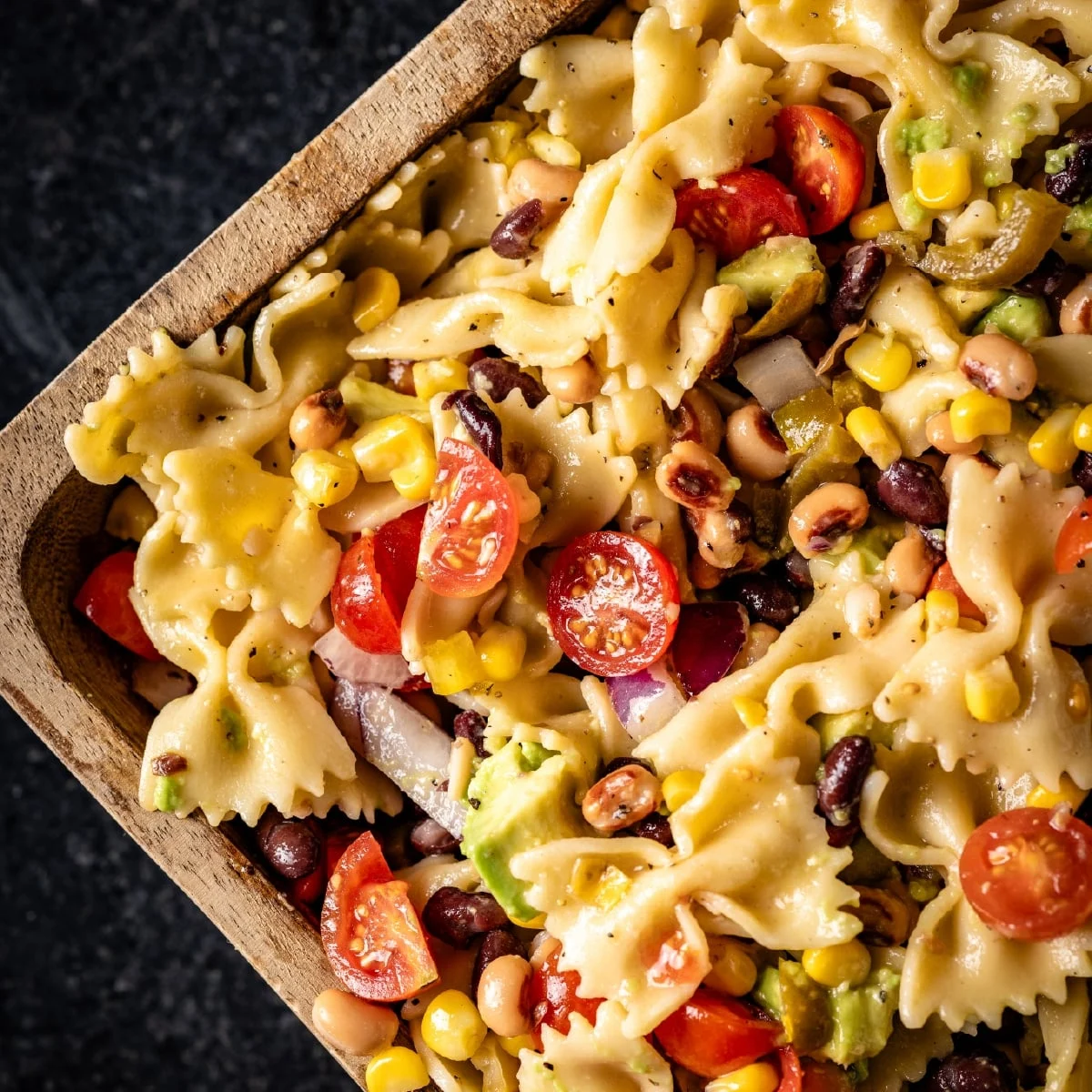
The Cowboy Pasta Salad has emerged as a significant fixture in the contemporary American culinary landscape, representing a fusion of traditional pasta-based side dishes and the bold, rustic flavors associated with Southwestern and Tex-Mex cuisine. Characterized by its use of bowtie pasta, black beans, sweet corn, and creamy avocado, this dish is traditionally unified by a zesty lime and red wine vinegar dressing. While historically many variations of the "Cowboy" style meal have included proteins such as ground beef or bacon, modern iterations—such as the one popularized by culinary expert Susie Bulloch of Hey Grill Hey—emphasize the versatility of pantry staples and fresh produce. This shift reflects a broader trend in outdoor cooking where side dishes are no longer treated as secondary considerations but are instead engineered to complement complex smoked meats like brisket and pulled pork.
The Historical Trajectory of the Pasta Salad Phenomenon
The history of the pasta salad in the United States is a narrative of adaptation and cultural blending. Cold pasta dishes began to gain mainstream popularity in the mid-20th century, initially appearing as mayonnaise-heavy macaroni salads found at deli counters and church socials. By the 1980s, the "California-style" pasta salad introduced lighter vinaigrettes and fresh vegetables, moving away from the heavy dressings of the previous era.

The specific "Cowboy" or "Southwestern" variant traces its lineage back to the "Texas Caviar" (a bean-based salad) created by Helen Corbitt in the 1940s. Over the subsequent decades, the integration of Italian-style pasta with these indigenous and Mexican-influenced ingredients created a new category of "fusion" side dishes. The Cowboy Pasta Salad represents the culmination of this trend, prioritizing textures that can withstand the outdoor temperatures typical of barbecue season while providing a high-acid profile to cut through the richness of grilled fats.
Ingredient Composition and Nutritional Analysis
A technical examination of the Cowboy Pasta Salad reveals a strategic balance of macronutrients and flavor profiles. The choice of bowtie pasta, or farfalle, is not merely aesthetic; the "pinch" in the center of the pasta provides a firm texture (al dente) that resists becoming mushy when tossed with acidic dressings.
Core Salad Components:
- Legumes: The inclusion of black beans and black-eyed peas serves as a significant source of plant-based protein and dietary fiber.
- Vegetables: Cherry tomatoes provide acidity and moisture, while sweet corn offers a textural "pop" and natural sugars.
- Aromatics and Heat: Red onions provide sharp contrast, while pickled jalapeños introduce capsaicin, which stimulates the palate and balances the creaminess of other ingredients.
- Healthy Fats: Avocado serves as the primary lipid source, offering monounsaturated fats that enhance the mouthfeel of the salad without the need for heavy dairy.
Nutritional Data Overview:
Based on standardized calculations for an eight-serving yield, the Cowboy Pasta Salad provides approximately 383 calories per serving. The nutritional breakdown is as follows:

- Total Fat: 16g (with only 2g of saturated fat).
- Carbohydrates: 57g (supported by 5g of dietary fiber).
- Protein: 11g.
- Micronutrients: The dish is particularly high in Vitamin A (514 IU) and Vitamin C (17 mg), largely due to the fresh produce and lime juice.
The sodium content, measured at 528 mg, remains relatively moderate for a processed pasta dish, especially when compared to store-bought alternatives which often exceed 800 mg per serving.
The Role of Pantry Staples in Modern Recipe Development
The modern culinary movement has increasingly focused on "resilient cooking"—the ability to create high-quality meals using ingredients already present in a household’s pantry or refrigerator. This is a central theme in the Cowboy Pasta Salad’s rise to prominence. Culinary influencers like Susie Bulloch have noted that the dish can be assembled in as little as ten minutes if the pasta is prepared in advance.
This efficiency is particularly relevant in the context of the "Backyard BBQ Hero" culture, where the primary cook often spends twelve to sixteen hours managing a smoker for a brisket or pork shoulder. The ability to produce a "sleeper hit" side dish with minimal labor allows the cook to maintain focus on the main protein while ensuring the overall meal remains balanced. Furthermore, the exclusion of meat in some modern versions—initially a result of ingredient availability—has broadened the dish’s appeal to vegetarian demographics without sacrificing the "Cowboy" identity.

Strategic Pairing and Culinary Implications
In a professional gastronomic context, the Cowboy Pasta Salad is analyzed for its ability to act as a "palate cleanser" between bites of rich, fatty meats. The acidity from the lime juice and red wine vinegar in the dressing performs a chemical function, breaking down the coating of fat on the tongue, which allows the diner to more clearly perceive the smoky nuances of the meat.
Recommended Pairings:
- Texas-Style Smoked Brisket: The salad’s brightness contrasts the heavy pepper and smoke profile.
- Pulled Pork: The vinegar notes in the salad mimic traditional North Carolina-style sauces.
- Grilled Chicken Thighs: The creaminess of the avocado complements the charred skin of the poultry.
Beyond its role as a side dish, the Cowboy Pasta Salad is increasingly being positioned as a standalone main course. The combination of complex carbohydrates from the pasta and dense protein from the beans makes it a satiating option for lunch or light dinner, particularly during peak summer months when heat discourages the consumption of hot meals.
Expert Perspectives and Industry Impact
Susie Bulloch, the founder of Hey Grill Hey and a prominent figure in the barbecue industry, has frequently advocated for the democratization of high-quality outdoor cooking. Her background, which includes appearances on the Food Network and the establishment of multiple Guinness World Records in the grilling category, lends significant weight to the "Cowboy" style of recipe development. Bulloch emphasizes that the success of a barbecue is defined by the cohesion of the entire spread, rather than the quality of the meat alone.

Industry analysts suggest that the popularity of such recipes is also driven by the "potluck economy." In a social environment where guests are often expected to bring a dish to share, the Cowboy Pasta Salad offers high visual appeal and a "shareable" nature that holds up well during transport. Unlike leaf-based salads that wilt quickly, the robust structure of bowtie pasta and beans allows the dish to remain appetizing for several hours.
Broader Cultural Significance
The Cowboy Pasta Salad is more than a simple recipe; it is a reflection of the American "melting pot" applied to the backyard grill. By incorporating ingredients like jalapeños and cilantro—staples of Mexican cuisine—into a format (pasta salad) that is quintessentially American-European, the dish symbolizes the ongoing evolution of regional foodways.
As home cooks continue to seek a balance between convenience, health, and bold flavor, the Cowboy Pasta Salad is expected to remain a permanent fixture in the American menu rotation. Its ability to adapt—whether by adding bacon for traditionalists or keeping it plant-forward for modern diners—ensures its longevity. The dish stands as a testament to the fact that with a few pantry staples and a clear understanding of flavor balance, anyone can achieve the status of a "Backyard BBQ Hero."

Conclusion: The Future of Outdoor Dining
Looking forward, the trend toward vibrant, nutrient-dense side dishes is likely to intensify. The Cowboy Pasta Salad provides a blueprint for this future: it is cost-effective, nutritionally diverse, and highly customizable. In an era where food costs are a significant concern for many households, the utilization of beans, corn, and dried pasta to create a high-impact dish represents a sophisticated approach to economic and flavorful cooking. As culinary communities continue to share and refine these recipes through digital platforms and social media, the Cowboy Pasta Salad will likely continue its ascent as a cornerstone of modern outdoor dining.
