
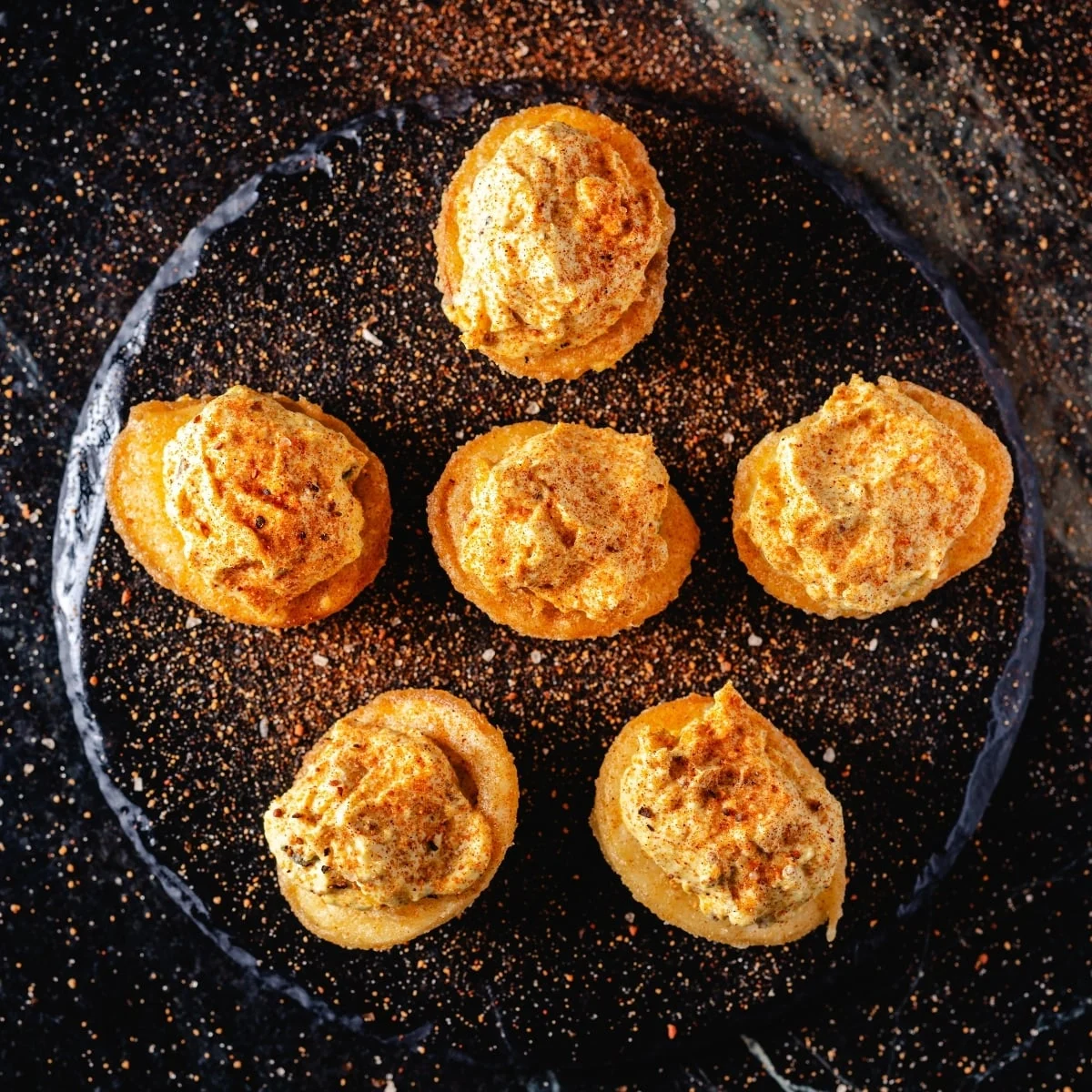
The culinary landscape of the American backyard barbecue is undergoing a significant transformation as traditional recipes are reimagined through the lens of modern technique and flavor fusion. One of the most notable entries in this movement is the Smoke-Fried Deviled Egg, a dish that synthesizes the ancient practice of wood-smoke infusion with the contemporary appeal of deep-fried textures. Developed by Susie Bulloch, a prominent figure in the barbecue industry and founder of the culinary platform Hey Grill Hey, this recipe represents a departure from the standard chilled deviled egg commonly found at seasonal gatherings. By subjecting the hard-boiled egg to a low-and-slow smoking process before battering and frying the whites, the dish achieves a complex profile of smoky, zesty, and crispy elements. This innovation arrives as consumer interest in "elevated comfort food" continues to rise, driven by a desire for nostalgic flavors presented with sophisticated culinary execution.
The Historical and Cultural Context of the Deviled Egg
To understand the significance of the smoke-fried variation, one must first examine the long history of the deviled egg itself. Culinary historians trace the origins of stuffed eggs back to ancient Rome, where boiled eggs were seasoned with spicy sauces and served as a starter course during lavish banquets. However, the specific term "deviled" did not enter the English lexicon until the late 18th century. In 1786, the word was used to describe foods prepared with potent seasonings, particularly those involving high heat or heavy spice, such as mustard, pepper, or cayenne. By the 19th century, deviled eggs became a staple of American cookbooks, eventually evolving into the mayonnaise-based picnic classic recognized today.

The introduction of smoke and deep-frying into this traditional framework marks a convergence of two distinct regional American foodways: the Southern tradition of deep-frying and the nationwide passion for low-and-slow barbecue. The Smoke-Fried Deviled Egg leverages the egg’s porous nature, which allows it to absorb the aromatic compounds of wood smoke, creating a depth of flavor that cannot be replicated with liquid smoke or synthetic additives.
Technical Chronology of the Smoke-Fried Preparation
The creation of Smoke-Fried Deviled Eggs is a multi-stage process that requires precise temperature control and a strategic sequence of culinary operations. The methodology is divided into four primary phases: preparation, smoking, frying, and assembly.
Phase I: Preparation and Hard-Boiling
The process begins with the production of standard hard-boiled eggs. Achieving the ideal texture for the whites is critical, as they must remain firm enough to withstand the subsequent smoking and frying stages. Once boiled and cooled in an ice bath to prevent overcooking and the formation of a gray sulfur ring around the yolk, the eggs are peeled and halved. The yolks are then removed to be reserved for the filling.

Phase II: The Smoking Process
The egg whites are placed directly onto the grates of a smoker. The selection of wood is paramount; fruitwoods like apple or cherry provide a mild sweetness, while hardwoods like hickory or oak offer a more robust, traditional barbecue profile. The smoking is conducted at a low temperature—typically between 150°F and 225°F—to ensure the whites absorb the smoke without becoming rubbery or overly tough. This stage usually lasts between 30 to 60 minutes, during which the whites take on a light amber hue.
Phase III: Battering and Frying
Following the smoke bath, the egg whites are prepared for frying. They are coated in a specialized batter—often a seasoned flour or a specific chicken wing batter—which provides a structural contrast to the soft interior. The whites are submerged in oil heated to approximately 350°F. The goal is to achieve the Maillard reaction, a chemical reaction between amino acids and reducing sugars that gives browned food its distinctive flavor and golden-brown appearance. This process is brief, lasting only until the exterior is crispy.
Phase IV: Filling and Final Assembly
The reserved smoky yolks are combined with a mixture of mayonnaise, apple cider vinegar, and specific barbecue elements. In the Hey Grill Hey iteration, this includes a mustard-based "Zesty Gold BBQ Sauce" and a "Sweet Rub" consisting of sugar and savory spices. Diced jalapeños are added to provide a textural crunch and a capsaicin-driven heat, adhering to the "deviled" heritage of the dish. The mixture is piped back into the fried cavities and finished with a final dusting of dry rub.

Supporting Data and Ingredient Analysis
The nutritional and economic profile of the Smoke-Fried Deviled Egg reflects its status as an indulgent appetizer. According to data provided by the recipe’s creator, a single serving contains approximately 131 calories, with 7 grams of fat and 11 grams of carbohydrates. While higher in caloric density than a traditional boiled egg, the dish provides 5 grams of protein, making it a substantial hors d’oeuvre.
From a market perspective, the ingredients used in this dish align with broader trends in the U.S. food industry. According to the United States Department of Agriculture (USDA), egg consumption has remained resilient, with the average American consuming nearly 280 eggs per year. Furthermore, the specialized barbecue sauce market has seen significant growth, with consumers increasingly seeking "craft" or "artisanal" sauces over mass-produced alternatives. The use of a mustard-based sauce in the filling is a nod to South Carolina-style barbecue, which has gained national popularity for its tangy profile that cuts through the richness of fried foods.
Official Responses and Culinary Reception
While there is no "official" governing body for deviled eggs, the reception from culinary experts and professional pitmasters has been overwhelmingly positive regarding the "smoke-fry" technique. Culinary analysts note that the dish addresses the primary criticism of traditional deviled eggs: a lack of textural variety. By introducing a "crunch" factor, the recipe elevates the sensory experience.

Susie Bulloch has emphasized that this recipe was designed to help home cooks transition from being "casual grillers" to "backyard barbecue heroes." Her approach focuses on accessibility, using a limited ingredient list (seven items) to ensure that the complexity of the flavor does not translate into an overly complex preparation for the consumer. Industry reactions suggest that such "hybrid" recipes are essential for the continued relevance of traditional holiday menus, particularly during the Easter season, when egg-based dishes see their highest annual demand.
Broader Impact and Implications for the Food Industry
The rise of the Smoke-Fried Deviled Egg is indicative of a larger shift in how Americans approach seasonal entertaining. Data from the National Retail Federation (NRF) indicates that Easter spending on food consistently reaches billions of dollars, with a growing percentage of that spending directed toward premium ingredients and unique recipe components. As social media platforms like Instagram and TikTok continue to prioritize visually striking food photography, the "photogenic" nature of a golden-brown, smoke-fried egg makes it a viral-ready centerpiece for modern hosts.
Furthermore, the integration of smoking technology into home kitchens—through the proliferation of pellet grills and electric smokers—has lowered the barrier to entry for complex wood-fired recipes. What was once the domain of professional smokehouses is now achievable in a suburban backyard. This democratization of barbecue technique allows for the experimentation seen in the Smoke-Fried Deviled Egg, where traditional boundaries between "cold appetizers" and "hot barbecue" are increasingly blurred.

Conclusion
The Smoke-Fried Deviled Egg stands as a testament to the versatility of simple ingredients when subjected to imaginative culinary techniques. By honoring the historical "deviled" roots of the dish while introducing the sophisticated layers of wood smoke and the textural appeal of deep-frying, the recipe offers a blueprint for the future of American comfort food. As the culinary world continues to move toward a fusion of regional styles and technical precision, dishes like these will likely become the new standard for festive gatherings, ensuring that even the most venerable classics can find new life on the modern plate. Through the careful balance of smoke, spice, and crunch, this appetizer provides a case study in how tradition can be upgraded without being lost, offering a flavor profile that is both deeply familiar and excitingly new.
