
The Architectural Foundation of Cowboy Pasta Salad
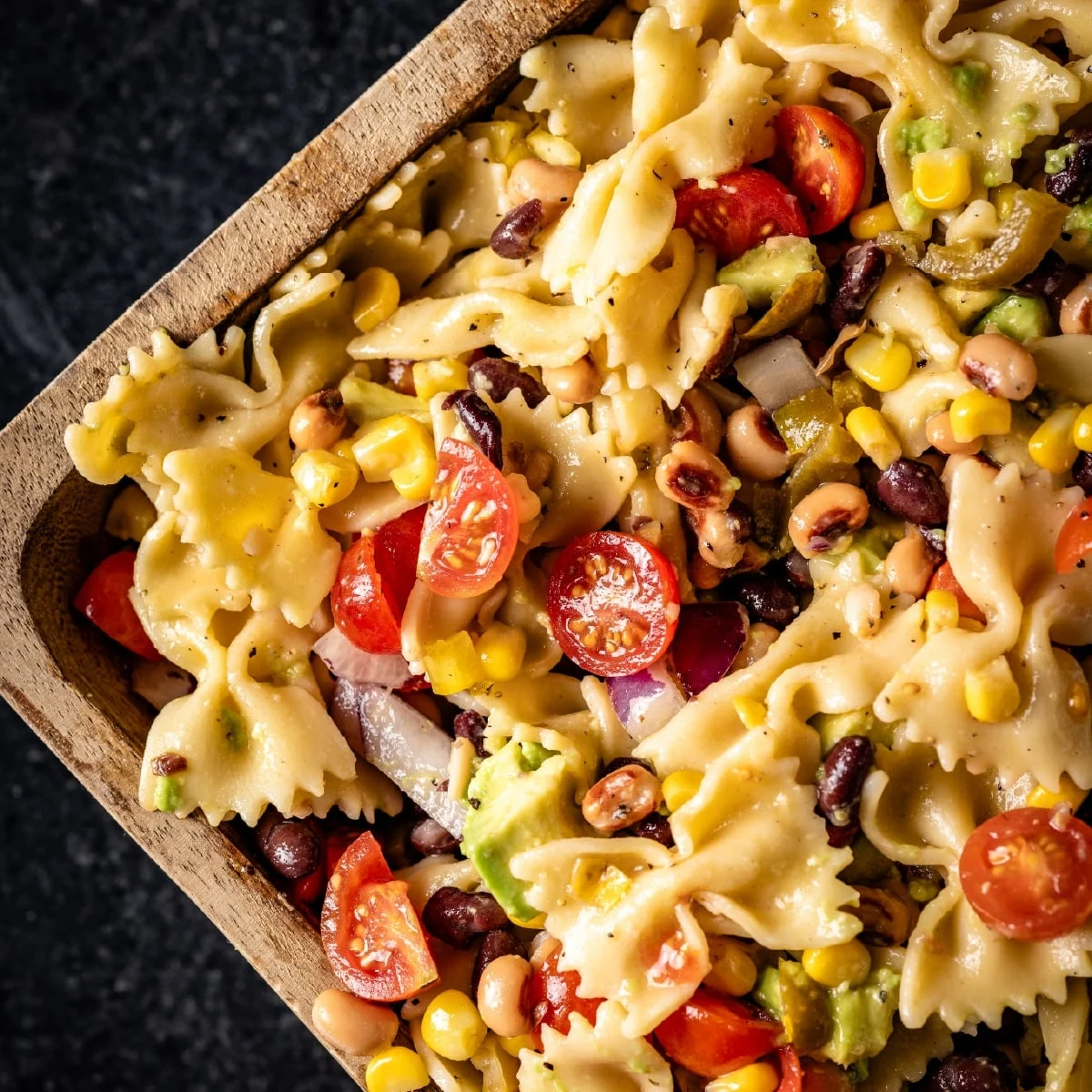
The modern Cowboy Pasta Salad is defined by a specific set of flavor pillars: acidity, creaminess, and a balanced textural contrast. Unlike traditional mayonnaise-heavy macaroni salads that dominated 20th-century American picnics, the cowboy variant prioritizes fresh produce and vinegar-forward dressings. The primary components typically include farfalle (bowtie) pasta, which provides a significant surface area for dressing adhesion, alongside black beans, sweet corn, and cherry tomatoes.
The inclusion of pickled jalapeños and red onions introduces a sharp piquancy that cuts through the richness of the avocado, while the dressing—a mixture of olive oil, lime juice, and red wine vinegar—provides a bright finish. According to culinary data, the "Cowboy" prefix in American cuisine often denotes a recipe that incorporates beans, corn, and a hint of spice, nodding to the historical trail-cooking of the American West, albeit modernized for the contemporary kitchen.

Chronological Evolution: From Texas Caviar to Pasta Salad
The lineage of the Cowboy Pasta Salad can be traced back to the mid-1940s with the creation of "Texas Caviar." Developed by Helen Corbitt, a New York-born chef who moved to Austin, Texas, the original dish was a pickled black-eyed pea salad intended to elevate a humble ingredient. Over the decades, Texas Caviar evolved into "Cowboy Caviar," expanding to include corn, bell peppers, and avocados.
By the early 2000s, the integration of pasta into this vegetable-heavy mix became a popular method for transforming a dip into a satiating side dish. The 2020s have seen a resurgence of this trend, fueled largely by social media platforms like TikTok and Instagram, where vibrant, colorful "chopped salads" and "pasta assemblies" garner millions of views. The current iteration by Hey Grill Hey represents the latest stage in this evolution, emphasizing the "work with what you have" philosophy that defined early frontier cooking, adapted for modern pantry staples.
Culinary Science and Nutritional Data
The popularity of the Cowboy Pasta Salad is not merely a matter of trend but is rooted in sensory science. The dish utilizes the "Fat-Acid-Salt-Heat" framework popularized by modern culinary theory. The avocado and olive oil provide the fat; the lime juice and red wine vinegar provide the acid; the pickled jalapeños provide the heat; and the seasoning provides the salt. This combination triggers a high level of palatability, making it a frequent request at social gatherings.

From a nutritional perspective, the dish offers a more complex profile than traditional starch-only sides. A standard serving (approximately 1/8th of a large batch) contains:
- Calories: 383 kcal
- Carbohydrates: 57g (largely from complex sources like pasta and beans)
- Fiber: 5g (essential for digestive health)
- Protein: 11g (derived from the combination of legumes and wheat)
- Healthy Fats: 16g (primarily monounsaturated fats from avocado)
Furthermore, the inclusion of black beans and corn creates a "complementary protein" profile, which is particularly significant as more consumers move toward plant-forward diets. The presence of Vitamin C from lime juice and Vitamin A from tomatoes further enhances the dish’s micronutrient density.
The Role of Hey Grill Hey in the BBQ Industry
The dissemination of this recipe by Susie Bulloch, the founder of Hey Grill Hey, reflects a significant shift in how barbecue knowledge is consumed. Bulloch, a recognized authority in the grilling world who has appeared on the Food Network and held Guinness World Records, has built an empire on making "backyard barbecue" accessible to the average homeowner.

In the broader context of the $15 billion global barbecue grill market, the "side dish" category has seen substantial growth. Content creators like Bulloch have identified that while the "main event" (such as a smoked brisket or pork shoulder) is the draw, the success of a barbecue event often hinges on the quality of the accompaniments. Bulloch’s philosophy focuses on reducing "cookout stress," suggesting that side dishes should be able to be prepared quickly—often in under 10 minutes if using leftover pasta—allowing the cook to focus on the technicalities of fire management and meat temperatures.
Market Trends and Consumer Behavior
The rise of the Cowboy Pasta Salad aligns with several key consumer behavior trends observed in 2024 and 2025:
- The Rise of "Semi-Homemade" Meals: Consumers are increasingly looking for recipes that combine fresh produce with pantry staples (canned beans, dried pasta) to manage food costs in an inflationary environment.
- Texture-Forward Eating: Market research indicates a growing preference for dishes with varied textures. The contrast between the "bite" of al dente pasta and the "creaminess" of ripe avocado satisfies this consumer demand.
- Versatility and Dietary Flexibility: This dish is naturally vegetarian and can be easily modified for vegan diets by ensuring the pasta is egg-free. In a social setting where guests may have diverse dietary needs, the Cowboy Pasta Salad serves as a "safe" yet flavorful option.
While traditional versions of cowboy-themed dishes often included ground beef or bacon, the modern shift—as seen in Bulloch’s recipe—frequently omits meat. This change is not only a nod to rising meat prices but also to the logistical reality of outdoor dining, where a vegetable-and-bean-based salad remains shelf-stable and appetizing for longer periods than those containing warm proteins.

Broader Cultural Impact and Implications
The Cowboy Pasta Salad is more than a recipe; it is a reflection of the American "melting pot" at the dinner table. It takes Italian pasta, Mexican-inspired flavors (cilantro, lime, jalapeño), and Southern American legumes, and synthesizes them into a single bowl. This hybridization is a hallmark of modern American cuisine.
Furthermore, the "social shareability" of the dish cannot be overlooked. In the digital age, the visual appeal of a dish—its "Instagrammability"—is a factor in its popularity. The vibrant green of the avocado, the deep purple of the onions, and the bright yellow of the corn make the Cowboy Pasta Salad a visual centerpiece. This has led to a cycle where the dish is prepared, photographed, shared, and subsequently adopted by a wider audience, cementing its place in the national culinary canon.
Conclusion: The Future of the Backyard Barbecue
As outdoor cooking continues to evolve, the distinction between "chef" and "home cook" continues to blur, thanks to the accessibility of high-quality instructional content. The Cowboy Pasta Salad stands as a testament to this democratization of culinary skill. It proves that a "show-stopping" dish does not require expensive ingredients or hours of labor, but rather an understanding of flavor balance and a willingness to adapt.

Looking ahead, the trend toward "globalized" barbecue sides is expected to continue. We are likely to see further iterations of the pasta salad that incorporate ingredients from various cultures, such as miso-based dressings or the inclusion of ancient grains. However, for the time being, the Cowboy Pasta Salad remains the reigning champion of the summer cookout, providing a reliable, nutritious, and flavor-packed solution for hosts and guests alike. Through the efforts of influencers like Susie Bulloch and the enduring appeal of Southwestern flavors, this dish has secured its legacy as a modern classic in the American culinary landscape.
