
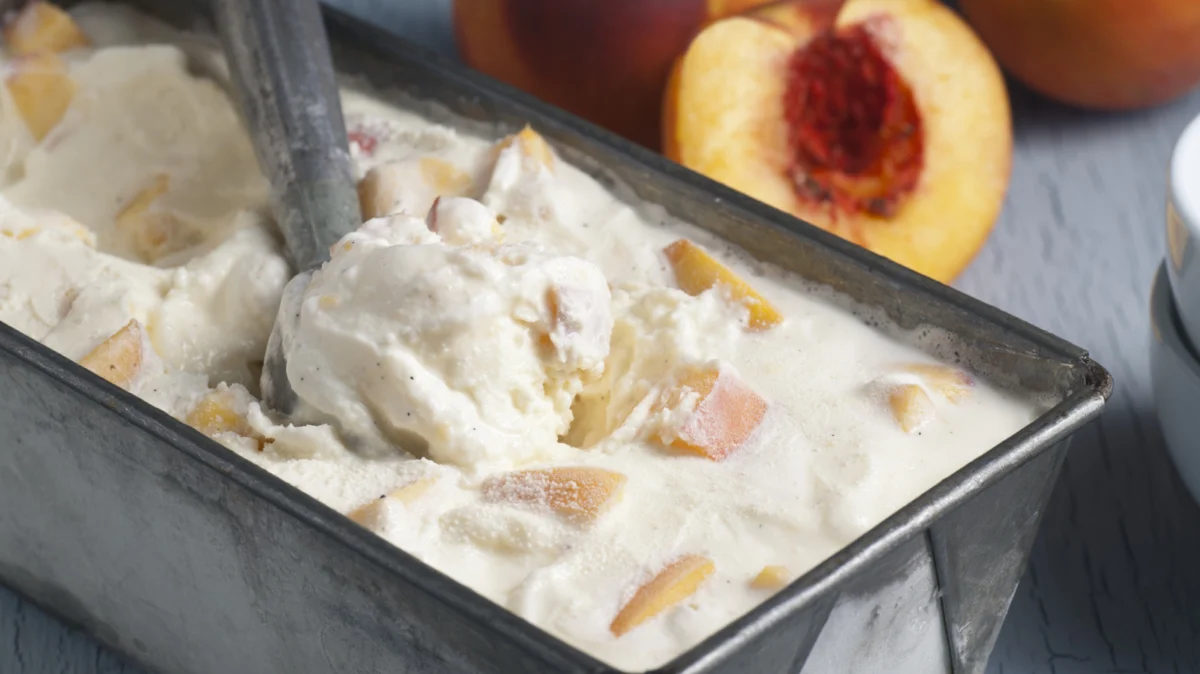
There’s a timeless appeal to the simple, unadorned flavors of summer, and few fruits embody this more than the ripe peach. Its sweet, slightly tart flesh, bursting with juice, evokes memories of sun-drenched afternoons and simpler times. For those seeking to capture this essence in a frozen treat, the traditional method of making homemade peach ice cream offers a delicious alternative to modern, gadget-dependent recipes. Tracing its lineage back to the very beginnings of a household name in home economics, a recipe from 1924 for "Delicious Peach Ice Cream" from Fruit, Garden and Home (now known as Better Homes and Gardens) eschews the need for specialized appliances, relying instead on ingenuity and readily available ingredients. This vintage approach not only provides a nostalgic culinary journey but also highlights the enduring appeal of classic dessert-making techniques that predated the advent of sophisticated kitchen machinery like the Ninja Creami.
The 1924 recipe, unearthed from the inaugural volume of the publication under its new moniker, presents a surprisingly straightforward list of components. It calls for a dozen ripe peaches, to be "crushed finely," with the option of using either fresh or canned fruit. This adaptability speaks to the practicalities of home cooking in the early 20th century, where seasonal availability and preservation methods dictated ingredient choices. Beyond the peaches, the recipe requires a single beaten egg, a generous 1 ½ cups of sugar, a quart of fresh milk, and a pint of canned evaporated milk. The inclusion of evaporated milk suggests an early understanding of how to achieve a richer, creamier texture without the need for heavy cream, which might not have been as universally accessible or affordable at the time. A final touch involves mixing two teaspoons of cornstarch with water to form a slurry, which is then incorporated into the liquid mixture before freezing.
The instructions, though brief, offer a glimpse into the culinary landscape of the era. The mention of a "two-quart freezer" is particularly telling. This almost certainly refers to a hand-crank ice cream maker, a common household item that allowed for the gradual churning of ice cream mixtures, facilitating the formation of small ice crystals and a smooth texture. This stands in stark contrast to modern freezers, which are designed to rapidly freeze contents. The 1924 method, therefore, necessitates a degree of manual labor and patience, a departure from the instant gratification often associated with contemporary kitchen gadgets.
The Evolution of Homemade Ice Cream
The journey from a hand-crank freezer to the sophisticated Ninja Creami represents a significant technological leap in home dessert preparation. The Ninja Creami, a popular countertop appliance, has revolutionized the way many home cooks approach ice cream. It works by freezing a base mixture in a specialized pint container and then processing it with a powerful blade, allowing for rapid churning and a creamy texture, often without the need for traditional dairy fats like heavy cream. Tasting Table’s own review of the Ninja Creami, while acknowledging its capabilities, even suggested it might not be entirely worth the investment for all users, hinting at the existence of simpler, more accessible methods.
This notion of simplicity and accessibility is precisely what the 1924 peach ice cream recipe embodies. While the vintage recipe utilizes a hand-crank freezer, its core principles can be readily adapted to modern, no-churn methods. The essence of a no-churn ice cream recipe typically lies in a simple base of three key ingredients: heavy whipping cream, vanilla extract, and sweetened condensed milk. Whipping the heavy cream incorporates air, while the sweetened condensed milk provides both sweetness and a rich, creamy texture due to its high sugar and reduced water content. This mixture, when chilled in a freezer-safe container, sets into a delightful frozen dessert.
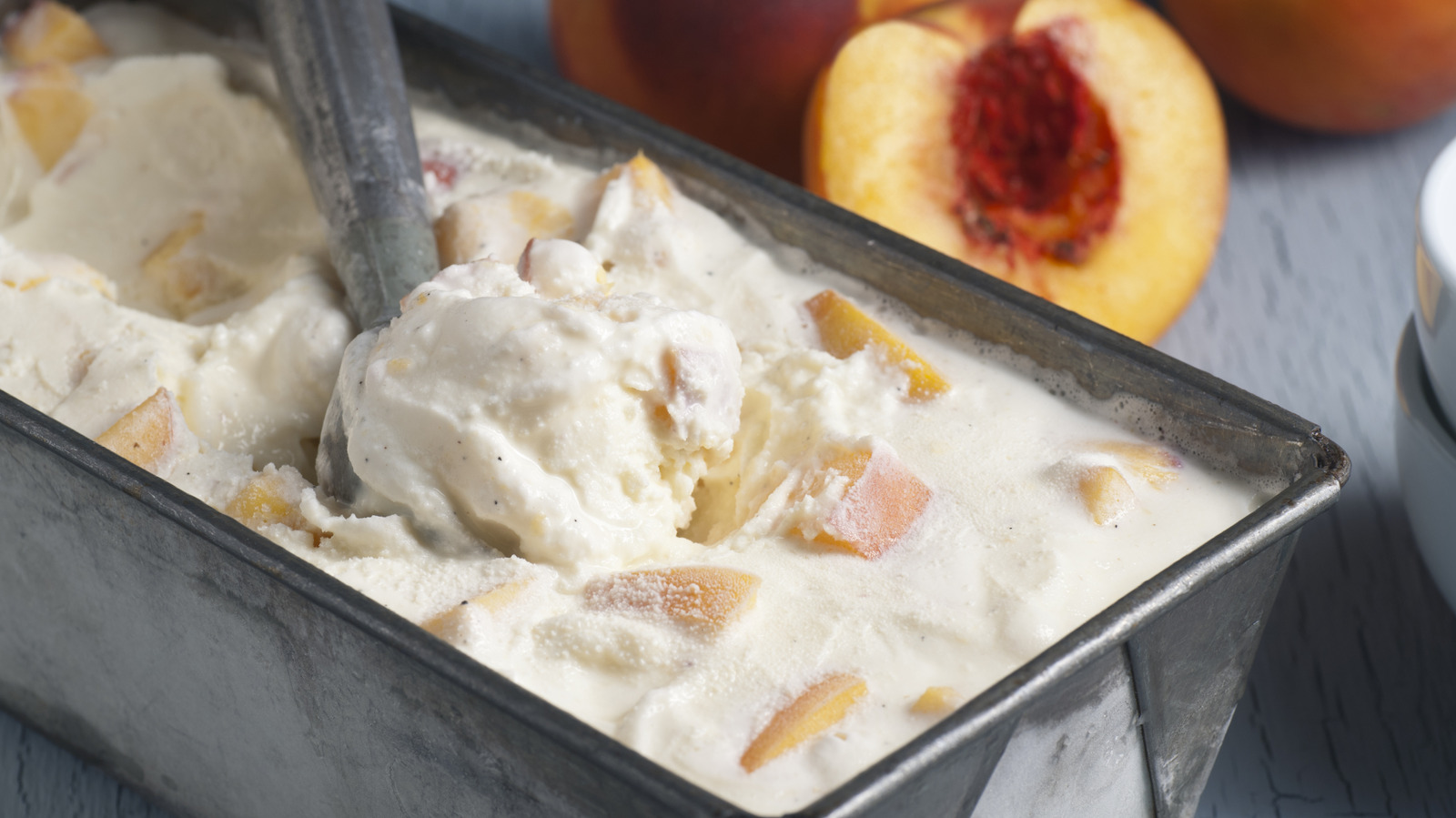
To infuse this modern no-churn base with the nostalgic flavor of peaches, one can employ various techniques. Fresh or canned peaches can be pureed and folded into the base, or small pieces of fruit can be added for textural contrast. Peach juice, a byproduct of canning or a concentrated blend, can also be incorporated for an intensified flavor. For those seeking an even more potent peach essence, a few drops of high-quality peach extract can be judiciously used. The beauty of this approach lies in its flexibility; it allows for personalization, catering to individual preferences for peach intensity and texture.
The Enduring Appeal of Vintage Recipes
The enduring appeal of vintage recipes like the 1924 peach ice cream is multifaceted. For one, it connects us to a culinary heritage, offering a tangible link to the past and the ingenuity of home cooks who, with fewer resources, created delicious and comforting foods. This connection can foster a deeper appreciation for the origins of our favorite dishes and the evolution of cooking techniques.
Furthermore, these older recipes often emphasize the use of fresh, seasonal ingredients. In an era where processed foods are ubiquitous, a return to whole ingredients, like the ripe peaches called for in the 1924 recipe, aligns with a growing trend towards healthier and more sustainable eating. The act of preparing food from scratch, especially a beloved dessert like ice cream, can be a deeply satisfying and mindful experience.
The 1924 recipe also serves as a testament to the fact that achieving excellent results in the kitchen doesn’t always require the latest, most expensive equipment. The foundational principles of food science and culinary technique have remained remarkably consistent. Understanding how to balance sweetness, acidity, and fat content, and how to manage the formation of ice crystals, are key to making any ice cream, whether it’s churned by hand or processed by a high-tech machine.
Historical Context of Home Economics and Refrigeration
The early 20th century was a period of significant transformation in American households, particularly concerning food preparation and preservation. The rise of the home economics movement, championed by publications like Fruit, Garden and Home, aimed to professionalize and standardize domestic tasks, making them more efficient and scientific. This era saw the introduction of new kitchen appliances and a greater emphasis on nutrition and hygiene.
The development of refrigeration technology also played a crucial role. While mechanical refrigerators were not yet standard in most homes until later in the century, the concept of preserving food through cold was gaining traction. The "freezer" mentioned in the 1924 recipe, likely a hand-crank model, was a precursor to modern home freezers. These early machines typically involved a metal cylinder surrounded by a bucket filled with ice and salt. As the handle was turned, paddles inside the cylinder scraped the freezing mixture, preventing large ice crystals from forming and creating a smoother texture.
The use of evaporated milk in the 1924 recipe is also noteworthy. Evaporated milk, which is milk that has had about 60% of its water removed through heating, was a shelf-stable and more affordable alternative to fresh milk, especially in areas where refrigeration was unreliable. It contributed to the richness and creaminess of the ice cream without requiring the use of fresh cream, which could be perishable and more expensive.
Adapting Vintage Techniques for the Modern Palate
While the 1924 recipe provides a fascinating historical snapshot, modern home cooks can enhance and adapt it to suit contemporary tastes and dietary preferences. For instance, the amount of sugar can be adjusted based on the sweetness of the peaches and personal preference. Some might opt for a less refined sugar, such as brown sugar or maple syrup, to add a different layer of flavor complexity.
For those seeking a lighter version, a portion of the whole milk could be replaced with skim milk or even a plant-based milk alternative like almond or oat milk. However, it’s important to note that reducing fat content can impact the final texture and creaminess of the ice cream.
The cornstarch slurry, while effective as a stabilizer, can also be substituted or augmented. A small amount of gelatin or a commercial ice cream stabilizer can be used to improve texture and prevent iciness, especially if a traditional churn method is not employed.
The Broader Impact of Rediscovering Classic Recipes
The rediscovery and adaptation of vintage recipes like this 1924 peach ice cream offer a valuable perspective on our culinary evolution. It reminds us that innovation doesn’t always mean discarding the old; often, it involves understanding the foundational principles and adapting them with new knowledge and resources. In an age saturated with instant gratification and convenience, the deliberate, hands-on process of making ice cream from scratch, even a simplified version, can be a deeply rewarding experience.
This trend towards embracing heritage recipes aligns with a broader cultural movement that values authenticity, craftsmanship, and a connection to the past. It encourages us to slow down, to appreciate the journey of creating food, and to savor the resulting flavors with a deeper understanding of their origins. Whether one chooses to embrace the full hand-crank experience or adapt the principles to a no-churn method, the allure of homemade peach ice cream, with its roots firmly planted in a century-old culinary tradition, remains as sweet and inviting as ever. The ability to recreate such a dessert without relying on specialized, single-purpose appliances like the Ninja Creami speaks volumes about the timeless effectiveness of basic culinary science and the enduring power of simple, quality ingredients.
