
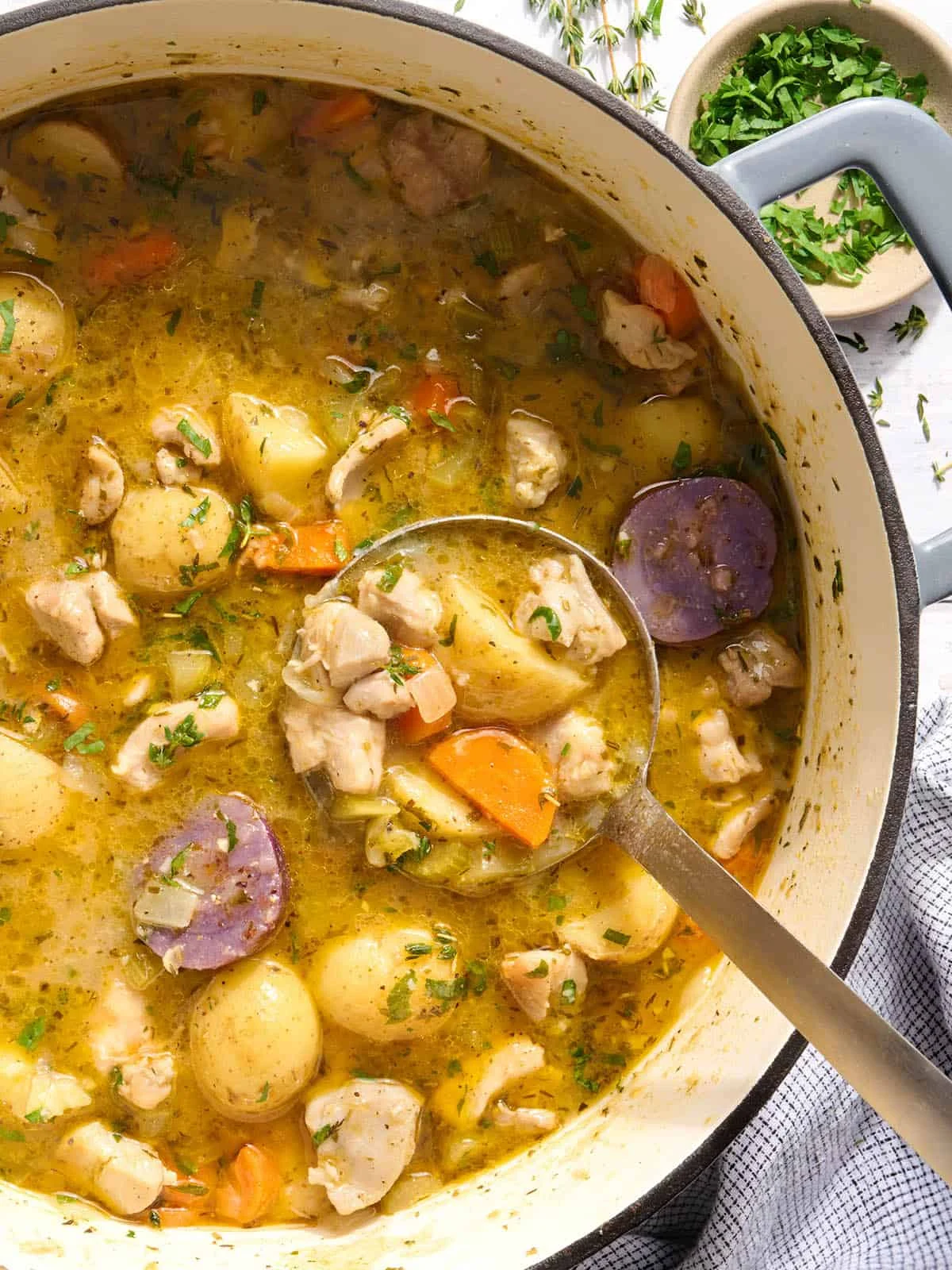
The classic chicken stew has long served as a cornerstone of home-cooked nutrition, balancing high-protein density with the economic advantages of seasonal vegetable integration. Recent data from the Nashville Test Kitchen, which rigorously evaluates recipes for scalability, affordability, and nutritional value, has highlighted a refined iteration of this traditional dish. At a calculated cost of approximately $13.56 for a six-serving yield—averaging $2.26 per portion—the recipe exemplifies the efficacy of combining simple, raw ingredients to achieve a complex, restaurant-quality flavor profile without the necessity of expensive convenience products or processed additives.

Historical Context and Culinary Evolution
The methodology behind the modern chicken stew is rooted in centuries-old techniques designed to maximize the flavor extraction of inexpensive cuts of meat. By utilizing boneless, skinless chicken thighs, chefs can ensure that the protein remains succulent even during prolonged simmering processes, a significant improvement over the tendency of breast meat to dehydrate under high heat. The incorporation of a traditional mirepoix—onion, carrot, and celery—acts as the aromatic foundation, providing the essential sugars and moisture needed to deglaze the cooking vessel and incorporate the "fond," or the caramelized bits of protein left behind during the searing phase.
The transition of this dish from a rustic necessity to a modern staple reflects a broader shift in consumer habits toward meal prepping and home-based cost management. The ability to prepare large quantities of nutrient-dense food that remains stable under refrigeration for three to four days provides a practical solution for households seeking to mitigate the impact of rising food costs.

Technical Preparation and Flavor Development
The production of a high-quality stew relies on a precise sequence of chemical and physical reactions. The process begins with the "dredging" of chicken pieces in all-purpose flour. This step serves two primary functions: it facilitates the Maillard reaction, a chemical reaction between amino acids and reducing sugars that gives browned food its distinctive flavor, and it creates a natural thickening agent for the final broth.
When the flour-coated chicken hits the heated butter and oil, the resulting crust forms the base of the stew’s flavor. Subsequent to the searing, the addition of vegetables releases enough moisture to dissolve the browned residue from the bottom of the pot. A secondary addition of flour further stabilizes the emulsion, creating a gravy that is substantial enough to coat a spoon without the need for high-fat dairy or synthetic thickeners.

Simmering for 30 minutes is the critical final stage, allowing the starches in the potatoes to soften and release, which provides further body to the liquid base. According to culinary standards, the equilibrium of the broth—achieved through a blend of chicken and vegetable stocks—ensures a balanced sodium and savory profile, particularly when utilizing concentrated bases like "Better Than Bouillon" for controlled flavor modulation.
Nutritional Profile and Economic Impact
From a nutritional standpoint, a 1.5-cup serving of this stew provides approximately 355 kilocalories, 30 grams of protein, and 32 grams of carbohydrates. With 17% of the daily recommended fiber intake and a balanced fat content of 12 grams, the dish meets the criteria for a well-rounded main course.

The economic implications are equally noteworthy. By utilizing base ingredients that are widely available in bulk, the per-serving cost remains significantly lower than pre-prepared or restaurant-ordered equivalents. The data indicates that this recipe has achieved significant market penetration, evidenced by more than 200 consumer reviews citing its success in both taste and budget compliance. This popularity suggests a growing trend among domestic cooks to prioritize "scratch" cooking as a primary strategy for financial planning.
Scalability and Storage Logistics
For long-term food security and meal management, the stability of chicken stew is a significant factor. The dish is highly conducive to refrigeration and freezing. When stored in airtight, food-grade containers, the stew maintains its integrity for up to 96 hours in a refrigerator.

Freezing protocols for such stews require specific adjustments to maintain texture. It is recommended that potatoes be slightly undercooked during the initial preparation if the intended consumption is beyond the three-month storage window, as the thawing and reheating processes can cause starch structures to break down, resulting in a grainy texture. Waxy potato varieties, such as Yukon Golds or baby potatoes, are statistically more likely to retain their structural integrity post-thaw compared to starchy alternatives like Russets.
Industry Feedback and Consumer Reception
Consumer feedback, particularly from independent home cooks like those identified in the Nashville study, emphasizes the "weekly bank" potential of the recipe—a term used to describe a reliable, repeatable meal that forms the basis of a household’s weekly nutrition plan. The consensus among users is that the flavor profile actually improves after 24 hours of refrigeration, as the aromatic herbs and spices have additional time to permeate the chicken and vegetable fibers.

Furthermore, the versatility of the base recipe allows for adaptations that cater to specific dietary requirements. Gluten-sensitive individuals have successfully substituted all-purpose flour with 1:1 gluten-free blends or cornstarch, demonstrating the recipe’s adaptability without compromising the fundamental structure of the dish.
Broader Implications for Sustainable Consumption
The reliance on whole, raw ingredients rather than pre-packaged processed foods aligns with contemporary movements toward sustainable and intentional consumption. By minimizing the use of high-cost, low-nutrient shortcuts, this approach to stew preparation reduces packaging waste and lowers the overall carbon footprint associated with food logistics.

The success of this recipe model serves as a case study for broader culinary education programs. By teaching foundational techniques—such as proper searing, deglazing, and the use of natural thickening agents—the culinary community can empower consumers to take control of their nutritional outcomes while simultaneously managing inflation-adjusted food budgets. As food costs continue to fluctuate in the global marketplace, the importance of such scalable, resource-efficient recipes will likely continue to rise, solidifying the role of the traditional stew as an essential element of modern, practical cooking.
The methodical approach—from the careful preparation of the mirepoix to the strategic simmering of the broth—serves as a reminder that sophisticated results are often the product of simple, well-executed techniques. As home cooking continues to evolve in the 21st century, the integration of these practices remains a vital skill set for those looking to maintain high dietary standards within constrained economic environments.
