
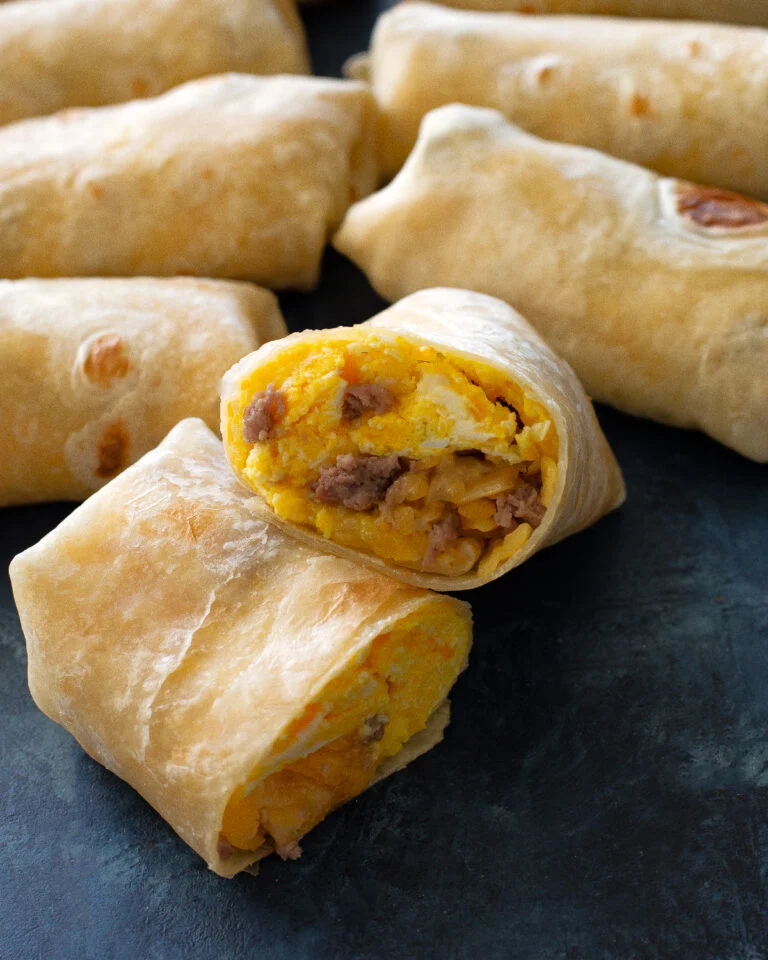
The Evolution of the Portable Breakfast
The rise of the breakfast burrito is not merely a trend but a response to demographic changes in household management. According to data from the Bureau of Labor Statistics, the average time spent on food preparation has declined as work-life balance pressures have increased. For families, the morning window is often the most critical point of friction in the daily schedule. The development of the Sausage and Egg Breakfast Burrito as a "make-ahead" meal serves as a tactical solution to this time scarcity.

By preparing these items in bulk, families are effectively moving from a "just-in-time" preparation model to a "batch-processing" approach. This ensures that nutritional requirements are met without requiring a daily 20-minute culinary commitment during the pre-commute rush.
Nutritional Composition and Dietary Implications
From a nutritional standpoint, the standard breakfast burrito offers a balanced macronutrient profile. The combination of protein from the eggs and pork-based sausage, paired with the complex carbohydrates provided by the flour tortilla, provides a sustained energy release.

Dietary analysts note that the inclusion of cheese adds calcium and additional protein, though they caution that sodium content—common in processed sausages and tortillas—should be monitored by those with specific dietary restrictions. When prepared at home rather than purchased at a fast-food establishment, these burritos allow for portion control and the selection of higher-quality, lower-sodium ingredients, effectively turning a common fast-food item into a more controlled, healthy, and cost-effective home-cooked meal.
A Chronology of the Batch-Prep Method
The practice of freezing and reheating breakfast items gained significant traction in the early 2010s, coinciding with the rise of "meal prep" culture on social media and health-focused blogs. The standard operating procedure for these burritos has been refined through years of domestic testing:

- Phase 1: Procurement and Preparation (Sunday Evening): The initial assembly involves cooking the sausage and scrambling the eggs. Culinary experts emphasize that cooling these components is critical to structural integrity. If the ingredients are added to the tortilla while hot, steam is trapped, leading to a "soggy" texture upon reheating.
- Phase 2: The Assembly Line: The process is designed for efficiency. A standard tortilla is laid flat, followed by a measured amount of protein and cheese. The "tight roll" technique is essential to ensure the structural integrity of the burrito during the freezing process.
- Phase 3: The Preservation Stage: Wrapping in moisture-resistant materials such as heavy-duty plastic wrap or aluminum foil is the industry standard for preventing freezer burn.
- Phase 4: The Reheat Cycle: Depending on the equipment used, the process ranges from 30 minutes in a 350-degree oven for a crispier exterior, to a 2-3 minute interval in a microwave for rapid consumption.
Economic and Logistical Impacts
The economic implications of mass-producing breakfast burritos at home are measurable. A standard, store-bought breakfast sandwich or burrito typically ranges from $3.50 to $6.00 per unit. When prepared in bulk, the cost-per-unit for high-quality, homemade versions often drops by approximately 40 to 60 percent.
Furthermore, the "grab-and-go" model reduces the reliance on drive-thru service windows, which have seen record-high wait times over the past three years. By eliminating the morning stop, families can effectively recover 10 to 15 minutes of transit time, which significantly alters the morning trajectory for students and commuters alike.

Expert Perspectives on Food Safety
Food scientists emphasize that the key to successful meal prep lies in the "danger zone" management of proteins. Eggs and pork, if left at room temperature for extended periods, are susceptible to rapid bacterial growth.
"The process of chilling the ingredients before assembly is not just a texture preference; it is a vital food safety protocol," says Dr. Elena Rodriguez, a food safety consultant. "By ensuring the internal temperature of the filling drops below 40 degrees Fahrenheit before sealing, the consumer creates an environment that minimizes the risk of spoilage during the refrigeration or freezing cycle."

Broader Cultural Significance
The popularity of these burritos also reflects a broader movement toward "culinary autonomy." As families look to reclaim control over their ingredients, the ability to replicate restaurant-quality items at home becomes a form of domestic empowerment.
While the "Green Chile" variation—often cited as a regional favorite in the American Southwest—adds complexity through spicy, vegetable-forward ingredients, the foundational "Sausage and Egg" model remains the gold standard for its simplicity and universal appeal. It is a meal that transcends age groups, bridging the gap between the "non-morning" child and the time-strapped parent.

Future Trends in Breakfast Consumption
Looking ahead, the shift toward portable, high-protein breakfasts is expected to accelerate. Analysts at the National Restaurant Association suggest that as the cost of living fluctuates, consumers will continue to prioritize "value-added" home meals. The inclusion of additional components, such as potatoes, beans, or spinach, is becoming increasingly common as households look to customize these basic recipes to meet evolving health goals without sacrificing the core convenience of the breakfast burrito.
In conclusion, the Sausage and Egg Breakfast Burrito is more than a simple recipe; it is a structural response to the demands of contemporary life. By optimizing the preparation process, selecting basic yet nutrient-dense ingredients, and employing proper storage techniques, families are successfully adapting to the pressures of the modern morning. Whether consumed in a car on the way to school or during a quick break at a desk, this meal remains a primary example of how basic culinary innovation continues to improve the daily quality of life.
