
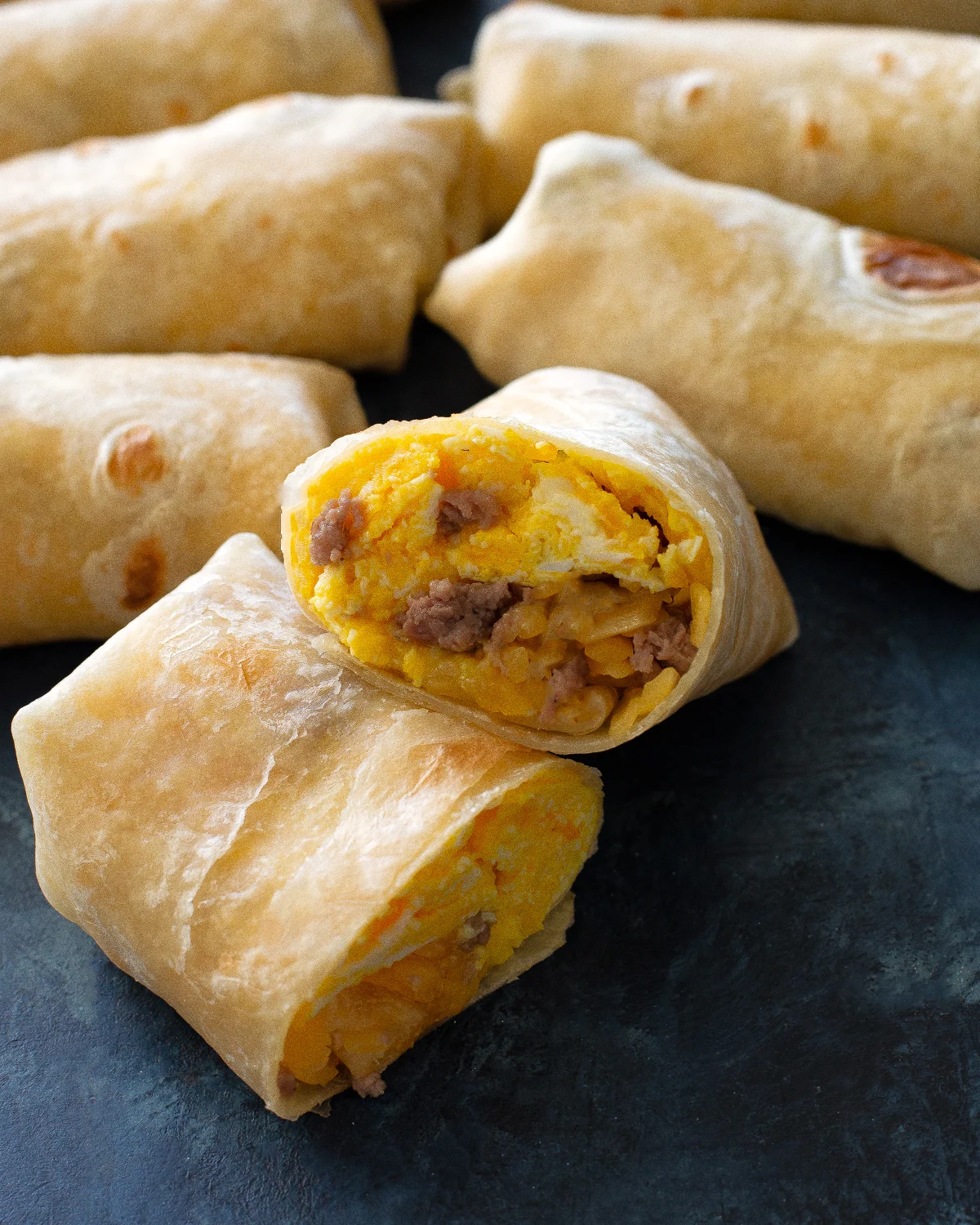
The Evolution of Breakfast Convenience
Historically, the concept of the American breakfast has shifted from time-intensive, sit-down meals to grab-and-go options that cater to the logistical realities of school runs and early morning commutes. According to data from the Bureau of Labor Statistics and various culinary research reports, there has been a steady increase in the consumption of breakfast items that can be prepared in bulk during off-peak hours.

The breakfast burrito, a descendant of traditional northern Mexican cuisine, has been successfully adapted for the convenience-focused American market. By utilizing the principle of batch cooking, families are increasingly moving away from pre-packaged, processed frozen goods in favor of home-prepared alternatives that offer greater control over ingredient quality and caloric density.
Nutritional Profile and Preparation Logistics
From a nutritional standpoint, the combination of eggs and sausage provides a significant source of protein and essential fats, which are key components for sustaining energy levels throughout the morning. The inclusion of cheese adds calcium and additional protein, while the flour tortilla serves as a convenient vessel for transport.

Professional food safety guidelines emphasize the importance of thermal management during the preparation of these items. Experts in food science note that the integrity of a breakfast burrito is largely dependent on the cooling process prior to storage. By ensuring that the internal components—specifically the eggs and sausage—are brought to a lower temperature before assembly, the risk of moisture migration is significantly reduced. This step is critical in preventing the "soggy tortilla" phenomenon that often plagues poorly executed, freezer-ready meals.
Chronology of Preparation
For those implementing a meal-prep strategy, the workflow typically follows a standardized timeline designed to maximize efficiency and maintain food quality:

- Preparation (Minutes 0–15): The cooking of protein components, such as ground breakfast sausage and scrambled eggs, is completed. It is standard practice to season the mixture during this phase to ensure consistent flavor distribution.
- Cooling (Minutes 15–30): The cooked mixture is spread onto a tray to facilitate rapid heat dissipation. This is a vital stage to prevent bacterial growth and ensure the structural integrity of the final product.
- Assembly (Minutes 30–45): Ingredients are portioned onto flour tortillas. Careful attention is given to the folding technique, which secures the filling and prevents leakage during the reheating process.
- Preservation (Minutes 45+): The burritos are individually wrapped in protective barriers such as food-grade plastic or aluminum foil. This prevents freezer burn and cross-contamination with other items stored in the refrigeration unit.
Data Analysis: The Rise of Meal Prep
Market research suggests that households that adopt a Sunday-prep model—where breakfast items for the entire week are produced in one session—report a significant reduction in morning stress levels. A survey of consumer habits indicates that households with school-aged children are 40% more likely to favor "heat-and-eat" solutions that provide a balance of comfort and nutrition.
The cost-benefit analysis of home-prepared burritos compared to commercial alternatives remains favorable. By purchasing ingredients in bulk, the per-unit cost of a homemade sausage and egg burrito is substantially lower than that of a premium café or convenience store purchase, while simultaneously offering a cleaner label by eliminating unnecessary preservatives or stabilizers used in mass-manufactured products.

Reheating Techniques and Quality Control
The effectiveness of a make-ahead meal is ultimately determined by the reheating phase. Different heating methods yield varying textures:
- Oven Reheating: For those seeking a crisp exterior, the oven remains the gold standard. When wrapped in foil and heated at 350°F (175°C) for 30 to 35 minutes, the tortilla maintains a structural firmness that mimics a fresh preparation.
- Microwave Reheating: This method prioritizes speed over texture. A cycle of 2 to 3 minutes is generally sufficient to achieve an internal temperature of 165°F (74°C), which is the recommended threshold for food safety. However, users should be aware that moisture retention in a microwave can occasionally lead to a softer tortilla texture.
Broader Implications for Domestic Management
The shift toward simplified, repeatable breakfast recipes reflects a broader movement in domestic management: the professionalization of the home kitchen. By adopting industrial-style batch preparation methods, families are able to reclaim time that would otherwise be spent on daily meal preparation.

Furthermore, the versatility of the base recipe allows for nutritional scalability. For instance, the inclusion of dietary variations—such as the addition of green chiles or root vegetables like potatoes—allows households to tailor the recipe to specific regional preferences or nutritional requirements without compromising the fundamental convenience of the dish.
Expert Perspective: Culinary Stability
Culinary consultants emphasize that the success of these burritos lies in their simplicity. In an era where complex recipes often dominate social media and cooking platforms, the return to four-ingredient staples highlights a desire for reliability. Nutritionists argue that by keeping the ingredient list short, parents can better manage the sodium and fat content of their children’s diets, providing a baseline of nutrition that supports cognitive function during the school day.

As the industry continues to evolve, the focus remains on the intersection of convenience and quality. The breakfast burrito serves as a prime example of how traditional, labor-intensive meals can be deconstructed and reorganized to fit the rigorous schedules of modern life, ensuring that the most important meal of the day is not sacrificed for the sake of time.
