
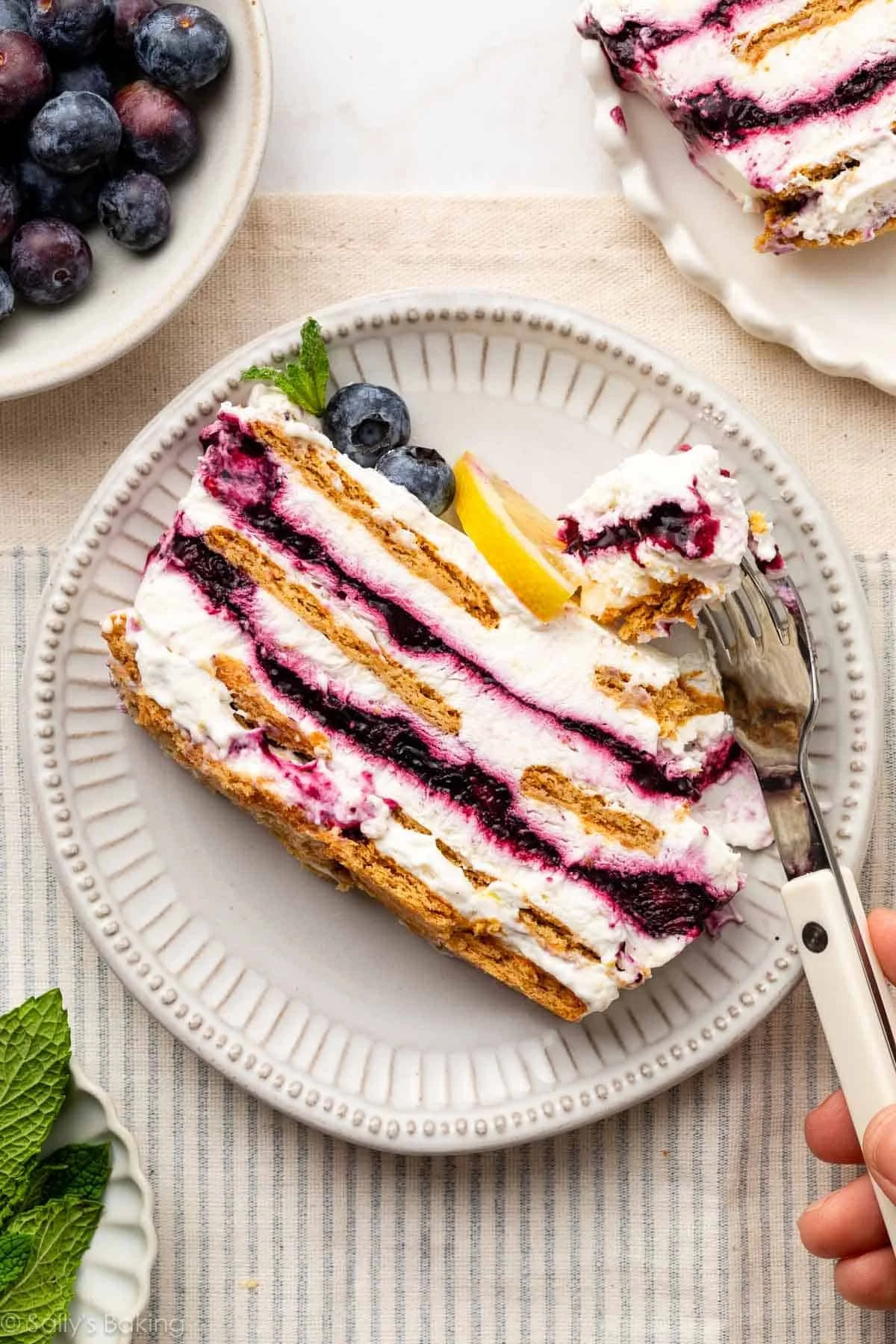
The Blueberry Lemon Icebox Cake stands as a testament to the enduring appeal of no-bake desserts, offering a cool, creamy, and vibrant culinary experience perfect for warm weather. This particular rendition, noted for its bright citrus notes and bursting blueberry flavor, distinguishes itself through a straightforward preparation requiring only nine simple ingredients. It masterfully combines layers of tender graham crackers, a rich lemony whipped cream filling, and a flavorful homemade blueberry sauce. Once assembled, the dessert undergoes a transformative chilling process, culminating in a sliceable cake with a light, mousse-like texture that consistently garners praise and disappears rapidly at social gatherings.
The Enduring Legacy of the Icebox Cake: A Culinary Historical Perspective
The concept of the "icebox cake" is deeply rooted in American culinary history, emerging prominently in the early 20th century. Before widespread access to modern refrigeration, "iceboxes" were insulated cabinets cooled by blocks of ice, serving as precursors to today’s refrigerators. These appliances gave rise to a new category of desserts that did not require baking in an oven, a significant advantage, particularly during hot summer months or in households without ovens. Early icebox cakes typically featured layers of cookies or crackers softened by a creamy filling, which would set and meld together in the chilled environment of the icebox.
The popularity of icebox cakes soared during the Great Depression and World War II, periods when convenience and resourcefulness in the kitchen were paramount. Recipes often utilized readily available, inexpensive ingredients such as graham crackers, vanilla wafers, and canned fruit, combined with whipped cream or custard. Brands like Nabisco actively promoted icebox cake recipes on their packaging, further cementing their place in American home cooking. The evolution of the icebox cake reflects a broader trend in culinary innovation driven by technological advancements (refrigeration) and societal needs (simplicity, cost-effectiveness). Today, the icebox cake continues to be celebrated for its nostalgic charm and its inherent ease of preparation, providing a refreshing alternative to traditional baked goods, especially when oven use is undesirable.
The Evolution of a Modern Classic: This Recipe’s Journey
This specific Blueberry Lemon Icebox Cake recipe first gained public attention with its publication in 2017. Since its initial release, the recipe has undergone thoughtful revisions aimed at enhancing its flavor profile, structural integrity, and overall user experience. Key updates include the incorporation of new photographic documentation, providing clearer visual guidance for preparation, and the addition of crucial success tips that empower home bakers to achieve optimal results.
Perhaps the most significant modification involves the cream filling: the original formulation has been enriched with the inclusion of cream cheese. This strategic addition serves multiple purposes. From a textural standpoint, cream cheese imparts a greater stability to the whipped cream, ensuring a firmer set and a more pronounced "mousse-like" consistency in the final product. Flavor-wise, the cream cheese introduces a subtle tang that beautifully complements the bright lemon and sweet blueberries, adding a layer of complexity and depth that elevates the overall taste experience. This iterative refinement process underscores a commitment to culinary excellence, ensuring the recipe remains a reliable and highly satisfying option for enthusiasts of no-bake desserts.
A Symphony of Nine Ingredients: Deconstructing the Components
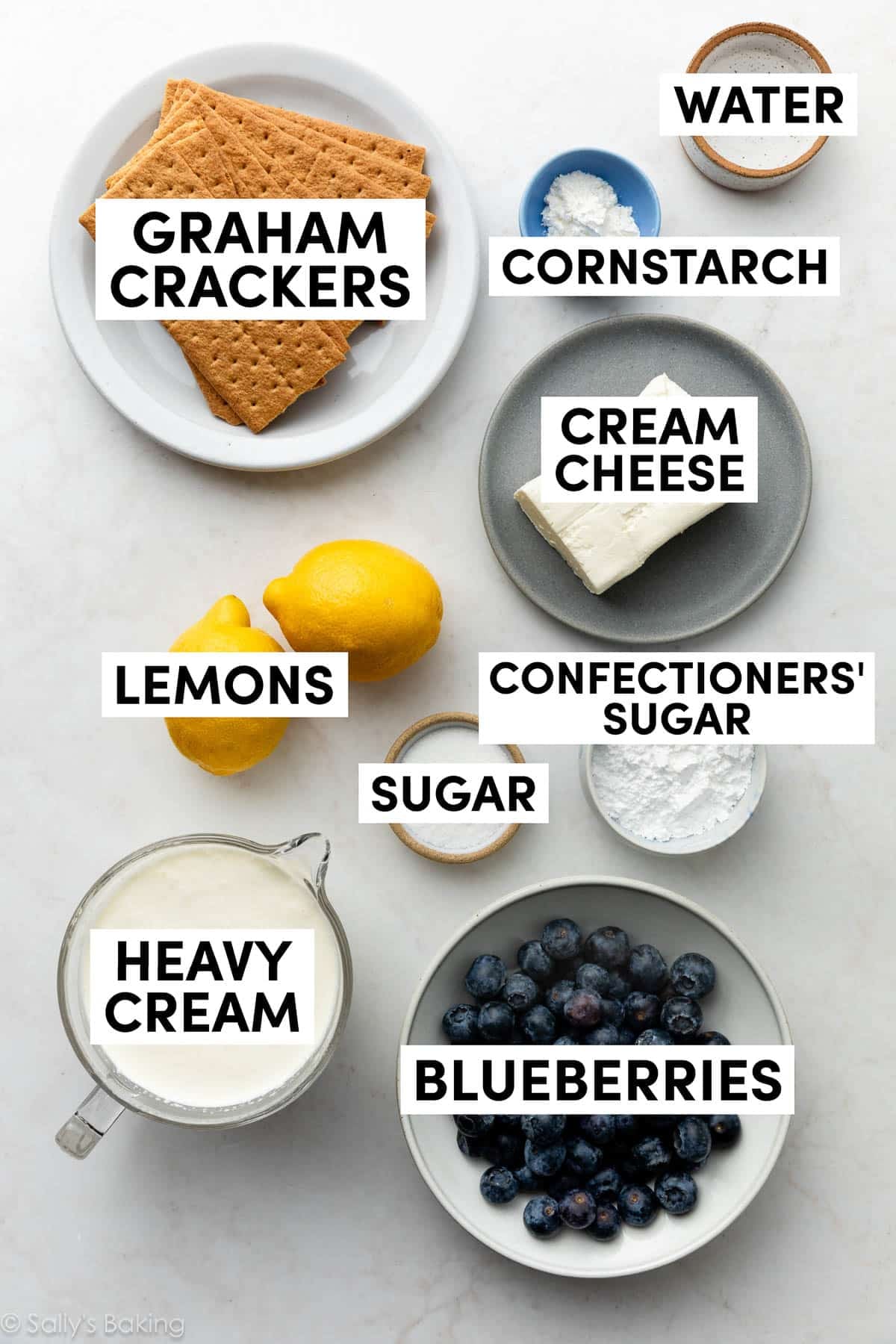
The simplicity of this dessert lies in its concise list of just nine ingredients, each playing a critical role in achieving the desired balance of flavor and texture:
- Blueberries: The star fruit, providing juicy bursts of sweetness and a vibrant color. Blueberries are rich in antioxidants, particularly anthocyanins, which contribute to their distinctive blue-purple hue. Seasonally, fresh blueberries are abundant in summer, making them a natural choice for a warm-weather dessert. Their natural pectin aids in thickening the sauce.
- Lemons: Both the zest and juice of lemons are utilized, delivering a crucial bright, acidic counterpoint to the sweetness of the blueberries and cream. Lemon zest contains aromatic oils that provide a concentrated citrus fragrance, while the juice offers a sharp, refreshing tang. This pairing is a classic in culinary arts, known for its ability to balance and elevate flavors.
- Graham Crackers: These humble, rectangular biscuits form the structural base of the cake. Made from graham flour, a type of whole wheat flour, they possess a subtly sweet, nutty flavor. Crucially, their porous texture allows them to absorb moisture from the cream and blueberry sauce during chilling, transforming them from crisp crackers into soft, cake-like layers, mimicking a baked sponge.
- Heavy Cream: The foundation of the creamy filling, heavy cream (or whipping cream) provides richness and volume when whipped. Its high fat content (typically 36% or more) enables it to hold air effectively, creating a light, airy, and stable whipped texture. The quality of heavy cream directly impacts the lusciousness of the final dessert.
- Cream Cheese: As a recent addition to the recipe, room-temperature cream cheese is vital for both texture and flavor. Its creamy consistency contributes to a smoother, more stable filling that resists weeping, while its characteristic tangy flavor enhances the overall brightness of the lemon and blueberry components. It also adds a subtle richness without making the dessert overly heavy.
- Granulated Sugar: Employed in both the blueberry sauce and the cream filling, sugar provides essential sweetness, balancing the tartness of the lemons and blueberries. In the sauce, it also aids in the caramelization process, deepening the berry flavor during cooking.
- Water: Used primarily in the blueberry sauce, water helps to create a liquid medium for cooking the berries and dissolving the sugar and cornstarch, ensuring a smooth, evenly thickened sauce.
- Cornstarch: A key thickening agent for the blueberry sauce. When heated in a liquid, cornstarch molecules swell and burst, creating a viscous gel that gives the sauce its desired consistency. This prevents the sauce from being too watery and ensures it holds its shape within the cake layers.
- Vanilla Extract: A ubiquitous flavor enhancer in desserts, vanilla extract adds a warm, aromatic depth that subtly complements and rounds out the brighter flavors of lemon and blueberry, contributing to the overall complexity of the filling.
This carefully selected palette of ingredients works synergistically, demonstrating how simple components, when combined thoughtfully, can yield a dessert of remarkable complexity and appeal.
The Meticulous Process of Preparation: Crafting the Blueberry Sauce
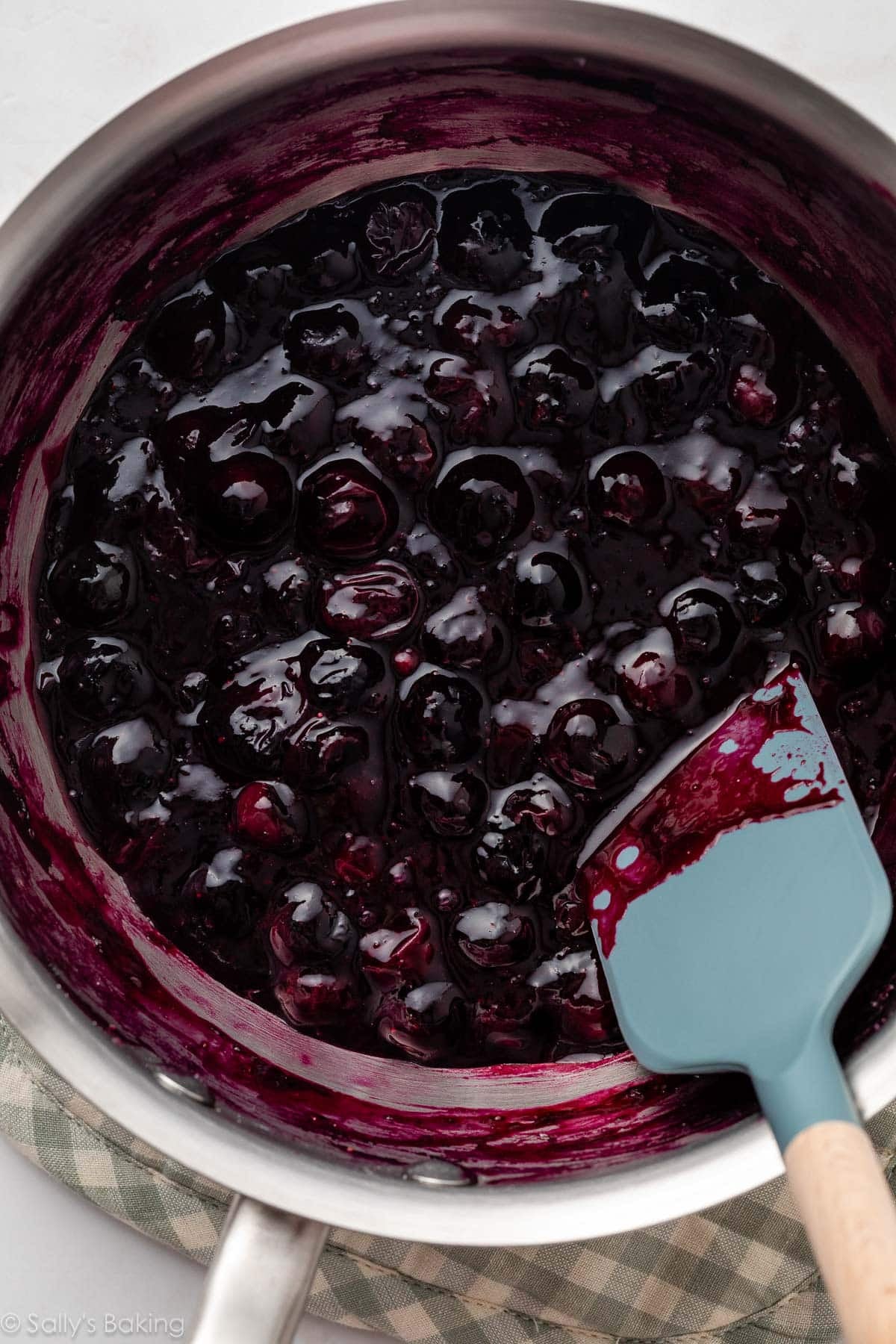
The initial stage of preparing the Blueberry Lemon Icebox Cake involves crafting the homemade blueberry sauce, a critical component that delivers concentrated berry flavor without contributing excessive moisture or sweetness. This sauce, a variation of that used in other popular recipes like blueberry swirl cheesecake, is enhanced with additional lemon for an extra bright zest. The process begins on the stovetop, where blueberries, sugar, water, and cornstarch are gently cooked. As the mixture simmers, the blueberries break down, releasing their natural juices and intensifying their flavor, while the cornstarch works to thicken the sauce to a desirable consistency.
A crucial aspect of this step is allowing the blueberry sauce to cool completely before assembly. This prevents it from warming the cream filling and ensures the cake sets properly. This requirement for cooling also highlights one of the recipe’s most advantageous features: its make-ahead potential. The blueberry sauce can be prepared up to three days in advance and stored in the refrigerator, allowing for staggered preparation and reducing last-minute effort, making it an ideal candidate for busy entertainers.
The Art of the Cream Filling: Achieving Velvety Perfection
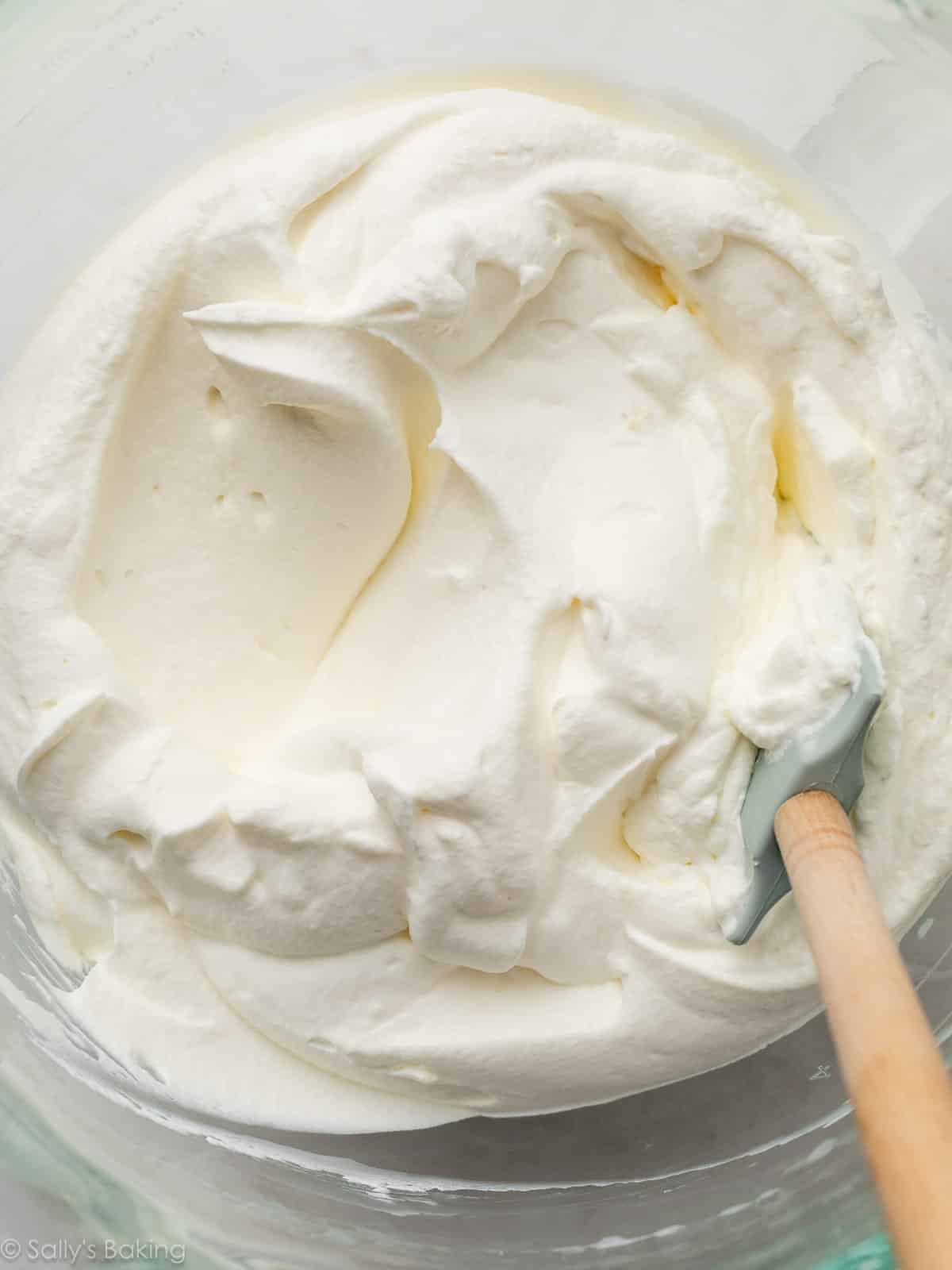
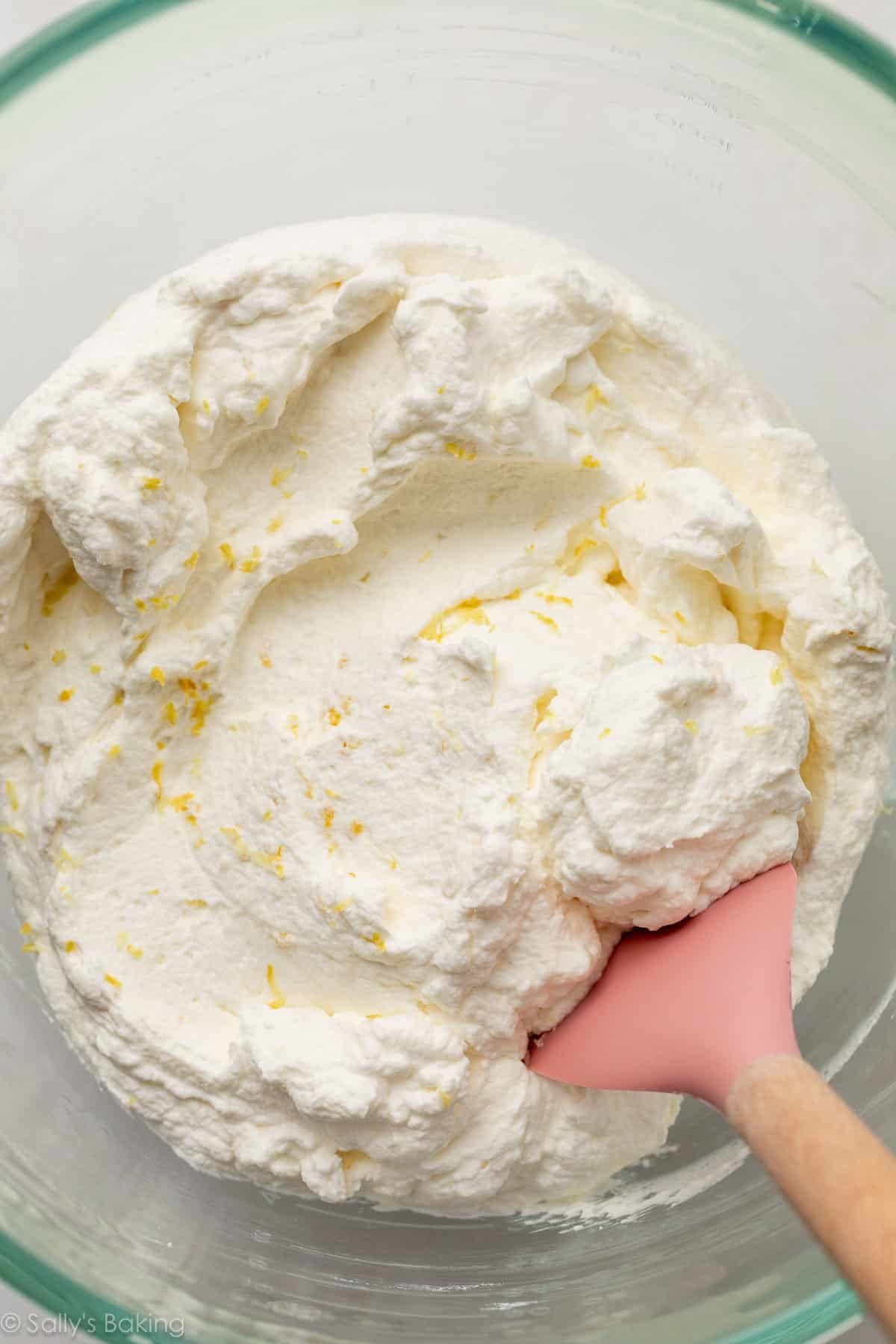
Following the blueberry sauce, attention turns to the cream filling, a pivotal element that contributes significantly to the cake’s light, mousse-like texture. The process begins with whipping cold heavy cream to soft peaks. This distinction is vital; over-whipping to stiff peaks can result in a grainy or overly firm texture, which would compromise the delicate mouthfeel of the finished cake. The goal is a pillowy, spreadable consistency, akin to a thick pudding, which will integrate seamlessly with the other layers.
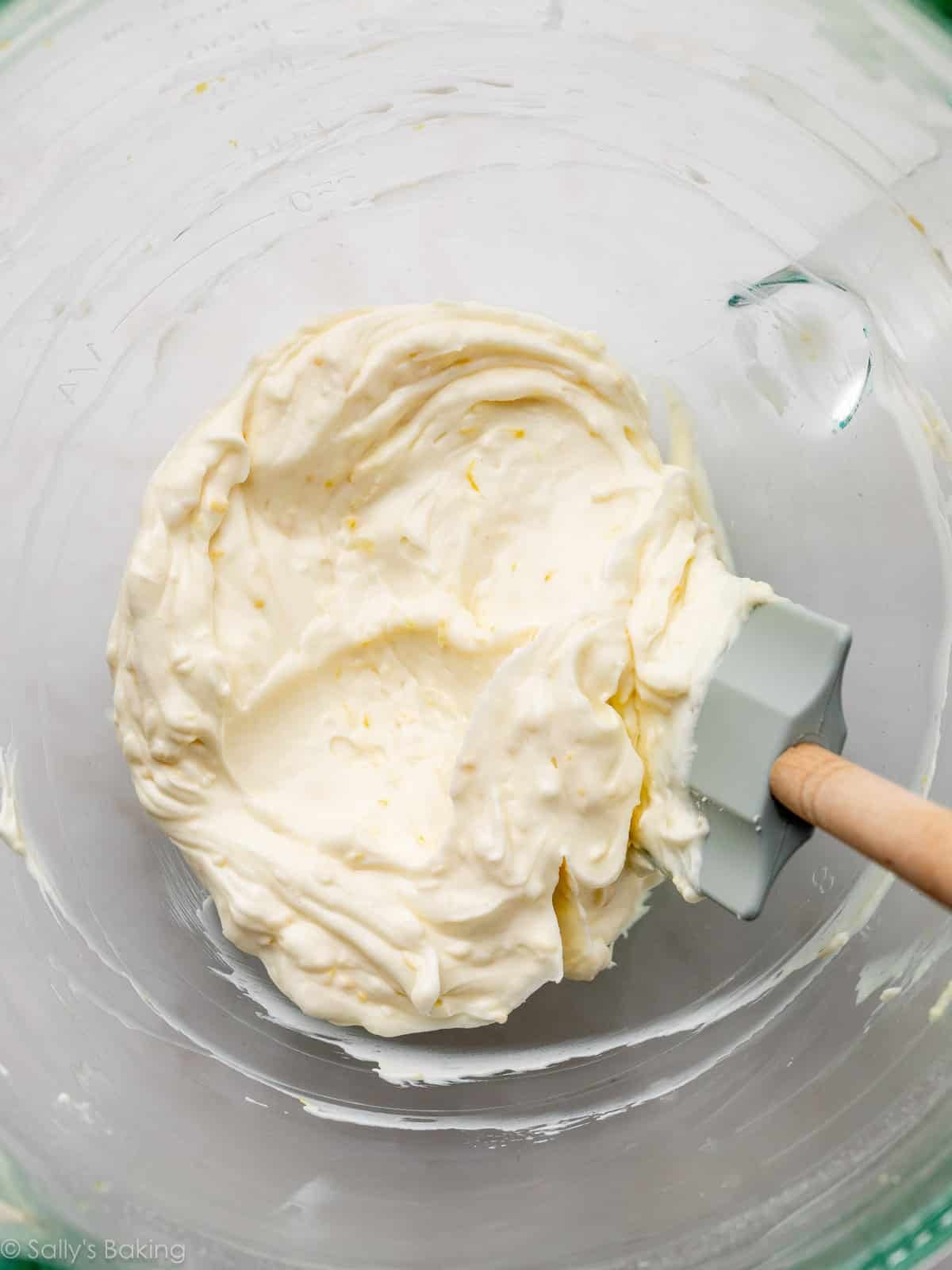
Once the heavy cream is whipped, it is carefully set aside. The next step involves preparing the cream cheese base. It is imperative that the cream cheese be at room temperature and thoroughly softened prior to whipping. Failure to do so can lead to undesirable lumps in the filling, detracting from its smooth, luxurious texture. The softened cream cheese is then whipped until creamy, followed by the incorporation of the remaining filling ingredients, including lemon juice and zest, sugar, and vanilla extract. Finally, the previously whipped heavy cream is gently folded into the cream cheese mixture. This folding technique is critical for maintaining the airy volume of the whipped cream, ensuring the filling remains light and fluffy rather than dense. This two-stage approach to the cream filling guarantees both stability and a delightful texture, essential for the success of the icebox cake.
Assembling the Masterpiece: Layer by Layer Precision
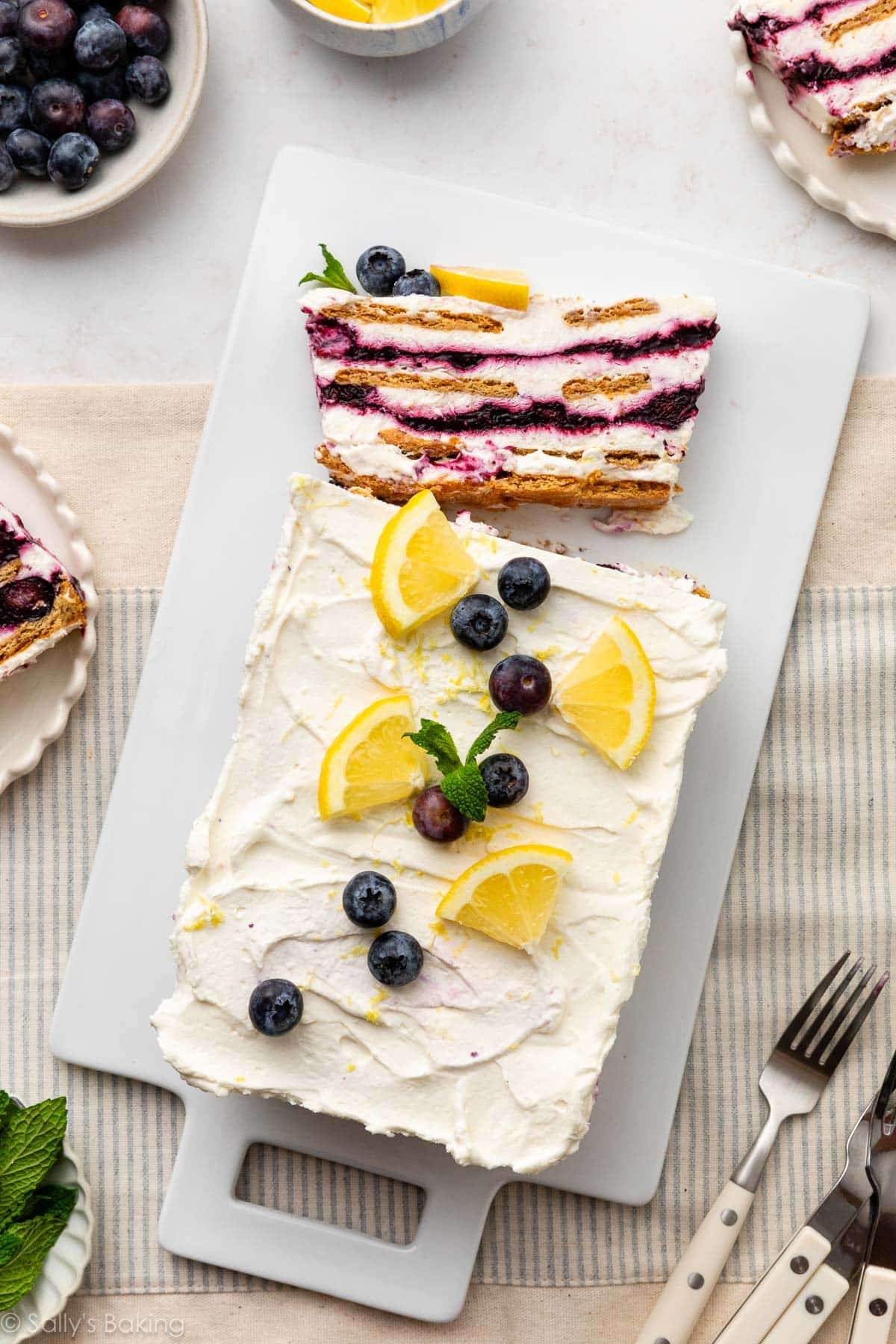
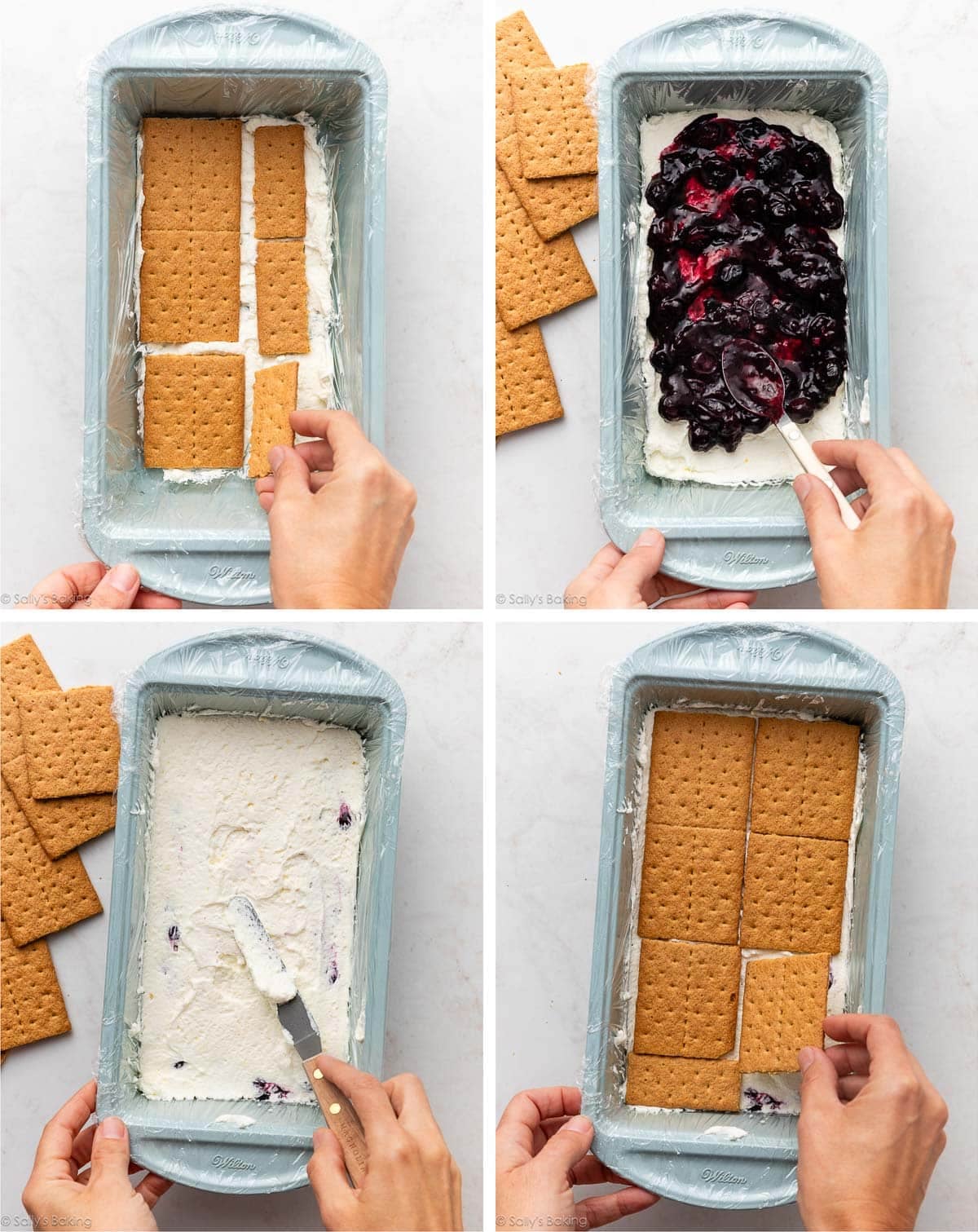
The assembly of the Blueberry Lemon Icebox Cake is a methodical process that, when executed with precision, ensures a visually appealing and structurally sound dessert. A primary recommendation for this recipe is to line the loaf pan with plastic wrap, leaving an overhang on all sides. This simple but effective technique is indispensable for easy removal of the frozen cake, allowing for clean, effortless lifting and subsequent neat slicing.
The layering sequence is as follows:
- First layer of graham crackers: These form the base, laid out to cover the bottom of the pan. Depending on the pan size, they may need to be broken to fit snugly.
- A generous layer of lemon cream filling: This is spread evenly over the graham crackers, providing the essential creamy element and citrus brightness.
- A layer of blueberry sauce: Carefully dolloped and spread over the cream, this adds the vibrant berry flavor and color.
- Repeat: The sequence of graham crackers, lemon cream, and blueberry sauce is repeated, building the cake upwards.
- Final layer of graham crackers: The cake is capped with a final layer of graham crackers, which will soften into the top "crust" during chilling.
This systematic layering ensures an even distribution of flavors and textures throughout the cake. For those seeking to further elevate the dessert, an optional layer of homemade lemon curd could be introduced, adding an extra dimension of intense lemon flavor and a silken texture. This assembly process, though straightforward, is where the distinct character of the icebox cake truly begins to take shape, setting the stage for its remarkable transformation in the freezer.
The Transformative Power of the Freezer: Setting the "Magic"
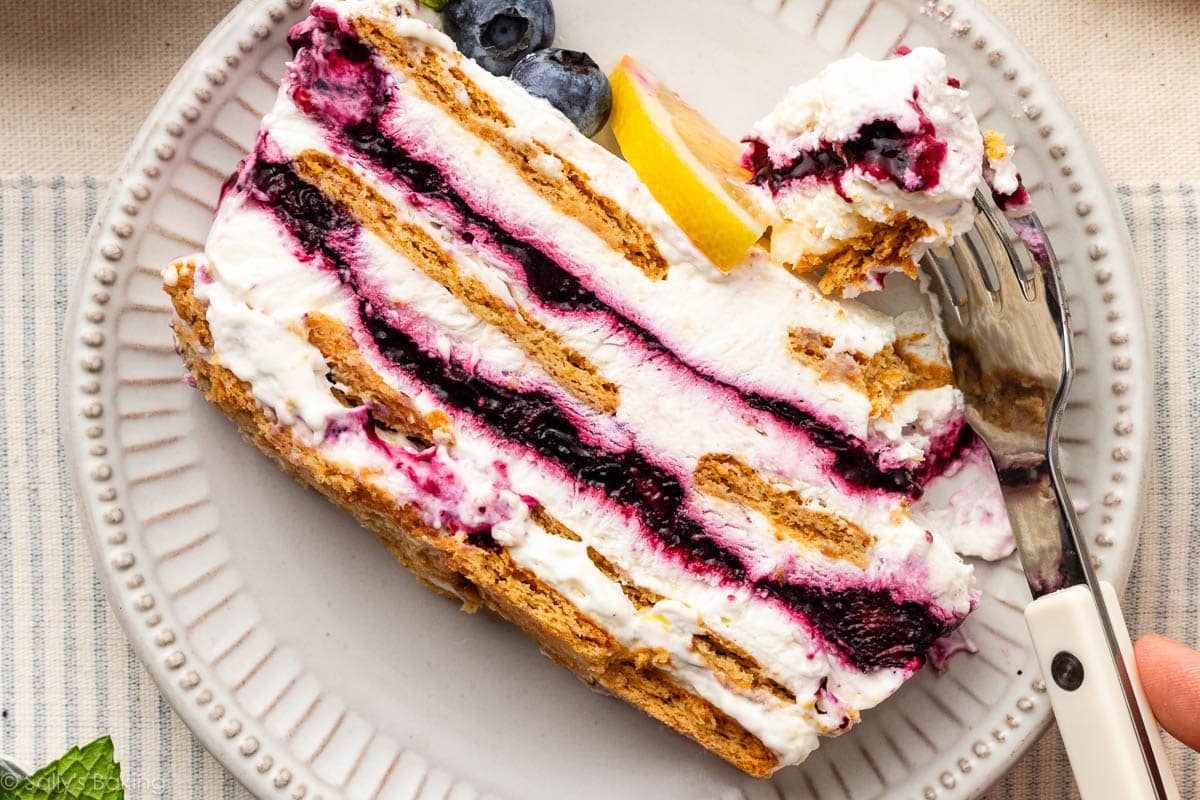
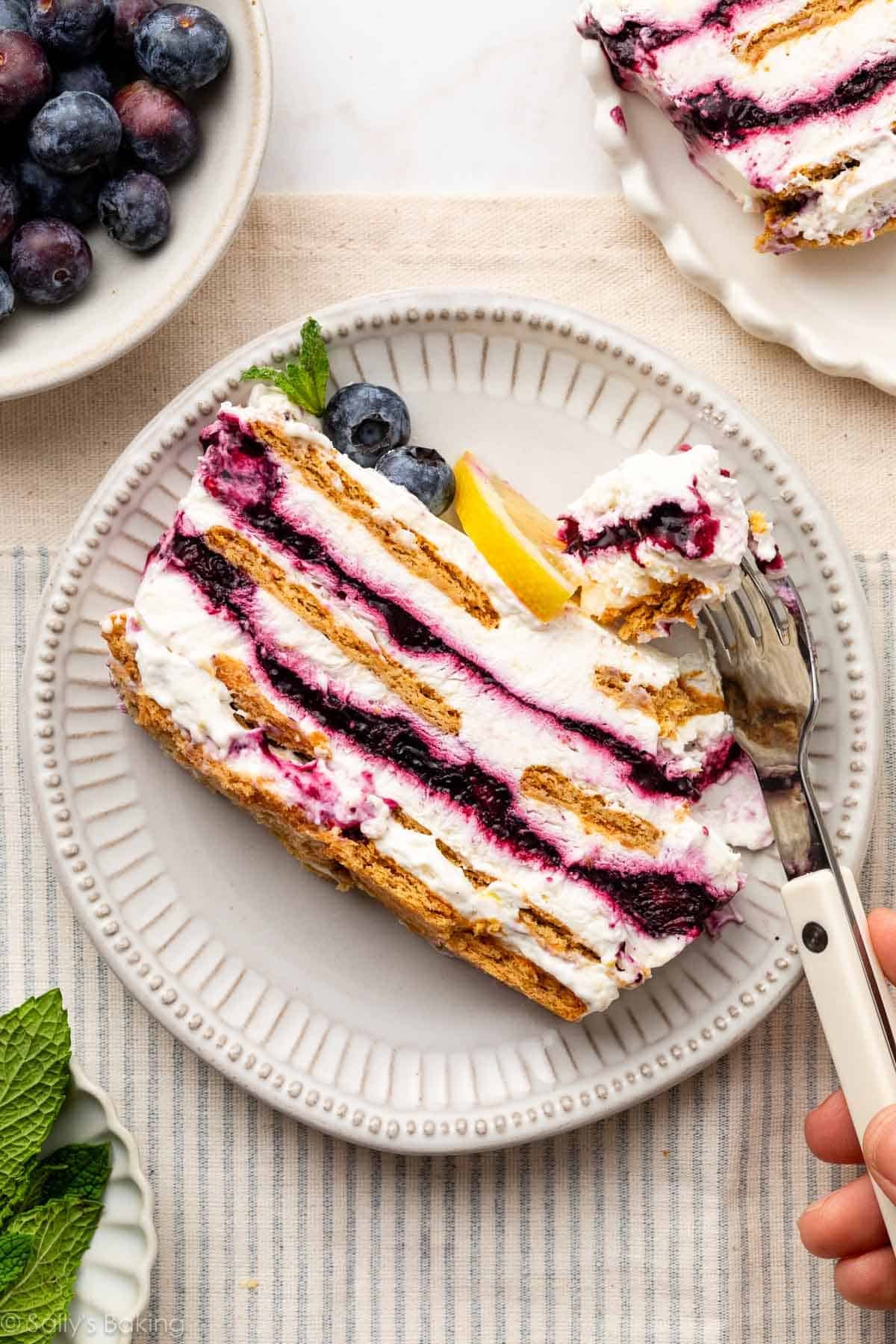
Unlike many traditional icebox cakes that rely on refrigeration alone for setting, this loaf-style Blueberry Lemon Icebox Cake achieves its optimal form and stability through freezing. The freezer is where the "magic" truly unfolds, as the various components undergo a remarkable physical transformation. During the freezing period, the graham crackers gradually absorb moisture from the surrounding cream and blueberry sauce. This absorption process softens them from their original crisp state into delicate, cake-like layers, mimicking the texture of a baked cake. Simultaneously, the lemon cream and homemade blueberry sauce meld together, their flavors deepening and integrating, while their textures coalesce into a single, cohesive, creamy, and mousse-like dessert.
Once assembled, the pan is tightly covered to prevent freezer burn and then placed in the freezer until thoroughly firm. This typically requires several hours, ideally overnight, to ensure complete setting. Prior to serving, it is crucial to allow the icebox cake to sit at room temperature for approximately 10 to 15 minutes. This brief tempering period is essential for two key reasons: firstly, it makes slicing significantly easier, allowing a clean cut through the now-firm layers; and secondly, it brings the filling to the perfect creamy texture, preventing it from being too hard or icy, thus delivering the optimal eating experience. This freezing and tempering regimen is a hallmark of this recipe’s success, guaranteeing a perfectly textured and flavorful dessert every time.
Consumer Reception and Culinary Adaptability
The Blueberry Lemon Icebox Cake has consistently garnered positive feedback from those who have prepared and tasted it, highlighting its ease of preparation, delightful flavor profile, and versatility. Consumers frequently praise its light and summery characteristics, making it an ideal dessert for a variety of occasions.
One enthusiast, Edie, commented on its extreme ease of making with minimal ingredients, labeling it "another winner" and "light and summery." Carissa, another reader, described it as "DELICIOUS!!" and "literally lick the plate yummy," noting its ability to appear "fancy and complex" despite its simple preparation. Carissa’s experience also underscores the cake’s adaptability, as she successfully substituted mixed berries for blueberries, demonstrating its flexibility with different fruit profiles. She specifically lauded the transformation of the graham crackers, affirming that they indeed achieve a "fantastic in texture, almost like a cake," solidifying its status as a new summer go-to dessert. Furthermore, PB, a parent, shared a heartwarming account of preparing the cake with 6- and 9-year-old boys, emphasizing its kid-friendly nature. Their innovative use of ginger snap cookies instead of graham crackers further illustrates the recipe’s potential for customization, resulting in an "out of this world" and "wonderful summer dessert, so light." These testimonials collectively affirm the cake’s broad appeal and its capacity to inspire culinary creativity in home kitchens.
Broader Culinary Implications: The Resurgence of Make-Ahead Desserts
The Blueberry Lemon Icebox Cake exemplifies a significant trend in contemporary culinary practices: the increasing popularity and practical necessity of make-ahead desserts. In an era where hosts and hostesses seek both convenience and quality, dishes that can be prepared entirely or partially in advance offer considerable advantages. This particular icebox cake allows for every single component – the blueberry sauce, the cream filling, and the assembled cake itself – to be prepped ahead of time. This flexibility is invaluable for entertaining, as it significantly reduces stress and allows hosts to focus on their guests rather than last-minute kitchen tasks.
Moreover, the "no-bake" aspect of the icebox cake is particularly appealing during warmer months. Avoiding the use of an oven prevents heating up the kitchen, making it an especially welcome dessert for summer gatherings such as BBQs, pool parties, Memorial Day celebrations, and Fourth of July festivities. The refreshing, cold nature of the cake further enhances its suitability for hot weather. Beyond convenience, make-ahead desserts like this icebox cake often develop deeper, more integrated flavors as they chill, allowing ingredients to meld harmoniously. This trend reflects a broader cultural shift towards practical elegance in home cooking, where sophisticated results are achieved through intelligent preparation and thoughtful design, making this Blueberry Lemon Icebox Cake a quintessential example of modern summer entertaining.
