
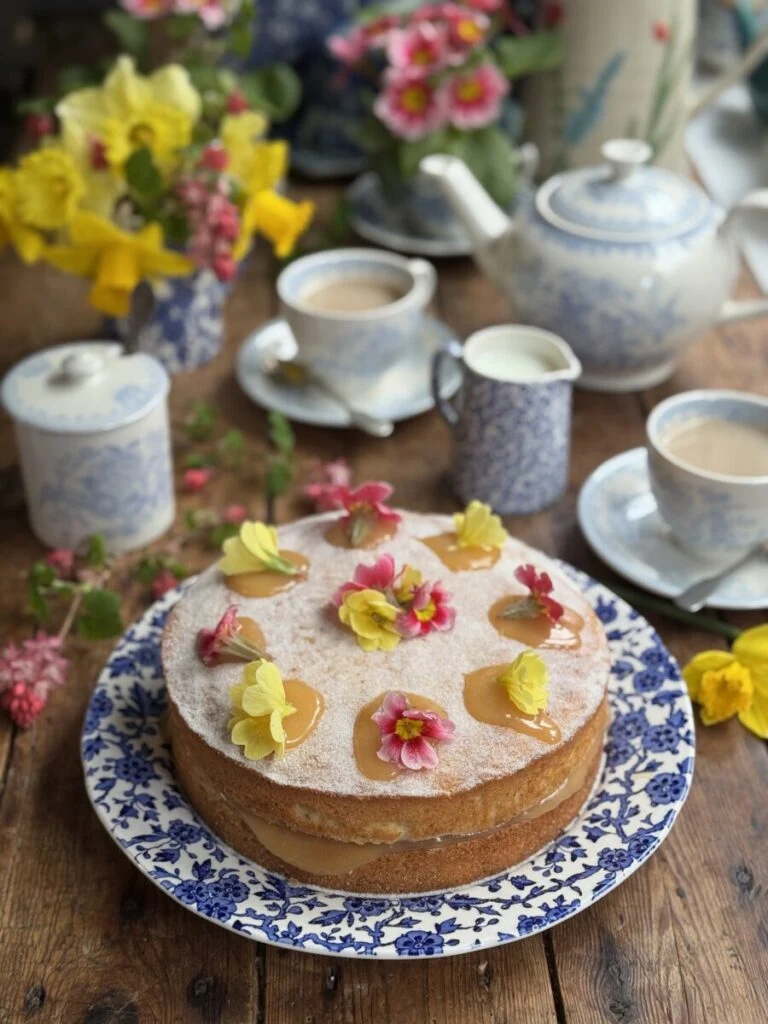
Karen Burns-Booth, the renowned culinary blogger behind Lavender and Lovage, has unveiled a new seasonal recipe, the "Spring Posy Victoria Sandwich Cake with Lemon Curd," timed to coincide with the vernal equinox on March 20, 2026. This release marks a culinary celebration of the official end of winter and the dawn of spring, offering a traditional British cake infused with bright, seasonal flavours and adorned with edible flora. The recipe, positioned as an ideal accompaniment for afternoon tea, particularly for occasions like Mother’s Day and Easter, highlights both the simplicity of classic baking methods and the elegance of seasonal presentation.

The Culinary Creation: A Springtime Masterpiece
The Spring Posy Victoria Sandwich Cake is a modern interpretation of the classic Victoria Sponge, distinguished by its vibrant lemon curd filling and delicate floral decorations. According to Ms. Burns-Booth, the cake employs an "all-in-one" mixing method, a technique favoured for its efficiency and consistent results, making it accessible to home bakers of varying skill levels. This method involves combining all primary cake ingredients – typically butter or margarine, caster sugar, self-raising flour, and eggs – simultaneously, then mixing until a light, creamy batter is achieved. A touch of vanilla is incorporated into the sponge, intended to provide a warming counterpoint to the sharp, zesty notes of the lemon curd.

The cake comprises two symmetrical sponge layers, generously filled with lemon curd. The top layer is then lightly dusted with vanilla sugar, creating a subtle aromatic sweetness. The visual appeal is significantly enhanced by the final decoration: teaspoons of additional lemon curd are artfully placed around the edge of the cake, serving as anchors for a selection of edible spring flowers, such as crystallised primroses. This botanical embellishment transforms the traditional sandwich cake into a "spring posy," evoking the freshness and beauty of the season.
Celebrating the Spring Equinox: A Cultural Confluence

The timing of the recipe’s launch on the Spring Equinox is a deliberate nod to ancient traditions and astronomical phenomena. The term "equinox," derived from Latin, literally translates to "equal night," signifying the two points in the year (around March 20th and September 22nd in the Northern Hemisphere) when the day and night are approximately equal in length. The vernal, or spring, equinox heralds the astronomical commencement of spring, after which days progressively lengthen, bringing more daylight hours and warmer temperatures.
Historically, the Spring Equinox has been celebrated across diverse cultures as a potent symbol of renewal, fertility, and the reawakening of nature. From ancient Mesopotamian rituals marking the return of agricultural abundance to modern-day festivals across Europe and Asia, the transition from winter’s dormancy to spring’s vitality has inspired numerous culinary and communal traditions. In many cultures, this period is associated with special foods that reflect new growth and seasonal produce, such as eggs, fresh greens, and citrus fruits – elements subtly echoed in Ms. Burns-Booth’s lemon-infused creation and its floral adornments. The release of a recipe like the Spring Posy Victoria Sandwich Cake, therefore, taps into a deep-seated human inclination to mark and celebrate seasonal shifts with food.

The Enduring Legacy of the Victoria Sandwich
The Victoria Sandwich cake, or Victoria Sponge, holds an iconic status in British baking, a culinary heritage that dates back to the reign of Queen Victoria. It is said that the Queen herself enjoyed a slice of sponge cake with her afternoon tea, popularising this simple yet elegant confection. The quintessential Victoria Sponge consists of two identical sponge cakes, typically filled with raspberry jam and a layer of cream, though variations with buttercream are also common.

Its enduring appeal lies in its delicate texture, balanced sweetness, and remarkable versatility. The basic recipe, often referred to as a "balanced mix" where the weight of eggs determines the weight of butter, sugar, and flour, is a cornerstone of baking education and home cooking. The Victoria Sandwich has transcended its royal origins to become a staple of British tea rooms, garden parties, and celebratory gatherings. Ms. Burns-Booth’s adaptation, with its lemon curd and edible flower embellishments, demonstrates how a classic can be refreshed while retaining its fundamental charm and historical integrity, fitting perfectly into the seasonal narrative.
The Zesty Heart: A Nod to Lemon Curd Tradition

Lemon curd, the vibrant filling at the heart of the Spring Posy Victoria Sandwich Cake, is another beloved element of British culinary tradition. This rich, creamy, and intensely tart spread is typically made from lemons, eggs, sugar, and butter. Its origins can be traced back to the 19th century, where it was often served as an accompaniment to bread or scones, much like jam, and also used as a filling for tarts and cakes.
The sharp tang of lemon curd provides a crucial counterpoint to the sweetness of the sponge, creating a balanced flavour profile that is both refreshing and comforting. Homemade lemon curd is often prized for its superior flavour and texture, a sentiment echoed by Ms. Burns-Booth, who directs readers to her mother’s homemade lemon curd recipe for optimal results. The inclusion of this traditional component not only enhances the cake’s taste but also reinforces its connection to a wider lineage of British home baking.

Edible Embellishments: The Art of Floral Decoration
The decoration of the cake with edible spring flowers, specifically crystallised primroses, highlights a growing trend in contemporary gastronomy: the use of floral elements for both aesthetic and flavour purposes. Edible flowers have been used in culinary traditions for centuries across various cultures, from ancient Roman feasts to Victorian-era desserts. In recent years, there has been a resurgence of interest in their use, driven by a desire for natural beauty, subtle flavour infusions, and visually stunning presentations.

Primroses, with their delicate petals and soft hues, are quintessential spring blooms. When crystallised, they offer a textural contrast and a hint of sweetness, transforming a simple cake into a sophisticated visual and sensory experience. The use of such natural embellishments reinforces the seasonal theme, grounding the cake firmly in the spirit of spring’s awakening. However, it is crucial for bakers to source edible flowers carefully, ensuring they are free from pesticides and correctly identified, as not all flowers are safe for consumption. Ms. Burns-Booth’s choice of primroses, a commonly recognised edible flower, speaks to an informed approach to floral decoration.
Presentation Excellence: The Role of British Craftsmanship

Beyond the ingredients and decoration, Ms. Burns-Booth emphasizes the importance of presentation, recommending that the cake be served on "elegant, beautifully made British made china." Specifically, she references Burleigh Pottery, mentioning their iconic Blue Asiatic Pheasant, Blue Arden, and Blue Felicity patterns. This detail is significant, as it underscores the holistic experience of afternoon tea, where the vessel is as important as the victual.
Burleigh Pottery, established in 1851 in Stoke-on-Trent, the heart of England’s pottery industry, is renowned for its traditional copper-plate printing techniques and distinctive designs. Products like the Blue Asiatic Pheasant pattern, first introduced in 1851, embody a rich history of British manufacturing and design excellence. By recommending Burleigh china, Ms. Burns-Booth subtly links the culinary art of baking to the artisanal craft of pottery, advocating for the appreciation of quality and heritage in all aspects of the dining experience. This choice reinforces a commitment to supporting British craftsmanship and upholding long-standing traditions of elegance and refinement.

Baking Accessibility: The "All-in-One" Method
The emphasis on the "easy ‘all-in-one’ cake mixture" is a key feature of this recipe, promoting accessibility in home baking. This method, sometimes referred to as the "dump everything in" or "creaming-in-reverse" method, simplifies the traditional multi-step process of creaming butter and sugar, then alternating dry and wet ingredients. By combining all ingredients at once and mixing them until smooth, it significantly reduces preparation time and minimises the risk of over-mixing the flour, which can lead to a tough cake.

This approach is particularly appealing to modern home bakers who seek efficient yet reliable recipes. It democratises baking, making classic creations like the Victoria Sandwich achievable for those with less experience or limited time. The "all-in-one" method, while simple, still yields a light and airy crumb, demonstrating that convenience does not necessarily compromise quality in the realm of baking.
Nutritional Overview: A Balanced Indulgence

The provided nutritional information for the Spring Posy Victoria Sandwich Cake with Lemon Curd indicates that one serving (out of eight) contains approximately 147 calories, 8g total fat (4g saturated, 4g unsaturated), 141mg cholesterol, 98mg sodium, 15g carbohydrates, 0g fiber, 15g sugar, and 4g protein. This data offers a factual breakdown for consumers interested in dietary considerations.
In the context of a balanced diet, this nutritional profile positions the cake as an occasional treat. The sugar content, at 15g per serving, is notable, as is the cholesterol level, predominantly from the eggs and butter/margarine. The absence of fibre is typical for a sponge cake. This information, while not prescriptive, allows individuals to make informed choices about incorporating such a dessert into their overall eating patterns, aligning with current trends towards greater transparency in food labelling.

Broader Culinary Implications and Seasonal Celebrations
The Spring Posy Victoria Sandwich Cake with Lemon Curd extends beyond a mere recipe; it serves as a culinary marker for seasonal celebrations. Ms. Burns-Booth explicitly suggests its suitability for Mother’s Day and Easter tea time tables. This highlights the cake’s role in family gatherings and festive occasions, reinforcing the cultural practice of using food to commemorate important dates.

Mother’s Day, a celebration of maternal figures, and Easter, a spring festival with deep historical roots, both traditionally involve special meals and sweet treats. A beautifully decorated, light, and flavourful cake like this one fits perfectly into these contexts, offering a homemade touch that carries significant sentimental value. The emphasis on home baking, particularly for such cherished occasions, reflects a broader societal appreciation for traditional values and the comfort associated with familiar, well-loved recipes. The cake’s aesthetic appeal, with its floral decorations, further aligns it with the gift-giving and celebratory aspects of these holidays.
Recipe Details and Cook’s Notes for Aspiring Bakers

For those inspired to recreate this seasonal delight, the recipe provides clear instructions and valuable "Cook’s Notes." The baking process begins with pre-heating the oven to Gas 4, 160C (fan), 180C, or 350F, and preparing two 8-inch (20cm) sandwich tins. The "all-in-one" method is then employed, mixing all cake ingredients for 2 to 3 minutes until a creamy batter is formed. Baking time is approximately 25 minutes.
Crucially, the "Cook’s Notes" offer practical advice, such as allowing butter to soften if used instead of soft margarine, and adjusting other ingredient weights proportionally if larger eggs are used. It also provides alternative measurements in ounces (4 eggs, 8 ounces each of soft margarine/butter, caster sugar, and self-raising flour), catering to different preferences and regional traditions. Instructions for a smaller 7-inch cake, requiring 2 medium eggs and a reduced baking time of 20 minutes, further enhance the recipe’s adaptability. These detailed insights demonstrate a thoughtful consideration for the home baker, aiming to ensure successful outcomes and encouraging experimentation with alternative fillings like raspberry, strawberry, or blackcurrant jams, or even the addition of whipped cream or buttercream.

In conclusion, Karen Burns-Booth’s Spring Posy Victoria Sandwich Cake with Lemon Curd is more than just a recipe; it is a meticulously crafted culinary statement. Released on the Spring Equinox, it intertwines the simplicity of a classic British cake with the vibrancy of seasonal ingredients and the elegance of traditional presentation. By highlighting historical context, cultural significance, and practical baking advice, this creation stands as a testament to the enduring appeal of home baking and the timeless joy of celebrating the changing seasons through food.
