

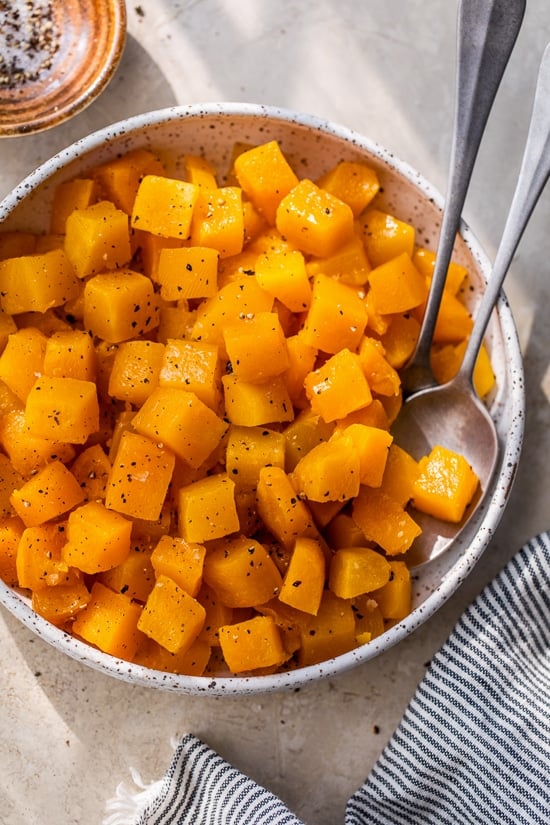
The preparation of seasonal vegetables during the autumn and winter months represents a significant trend in domestic culinary practices, characterized by a preference for simple, nutrient-dense ingredients that require minimal intervention. Among these, the butternut squash (Cucurbita moschata) has emerged as a staple of North American holiday menus and weeknight dinner rotations. By employing a straightforward roasting technique involving olive oil and maple syrup, home cooks can achieve a caramelized, tender profile that highlights the vegetable’s natural sweetness and versatility.
The Nutritional Profile of Winter Squash
Butternut squash is classified as a winter squash, harvested typically between late summer and early autumn. Nutritionally, it is recognized for its high concentration of provitamin A carotenoids, specifically beta-carotene, which gives the flesh its characteristic deep orange hue. According to dietary data, a three-quarter cup serving of roasted squash contains approximately 104 calories, 23 grams of carbohydrates, and 4 grams of dietary fiber, with negligible fat and sodium content. This nutrient density makes it an attractive option for those prioritizing plant-based, low-calorie side dishes that do not sacrifice flavor or texture.
Culinary Context and Historical Shift
The transition toward roasting techniques for winter squash marks a departure from traditional mashing or boiling methods, which were historically favored for their simplicity. Culinary historians note that as the accessibility of high-quality, pure maple syrup has increased, the combination of maple and squash has become a standard pairing in contemporary gastronomy. This shift reflects a broader consumer interest in natural sweeteners as an alternative to processed sugars, particularly during the holiday season when demand for traditional, comfort-oriented dishes peaks.

The process of roasting at high temperatures—typically between 400°F and 425°F—facilitates the Maillard reaction, a chemical process between amino acids and reducing sugars that produces the characteristic browning and flavor depth observed in the finished dish. When combined with the sucrose content in maple syrup, this reaction is accelerated, leading to the signature caramelization that defines the dish.
Technical Challenges: Peeling and Preparation
Despite its popularity, the butternut squash poses a unique challenge to culinary preparation due to its dense, fibrous rind. The skin is sufficiently rigid to resist standard vegetable peelers, often requiring the use of heavy-duty chef’s knives and specialized cutting techniques. This physical barrier acts as a deterrent for many consumers, leading to the growth of a retail market for pre-cut, vacuum-sealed, or frozen squash cubes.

For those preparing the vegetable from its whole state, industry-standard safety protocols recommend the use of a sharp, high-carbon steel knife and a stable cutting surface. A common preparatory method involves trimming the ends of the squash and bisecting the bulbous bottom from the cylindrical neck, followed by vertical peeling. An alternative, increasingly popular method involves a brief exposure to heat—either via a microwave or a short boil—to soften the exterior skin, thereby reducing the force required for peeling and dicing. This technical adaptation has been instrumental in increasing the adoption of home-cooked squash recipes.
Analytical Overview of Recipe Variations
While the standard preparation relies on the triad of squash, olive oil, and maple syrup, the recipe is highly susceptible to modification based on regional availability and dietary requirements. Data regarding consumer preferences indicate that substitutions are frequently employed to accommodate specific nutritional needs or flavor profiles:
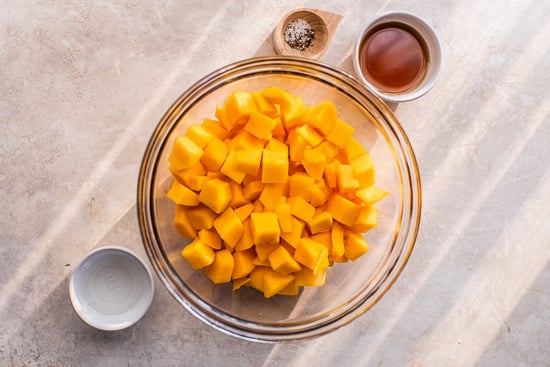
- Sweetener Substitutions: Honey, agave nectar, or brown sugar are commonly swapped for maple syrup. While these alternatives provide the necessary sugar for caramelization, they alter the viscosity and flavor profile, with maple syrup providing a distinct woody undertone favored in fall-themed dishes.
- Technological Integration: The adoption of air frying as an alternative to oven roasting has significantly reduced total cooking times. Air-fryer variants typically require 15 to 20 minutes compared to the 40-minute window required for traditional convection roasting, though this comes at the expense of total volume, as air fryers generally possess smaller capacities than standard ovens.
- Botanical Versatility: The fundamental roasting method is transferable to other winter squashes, including acorn, delicata, and pumpkin. However, the density and moisture content of these varieties vary, requiring slight adjustments in roasting time to prevent uneven cooking or burning.
Economic and Logistical Implications
The rise in the popularity of roasted butternut squash correlates with broader economic trends in the grocery sector. The increased availability of fresh-cut produce reduces the barriers to entry for inexperienced cooks, effectively shifting the preparation time from a 45-minute total duration to a much shorter, more manageable window. Retailers have responded to this demand by expanding the presence of squash-based products in the produce aisle, particularly during the peak harvest months of October and November.
From a logistical standpoint, the storage requirements for this dish are minimal, making it an efficient choice for large-scale event planning, such as Thanksgiving or holiday gatherings. The dish maintains its structural integrity when refrigerated for up to four days in airtight containers, though it is prone to moisture loss, which can affect the texture upon reheating. Reheating via a conventional oven rather than a microwave is recommended to restore the crisp, caramelized exterior.
Broader Culinary Impact
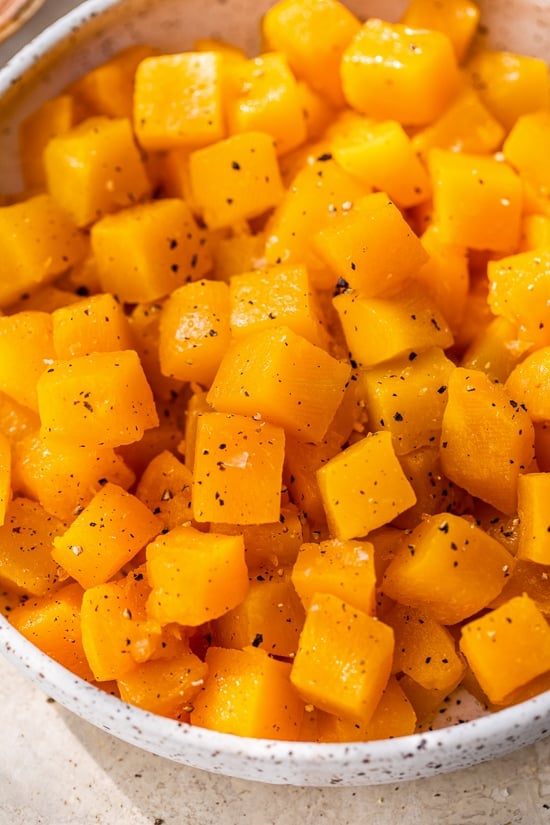
The endurance of the maple-roasted butternut squash as a staple dish is rooted in its simplicity and the balance of its flavor profile. By focusing on a "less is more" approach—using only three primary ingredients—the dish minimizes the risk of culinary error, making it a reliable option for both amateur and professional kitchens.
As food trends continue to move toward transparency in ingredients and a focus on whole foods, the reliance on basic, seasonal components like squash, olive oil, and maple syrup serves as a benchmark for modern, health-conscious cooking. Its role in the current culinary landscape is that of a foundational side dish—versatile enough to be paired with heavy proteins like roasted meats, yet simple enough to stand as a centerpiece for vegetarian diets.
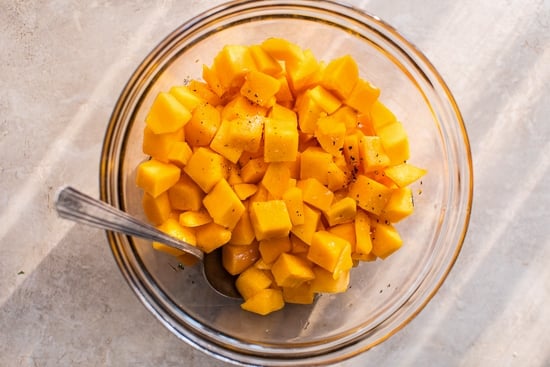
Looking forward, the evolution of this dish will likely follow the trajectory of other "quick-prep" vegetable sides, with a continued focus on time-saving techniques and the integration of diverse seasoning profiles. Whether prepared with simple black pepper and sea salt or elevated with herbaceous additions like rosemary or thyme, the fundamental method of roasting remains the defining element of its success in the modern home kitchen. This dish represents a successful intersection of historical agricultural traditions and contemporary consumer demand for efficient, high-quality, and nutrient-dense meal preparation.
