
The warehouse club industry has long been defined by a fierce tripartite competition between Costco Wholesale, Sam’s Club, and BJ’s Wholesale Club. These retailers, which rely on a membership-based revenue model, have transformed the American grocery landscape by offering bulk commodities at razor-thin margins. While each chain promises savings and convenience, a granular analysis of operational standards, product quality, and consumer accessibility reveals that Costco maintains a distinct market advantage across several key performance indicators.
The Evolution of the Wholesale Club Model
To understand why Costco has secured a dominant position, one must look at the historical trajectory of the big-box retail sector. The warehouse club concept was popularized in the 1970s and 80s, designed to serve small business owners and budget-conscious families. Sam’s Club, a subsidiary of Walmart Inc., was founded in 1983, shortly followed by the merger that created the modern iteration of Costco in 1983. BJ’s, headquartered in Massachusetts, has historically maintained a regional focus on the East Coast.
Over the past four decades, the business model has shifted from purely functional to experiential. Modern shoppers now demand not only bulk savings but also high-quality private labels, premium fuel services, and convenient food service options. Costco’s ability to pivot toward these consumer preferences has consistently outpaced its competitors.
Superior Meat Procurement and Quality Control
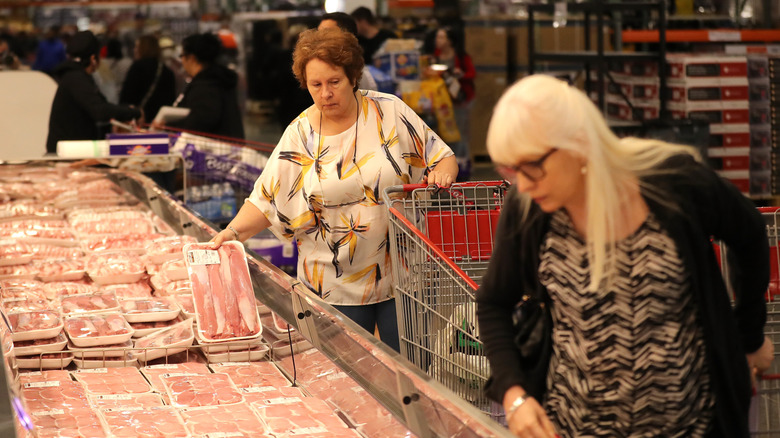
The meat department serves as a primary driver for membership renewals, and Costco has differentiated itself through rigorous quality control and customization. While competitors often rely on mass-produced, pre-packaged cuts, Costco has maintained a reputation for sourcing higher-grade beef and poultry.
Industry analysts note that Costco’s business model allows for higher volume turnover, which ensures fresher inventory. Furthermore, the retailer provides a service that has largely vanished from modern supermarkets: on-site butchers who can accommodate custom cuts. While consumers must navigate a higher initial price point compared to some traditional grocery stores, the cost-per-pound efficiency remains superior when compared to the average retail grocery chain, and the quality profile frequently tests higher than the standard inventory found at Sam’s Club or BJ’s.
The Kirkland Signature Advantage
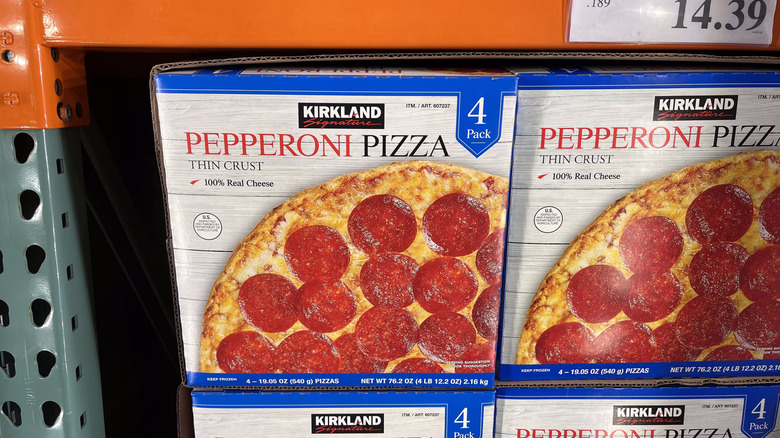
Perhaps the most significant factor in Costco’s success is the strategic management of its private-label brand, Kirkland Signature. Unlike many retailers that view store brands as "budget" alternatives, Costco has treated Kirkland Signature as a premium line.
Data from market research firms suggests that Kirkland Signature products are often manufactured by the same companies that produce name-brand items, but they are sold at a fraction of the cost. By maintaining strict quality requirements, Costco has fostered significant brand loyalty. In head-to-head comparisons, consumers frequently rate Kirkland Signature goods—ranging from olive oil and coffee to electronics and clothing—as equal to or superior to the name-brand alternatives, a feat that neither Member’s Mark (Sam’s Club) nor Berkley & Jensen (BJ’s) has managed to replicate with the same level of market penetration or prestige.
Operational Footprint and Global Reach
Infrastructure remains a critical metric in the retail sector. As of 2024, Costco operates over 870 locations globally, with a robust presence in the United States, Canada, Mexico, and several Asian and European markets. This extensive footprint provides a "network effect" for members; a Costco membership card is valid at any location worldwide.
In contrast, Sam’s Club operates roughly 600 locations, primarily within the United States, while BJ’s maintains a significantly smaller footprint, heavily concentrated in the Eastern United States. For the mobile consumer, or those living in regions where options are limited, the sheer ubiquity of Costco’s physical stores—and the consistency of the shopping experience across those locations—provides a tangible value-add that competitors struggle to match.
The Role of Top Tier Gasoline
Costco’s fuel strategy has become a cornerstone of its membership value proposition. The retailer is one of the few high-volume fuel providers that exclusively sells "Top Tier" gasoline. This certification, recognized by major automotive manufacturers, signifies that the fuel contains specific additives that prevent the buildup of engine deposits, thereby extending the life of a vehicle’s fuel system and improving performance.
While Sam’s Club and BJ’s also offer fuel discounts to members, they do not universally mandate the Top Tier standard for their supplies. For the average consumer, this translates to long-term maintenance savings, reinforcing the notion that a Costco membership is an investment in vehicle longevity rather than just a source of discounted fuel.
Experiential Retail: The Power of Samples and Food Courts
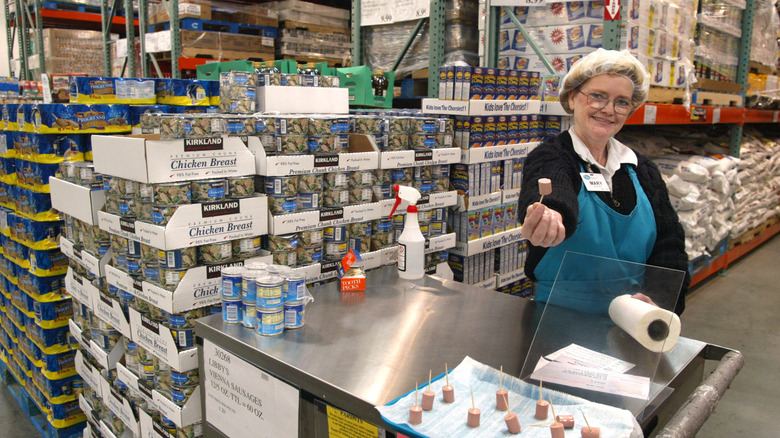
The "treasure hunt" aspect of the warehouse club experience is a proven tactic for increasing time-on-site and average basket size. Costco’s commitment to providing free, high-quality product samples significantly enhances the shopping experience. Consumer feedback consistently suggests that Costco’s sampling program is more frequent and diverse than those offered by its rivals.
Beyond sampling, the food court acts as a final touchpoint for the customer journey. Costco has maintained a strict price point for its signature hot dog and soda combo—$1.50—a pricing strategy that has remained unchanged since 1985. By prioritizing this loss-leader, Costco fosters goodwill and consumer satisfaction. Independent reviews of food court offerings consistently place Costco’s pizza, rotisserie chicken, and frozen yogurt ahead of the offerings found at Sam’s Club, which has faced criticism for inconsistent menu quality and limited availability at certain locations.
Broader Economic Implications
The dominance of Costco in these categories is not merely a matter of branding; it is a reflection of a supply chain strategy that prioritizes quality and efficiency over sheer scale. While Walmart-owned Sam’s Club benefits from the massive logistical infrastructure of its parent company, Costco’s focus on a curated selection of products—usually around 4,000 SKUs compared to the 100,000+ found in a typical supercenter—allows for higher inventory turnover and better leverage with suppliers.
This "curated" approach means that when a product makes it onto a Costco shelf, it has been vetted for quality and value. For the consumer, this reduces "choice paralysis" and ensures a higher probability of satisfaction with each purchase.
Conclusion: A Strategic Assessment
For the average household, the decision between membership clubs often comes down to geography and specific shopping habits. However, when evaluating the objective metrics—gas quality, private-label excellence, food service standards, and global accessibility—Costco consistently demonstrates a higher operational ceiling.
As the retail landscape continues to evolve under the pressure of e-commerce and changing consumer demographics, the warehouse club model faces new challenges. Yet, by maintaining its commitment to the Kirkland Signature brand and high-quality, high-volume operations, Costco has effectively insulated itself from the volatility that plagues less focused retail sectors. Whether the consumer is seeking a cost-effective bulk solution for their weekly groceries or a reliable partner for fuel and household maintenance, the data suggests that Costco remains the industry benchmark for the wholesale club experience.
